


Manduca quinquemaculata, commonly known as the five-spotted hawk moth in its adult form and the tomato hornworm as a caterpillar, is one of the most recognizable insects across North American agriculture and home gardens. Belonging to the family Sphingidae (sphingid or hawk moths), this species is notorious for its voracious appetite during its larval stage, capable of defoliating Nightshade family (Solanaceae) plants in a matter of days.
Despite its reputation as a crop pest, M. quinquemaculata is a fascinating organism from an ecological, evolutionary, and anatomical perspective.
Anatomy and Lifecycle
Like all holometabolous insects, Manduca quinquemaculata undergoes complete metamorphosis through four distinct developmental stages: egg, larva, pupa, and adult.
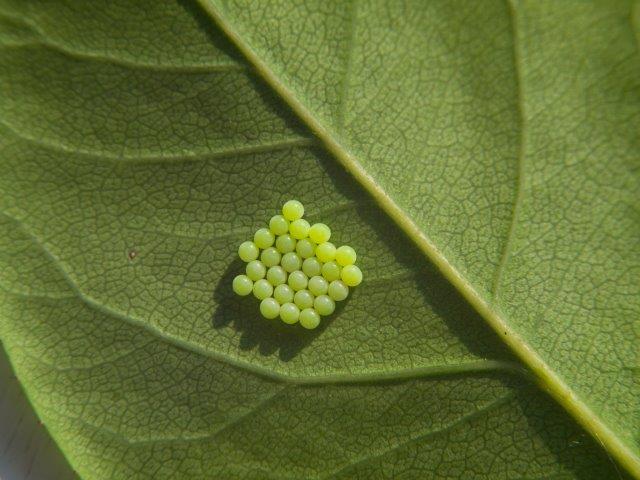
Egg Stage (3 to 5 Days)
Female moths deposit spherical, greenish-white eggs singly on the upper and lower surfaces of host plant leaves. Eggs hatch quickly in warm summer conditions.
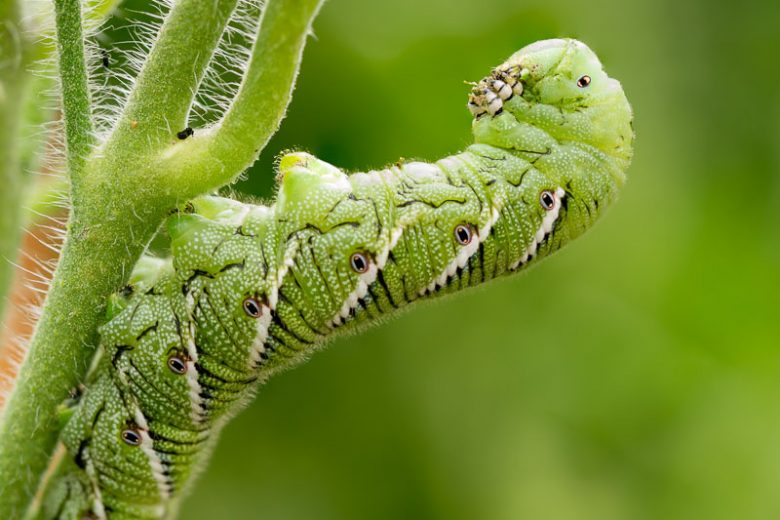
Larval Stage (3 to 4 Weeks)
The caterpillar progresses through 5 larval instars. It feeds continuously on leaves, stems, and green fruit, growing up to 10 cm (4 inches) long before maturity.
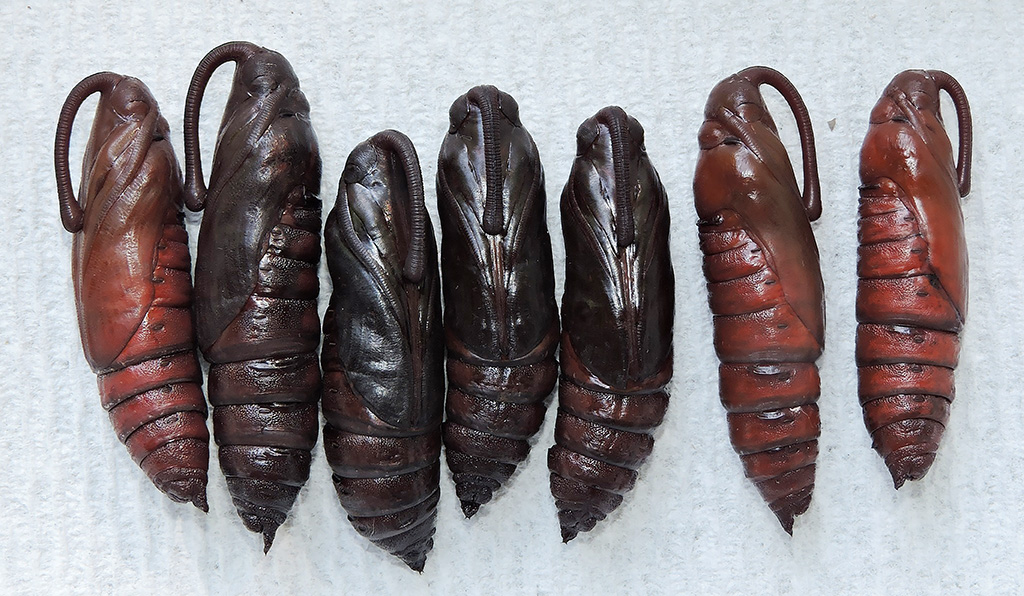
Pupal Stage (2 to 4 Weeks [or overwinter])
Fully grown larvae drop to the ground and burrow 10–15 cm into the soil to pupate inside a hard, dark brown pupal case featuring a distinct “pitcher handle” structure housing the developing proboscis.
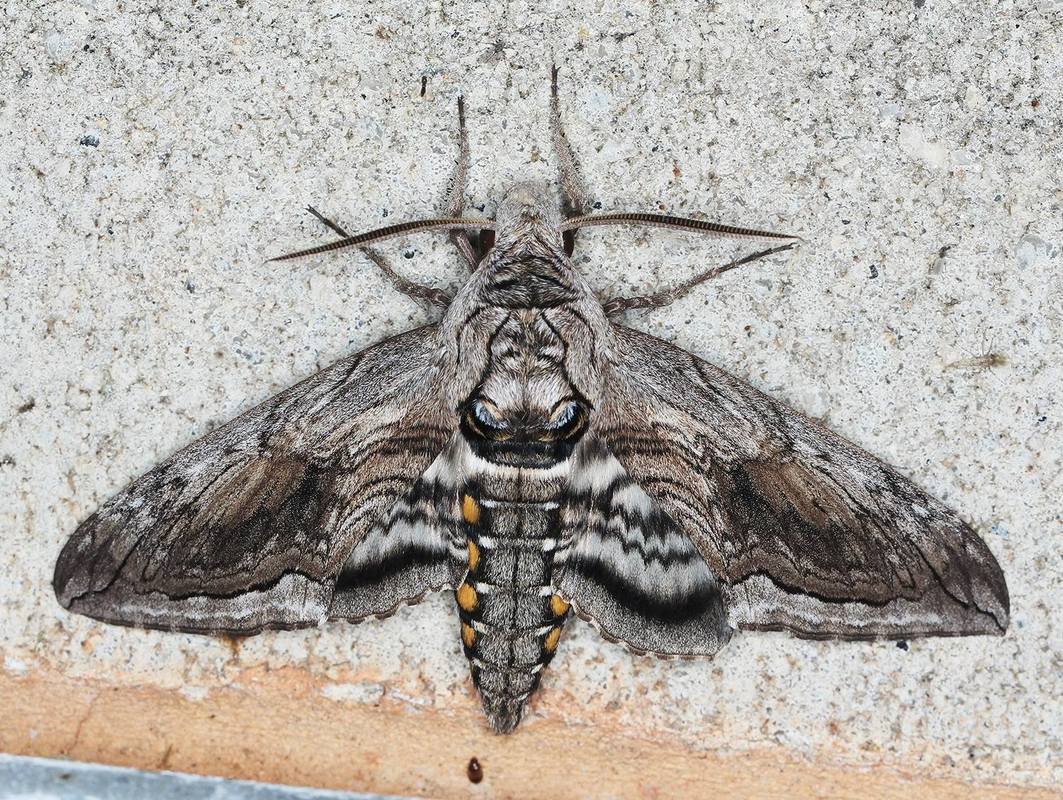
Adult Stage (2 to 3 Weeks)
Adult five-spotted hawk moths emerge to mate and lay eggs. Depending on latitude, 1 to 3 generations can occur per year before late-season pupae enter winter diapause in the soil.

Identification: Tomato Hornworm vs. Tobacco Hornworm
Manduca quinquemaculata is frequently confused with its close relative, Manduca sexta (the tobacco hornworm). Because both species often inhabit the same geographical regions and share host plants, distinguishing between them requires examining specific physical markers.
| Feature | Tomato Hornworm (M. quinquemaculata) | Tobacco Hornworm (M. sexta) |
|---|---|---|
| Larval Markings | Eight V-shaped white side stripes | Seven diagonal white side stripes |
| Horn Color | Dark blue to black horn | Red horn |
| Adult Abdomen | 5 pairs of yellow-orange spots | 6 pairs of yellow-orange spots |
| Adult Wings | Zigzag lines across hindwings | Wave-like lines across hindwings |
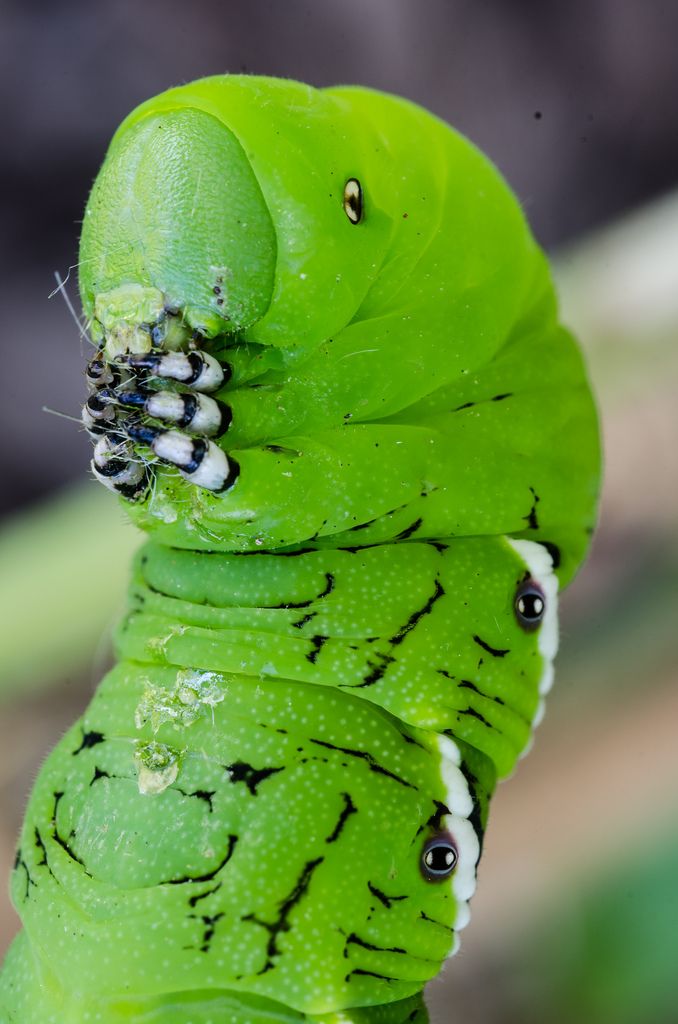
Ecological Impact and Agricultural Management
In garden and agricultural settings, M. quinquemaculata primarily targets solanaceous plants, including tomatoes, eggplants, potatoes, peppers, and tobacco.
Because the larvae blend seamlessly into foliage due to their cryptic green coloration, early infestations are often detected by secondary clues rather than direct observation:
- Large dark green or black droppings (frass) on foliage or the ground beneath the plant.
- Defoliation starting from the upper canopy down, leaving only thick leaf midribs.
- Chewed or gouged green fruits, which opens the plant to fungal infections and decay.
Integrated Pest Management (IPM)
- Handpicking: For small gardens, manually removing caterpillars and dropping them into soapy water is highly effective.
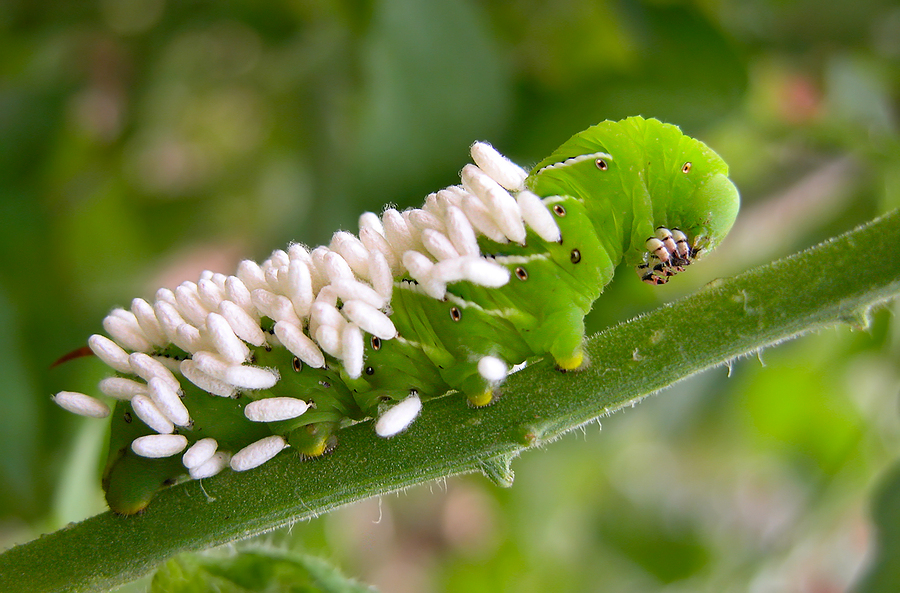
- Biological Control: Parasitic wasps, particularly Cotesia congregata, are critical natural enemies. The tiny adult wasp lays eggs inside the caterpillar. When the wasp larvae hatch, they feed internally before emerging to spin white pupal cocoons on the hornworm’s back.
Gardener’s Tip: If you see a hornworm covered in tiny white rice-like cocoons, do not kill it. The caterpillar is already doomed, and leaving it allows hundreds of beneficial parasitic wasps to hatch and protect your garden.
- Soil Tillage: Tilling the soil in late fall or early spring destroys over 90% of overwintering pupae buried in the topsoil.
- Organic Sprays: Bacillus thuringiensis (Bt), a naturally occurring soil bacterium, targets caterpillar digestive systems when applied to foliage without harming non-target beneficial insects.
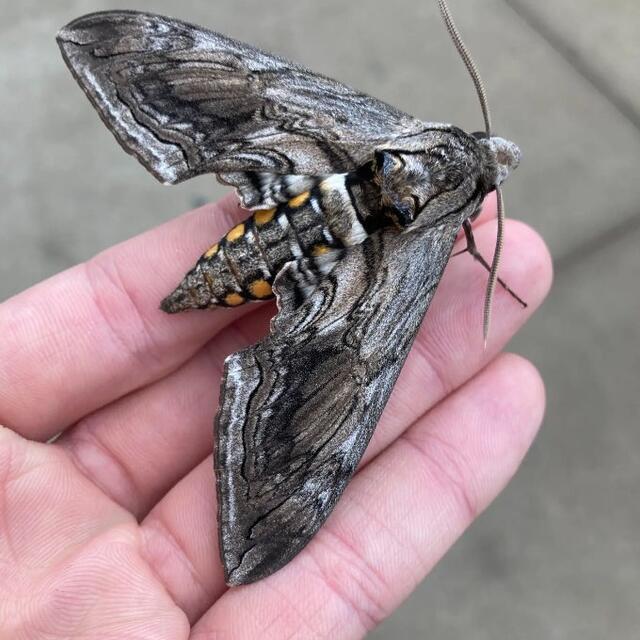
The Adult Moth: Nocturnal Pollinators
While the larval form causes agricultural damage, the adult five-spotted hawk moth plays a positive ecological role as a nocturnal pollinator.
With a wingspan reaching up to 13 cm (5 inches) and an exceptionally long proboscis, the adult moth hovers in front of flowers much like a hummingbird—earning the group the common nickname “hummingbird moths.” They prefer deep-throated, sweet-smelling night flowers like evening primrose, moonflower, and petunias, aiding in the cross-pollination of plant species that daytime pollinators miss.
 davethebugguy.org
Leave a comment