Category Archives: Buggy Book Reviews

BUGGUY BOOK REVIEW: “Tarantula Spiders as Pets: The Ultimate Tarantula Owner’s Guide” by Lolly Brown

When it comes to guides on tarantulas, I am always looking for new ones to add to my library. Unfortunately, there are a lot of AI-produced titles on Amazon, most of which are not worth the paper they are printed on. “Tarantula Spiders as Pets: The Ultimate Owner’s Guide” by Lolly Brown is one such book.

Continue reading BUGGUY BOOK REVIEW: “Tarantula Spiders as Pets: The Ultimate Tarantula Owner’s Guide” by Lolly Brown

Don’t Miss the Metamorphosis: A Review of the Caterpillar Field Guide

Caterpillars in the Field and Garden: A Field Guide to the Butterfly Caterpillars of North America by Thomas J. Allen, Jim P. Brock, and Jeffrey Glassberg is a truly remarkable and essential resource for anyone interested in the natural world, particularly butterflies and their fascinating early life stages. This book stands out as a comprehensive, visually stunning, and user-friendly guide that elevates the study of caterpillars from a niche interest to an accessible and engaging pursuit.

Continue reading Don’t Miss the Metamorphosis: A Review of the Caterpillar Field Guide

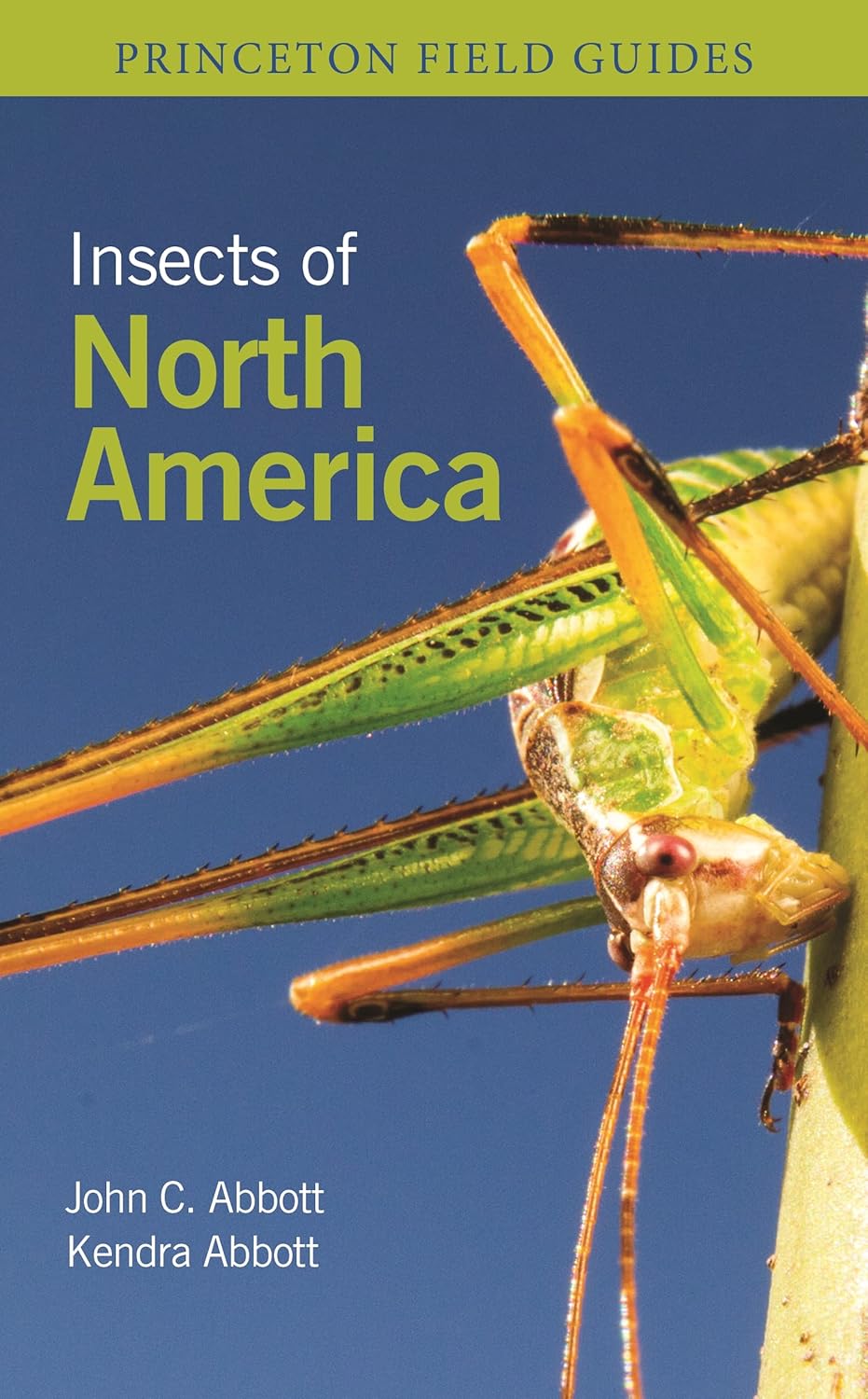
A Lens into a Hidden World: A Review of John and Kendra Abbott’s Insects of North America

If you’ve ever found yourself staring at a strangely iridescent beetle in your backyard or a delicate lacewing on your window screen, wondering exactly what you were looking at, “Insects of North America” is the answer to your curiosity.

Authored by the powerhouse duo of Dr. John C. Abbott and Kendra Abbott and published by the prestigious Princeton University Press, this book is far more than a simple identification guide. It is a breathtaking celebration of the most diverse group of animals on our continent.

Continue reading A Lens into a Hidden World: A Review of John and Kendra Abbott’s Insects of North America

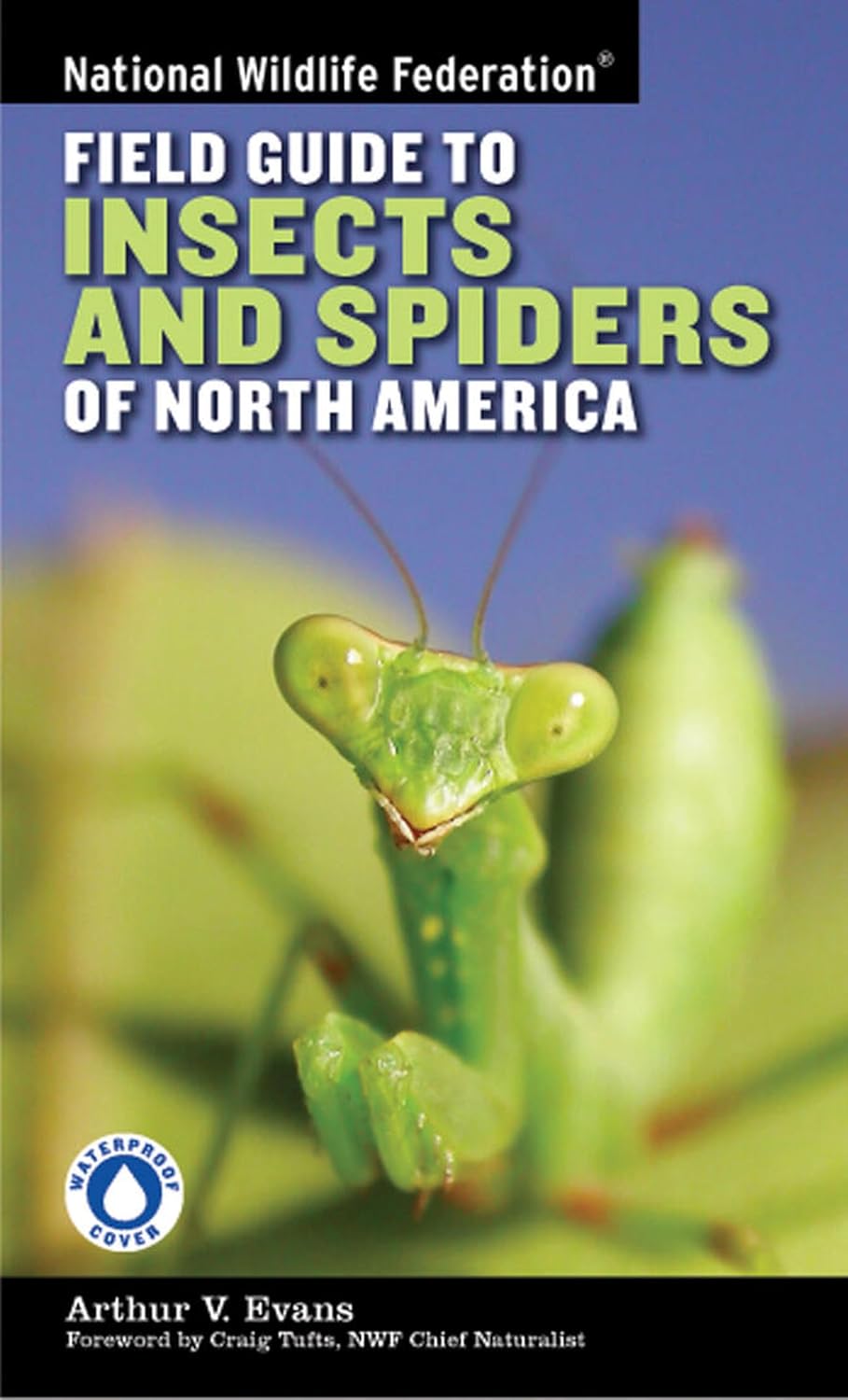
The Ultimate Backyard Safari: A Review of Arthur V. Evans’ Field Guide to Insects and Spiders of North America

For anyone who has ever paused in their backyard to wonder about a metallic-green beetle or a geometric spiderweb, Arthur V. Evans’ Field Guide to Insects and Spiders of North America isn’t just a book—it’s a VIP pass to a hidden world.

Published as part of the National Wildlife Federation series, this guide has cemented itself as the “gold standard” for amateur entomologists and curious hikers alike. It manages to do something rare: it bridges the gap between dense scientific academia and the sheer joy of discovery.

Continue reading The Ultimate Backyard Safari: A Review of Arthur V. Evans’ Field Guide to Insects and Spiders of North America

The Tarantula Enthusiast’s Bible: A Deep Dive into “Tarantulas in the Vivarium”

When Peter Klaas published Tarantulas in the Vivarium: Habits, Husbandry, and Breeding in 2001, the arachnoculture hobby was in a state of rapid transition. While keepers were moving away from “trial and error,” there was a desperate need for a consolidated, scientifically grounded resource.

Klaas, a respected German arachnologist and keeper, filled that void with a work that remains a foundational text for serious hobbyists and professional breeders alike.

Continue reading The Tarantula Enthusiast’s Bible: A Deep Dive into “Tarantulas in the Vivarium”

The Museum in a Volume: Why Paul Smart’s Encyclopedia Remains the Gold Standard of Lepidopterology.

For enthusiasts of lepidopterology and vintage natural history books, few volumes command as much reverence as Paul Smart’s “The Illustrated Encyclopedia of the Butterfly World.” First published in 1975 (with the widely beloved 1985 reprint), this work remains a definitive cornerstone of entomological literature. It isn’t just a reference book; it is a visual love letter to one of nature’s most delicate and diverse orders.

Continue reading The Museum in a Volume: Why Paul Smart’s Encyclopedia Remains the Gold Standard of Lepidopterology.

The Binocular Revolution: Why Pyle’s Butterfly Handbook is Still the Gold Standard

In the world of natural history, few books have had as profound an impact on how we engage with the small wonders of our environment as The Audubon Society Handbook for Butterfly Watchers by Robert Michael Pyle. First published in 1984, this seminal work did more than just list species; it essentially pioneered a new hobby. Before Pyle’s handbook, the study of butterflies—lepidopterology—was largely the domain of collectors with nets and glass-topped cases. Pyle, a visionary lepidopterist and the founder of the Xerces Society for Invertebrate Conservation, invited the public to trade their nets for binoculars, transforming a consumptive pursuit into a contemplative and scientific one.

Continue reading The Binocular Revolution: Why Pyle’s Butterfly Handbook is Still the Gold Standard

Caught in a Web of Wisdom: Why “The Tarantula Keeper’s Guide” is Still the Gold Standard

For decades, the world of arachnoculture has looked to a single, definitive source for wisdom, scientific insight, and practical care: The Tarantula Keeper’s Guide by Stanley A. Schultz and Marguerite J. Schultz. Often referred to by enthusiasts as the “Tarantula Bible,” this comprehensive work did more than just list husbandry requirements; it revolutionized the way these misunderstood creatures are perceived by the public and cared for by keepers. By blending rigorous biological study with a deep, palpable affection for their eight-legged subjects, the Schultzes created a manual that remains as inspiring today as it was upon its first publication in 1998.

Continue reading Caught in a Web of Wisdom: Why “The Tarantula Keeper’s Guide” is Still the Gold Standard

The Moth Book: A Timeless Classic of Natural History

The Moth Book by W.J. Holland, first published in 1903, remains a remarkable and foundational work in the study of North American moths. While many scientific texts from that era have become obsolete, Holland’s masterpiece endures as a testament to his passion for the subject and his skill as both a scientist and a writer. It’s a book that masterfully combines scientific rigor with an accessible, engaging style, making it a true classic for both professional entomologists and amateur naturalists alike.

Continue reading The Moth Book: A Timeless Classic of Natural History

Dragonflies & Damselflies: A Natural History – A Winged Window into a Hidden World

In the world of natural history books, some inform, while others transport. Dennis Paulson’s “Dragonflies & Damselflies: A Natural History” firmly belongs in the latter category. This isn’t merely a field guide; it’s a profound and beautifully rendered tribute to some of the planet’s most ancient and captivating insects. Paulson, a renowned authority on the subject, has crafted a work that is as rich in scientific detail as it is in a palpable sense of wonder.

Continue reading Dragonflies & Damselflies: A Natural History – A Winged Window into a Hidden World