
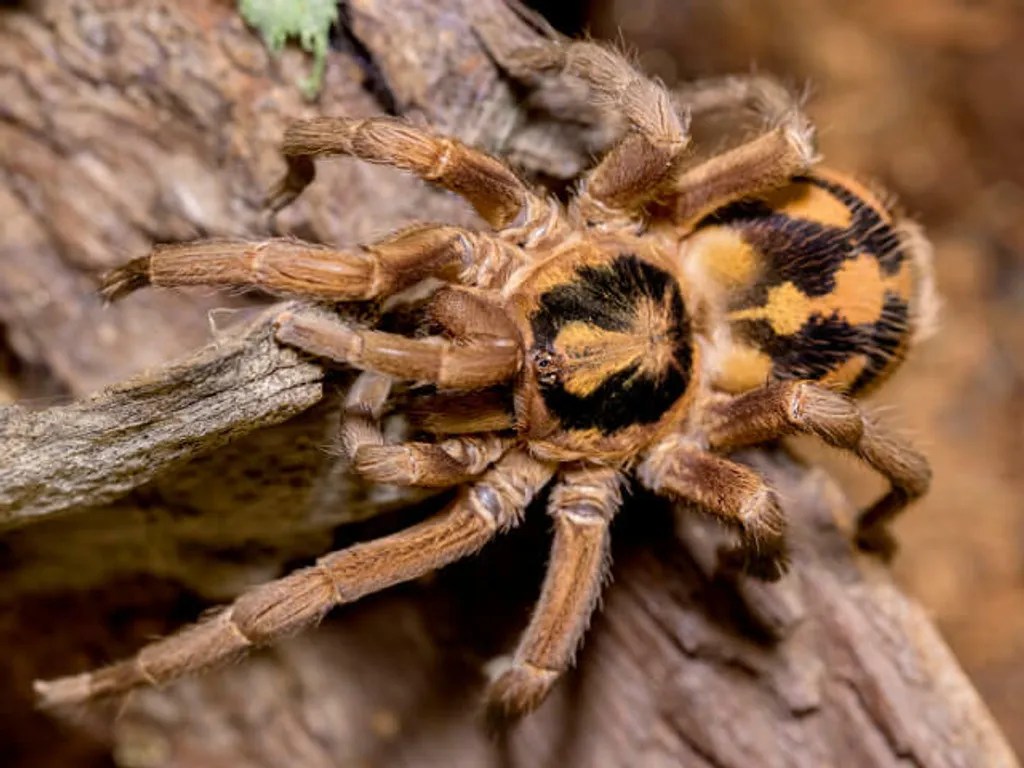
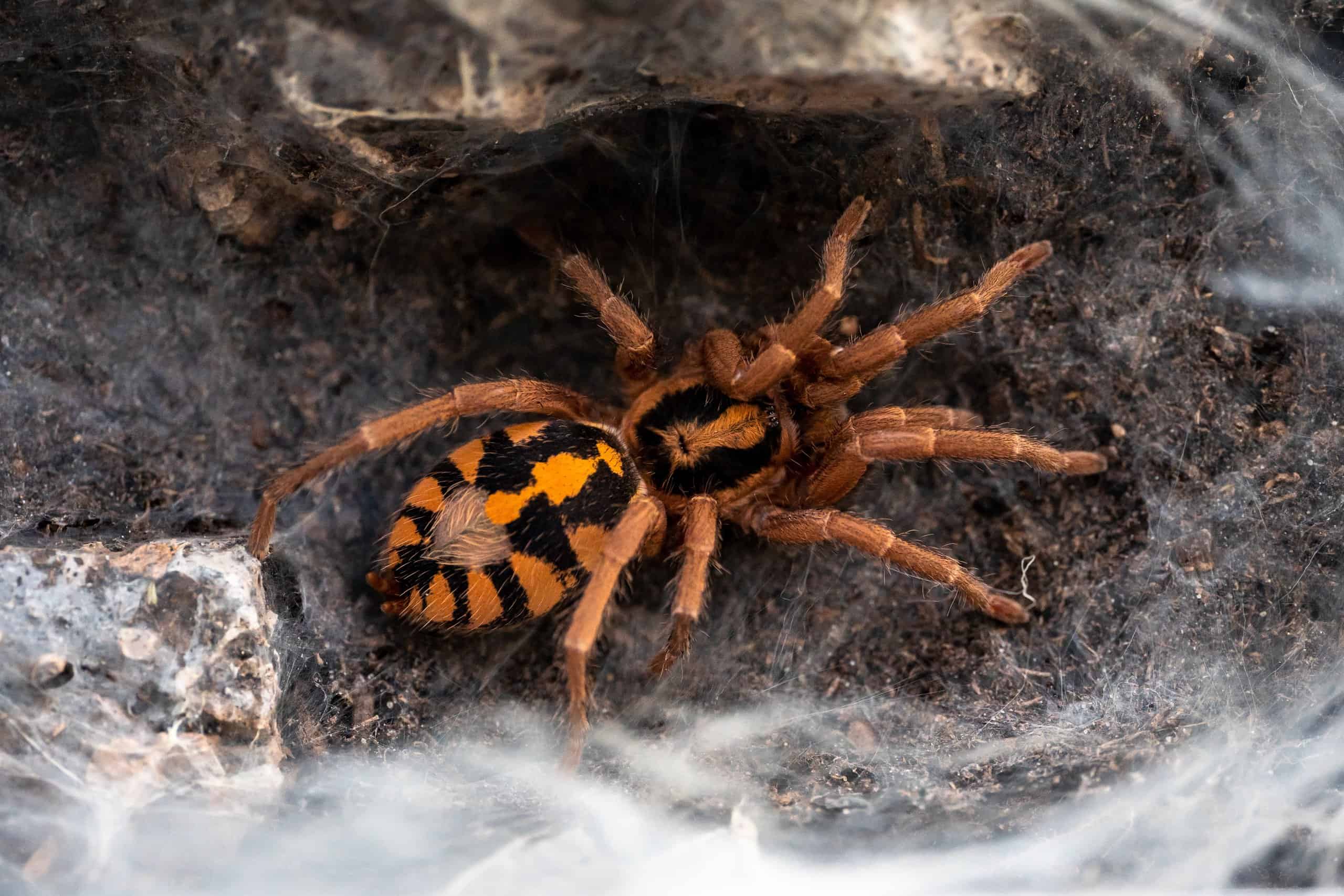
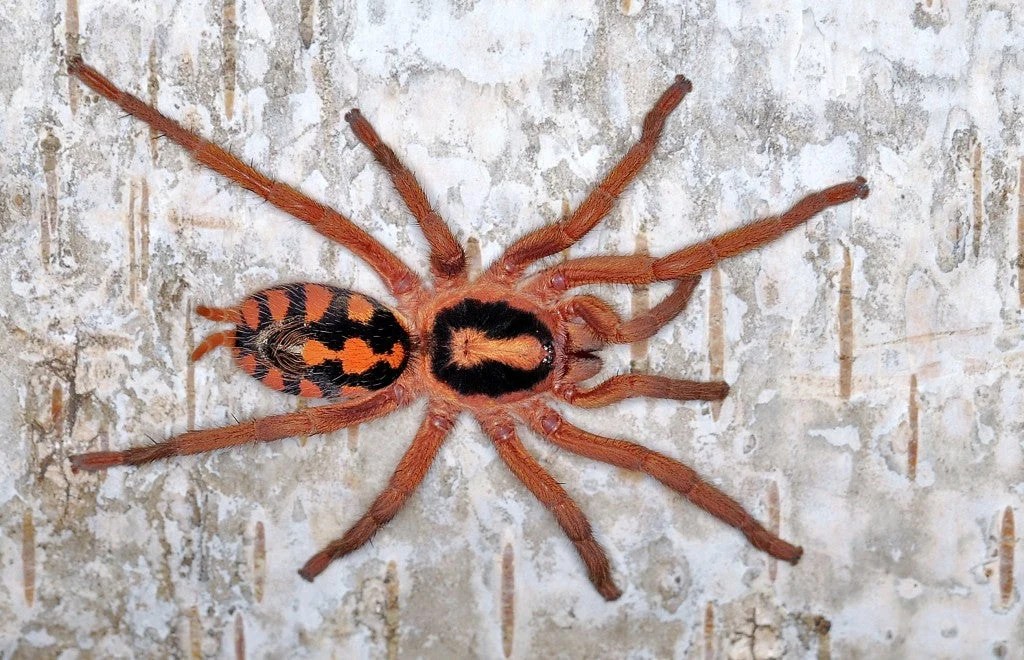
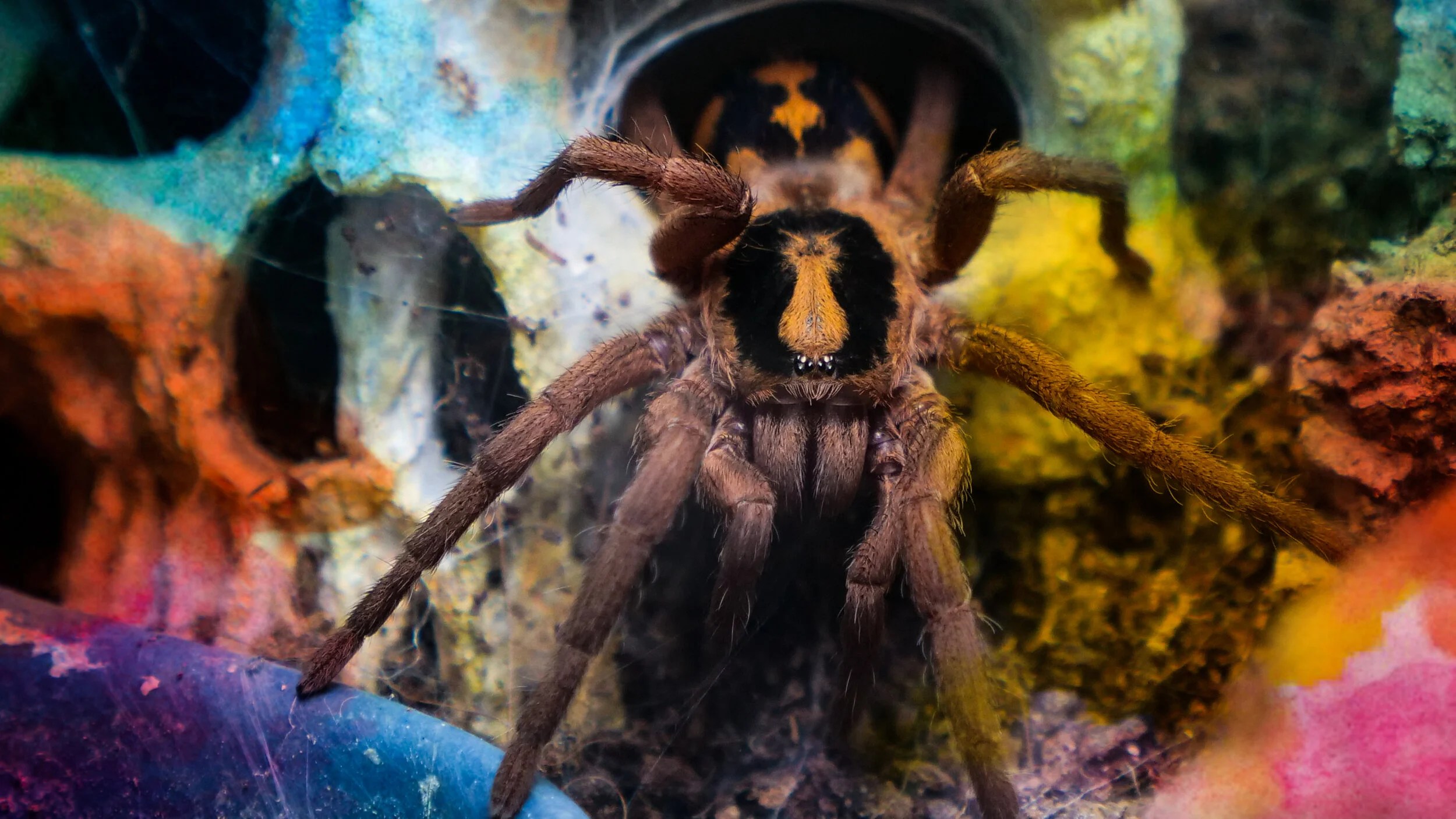
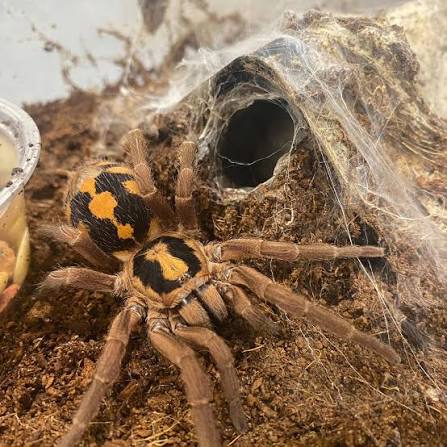
The Pumpkin Patch Tarantula (Hapalopus formosus, often traded as Hapalopus sp. “Pumpkin Patch”) is one of the most beloved dwarf tarantulas in the hobby. Named for the vibrant pumpkin-orange and jet-black jack-o’-lantern pattern spanning its abdomen, this pint-sized species combines striking contrast, active webbing behavior, and a voracious appetite into a compact package.
Quick Stats
| Feature | Details |
|---|---|
| Scientific Name | Hapalopus formosus (formerly often listed as Hapalopus sp. “Pumpkin Patch”) |
| Common Name | Pumpkin Patch Tarantula |
| Type | Terrestrial / Opportunistic Burrower / Heavy Webber |
| New World / Old World | New World |
| Growth Rate | Fast |
| Adult Size | 2.5 – 3.5 inches (6.5 – 9 cm) depending on morph (“Small” vs. “Large”) |
| Lifespan | Females: 8–10 years / Males: 3–4 years |
Natural Habitat & Temperament
- Origin: Colombia (tropical rainforest undergrowth).
- Behavior: Skittish, fast, and constantly active. While not aggressive, they will bolt quickly to their burrow when startled. They are opportunistic burrowers and heavy webbers, often constructing intricate silk mats and tunnels across the surface.
- Venom/Urticating Hairs: Mild venom (typical New World). They possess urticating hairs, but they rely primarily on lightning-fast speed to retreat rather than kicking hairs or displaying threat poses.
Enclosure Requirements
1. Housing Type
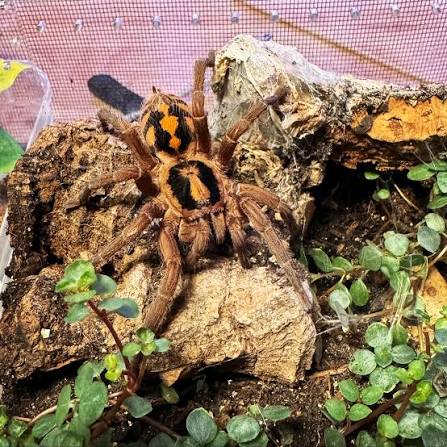
- Terrestrial: A small acrylic enclosure or nano terrarium (around 2 to 3 gallons for an adult; a 4x4x4 or 6x6x6-inch cube is typically ideal).
- Security & Escape Risk: Because they are a dwarf species, spiderlings (slings) are microscopic (under 1/4 inch) and can slip through standard vent holes or wire mesh. Use tight-fitting acrylic or deli containers with tiny pinhole ventilation for slings.
2. Substrate
- Type: A moisture-retentive blend of coco fiber, peat moss, and organic topsoil. Sphagnum moss can be mixed in to help regulate humidity.
- Depth: 2.5 to 4 inches. Slings and juveniles burrow extensively, while adults often construct semi-subterranean web-lined retreats.
- Moisture: Keep the lower substrate layer slightly moist while maintaining a dry top layer. They do not tolerate bone-dry conditions, but good cross-ventilation is essential to avoid stagnant air.
3. Decor & Hides
- Provide small pieces of cork bark flats or rounds positioned at an angle to create a starter hide.
- Add synthetic plants, small twigs, or moss clumps to serve as anchor points for their extensive webbing.
Environmental Conditions
- Temperature: 72°F – 80°F (22°C – 27°C). Standard room temperature is suitable, though warmer temperatures in the mid-to-high 70s encourage faster feeding and growth.
- Humidity: Moderate (65% – 75%).
- Maintenance: Keep one corner of the enclosure slightly damp by overflowing the water dish or dribbling water along the sides. Avoid heavy misting directly at the spider.
Feeding & Hydration
- Slings: Feed every 3–5 days. Slings are minuscule and thrive on flightless fruit flies (Drosophila melanogaster or hydei), pre-killed pinhead crickets, or severed mealworm/roach segments.
- Juveniles/Adults: Feed every 5–7 days. They have an aggressive feeding response and will readily take small to medium crickets, small Dubia nymphs, or red runner roaches.
- Water: Always provide a shallow water bottle cap or mini water dish. For slings, misting a drop of water onto a web strand or the enclosure wall provides accessible hydration without drowning risk.
Molting Process
- Signs of Premolt: The abdomen will swell, turn shiny, and darken significantly, obscuring some of the bright orange patches. The spider will usually refuse food and seal off the entrance to its web tunnel.
- Care: Ensure the enclosure maintains adequate ambient humidity to prevent stuck molts. Leave the spider undisturbed. Wait 4–6 days post-molt for juveniles and 7–10 days for mature adults before offering food to allow their delicate fangs to harden.
Pro Tip: In the hobby, H. formosus is frequently encountered under two hobby labels: “Pumpkin Patch Small” (maturing around 2–2.5 inches) and “Pumpkin Patch Large” (reaching closer to 3.5 inches). Both share identical husbandry requirements, so choose based on your preferred enclosure footprint!
To read my other Tarantula Species Spotlights, click HERE! To order my “Tarantula Keeper’s Log Book,” click on the book cover below!


Leave a comment