

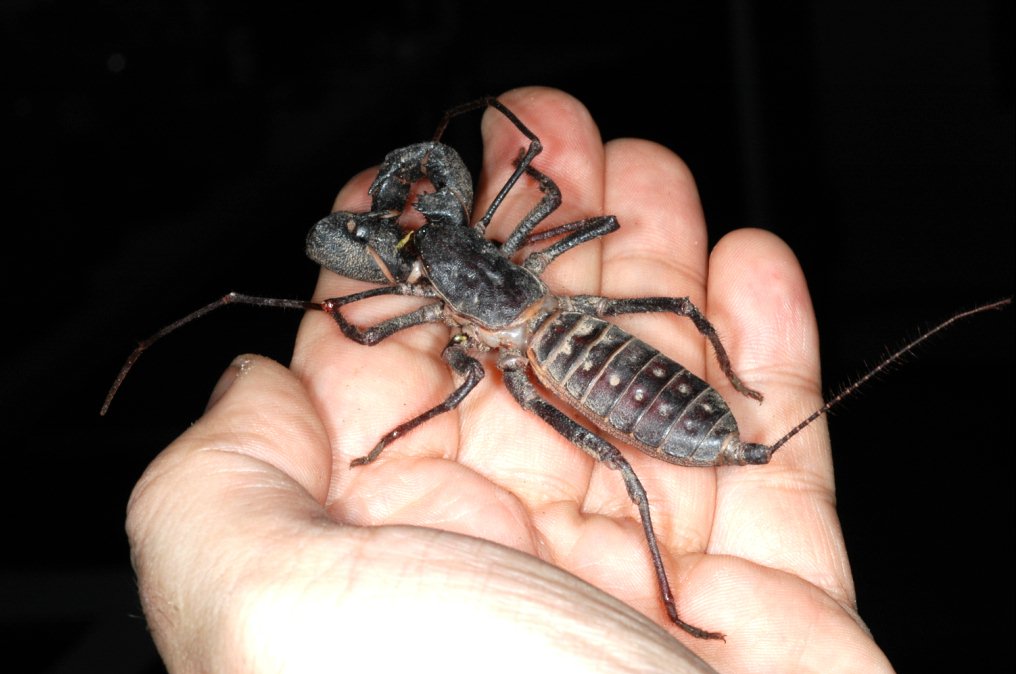
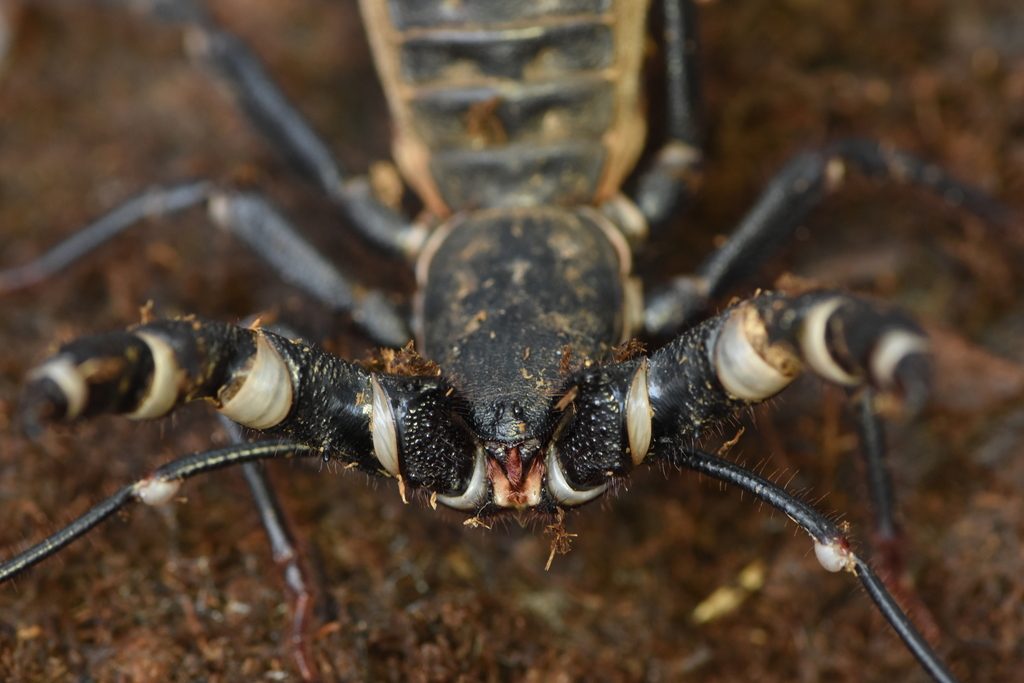
The Giant Vinegaroon (or Giant Whip Scorpion) is one of the most fascinating invertebrate pets you can keep. Prehistoric in appearance, these heavily armored arachnids earn their common name from their unique defense mechanism: the ability to spray a vinegar-like acetic acid compound from the base of their whip-like tail when threatened.
Quick Stats
| Feature | Details |
|---|---|
| Scientific Name | Mastigoproctus giganteus |
| Common Name | Giant Vinegaroon / Giant Whip Scorpion |
| Type | Terrestrial / Obligate Burrower |
| New World / Old World | New World (North America) |
| Growth Rate | Slow |
| Adult Size | 4 – 6 inches (10 – 15 cm) including tail |
| Lifespan | Females: 10–15 years / Males: 4–7 years |
Natural Habitat & Temperament
- Origin: Southern United States (Texas, New Mexico, Arizona) and Northern Mexico.
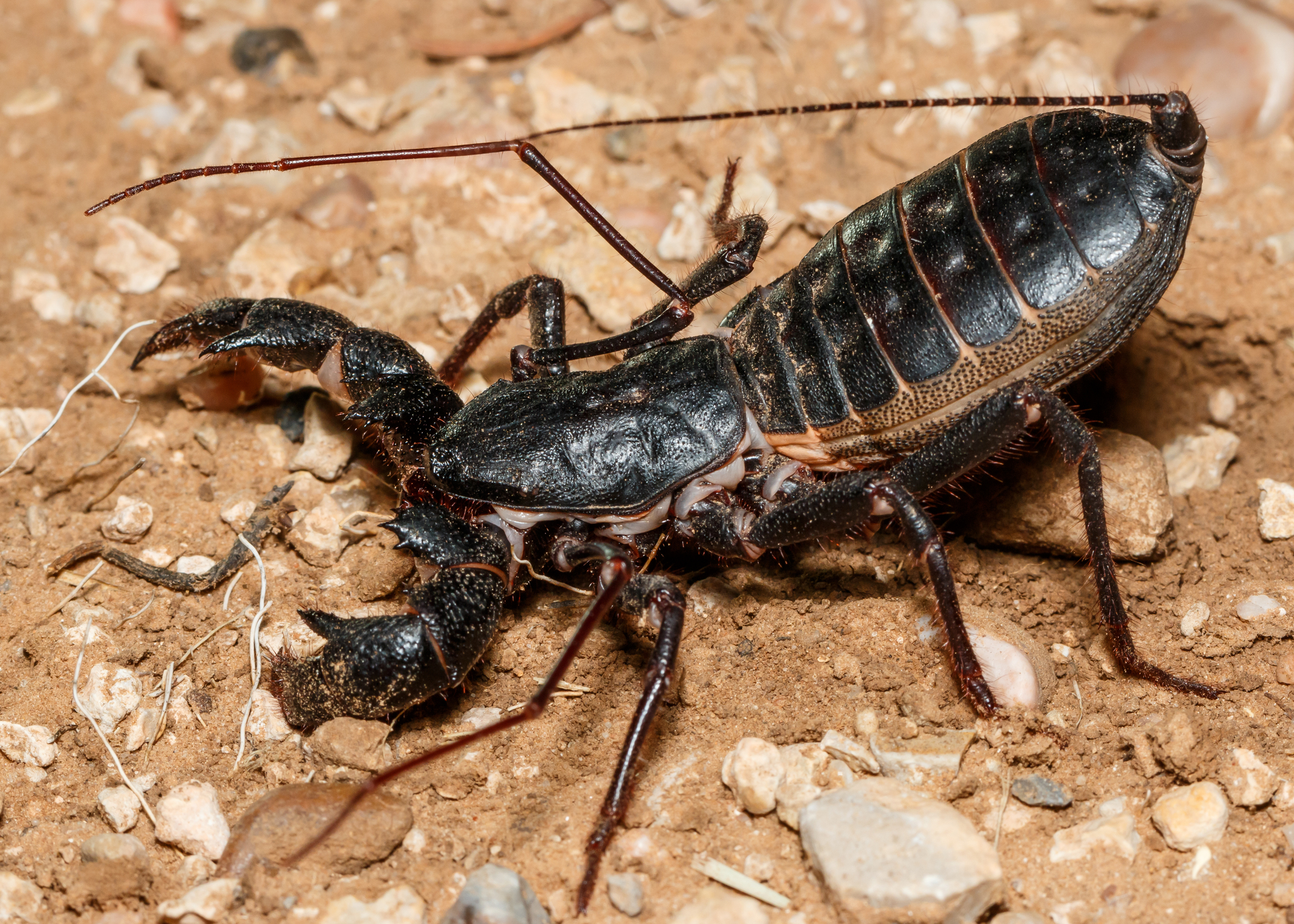
- Behavior: Generally docile and slow-moving, preferring to rely on camouflage and deep burrows. They use their long front legs as sensory feelers rather than for walking.
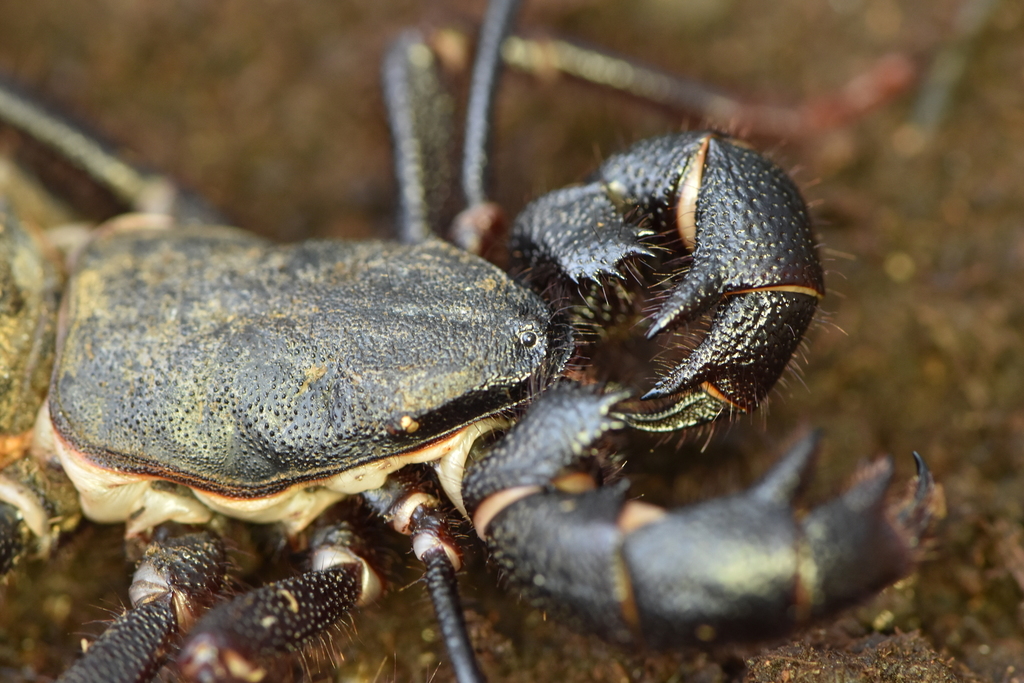
- Defensive Weapons: No venom and no sting. Instead, they pinch with heavy pedipalps (pincers) or aim a defensive spray containing 84% acetic acid (concentrated vinegar) from a gland at the base of their flagellum (tail). Keep spray away from your eyes and open cuts!
Enclosure Requirements
1. Housing Type
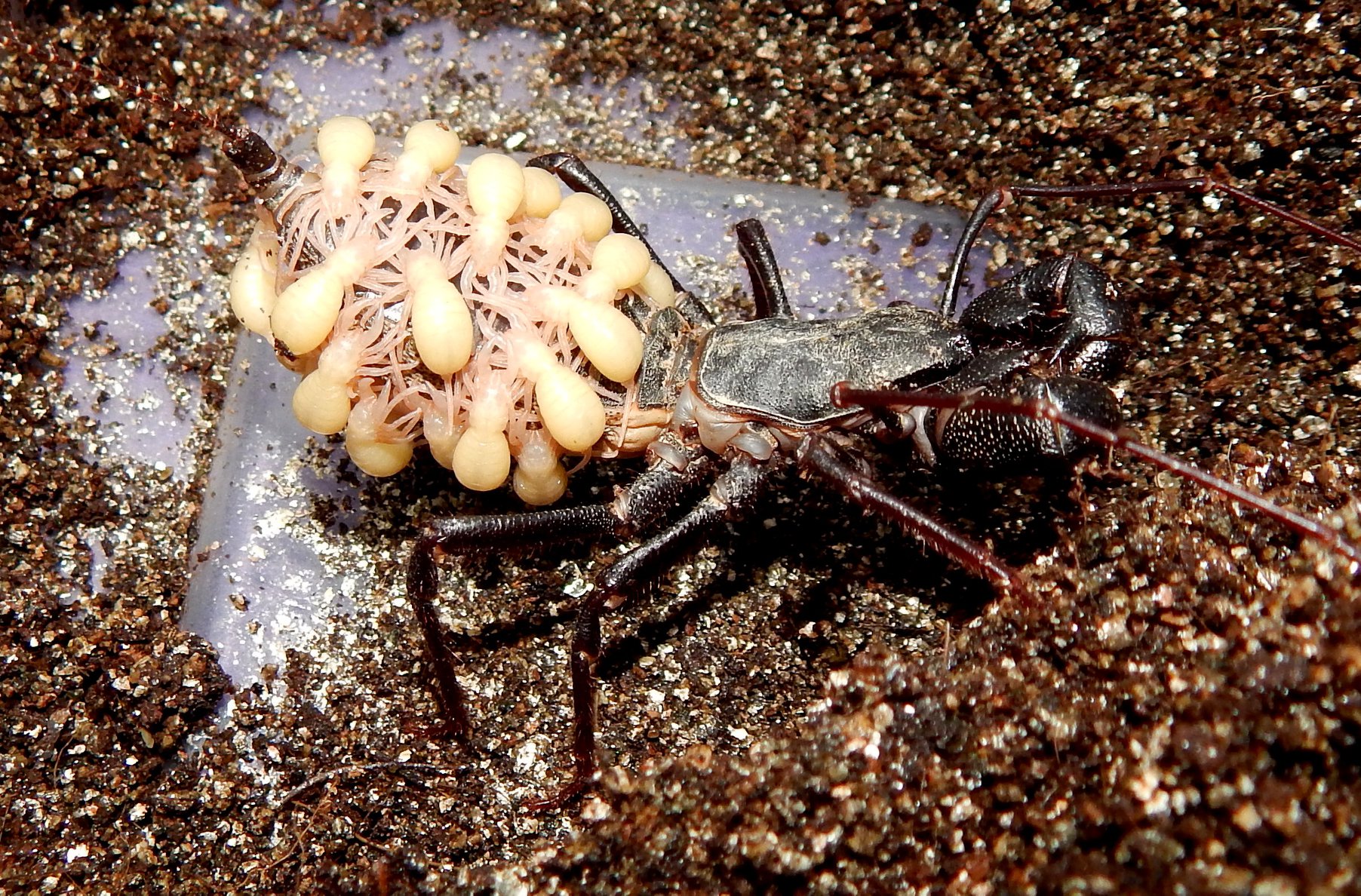
- Terrestrial: A standard 5 to 10-gallon glass enclosure or acrylic tank. Floor space and depth are essential.
- Security: Vinegaroons are surprisingly strong diggers and pushers; ensure the enclosure lid is heavily secured.
2. Substrate
- Type: A 50/50 mix of topsoil and coconut fiber with sand or clay to hold burrows.
- Depth: 6–8+ inches minimum. Unlike surface-dwelling tarantulas, vinegaroons must burrow to feel secure and molt safely.
- Moisture: Create a moisture gradient—keep the lower layers deep in the substrate damp, while keeping the top layer relatively dry.
3. Decor & Hides
- Provide a starter burrow using cork bark or flat slate rocks.
- Avoid heavy stones that could collapse down into a subterranean chamber.

Environmental Conditions
- Temperature: 75°F – 85°F. They appreciate a warm side of the enclosure to digest food effectively.
- Humidity: Moderate (60% – 70%).
- Maintenance: Ensure the deeper substrate layers retain moisture. If the soil dries out completely, their burrows will collapse and they may struggle during molts.
Feeding & Hydration
- Nymphs/Juveniles: Feed every 5–7 days. Small crickets, roach nymphs, or mealworms.
- Adults: Feed every 10–14 days. Crickets, Dubia roaches, or superworms. They capture prey by crushing it between their powerful pedipalps.
- Water: Always provide a small, shallow water dish. Vinegaroons drink frequently from open water sources.
Molting Process
- Signs of Premolt: Vinegaroons seal themselves inside their underground burrows for months prior to a molt.
- Care: Do not dig them up! Sealing their burrow for 3 to 6 months is completely normal behavior. Ensure the enclosure substrate stays lightly moist so the underground chamber does not dry out.
Pro Tip: Vinegaroons use their elongated front legs strictly as “antennae” to feel around and detect vibrations. Don’t be alarmed when you see them waving two long legs in the air—they’re just mapping out their surroundings!
 davethebugguy.org
Leave a comment