
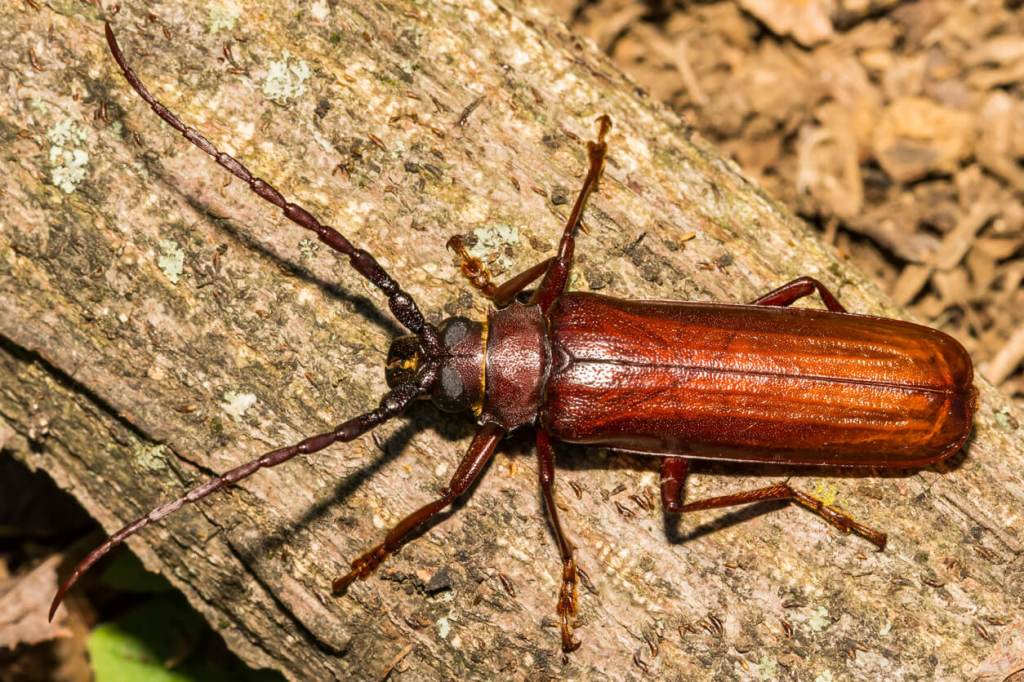
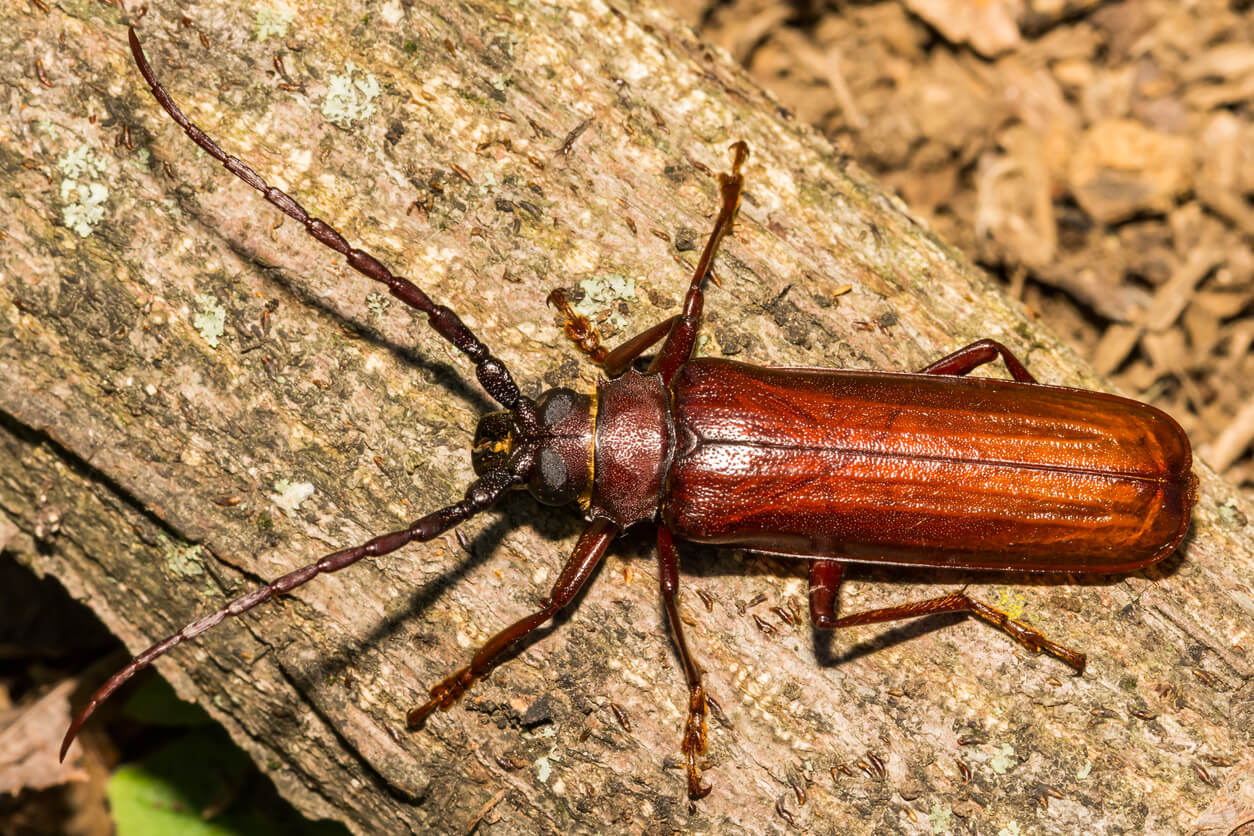
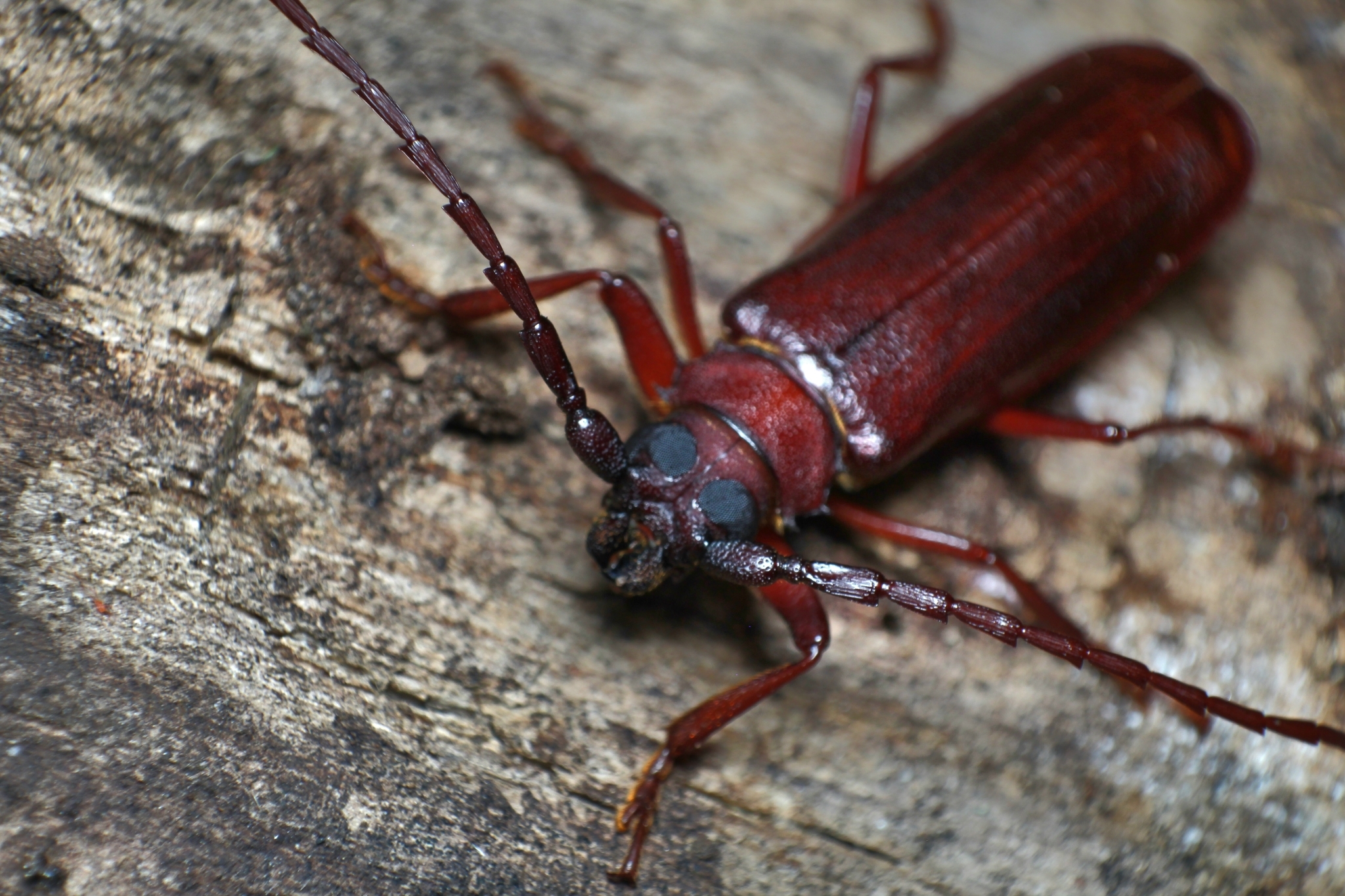
The brown prionid (Orthosoma brunneum), also known as the brownish-root borer, is a prominent member of the longhorn beetle family (Cerambycidae) native to eastern and central North America. Recognized by its elongated, mahogany-colored body and impressive size, it plays an important—and sometimes misidentified—role in forest ecosystems as a primary decomposer of wood.

Taxonomy and Name Origins
Orthosoma brunneum holds a unique evolutionary position: it is monotypic, meaning it is the sole surviving species in the genus Orthosoma.
- Family: Cerambycidae (Longhorn beetles)
- Subfamily: Prioninae
- Genus: Orthosoma
- Etymology: The generic name Orthosoma derives from Greek, meaning “straight body,” which highlights the remarkably parallel sides of the beetle’s hardened wing covers (elytra). The specific epithet brunneum comes from the Latin word for “brown”.
Anatomical & Behavioral Characteristics
Physical Appearance
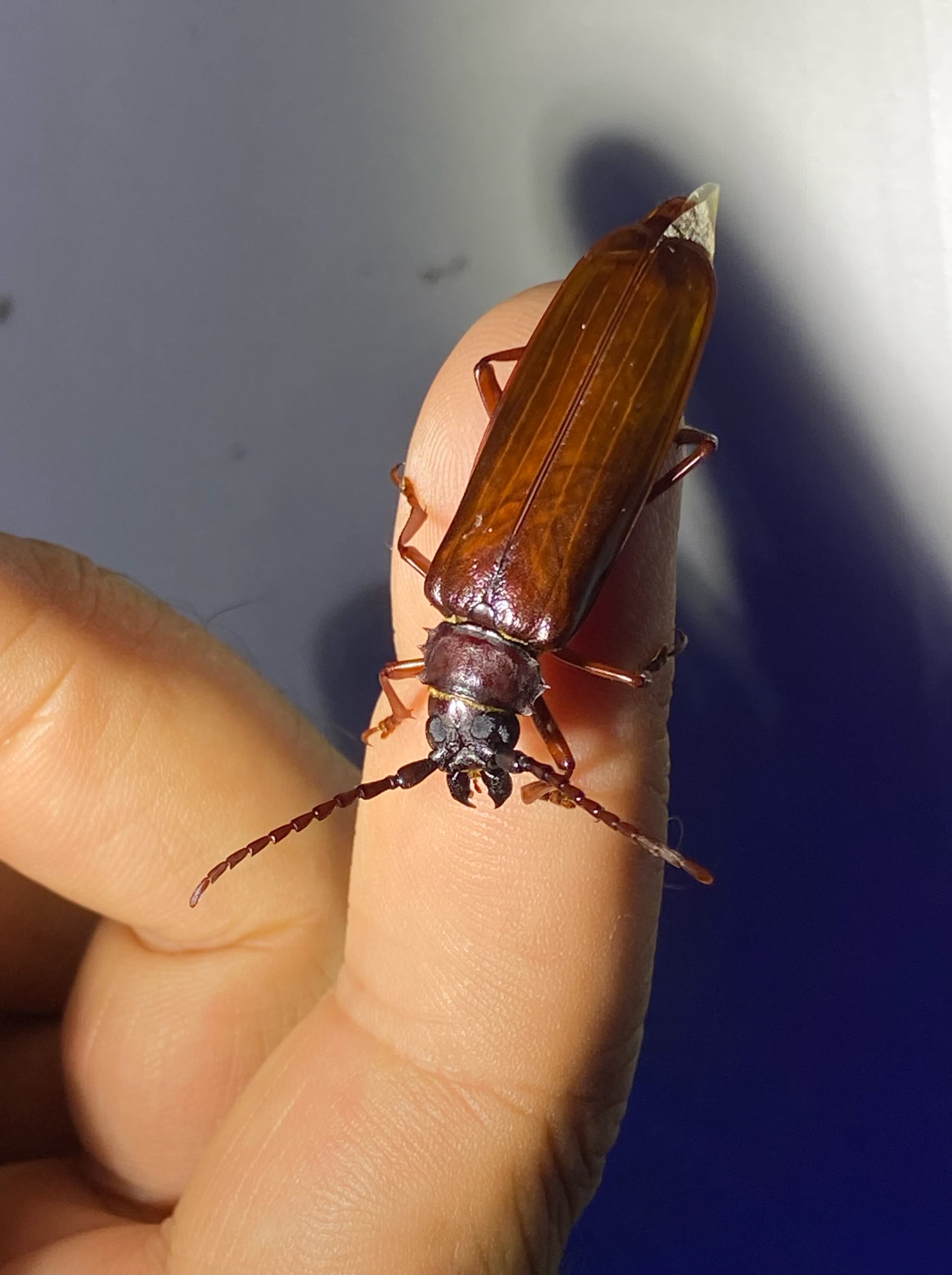
- Adult Size: Typically ranges from 2.5 to 5.0 cm (1.0 to 2.0 inches) in length.
- Coloration: Shiny reddish-brown to dark chestnut mahogany.
- Structure: Distinctly flattened and elongated, with nearly parallel side margins.
- Antennae: Long, multi-segmented antennae typical of cerambycid beetles, extending past the middle of the body.
- Mouthparts: Strong, forward-facing mandibles capable of chewing through tough bark and wood fibers.
Acoustic Defense System
When handled or threatened, Orthosoma brunneum can produce a audible squeaking or chirping sound. This stridulation occurs when the beetle rubs specialized ridges on its hind legs (femora) against the serrated edges of its elytra.
Life Cycle and Forest Ecology
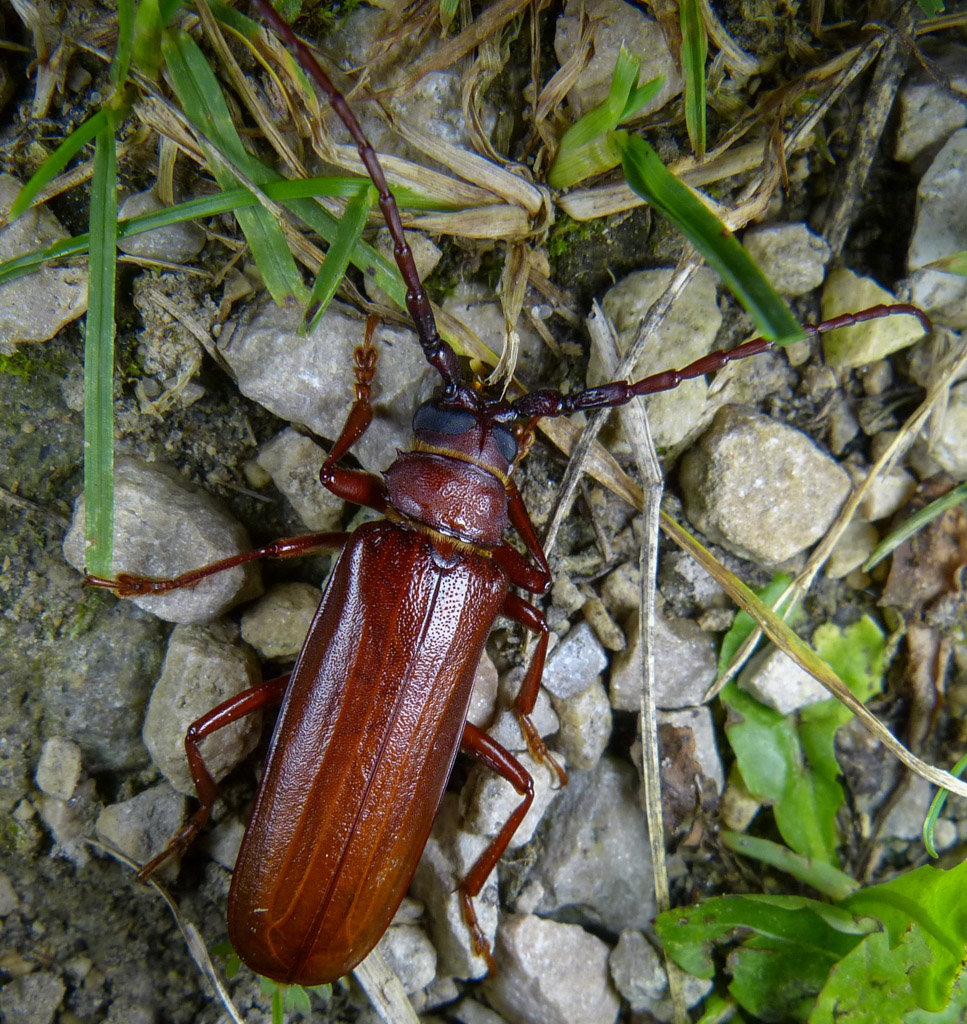
The life cycle of Orthosoma brunneum is closely tied to decaying wooden substrates.
1. Egg Laying
From mid-summer to early autumn, female beetles seek out moist, decaying wood—particularly hardwoods (like oak, maple, hickory, and ash) as well as some conifers. Eggs are deposited deep within cracks and bark fissures where moisture content remains high.
2. Larval Development
The larvae, commonly known as round-headed wood borers, are thick, cream-colored grubs that can reach over 5 cm in length. Over a development period lasting 2 to 3 years, they bore extensive tunnels through damp heartwood and sapwood, consuming organic matter alongside wood-decaying fungi.
3. Pupation and Emergence
Pupation takes place within a designated chamber packed with fibrous wood shavings near the surface of the timber. Adults emerge primarily during warm summer nights between May and November.
Ecological Significance vs. Pest Status
| Aspect | Description |
|---|---|
| Forest Ecosystem Role | Essential decomposer. By breaking down decaying trees and logs, larvae accelerate nutrient cycling and help return carbon and organic matter back to the soil. |
| Healthy Tree Impact | Extremely minimal. Unlike invasive wood borers, O. brunneum rarely attacks healthy, living trees, preferring wood that is already compromised, dying, or decaying. |
| Structural Damage | Occasional pest of untreated structural wood. If moisture or leaks are present, larvae can bore into structural timbers, outdoor decks, utility poles, and railroad ties. |
| Indoor Sightings | Adults are strongly phototactic (attracted to outdoor porch or building lights) and often wander into homes through open doors or windows during summer evenings. They do not reproduce indoors unless structural rot is present. |
 davethebugguy.org
Leave a comment