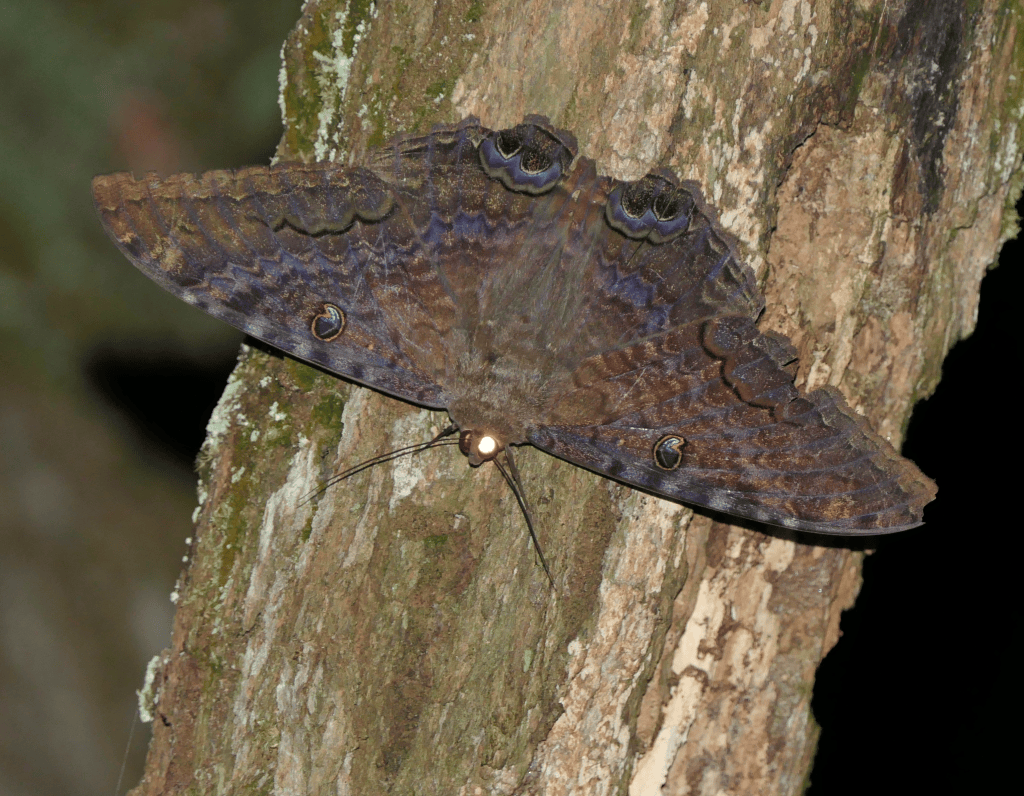
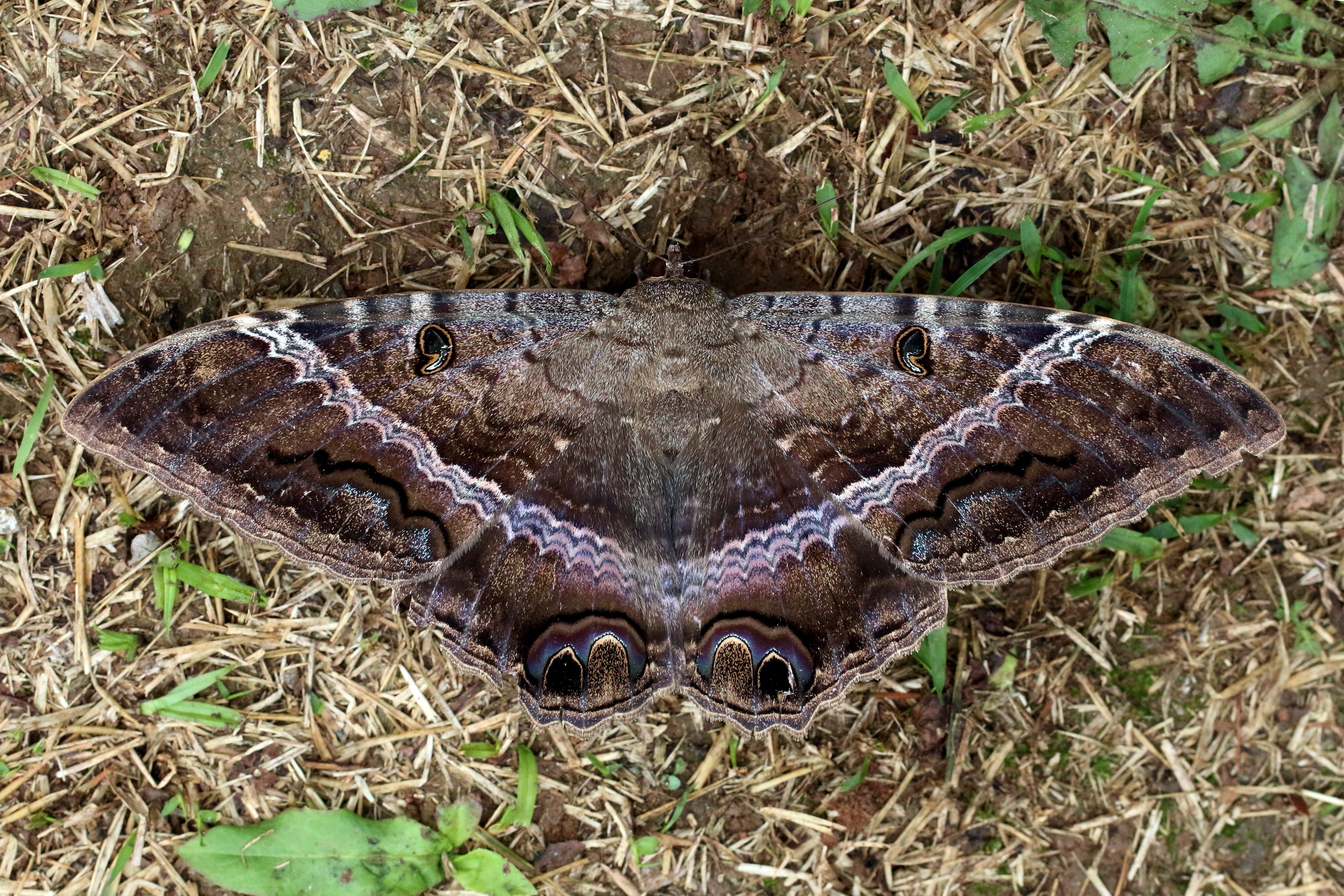
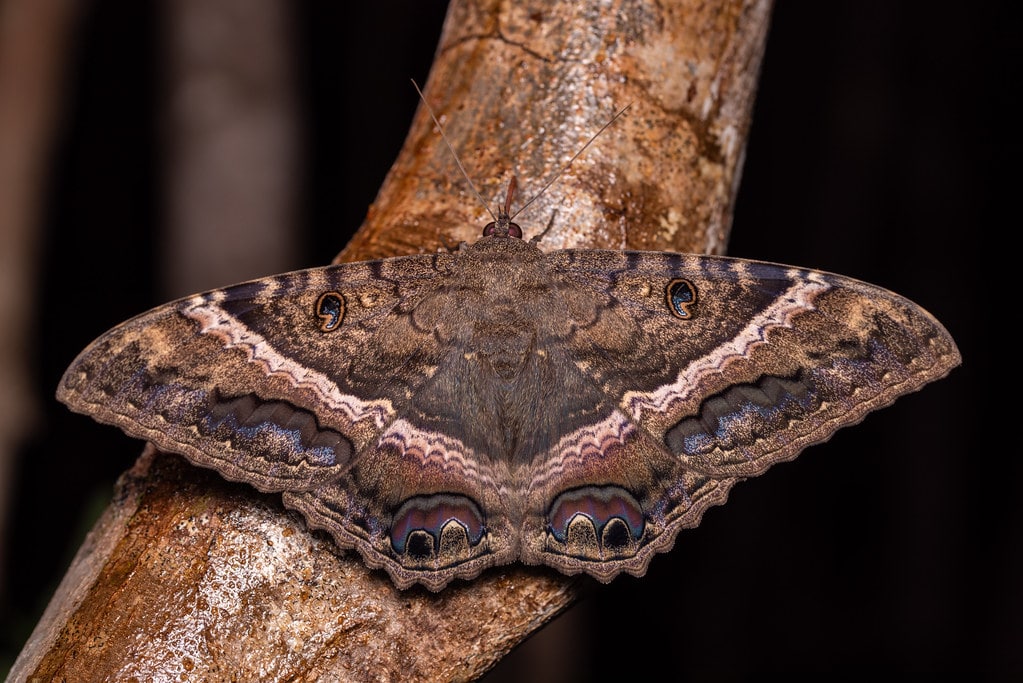
Ascalapha odorata, commonly known as the Black Witch moth, is one of the largest insects in the Americas and the heavyweight champion of the family Erebidae. With a wingspan that can exceed 18 to 20 cm (7 to 8 inches), it is frequently mistaken for a bat or a small bird when startled from daytime roosts beneath eaves, rock crevices, or thick forest canopies.
Taxonomy and Physical Characteristics
Originally described by Carl Linnaeus in 1758, Ascalapha odorata was long classified under Noctuidae before modern phylogenetic revisions placed it firmly within Erebidae (subfamily Erebinae).
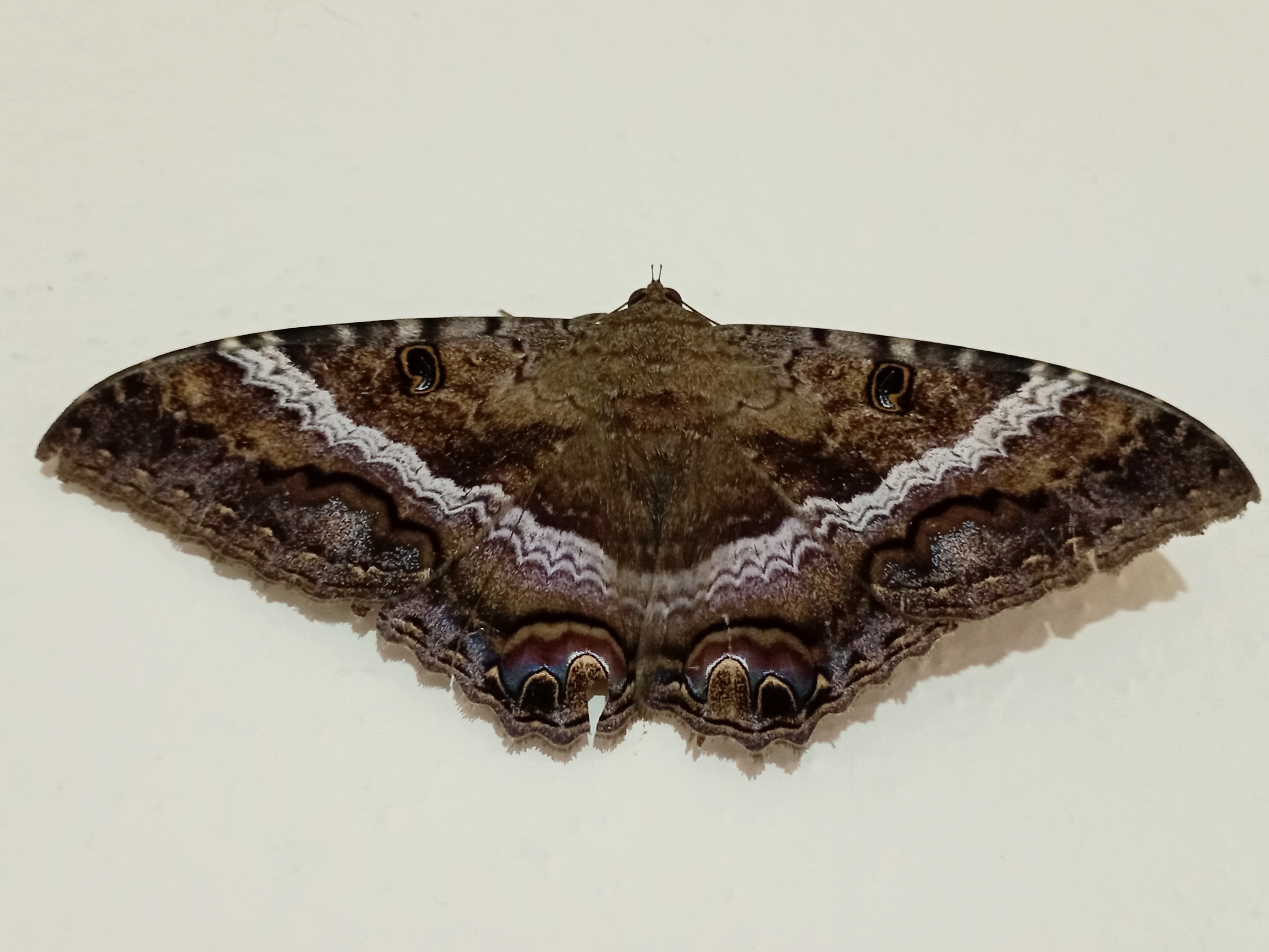
The species displays pronounced sexual dimorphism:
- Females: Typically larger and characterized by a bold, pale white to lilac-pink median band running transversely across both forewings and hindwings.
- Males: Darker overall, ranging from deep charcoal to chocolate brown, with subtle mottled patterning and faint iridescent purple-to-pink iridescence visible under angled light.
- Shared Features: Both sexes feature a distinctive, comma-shaped or numeral-9 eyespot on the apex of each forewing, serving as an antipredator distraction mechanism against birds and small mammals.
| Attribute | Description |
|---|---|
| Classification | Order Lepidoptera, Family Erebidae, Genus Ascalapha |
| Wingspan | 16–20 cm (6.3–7.9 in) |
| Native Range | Neotropics (Central America, Mexico, Caribbean, northern South America) |
| Flight Habit | Strictly nocturnal; strong, erratic flight pattern |
| Adult Diet | Fermenting fruit, tree sap, rotting matter (non-nectar feeding) |
Life Cycle and Ecology
Unlike Saturniid giant silkmoths, which lack functional mouthparts as adults and live only a few days, Ascalapha odorata possesses a fully developed proboscis and can live for several months, sustaining itself primarily on the sugars of overripe, fermenting fruit and weeping tree wounds.
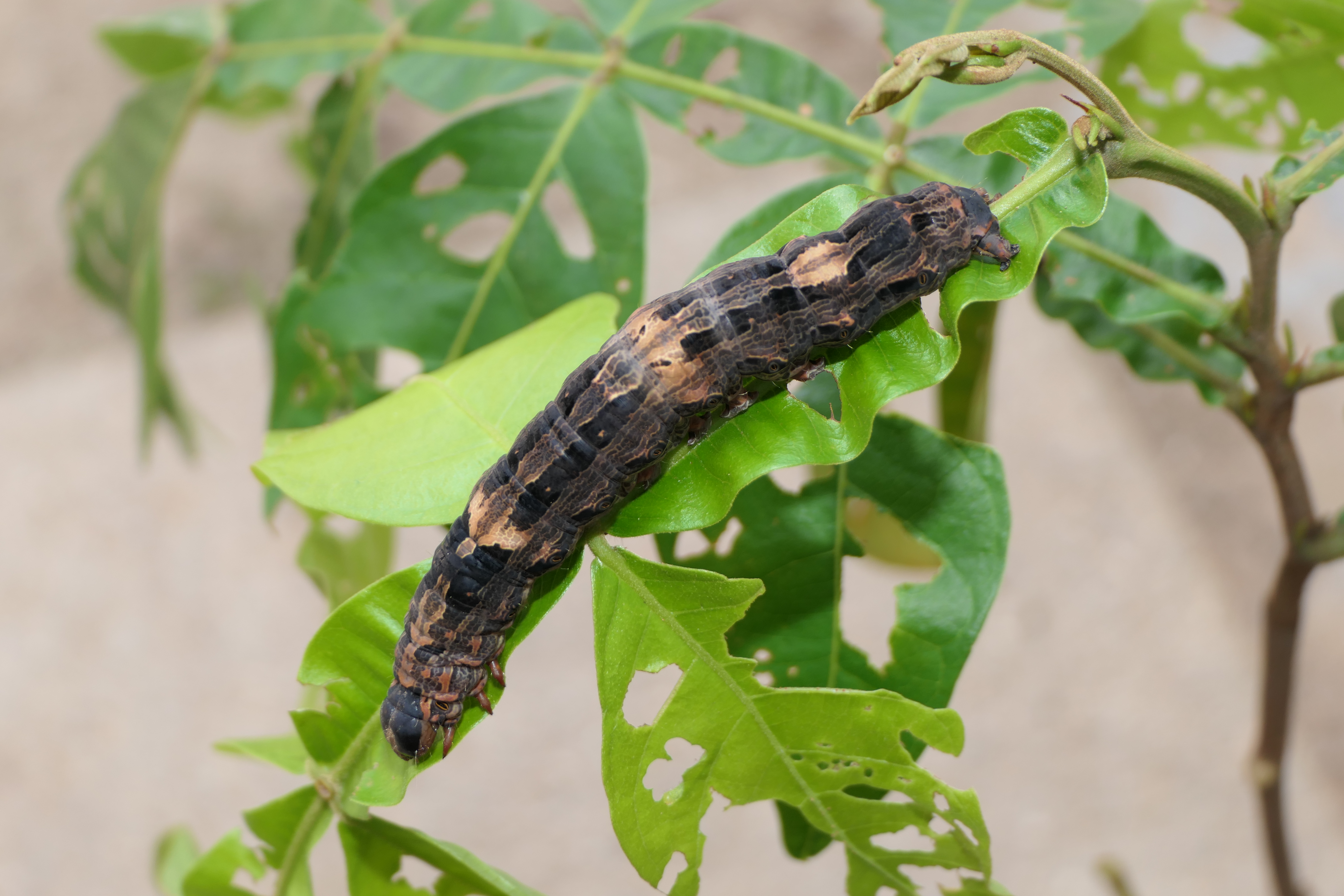
- Larvae: The caterpillars reach lengths of 7 to 9 cm. They are smooth, cylindrical, and mottled in shades of gray, brown, and black, mimicking lichen-covered bark. Larvae are nocturnal defoliators that feed primarily on woody legumes (Fabaceae), including mesquite (Prosopis), acacia (Acacia), monkeypod (Albizia saman), and leadtree (Leucaena).
- Pupation: When fully mature, the larva descends to the leaf litter or loose soil, spinning a sparse silk cocoon interwoven with debris where it pupates into a glossy, dark mahogany chrysalis.

The Great Northward Dispersal
While breeding populations are resident year-round throughout the tropical and subtropical Americas (from Brazil through northern Mexico, the Caribbean, and south Texas/Florida), Ascalapha odorata is famous for its massive summer migration.
Beginning with the onset of the Mexican monsoon season in late spring and early summer, tens of thousands of adults fly northward. Aided by prevailing south-to-north wind currents, stray individuals routinely turn up across the midwestern and northeastern United States, with documented records reaching as far north as Ontario, Quebec, Alaska, and even offshore ocean vessels. Because freezing winter temperatures kill all developmental stages, these northern wanderers represent a terminal reproductive sink rather than an expanding permanent range.
Folklore and Cultural Lore
Few insects have accumulated as rich—and spooky—a body of mythology across the Western Hemisphere:
- Mexico & Mesoamerica: Known in Nahuatl tradition as mictlanpapalotl (butterfly of the underworld) and in modern Spanish as mariposa de la muerte. Popular superstition holds that if a Black Witch enters a home, it portends illness, bad luck, or the death of an occupant.
- The Caribbean & South America: In Jamaica, it is known as the “Batwing” or “Duppy Bat” (duppy meaning a wandering ghost or malevolent spirit). In Brazil, it carries the moniker mariposa-bruxa.
- Texas & Northern Mexico: A more cheerful regional subversion exists along the border: if a Black Witch lands above your front door, folklore claims you are destined to win the lottery. In Hawaii, where the moth became naturalized in the 20th century, it is affectionately viewed as an ancestor’s spirit returning to say farewell.


Leave a Reply