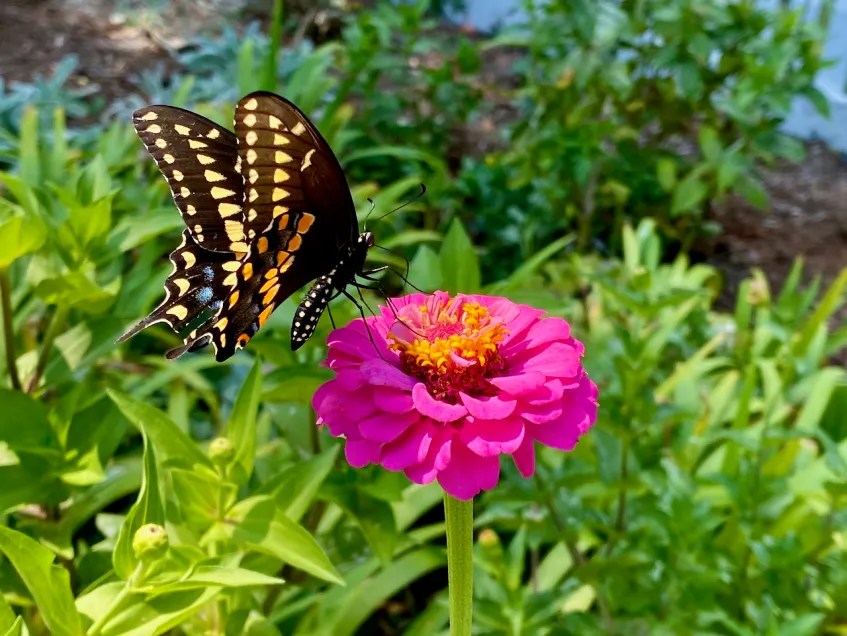
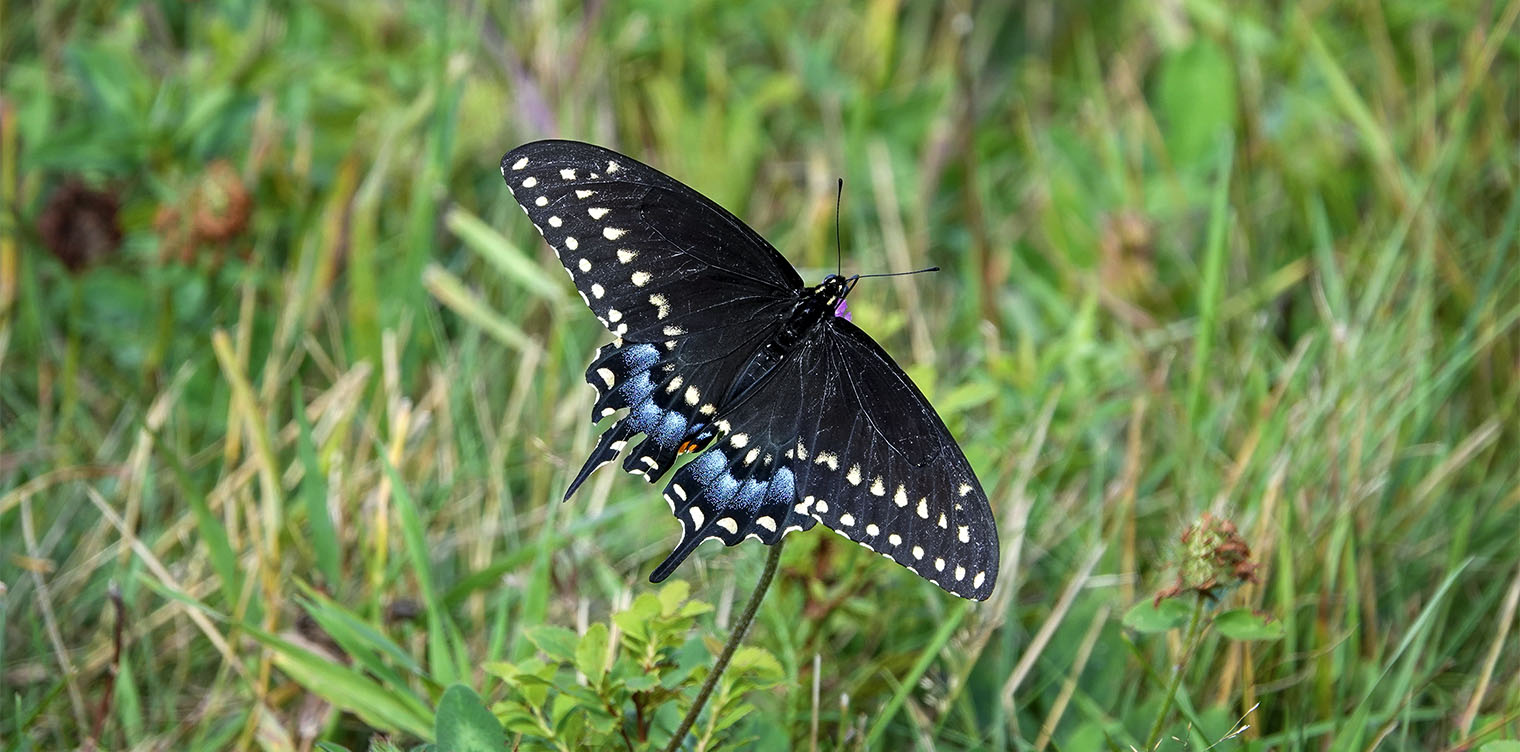
The Black Swallowtail, scientifically designated as Papilio polyxenes (frequently referenced as the Eastern Black Swallowtail), ranks among the most recognizable and widespread butterflies in the Americas. Belonging to the family Papilionidae, this striking pollinator is celebrated for its graceful flight, pronounced sexual dimorphism, chemical defenses, and seamless adaptation to both wild landscapes and suburban kitchen gardens.
Identification: Contrast and Mimicry
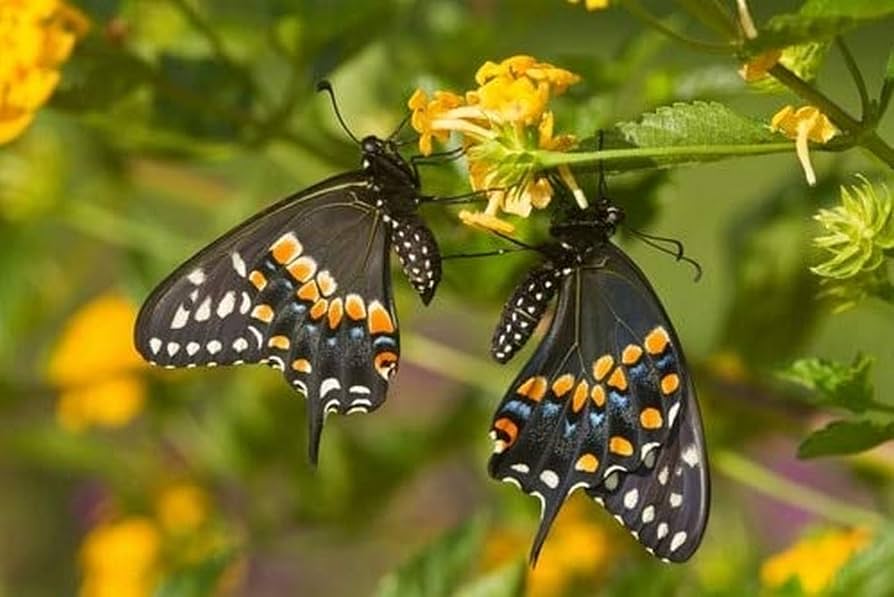
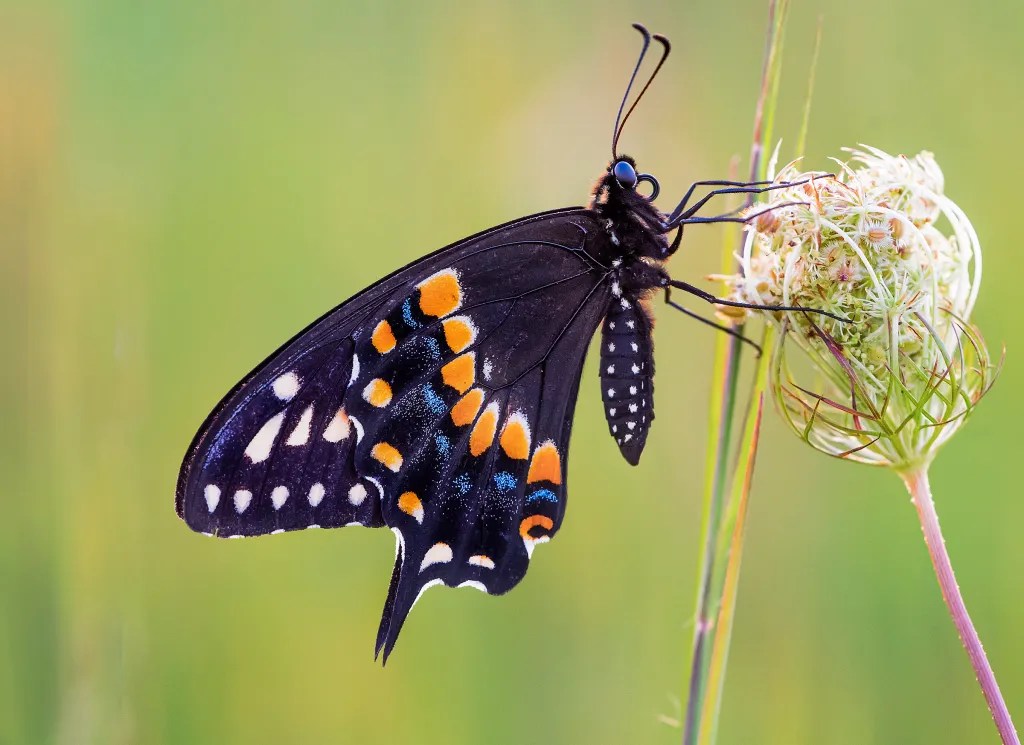
Adult Black Swallowtails exhibit a wingspan ranging from 2 ¾ to 4 ¼ inches (6.9 to 11 cm). Both sexes feature deep black dorsal surfaces bordered by two rows of spots and trailing “tails” on the hindwings, accompanied by an orange-and-black eyespot at the inner hindwing margin. However, sexual dimorphism creates clear distinctions:
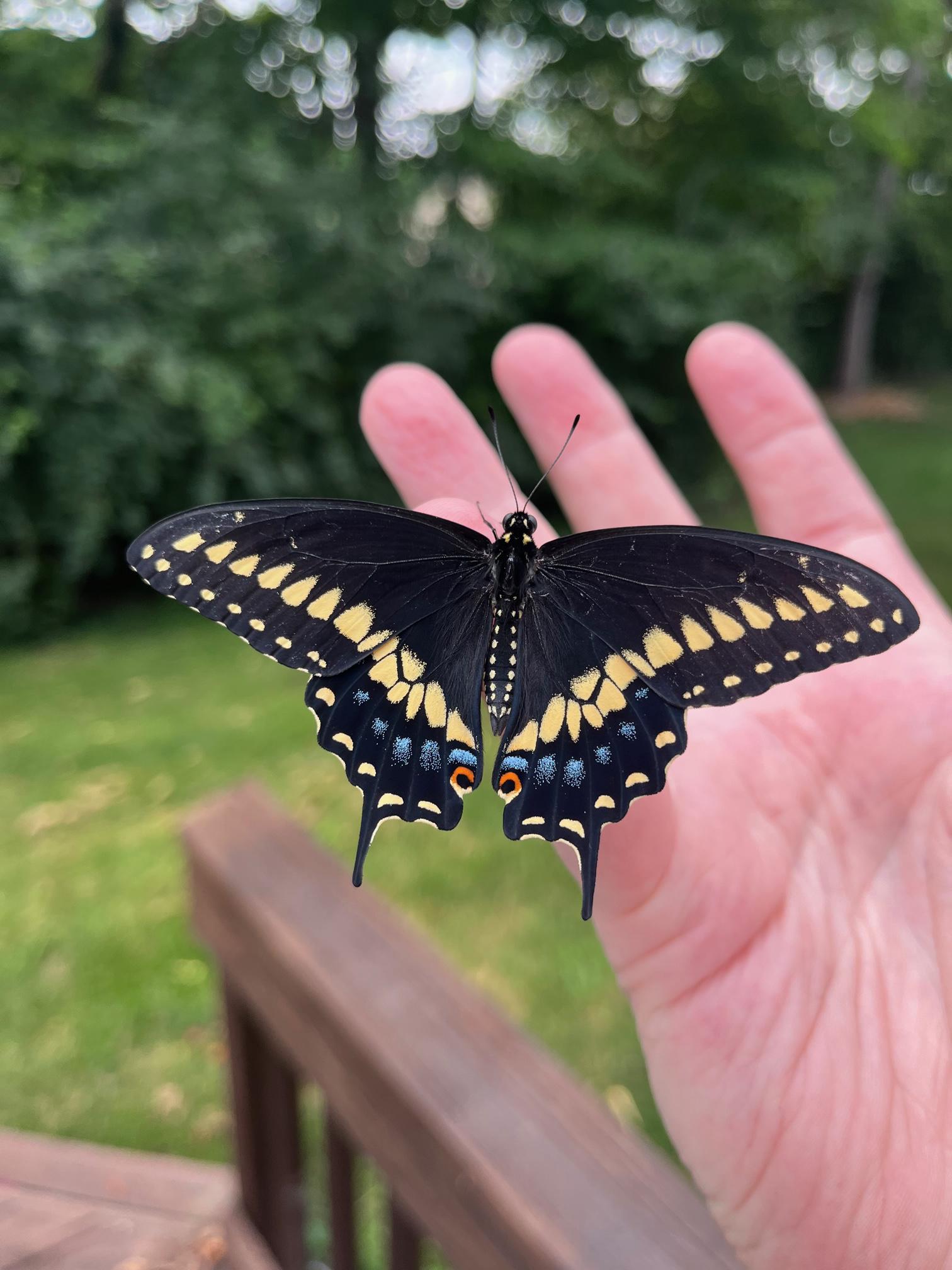
- Males: The dorsal surface is marked by a prominent, bold submarginal band of bright yellow spots spanning the forewings and hindwings. A lighter dusting of blue scales sits between the yellow bands on the hindwing.
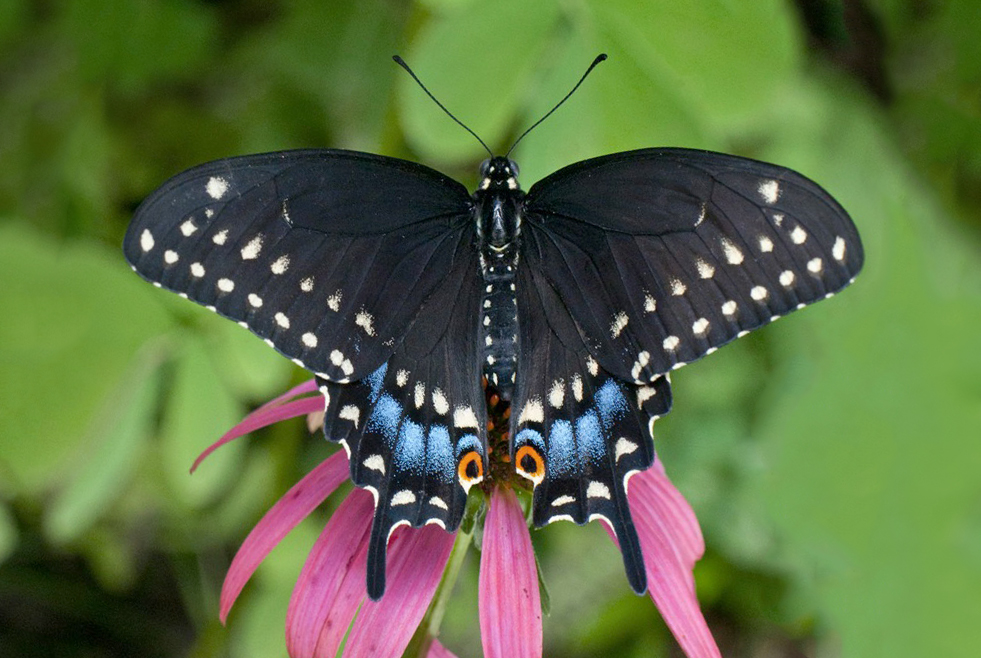
- Females: Typically larger than males, females display reduced, pale yellow spots along the margins. In contrast, the hindwings feature a vibrant, iridescent wash of powdery blue between the spot rows.
The female’s pattern functions as a classic example of Batesian mimicry. By closely resembling the distasteful, toxic Pipevine Swallowtail (Battus philenor), the female gains passive protection from avian predators.
Habitat and Distribution: Open Vistas and Suburbia
Unlike canopy-dwelling or deep-forest species, Papilio polyxenes is fundamentally an open-country butterfly. It readily populates:
- Open Landscapes: Sunny meadows, open fields, prairies, pastures, roadsides, and marsh edges.
- Cultivated Spaces: Agricultural fields, suburban backyards, community plots, and herb gardens where host plants thrive.
Geographically, the species spans across eastern and central North America—from southern Canada down to the Gulf Coast—extending west toward the Rocky Mountains and southward through Mexico, Central America, and northern South America. Oklahoma officially honors the Black Swallowtail as its state butterfly.
Life Cycle: From Parsley Worm to Winged Adult
Papilio polyxenes produces multiple broods throughout its range, typically completing two to three generations annually between spring and late autumn.
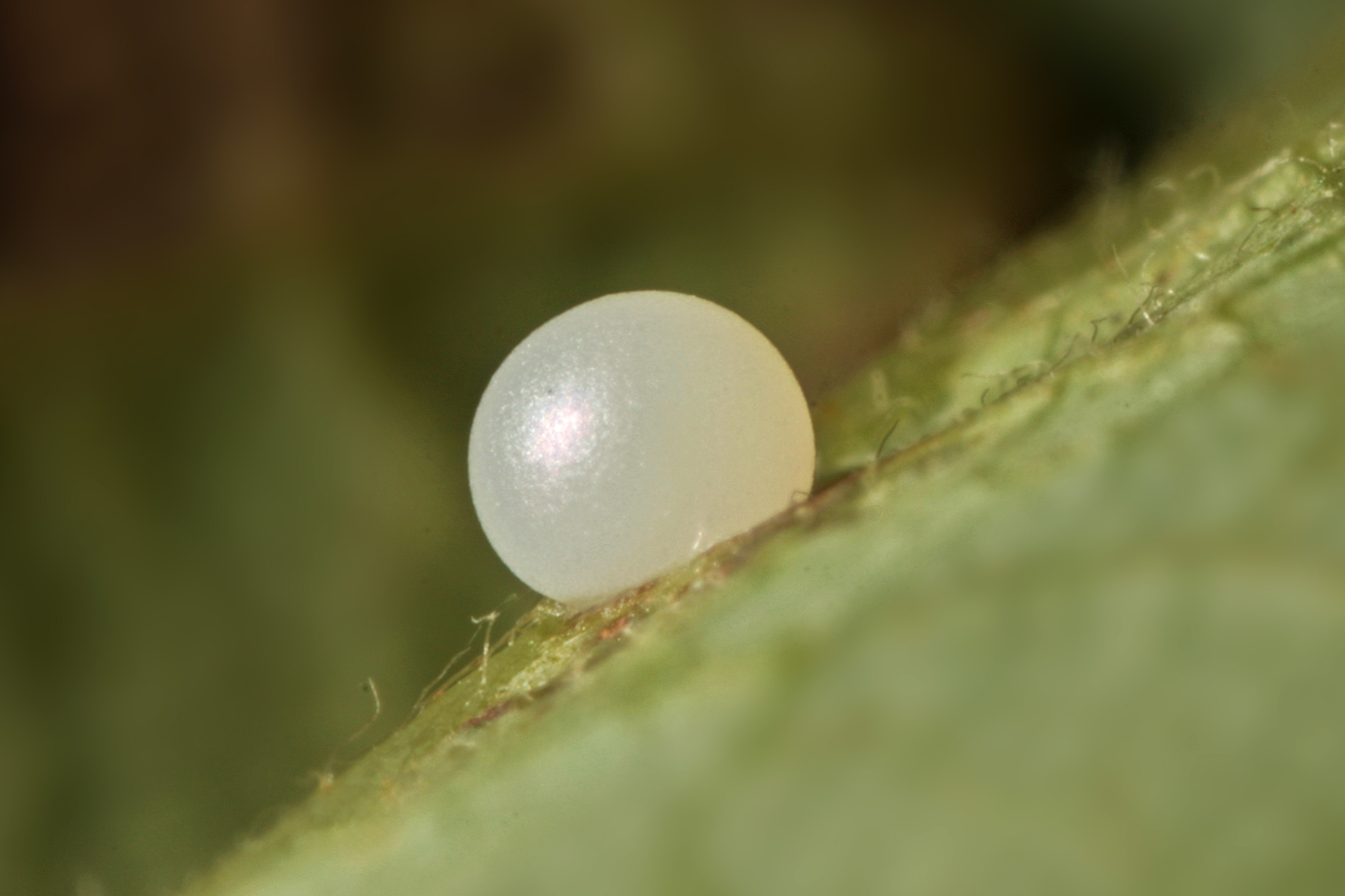
- Eggs: Females lay spherical, pale yellow eggs singly on the young foliage and flower heads of host plants. The eggs darken to a muted gray-brown shortly before hatching.
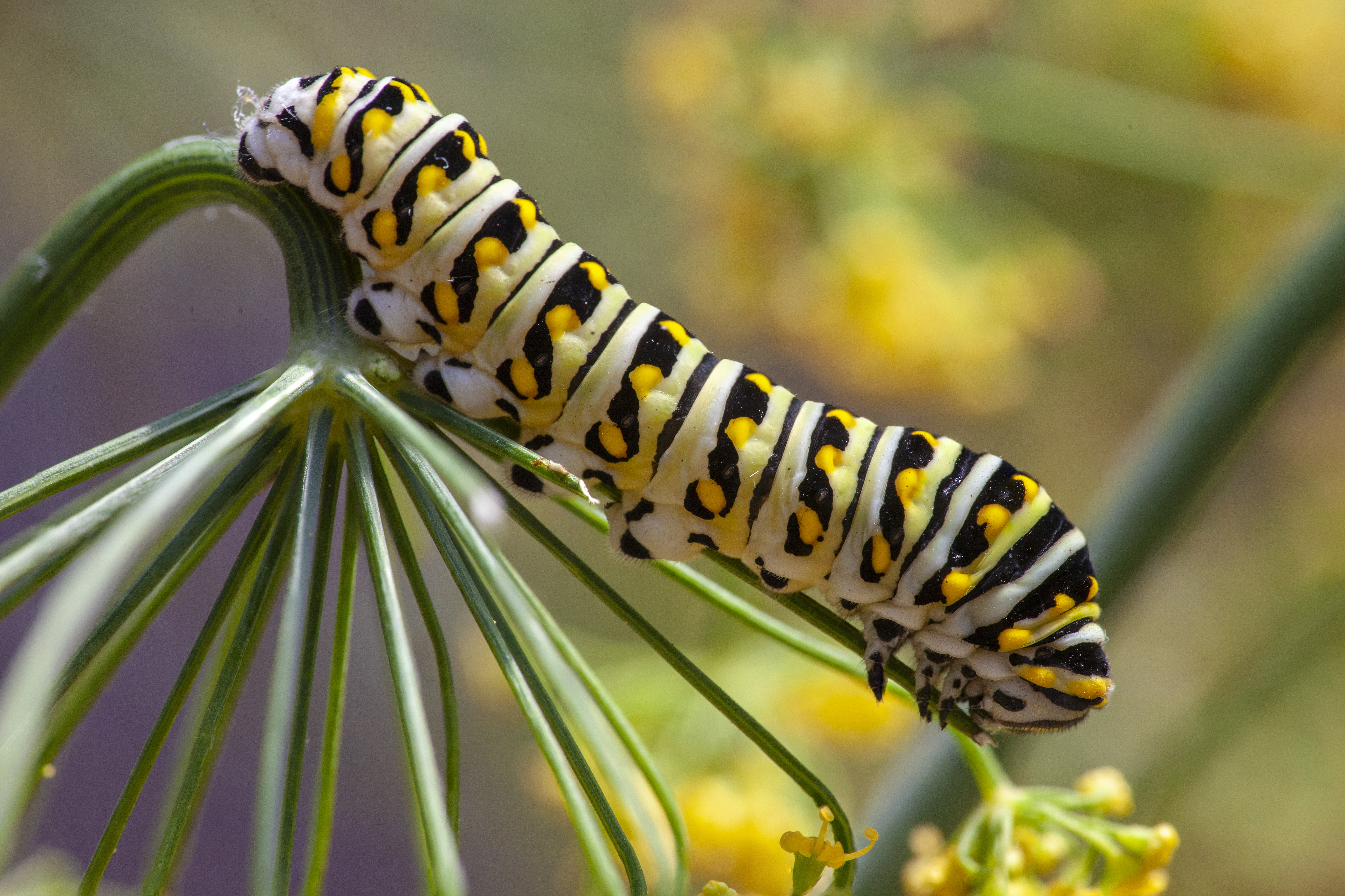
- Larvae (The “Parsley Worm”): Caterpillars undergo significant morphological shifts across five instars:
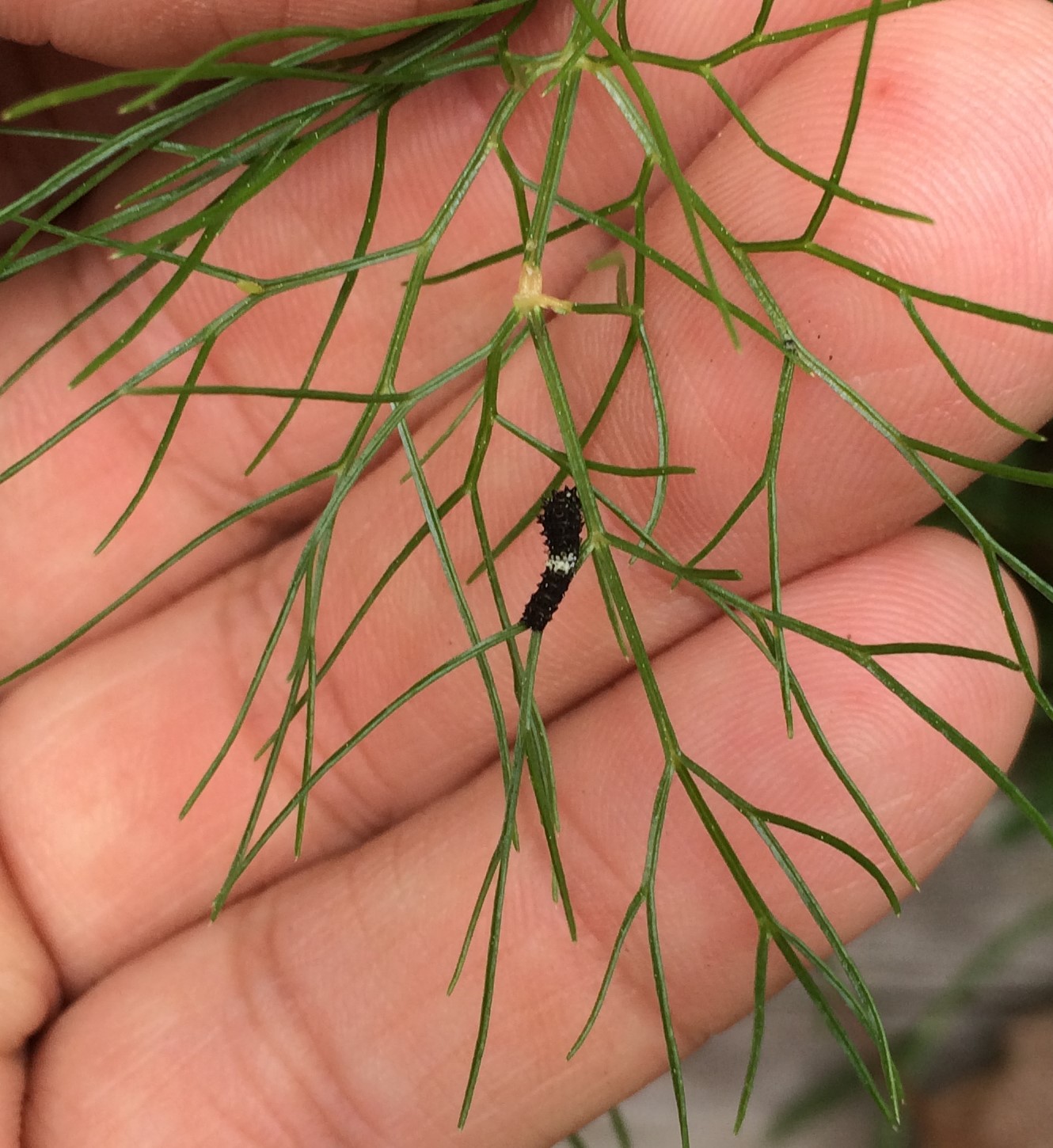
- Early Instars: Resemble dark brown or black bird droppings, accented by a white saddle across the middle—a form of cryptic camouflage.
- Late Instars: Transform into smooth, plump caterpillars ringed with bright green, velvety black bands, and dotted with vivid yellow or orange spots.
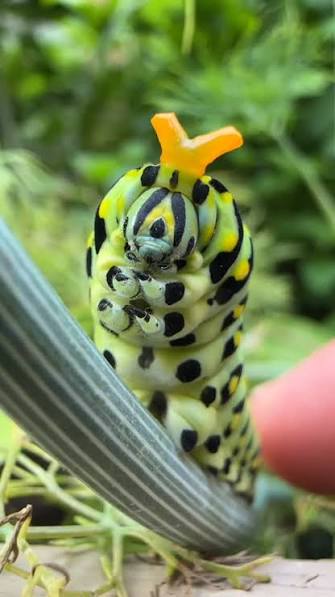
- Defense: When disturbed, larvae evert an orange, forked glandular organ behind the head called an osmeterium. This organ emits a pungent, foul-smelling secretion rich in butyric acids that repels ants, spiders, and birds.
- Host Plants: Larvae specialize strictly on members of the carrot family (Apiaceae), including wild species like Queen Anne’s lace (Daucus carota) and water hemlock, as well as cultivated culinary staples such as parsley, dill, fennel, carrots, and celery. They occasionally accept plants in the rue family (Rutaceae).
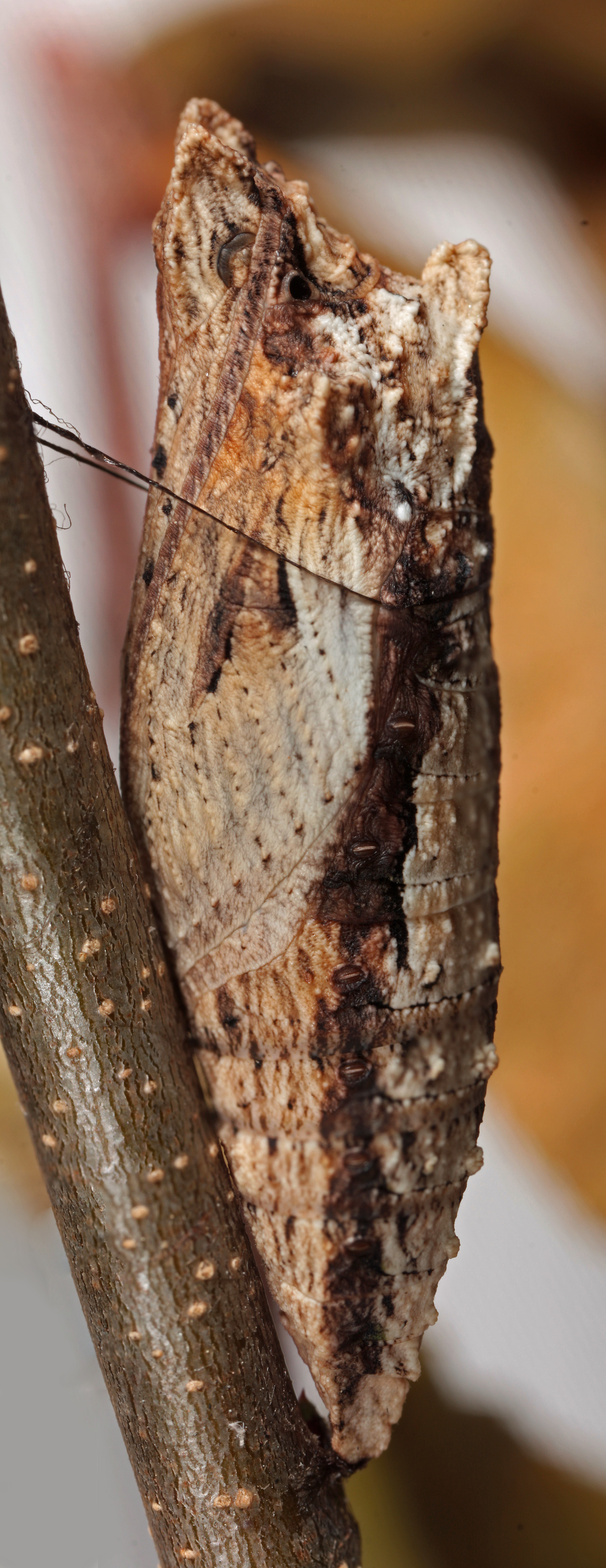
- Pupae (Chrysalis): The caterpillar secures itself to a woody stem or structure using a silk cremaster pad and an upright silk girdle. The chrysalis exhibits adaptive coloration—developing in either mottled brown (common on wood or dry stems) or bright green (on living foliage). Late-brood pupae enter diapause, overwintering safely inside the chrysalis to emerge the following spring.
- Adults: Adults emerge to feed voraciously on nectar from diverse floral sources, including milkweeds, thistles, clover, zinnia, butterfly weed, and phlox. Males engage in “hilltopping”—defending high perches and ridges while surveying for passing females.
Conservation Status and Ecological Role
Papilio polyxenes maintains a secure conservation standing, classified as G5 (Globally Secure) by NatureServe. Due to its wide geographic footprint and dietary flexibility, it remains common throughout its range.
However, localized threats persist:
- Pesticide Application: Broadcast insecticides on home gardens and commercial crops directly eradicate both larvae and foraging adults.
- Monoculture Agriculture: Large-scale herbicide use removes wild forage like Queen Anne’s lace and wild parsnip from field perches and margins.
Supporting the Black Swallowtail
Supporting Papilio polyxenes is straightforward due to its compatibility with residential gardens:
- Cultivate Host Plants: Incorporating patches of dill, fennel, flat-leaf parsley, and rue alongside ornamentals provides essential egg-laying sites.
- Provide Diverse Nectar: Plant continuous-blooming native wildflowers and nectar-heavy perennials to sustain adults across all broods from May through October.
- Leave Overwintering Sites: Maintaining undisturbed perennial stems, brush piles, or garden margins through winter ensures overwintering chrysalises remain intact until spring emergence.


Leave a Reply