
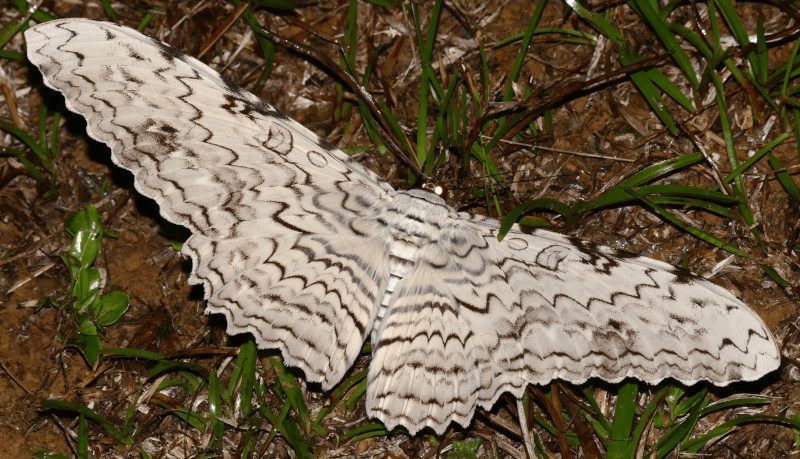
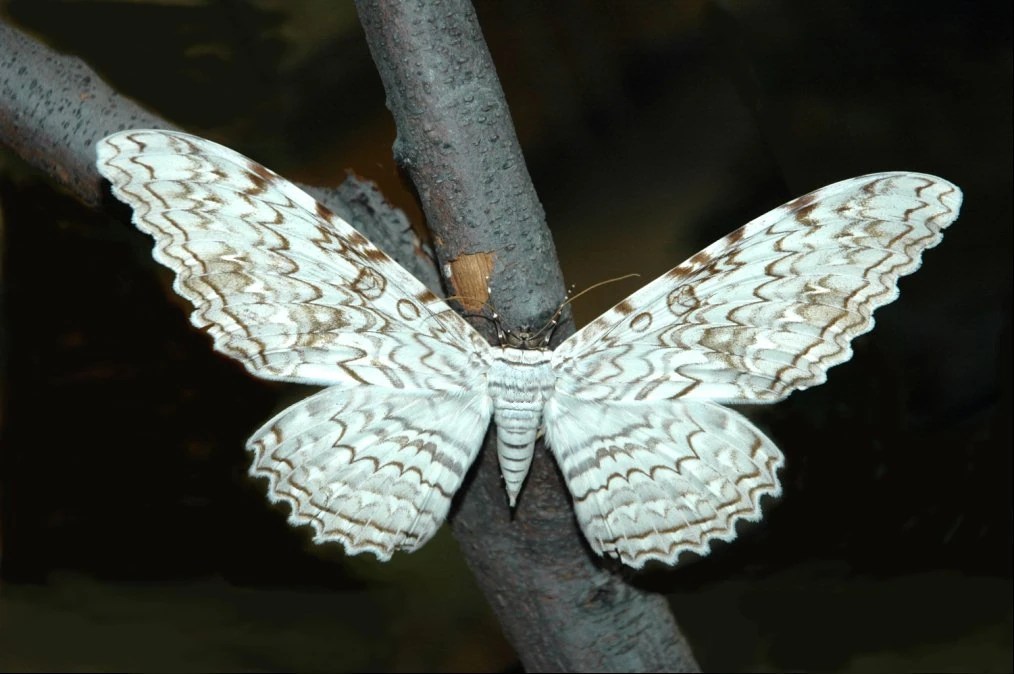
The White Witch moth (Thysania agrippina) is a colossal nocturnal insect renowned for holding the record for the largest wingspan of any known lepidopteran. Found throughout the tropical forests of the Americas, this moth is a master of camouflage and a striking example of natural gigantism.
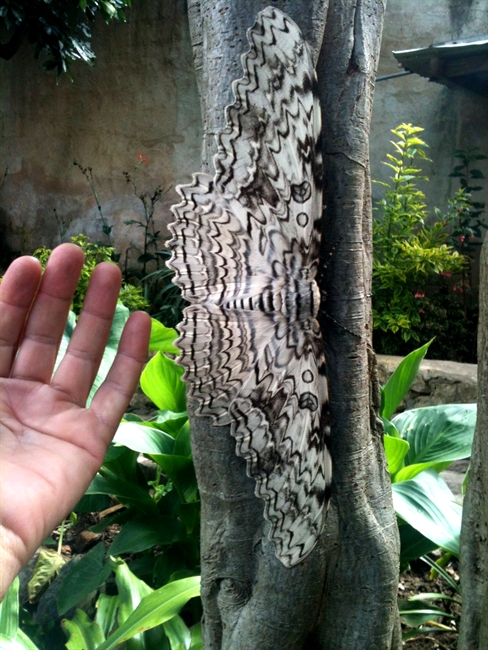
Physical Characteristics & The Wingspan Record
The White Witch is frequently cited as the largest moth in the world when measured by linear wingspan.
- Wingspan: Adult specimens have been documented with wingspans reaching up to 30.8 cm (roughly 12 inches). Some historical or anecdotal records claim sizes as large as 36 cm (14 inches).
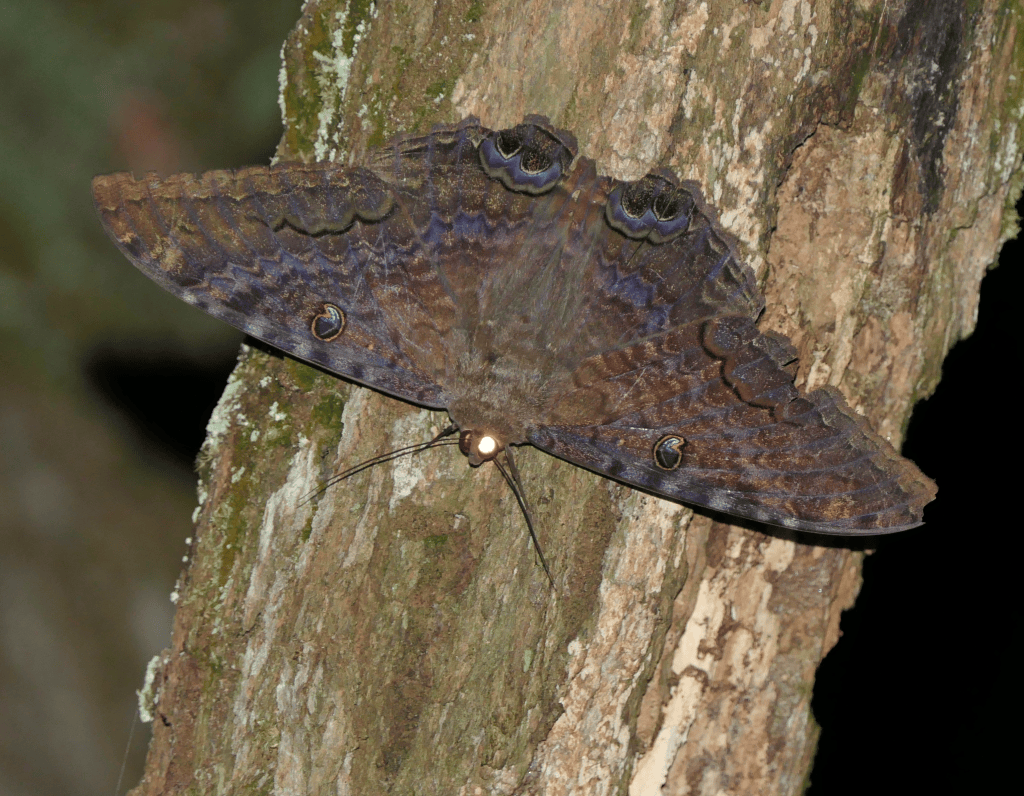
- Appearance: Their wings are long, relatively slender, and feature an intricate, marbled pattern of white, gray, and dark brown. This “psychedelic” yet subtle coloration allows them to mimic tree bark and lichen-covered surfaces perfectly, providing essential protection while they rest during the day.
- Sexual Dimorphism: While both sexes are large, they can sometimes be distinguished by slight variations in wing shape and intensity of the patterns.
Note on “Largest”: While T. agrippina holds the record for the greatest wingspan, other species—such as the Atlas moth (Attacus atlas)—are considered “larger” by total wing surface area or body mass.
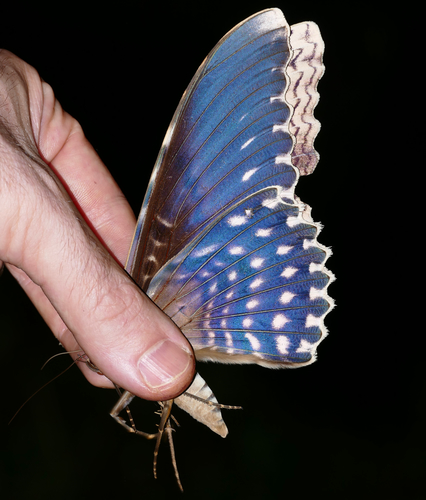
Habitat & Distribution
The White Witch is native to the Neotropical realm. Its range spans from northern South America and the Amazon basin through Central America, reaching as far north as southern Mexico.
- Environment: They primarily inhabit humid tropical rainforests.
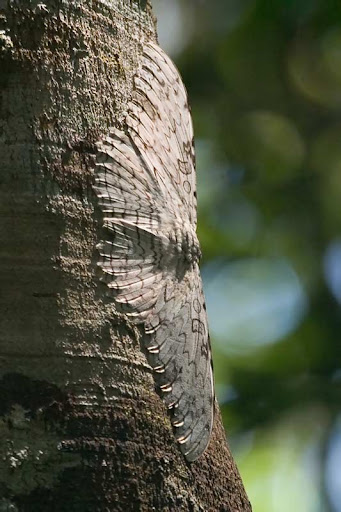
- Behavior: They are strictly nocturnal. During daylight hours, they remain motionless on tree trunks or walls, relying on their cryptic coloration to avoid predation. They are strongly attracted to artificial lights at night, which is how they are most frequently encountered by humans.
Life History & Ecology
Despite its fame, the life cycle of Thysania agrippina remains a subject of mystery for entomologists.
- Larval Stage: The caterpillar of the White Witch has proven difficult to document in the wild. While historical reports have suggested they might feed on plants in the Euphorbiaceae family (such as the Rubber Tree), these remain unconfirmed. Experts suspect they likely feed on woody legumes, similar to their close relative, Thysania zenobia.
- Adult Life: Like many large moths, the adult T. agrippina exists primarily to reproduce. They have a short lifespan as adults and do not possess functioning mouthparts for heavy feeding, though they may consume small amounts of liquid (nectar, sap, or rotting fruit) for energy.
Cultural Significance
Because of their silent, massive appearance and nocturnal habits, these moths have appeared in the folklore of various indigenous cultures across their range. In some regions, they are viewed as “messengers from the Underworld” or spirits of the dead—a reputation shared by the related Black Witch moth (Ascalapha odorata). Despite these myths, the White Witch is completely harmless to humans; it possesses no venom, stingers, or defensive aggression.


Leave a comment