All posts by David Albaugh

A Pictorial Guide To My Tarantula Collection

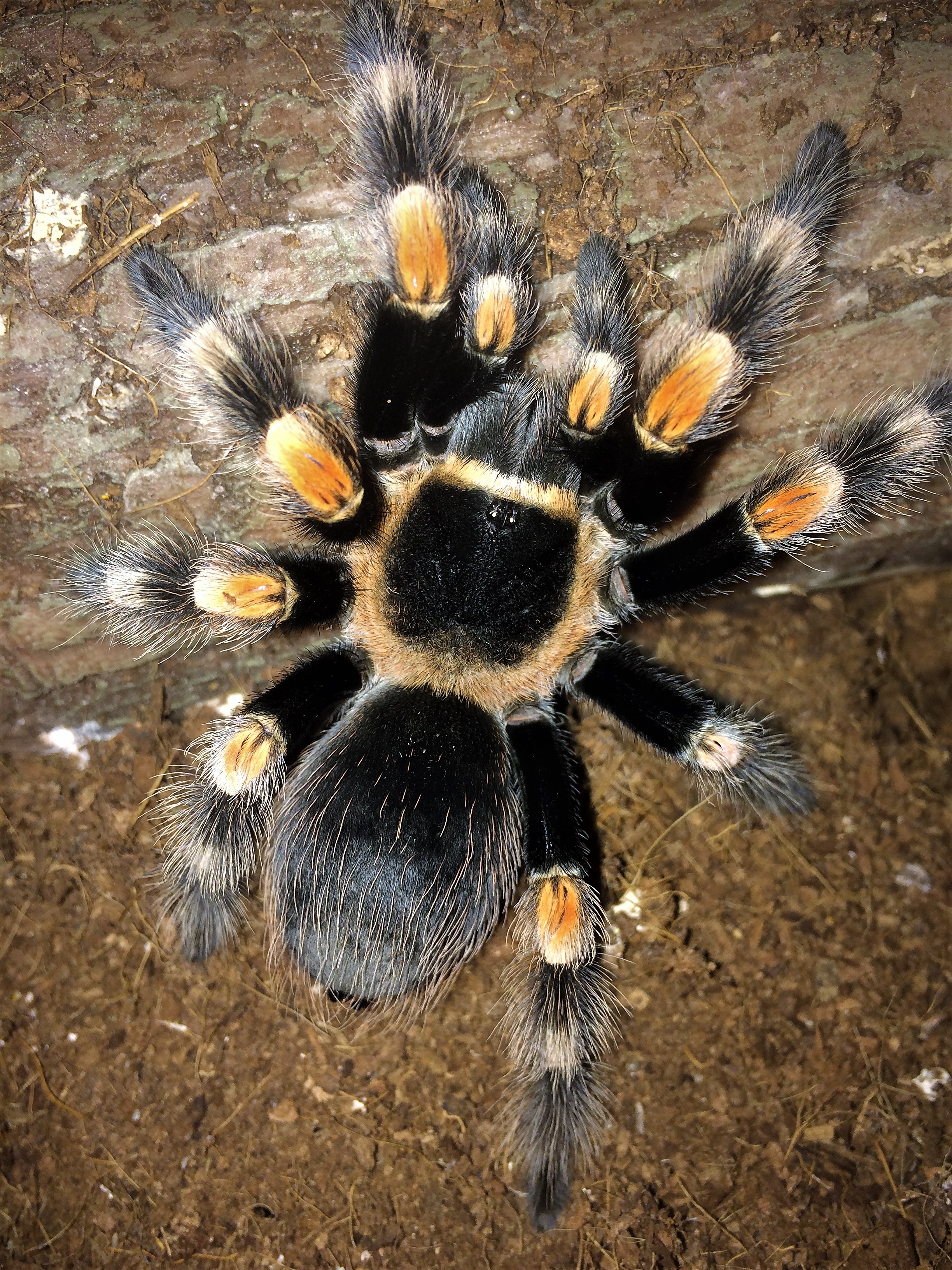
People are always asking me how many tarantulas I have and to be honest, I do have quite a few. What I am sharing with you today is the species list of tarantulas in my collection. In some cases I do have multiples of the same species so this list is just representative. In many cases, what I have are very young spiderlings so pictures may not be of the actual spider currently in my collection. As adult pictures of my actual animals are taken, they will replace any generic pictures used here. As more species are added, this list will be updated. Enjoy!

Acanthoscurria geniculata (Giant White Knee) – Brazil

dsadas

Continue reading A Pictorial Guide To My Tarantula Collection

BUTTERFLY CONSERVATION – Every Little Bit Helps

I have been a butterfly gardener for many years. Each year I try to add to existing gardens or take out gardens that don’t seem to be performing as well as I would like (when I say perform, I mean attracting butterflies). This year I wanted to do something new with an existing garden that over the past few years had just become overgrown, not only with weeds but with wildflowers and trees as well. This 13 foot by 13 foot garden had become unmanageable and with the exception of a butterfly bush and a wafer ash tree, nothing in it was attracting butterflies (the wafer ash was attracting giant swallowtails pretty regularly).

DSCF2914

Continue reading BUTTERFLY CONSERVATION – Every Little Bit Helps

EAST COAST BUTTERFLY GARDENING PART 1 – Attracting Butterflies To Your Yard

Gardening, without a doubt, is one of the best hobbies out there, for many different reasons. First off, it gets you out into the fresh air and you truly get to interact with nature. It is relaxing and yet the payoff is amazing. Whether it is the resulting vegetables from your gardens, fruit from your trees or the gorgeous flowers that bloom, there is no better feeling of satisfaction than the one you get after growing something yourself. Everyone has their type of gardening preference; whether it is growing fruits and vegetables or just growing flowers. Mine is butterfly gardening. This will be a work-in-progress so check back often.

5120_104880873622_7280976_n

Continue reading EAST COAST BUTTERFLY GARDENING PART 1 – Attracting Butterflies To Your Yard

CARNIVOROUS PLANTS – A Hobby That Is Not As Hard As You Think!

Being a lover of insects, I have also always found carnivorous plants a fascinating subject. I remember growing up and seeing the ads in the back of comic books advertising meat-eating Venus Fly Traps (right alongside the ads for live pet monkeys), ads that sensationalized them as being little monsters. I tried many times to grow these amazing plants but with no luck. They always ended up withering and dying on me.

venustrap

Continue reading CARNIVOROUS PLANTS – A Hobby That Is Not As Hard As You Think!

SO HOW DO TARANTULAS GROW?

Tarantulas, like all arachnids and insects, must shed their skin, or molt, to grow. This is because they have an exoskeleton. Since this exoskeleton is hard, the only way these invertebrates can grow is by breaking through their old skin, revealing the pliable new skin underneath. Once the shed is complete, the new and larger skin is then allowed to dry. What I present for you here is a pictorial guide to one of the world’s largest species of tarantulas, the Brazilian Salmon Pink Bird-eating Spider (Lasiodora parahybana), named for the beautiful pink hairs on this massive spider’s abdomen.

5689_133231628622_8280552_n

After making a bed of silk, the spider turns onto its back to start the molting process.

Continue reading SO HOW DO TARANTULAS GROW?

ENTOMOLOGICAL DISPLAYS

Though I am no longer an insect collector, I do from time to time put displays together, either for friends or to be used in my insect presentations at schools and libraries (for more information please click HERE). These are just a sampling of some of the things I have done. As additional displays are completed I will add to this blog. To get an idea of scale, I am using Presidential Display Cases that measure 24″ x 18″ x 2.5″.

INSECTS VS. ARACHNIDS

photo

In 2013 I decided to totally revamp my insect presentations featuring all new displays to bring into the classroom. This was the first one that I did, featuring a side-by-side comparison of insects and arachnids. I am very happy with this display even though it is not jam-packed with specimens. It does feature a good assortment though of some of the largest species of both insects and arachnids, including one of the largest scorpion specimens I have ever seen!

Continue reading ENTOMOLOGICAL DISPLAYS

BOOK REVIEW: “A Swift Guide to Butterflies of North America”

I am a huge fan of field guides and thankfully most of them out there are pretty good. In my last book review (seen HERE) I discussed my favorite of the guides, though it is one that is so large it is impractical to bring into the field with you. Thankfully, this one is much smaller, very user friendly and is perfect to have with you in the field. I must also say that I am quickly becoming a huge fan of Jeffrey Glassberg, who wrote this and many of the best guides available today.

51lZFh+pEZL

Continue reading BOOK REVIEW: “A Swift Guide to Butterflies of North America”

KEEPING INVERTEBRATES AS PETS

Keeping invertebrates as pets is not for everyone. Most people, when thinking of tarantulas, scorpions or other invertebrates, react in disgust or fear. This is mostly due to the fact that these animals are greatly misunderstood. Thanks to horror movies and stupid shows like FEAR FACTOR alot of these invertebrates have been given a bad reputation as being dangerous, even deadly. Though many invertebrates that are kept as pets are venemous (no, they don’t remove the venom before the animal is sold) keep in mind that their venom is not designed to kill people. It is designed to help them subdue their prey. There are species of scorpions that have venom so strong that it can kill a person but that is not what it is there for. Most of these animals would rather run away and hide from a person than actually try to bite them. They are actually very timid, and at times nervous. Keep in mind also that people are not supposed to die from bee stings or ant bites, but they do. It is not because of the bee or ant, but because of the person’s allergic reaction to the sting or bite. The same can be held true for all invertebrates that can bite or sting. The first rule to follow when having pets like this is to show them respect.

244349_10150271418663623_6504394_o

Continue reading KEEPING INVERTEBRATES AS PETS

BOOK REVIEW: “Butterflies Of The East Coast: An Observer’s Guide”

scan0001Hardcover version.

“Butterflies Of The East Coast: An Observer’s Guide” by Rick Cech and Guy Tudor, is, without a doubt, the best guide to East Coast butterflies. Since I live in Rhode Island, this was a book that I bought when it was released in 2005, and was not disappointed at all when it arrived. This book is everything a field guide should be, even though it is oversized (9″ x 11″ and weighs over 3 pounds) and would be cumbersome to take in the field. If you want a pocket guide, then I would recommend any of the available smaller field guides to take with you but for home study, this book cannot be beat!

Continue reading BOOK REVIEW: “Butterflies Of The East Coast: An Observer’s Guide”