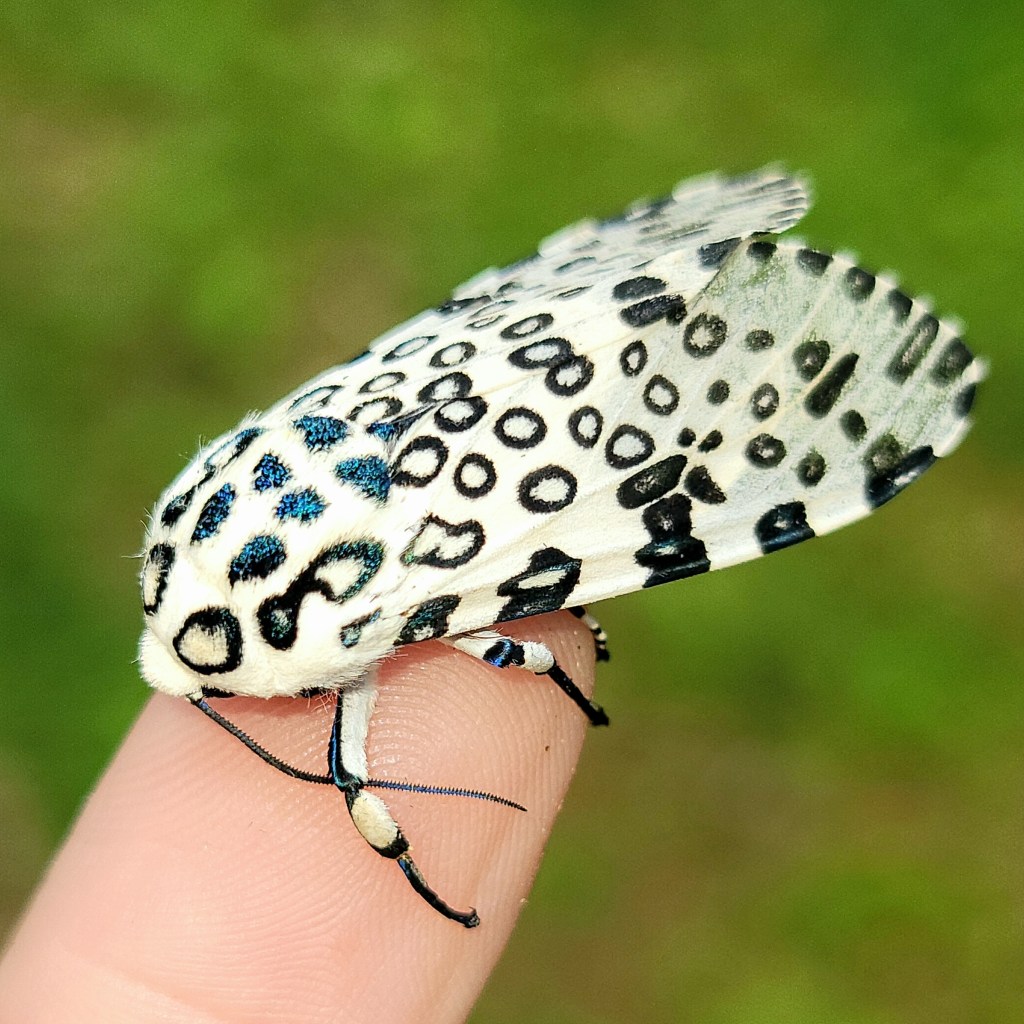
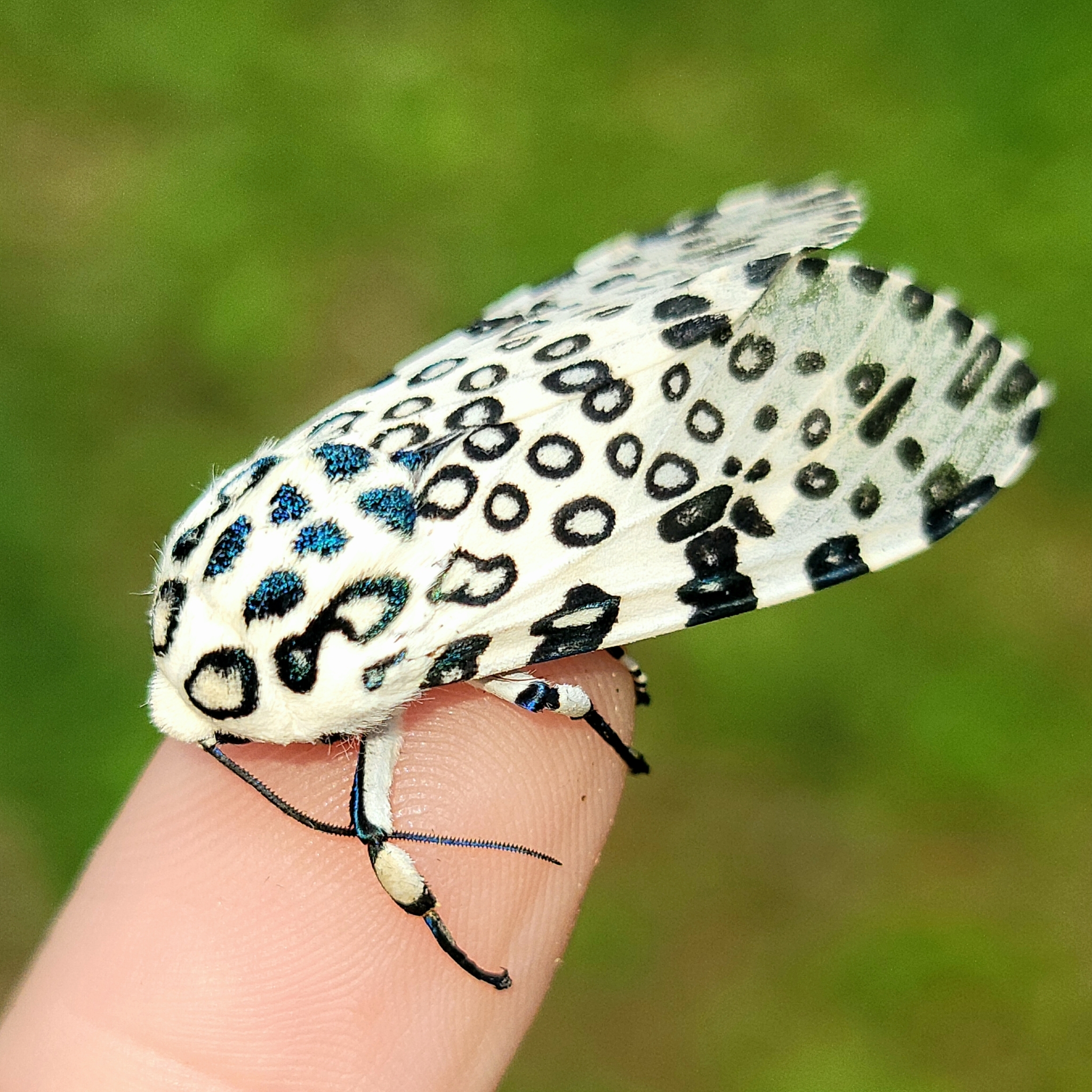
If you have ever stumbled across a massive, bristly black caterpillar with bright red bands or a stunning white moth dotted with iridescent blue-black rings, you have encountered Hypercompe scribonia. Commonly known as the Giant Leopard Moth (or Eyed Tiger Moth), this species is one of the largest and most visually striking tiger moths in North America.
Belonging to the family Erebidae and the subfamily Arctiinae, this insect is celebrated by entomologists and nature lovers alike for its dramatic physical transformations, unique defensive behaviors, and fascinating survival strategies.
Anatomy and Physical Description
The Giant Leopard Moth exhibits distinct appearances at each stage of its life cycle, characterized by vibrant, high-contrast coloration designed to warn or confuse predators.
The Adult Moth
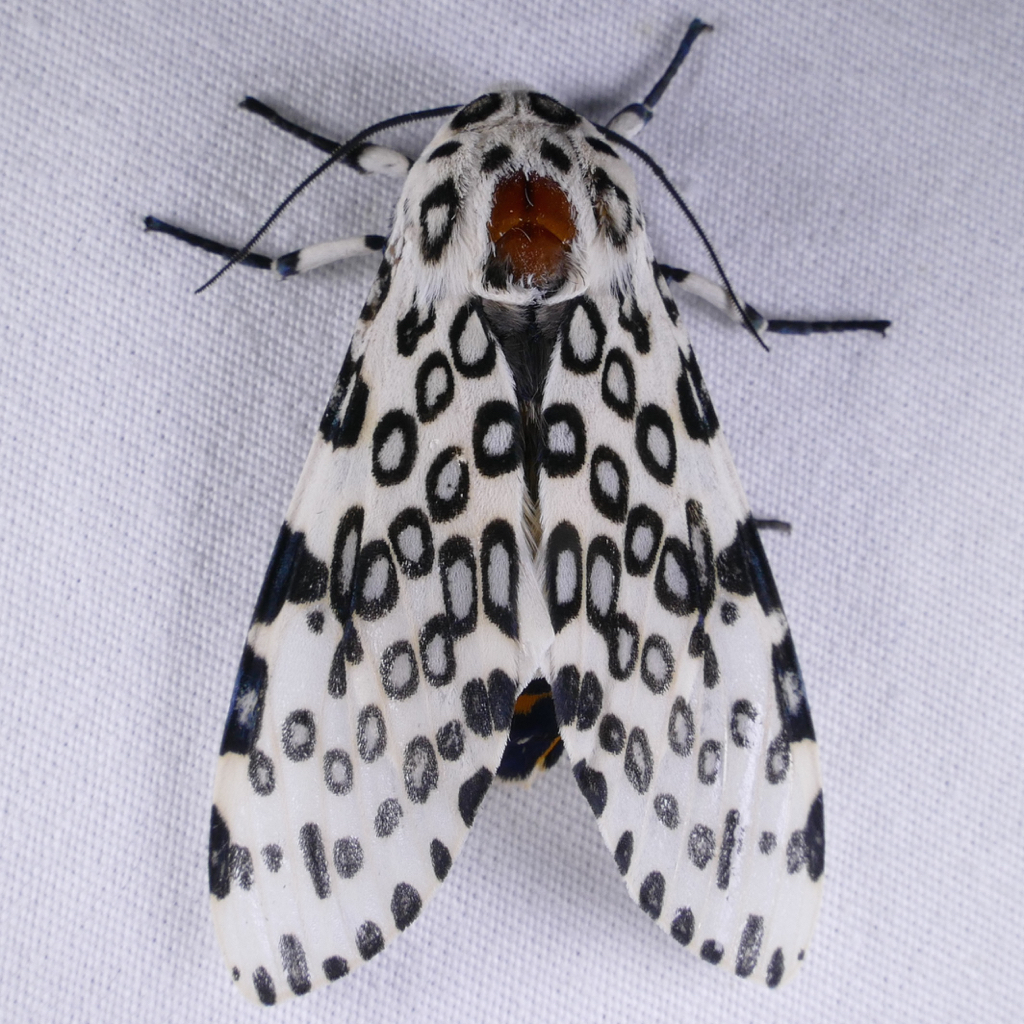
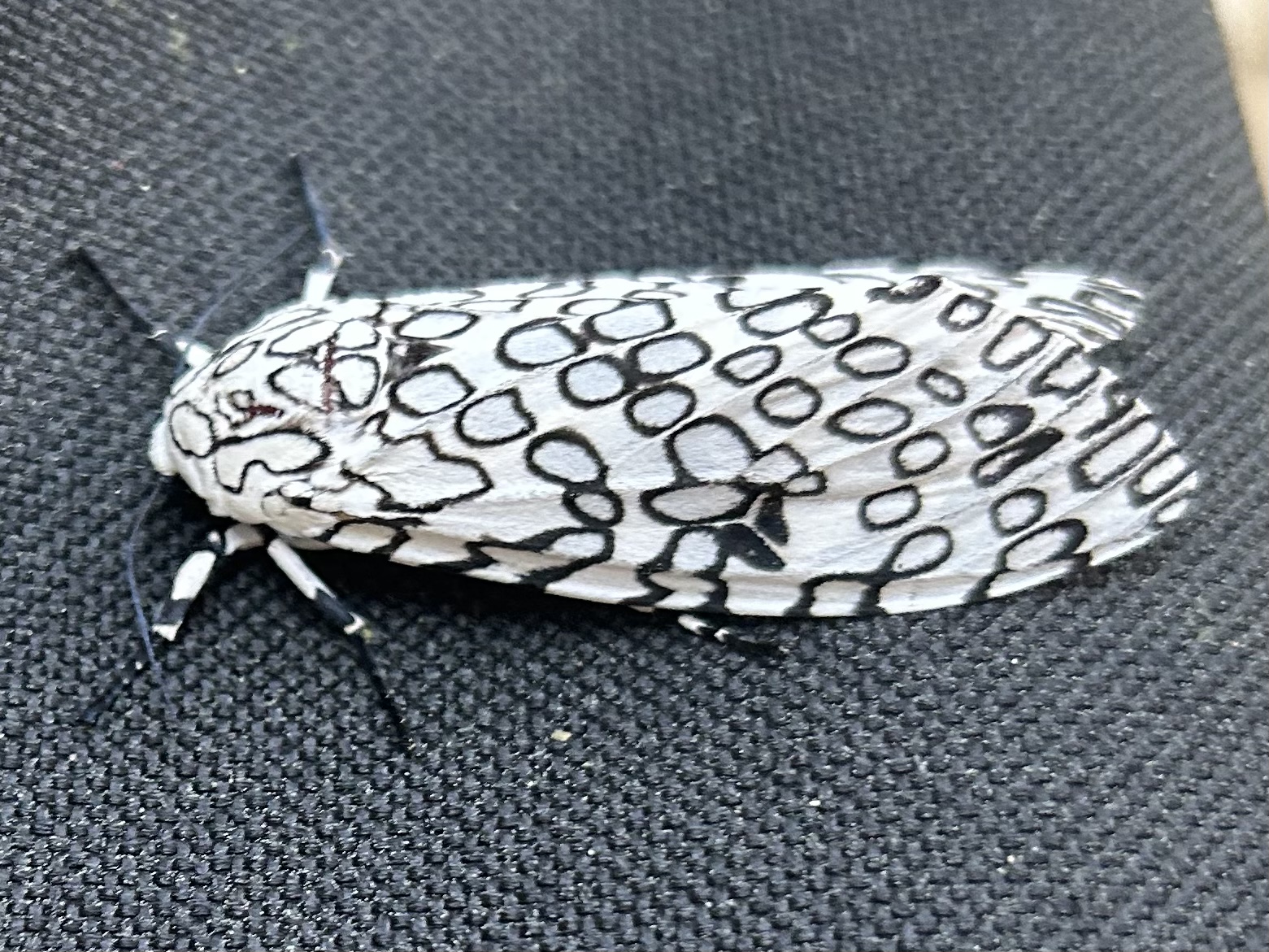
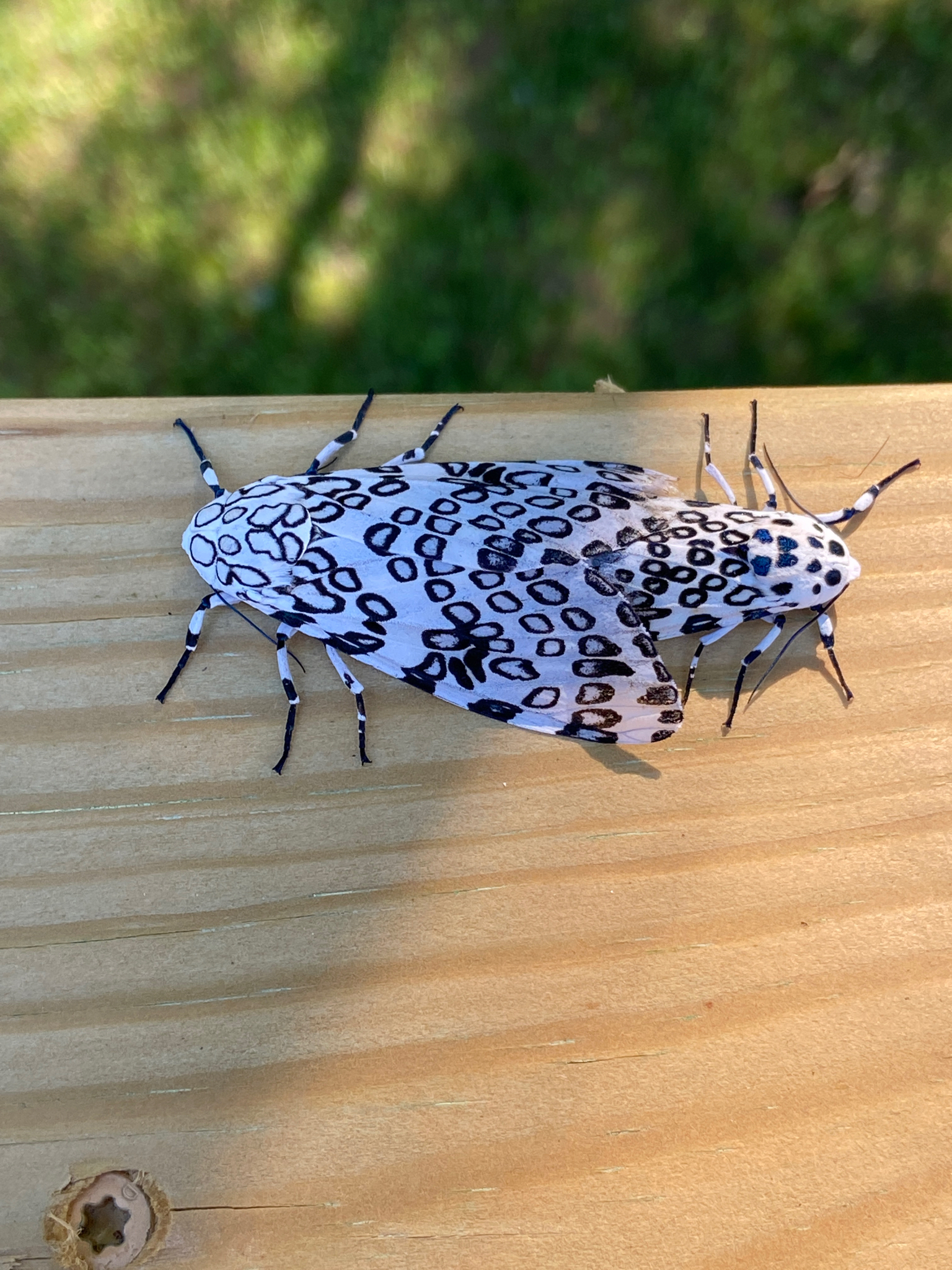
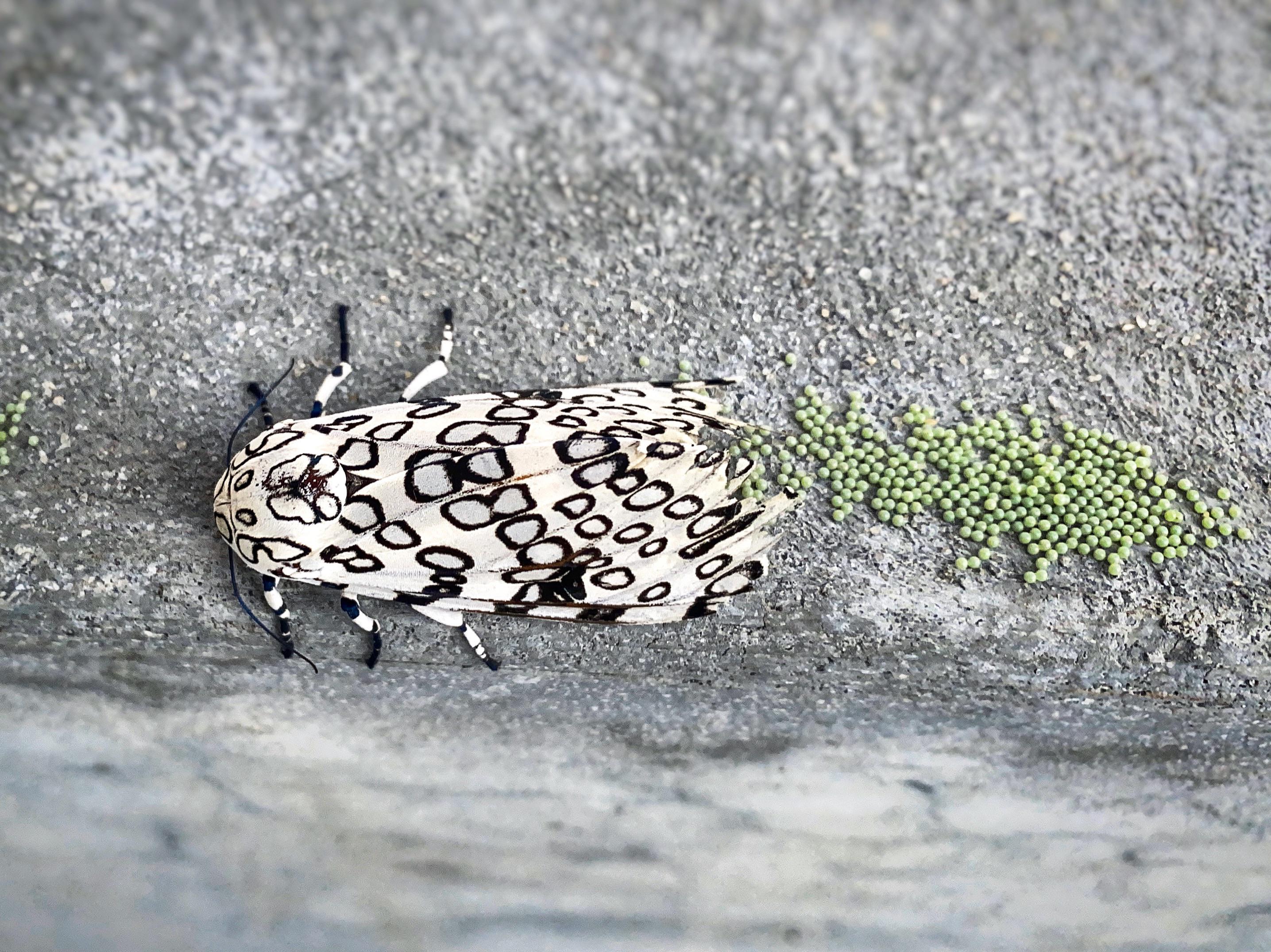
Adults are instantly recognizable by their snow-white forewings, which are heavily patterned with neat, hollow black circles and spots. Near the leading edge of the wing, these spots tend to be solid.
- Wingspan: Ranges from 5.7 to 9.1 cm (2.25 to 3.6 inches).
- Sexual Dimorphism: Males are significantly larger than females. A male can reach about 51 mm (2 inches) in body length, while females typically grow to around 30 mm (1.2 inches).
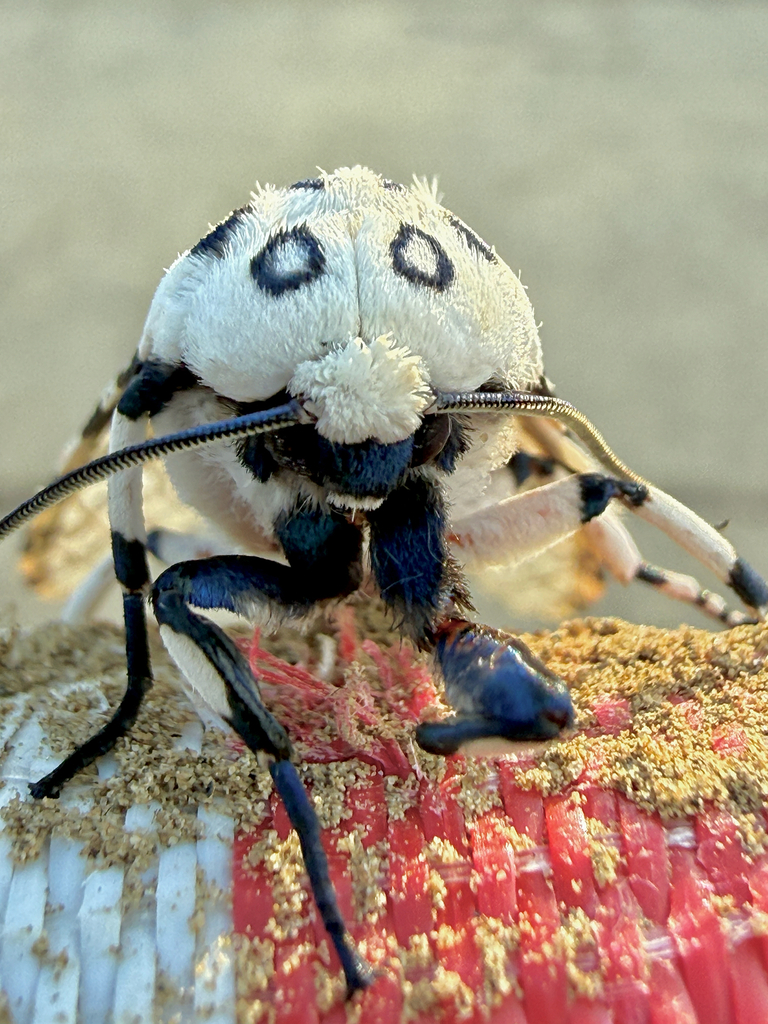
- Hidden Radiance: While the wings are monochrome, the dorsal (top) side of the abdomen features a shocking splash of metallic, iridescent blue-black coloration framed by bright orange markings. Their legs are also distinctly banded in black and white.
The Caterpillar (The Giant Woolly Bear)
Before it becomes a winged beauty, Hypercompe scribonia is a formidable-looking caterpillar often called the Giant Woolly Bear.
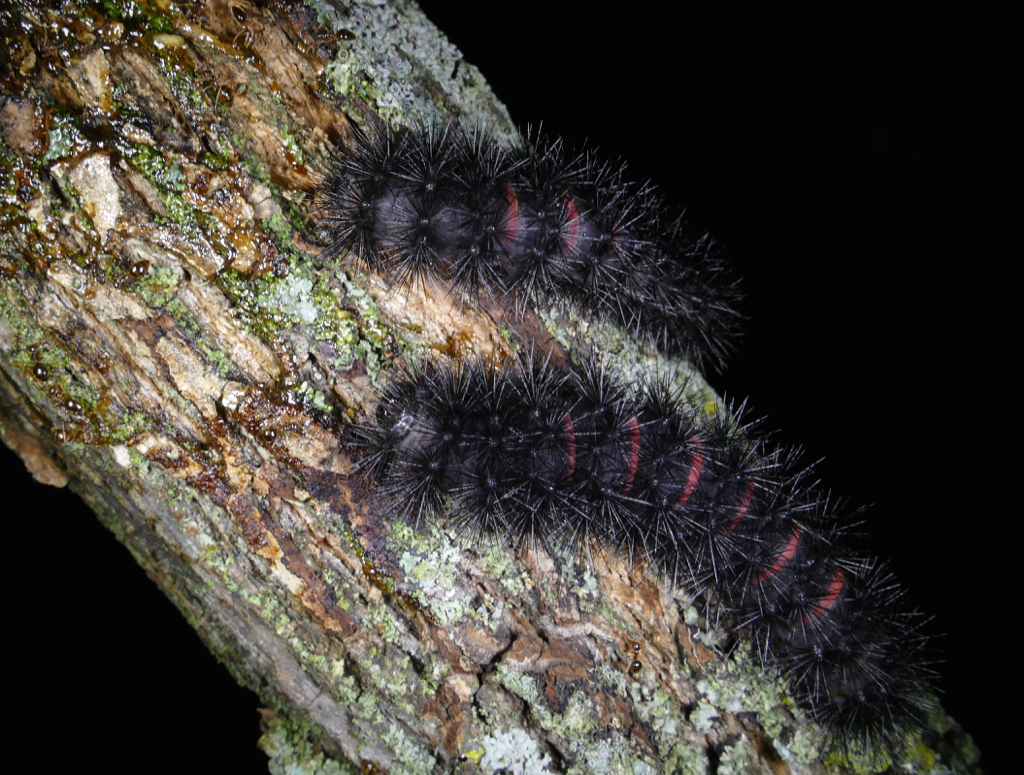
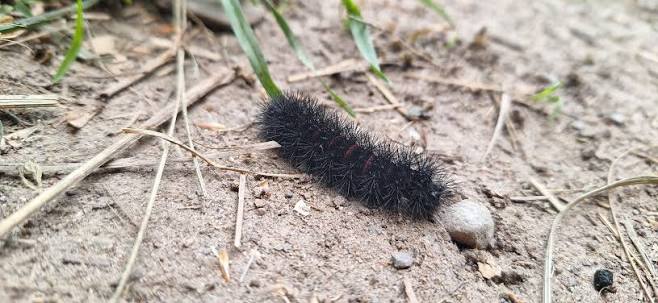
- Appearance: Growing up to 7.6 cm (3 inches) long, the larva is covered in a dense coat of stiff, glossy black bristles called setae.
- The Crimson Bands: Hidden beneath these black hairs are bright red or orange inter-segmental rings. These rings are usually invisible while the caterpillar crawls, but they take center stage when it feels threatened.
Range and Habitat
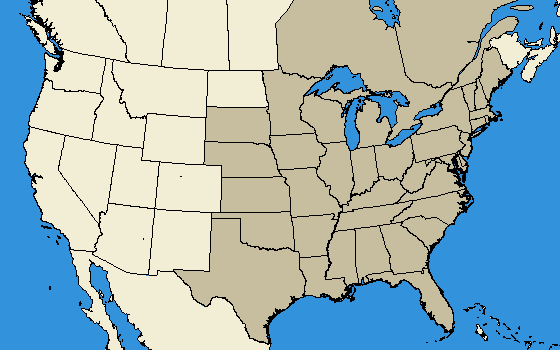
The Giant Leopard Moth is a highly adaptable native of the Americas. Its geographic distribution stretches from southern Ontario, Canada, through the eastern and southern United States (from New England down to Florida), and moves west into Minnesota and Texas. Its range continues southward through Mexico and as far south as Colombia.
They thrive in a variety of environments, including:
- Deciduous forests and woodlands
- Fields, meadows, and overgrown prairies
- Suburban gardens, parks, and agricultural borders
Diet and “Food-Mixing” Behavior
Unlike many specialized insects that only eat one specific host plant, the Giant Woolly Bear is a strict generalist polyphage—meaning it eats a massive variety of broadleaf herbaceous plants and woody structures.
Common Host Plants
- Herbaceous plants: Dandelions, broadleaf plantains, violets, sunflowers, and clover.
- Crops and garden plants: Cabbage, broccoli flowers, and even banana or citrus leaves in southern zones.
- Deciduous trees: Maples, cherries, willows, and oaks.
The “Food-Mixing” Strategy: These caterpillars rarely stay on a single plant for long. They tend to clip a leaf, eat a small amount, and then wander off to find a completely different plant species. Scientists believe this habit—called food-mixing—helps them self-medicate. By consuming small amounts of different plant toxins, they create a chemically diverse internal environment that makes them unpalatable to predators and more resilient against parasites.
Adult moths, by contrast, possess a proboscis (a straw-like mouthpart) but are rarely seen feeding, living primarily off the energy reserves stored during their caterpillar days. They have a known fondness for the moisture and chemical compounds found in bitter, unripe vegetables.
Behavioral Dynamics and Survival Tactics
Because they are large and slow-moving, both the larval and adult forms of Hypercompe scribonia have evolved specialized defense mechanisms.
| Life Stage | Primary Defenses | Mechanism |
| Larva (Caterpillar) | Curling & Aposematism | Rolls tightly into a rigid ball when touched. This bends its stiff bristles outward, making it incredibly difficult for a predator to grip. Curling also exposes the bright red bands between its segments—a warning display (aposematism) signaling bad taste. |
| Adult Moth | Death-Feigning & Fluid Secretion | If disturbed, the adult will “drop dead,” curling its abdomen to reveal its brilliant iridescent blue and orange markings. In extreme stress, it can exude a foul-tasting droplets of yellow fluid from its thoracic joints to deter birds or rodents. |
| Adult Moth | Bat Evasion | Adults possess specialized hearing organs (tympana) located right behind the hindwings. These function as “ears” that can detect the ultrasonic echolocation clicks of hunting bats, allowing the moth to drop or loop out of the sky to escape. |
Adults are strictly nocturnal. Males are highly phototactic (attracted to light) and are frequently spotted resting near porch lights or stadium lamps. Females generally remain closer to the ground, waiting to release pheromones to attract mates.
Life Cycle and Reproduction
The timeline of a Giant Leopard Moth’s life depends heavily on geography. In northern regions, they produce a single brood per year; in warmer southern climates, they can complete two or more generations annually.
1. Mating: A Marathonic Event
When a male locates a female via her chemical trail, they engage in an exceptionally long mating session that frequently lasts more than 24 hours. During this period, they remain entirely immobile to avoid drawing attention. However, they do actively thermoregulate: if they get too hot, the male will slowly walk the pair into the shade; if they are too cold, he will move them into a patch of sunlight. The female tucks her legs in completely, letting the male do all the heavy lifting.
2. Eggs
The female lays clusters of tiny, pearly gray, spherical eggs (about 0.8 mm in diameter) directly onto the leaves of a preferred host plant.
3. Larval Development and Overwintering
As the caterpillars hatch and grow, they shed their skin through several growth stages (instars). When autumn approaches, the nearly full-grown caterpillars seek shelter. They spend the winter tucked safely inside woodpiles, under loose tree bark, or beneath leaf litter.
To prevent freezing to death during harsh winters, their bodies undergo a physiological shift, accumulating high concentrations of glycerol, which acts as a natural biological antifreeze.
4. Pupation and Emergence
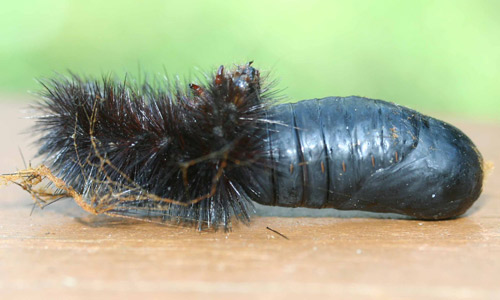
In the early spring, the caterpillars wake up, feed briefly for a few days, and then spin a thin, loose, net-like cocoon made of silk and woven with a few amber-colored structures. Inside, they transform into a smooth, dark pupa. Within two to three weeks, the pupal case splits, and the brilliant adult crawls out to dry its wings, restarting the extraordinary cycle.


Leave a Reply