
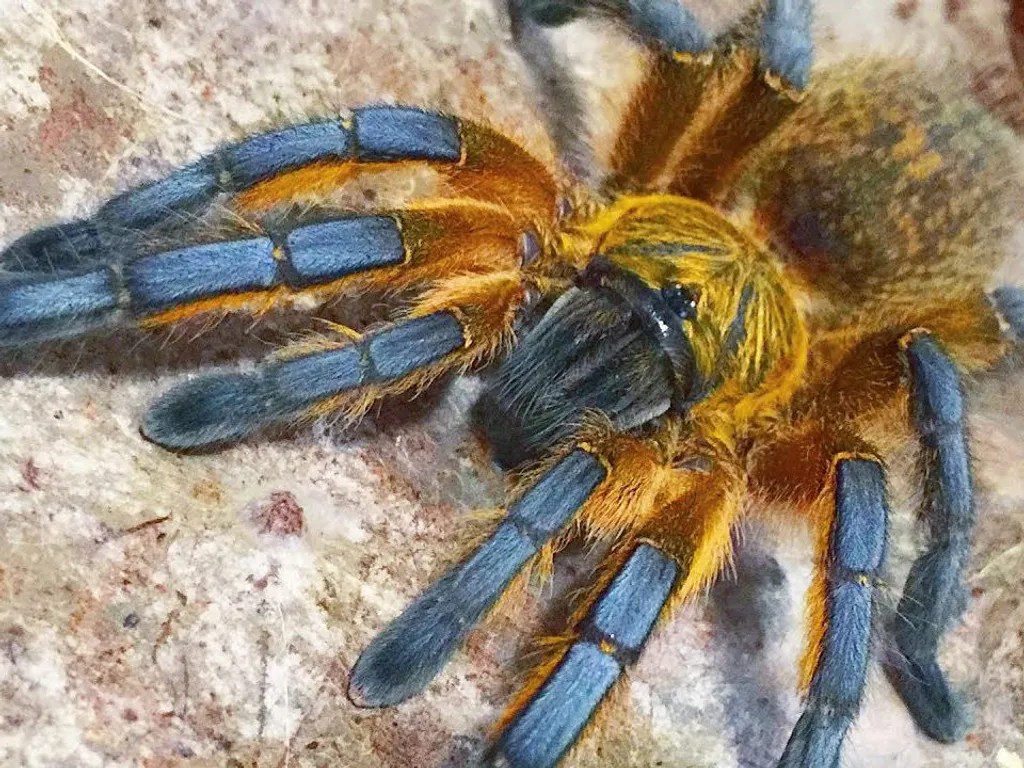
The Harpactira pulchripes, commonly known as the Golden Blue Leg Baboon, is widely considered one of the most beautiful tarantulas in the world. Hailing from South Africa, this species revolutionized the hobby by offering the striking aesthetics of an “Old World” tarantula with a temperament that is surprisingly manageable compared to its more aggressive relatives.
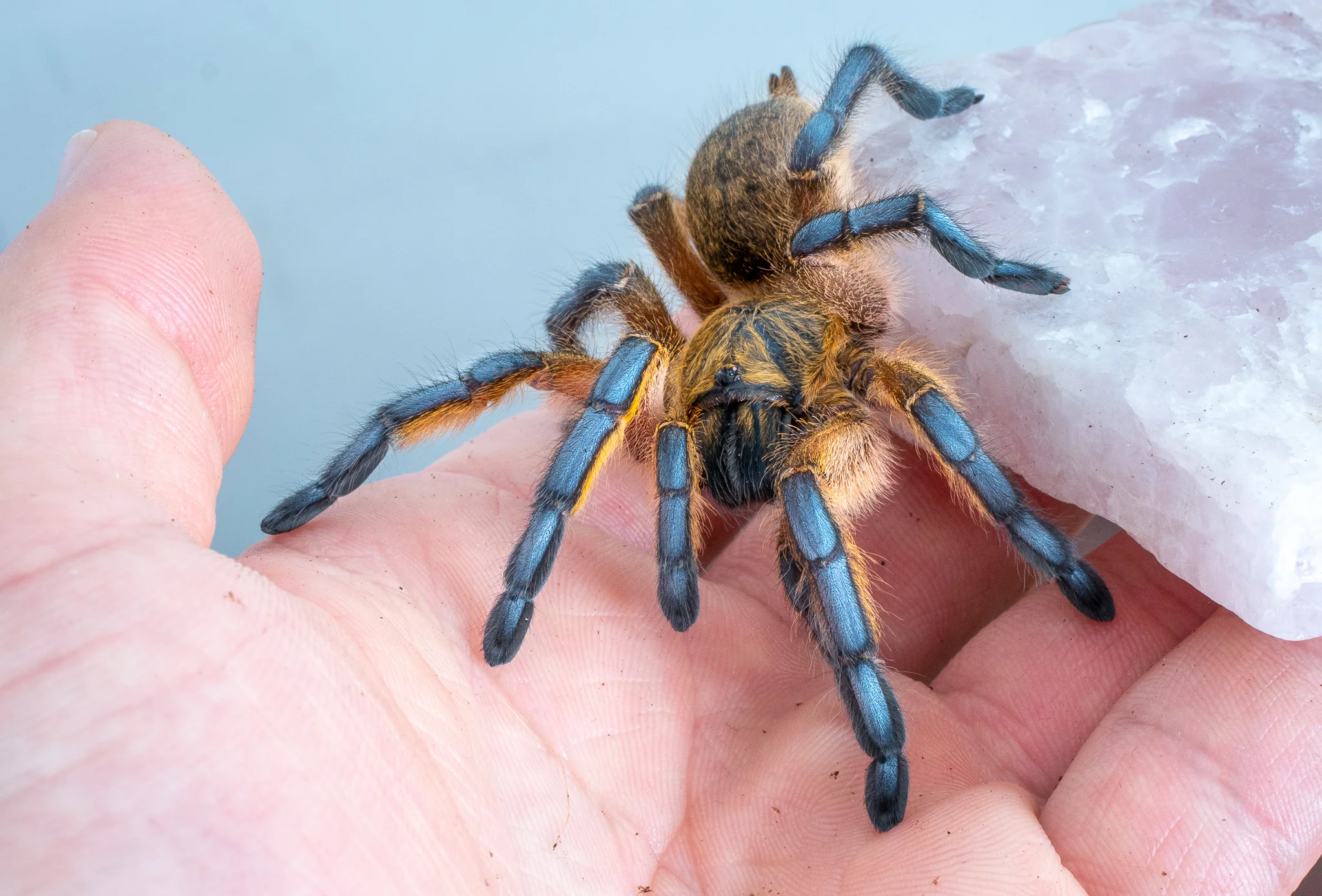
Taxonomy and Origin
First described in 1901, H. pulchripes belongs to the subfamily Harpactirinae, known as the “Baboon spiders.” They are native to the arid and semi-arid regions of the Eastern Cape Province in South Africa.
For many years, this species was almost non-existent in the hobby, making it a “holy grail” for collectors. Thanks to successful captive breeding programs over the last decade, they have become much more accessible, though they still retain a premium status.
Physical Characteristics
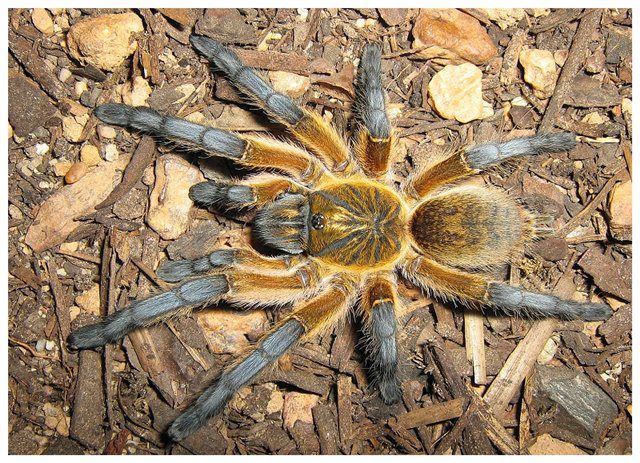
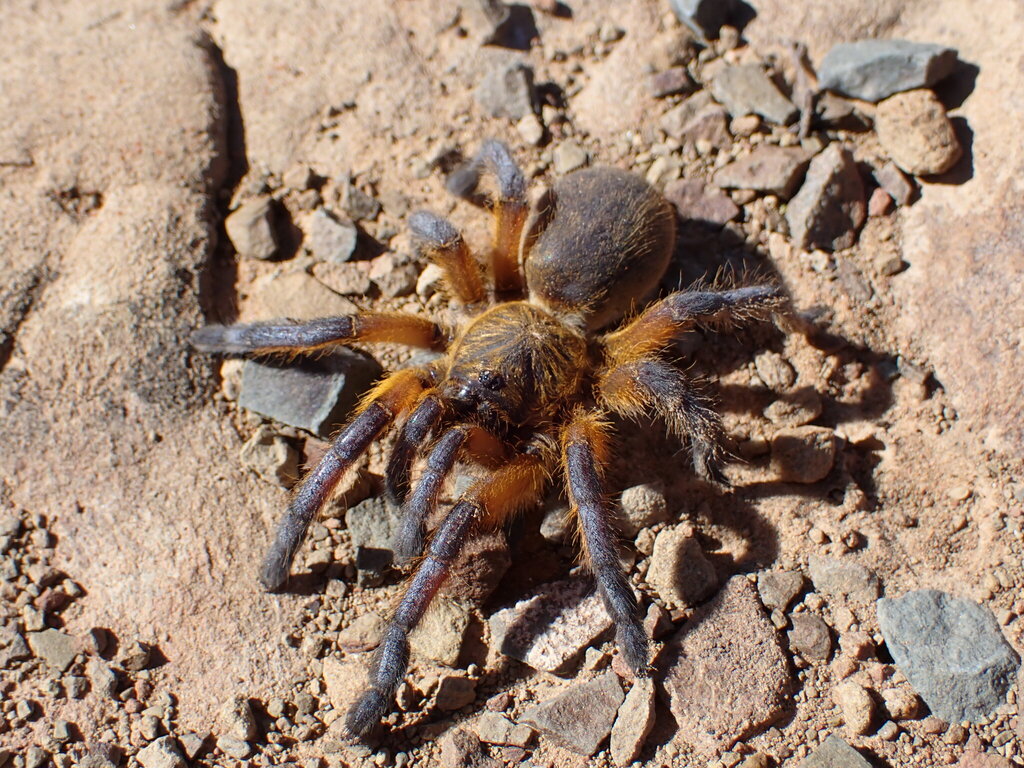
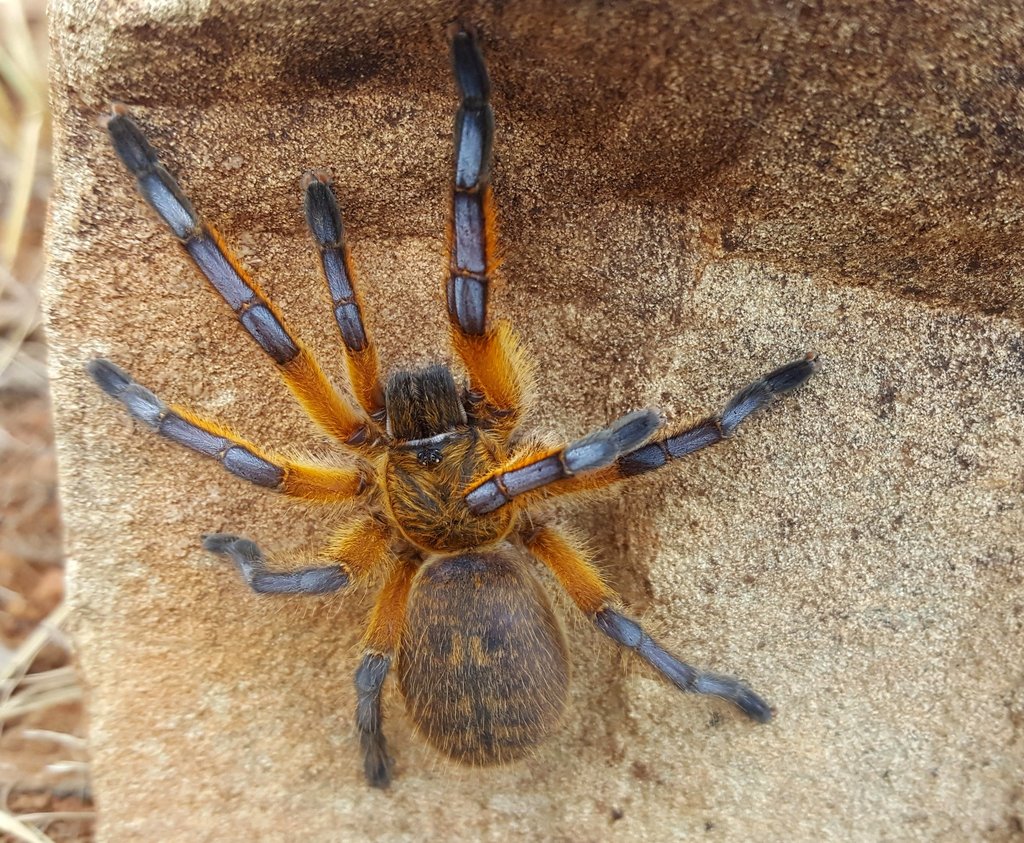
The contrast of colors on a healthy H. pulchripes is nothing short of spectacular, looking almost like a piece of living jewelry.
- Coloration: The cephalothorax and abdomen are a radiant, metallic gold or “burnt orange.” This is contrasted by legs that are a vivid, shimmering cobalt blue.
- Size: They are a medium-sized species, typically reaching a diagonal leg span of 4 to 5 inches.
- Growth Rate: The Golden Blue Leg Baboon grows at a medium-to-fast rate.
Temperament: The “Gentle” Old World?
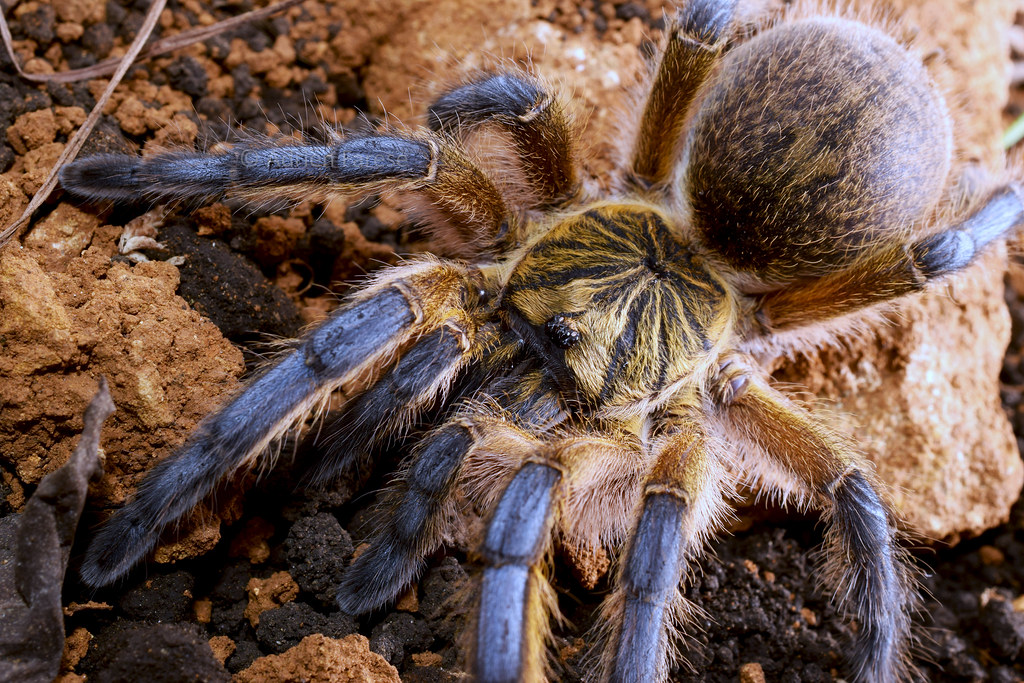
Tarantulas from Africa (Old Worlds) are notorious for being fast, defensive, and possessing potent venom. While H. pulchripes is still an Old World and should be treated with respect, it is famous for its relatively “calm” demeanor.
- Defensiveness: While they can be skittish and fast, they are less likely to throw a “threat posture” or bite than the infamous Orange Baboon Tarantula (OBT).
- Venom: As an Old World, their venom is medically significant. A bite will cause intense pain, swelling, and muscle cramping. They lack urticating hairs, so their only defense is their speed and their fangs.
- Heavy Webbing: They are prolific webbers. In captivity, they will quickly turn their enclosure into a complex fortress of thick, white silk.
Husbandry and Care
Because they originate from the xeric regions of South Africa, they are quite hardy and can tolerate some “keeper error” regarding humidity.
Enclosure Setup
- Type: Terrestrial or semi-fossorial. They appreciate a bit of vertical space to build “curtain” webs but require enough substrate to burrow.
- Substrate: 3–5 inches of a dry mix (EcoEarth, sand, and clay). They prefer a dry environment.
- Decoration: Provide anchor points like cork bark or fake plants. They will use these to attach their extensive web tunnels.
Temperature and Humidity
- Climate: They thrive at temperatures between 75°F and 82°F.
- Hydration: Keep the enclosure dry. High humidity can be detrimental to this species. A small water dish is all they need for hydration.
Diet and Feeding
They are enthusiastic hunters with a high metabolism.
- Juveniles/Adults: They will readily take crickets, roaches, and mealworms.
- Frequency: Once a week is usually sufficient for adults. Because they web so heavily, you can often “toss” the feeder onto the web, and the vibration will alert the spider immediately.


Leave a comment