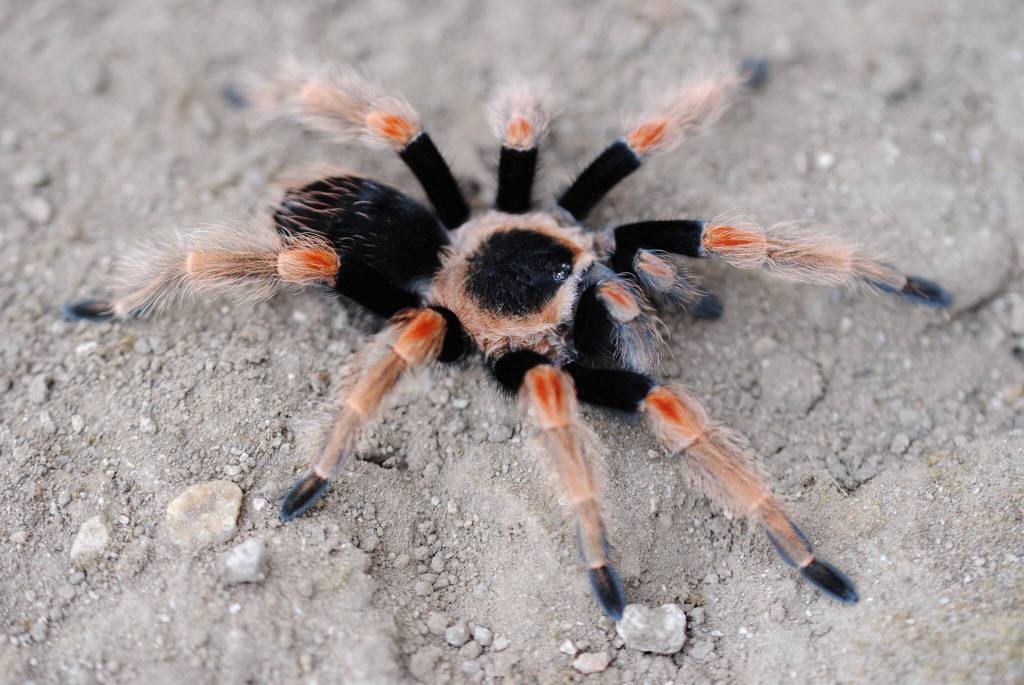
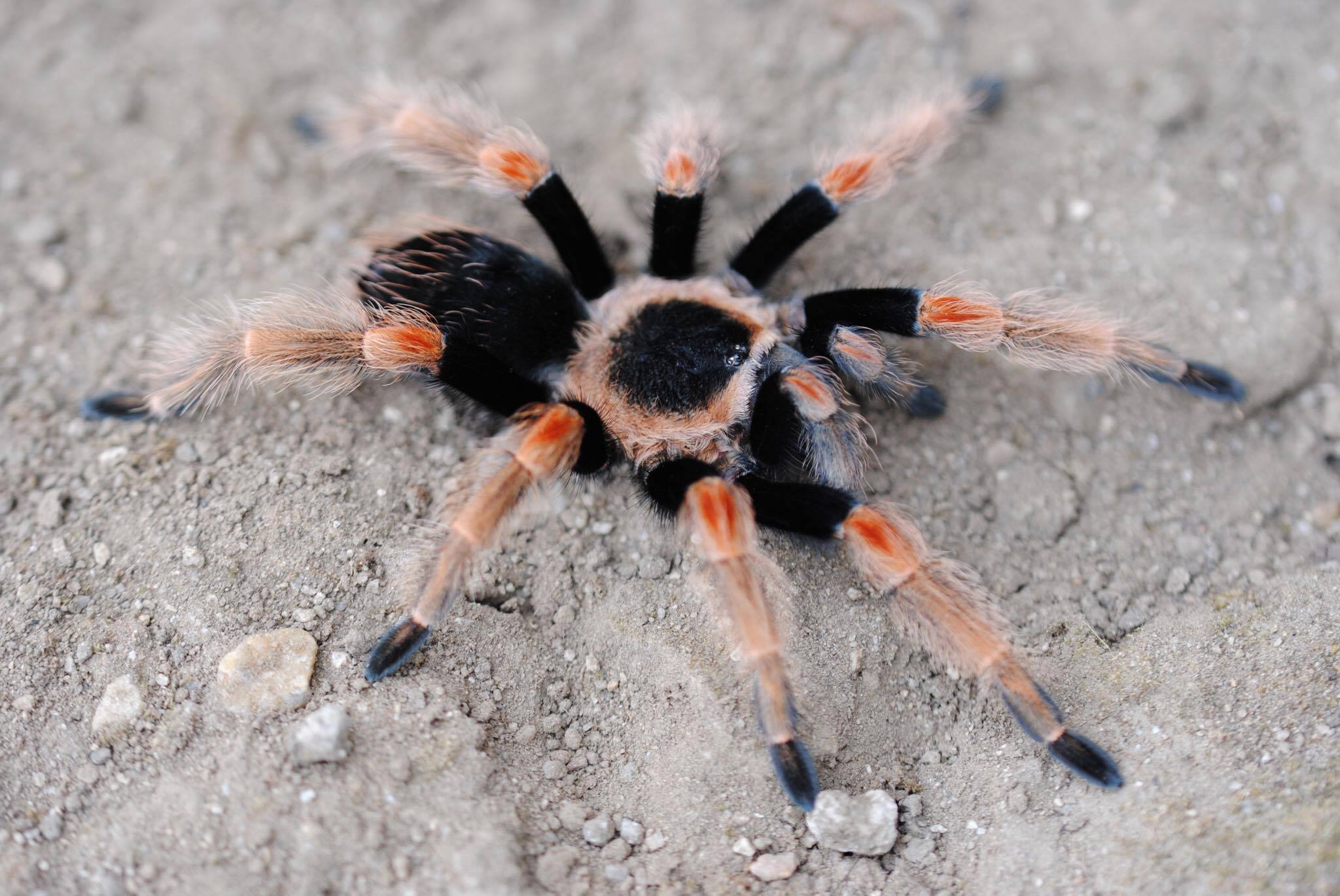
Brachypelma baumgarteni, commonly known as the Mexican Orange Beauty, is one of the most striking and coveted species within the Brachypelma genus. For a long time, it was shrouded in mystery, with many hobbyists debating whether it was a distinct species or a natural hybrid. Today, it stands as a centerpiece of Mexican tarantula conservation and a crown jewel for any serious collector.
Taxonomy and Hybridization Debate
For decades, the B. baumgarteni was the subject of intense debate among arachnologists. Because its physical appearance shares traits with both the Mexican Red Knee (B. hamorii) and the Mexican Fire Leg (B. boehmei), many believed it was a naturally occurring hybrid where their ranges overlapped.
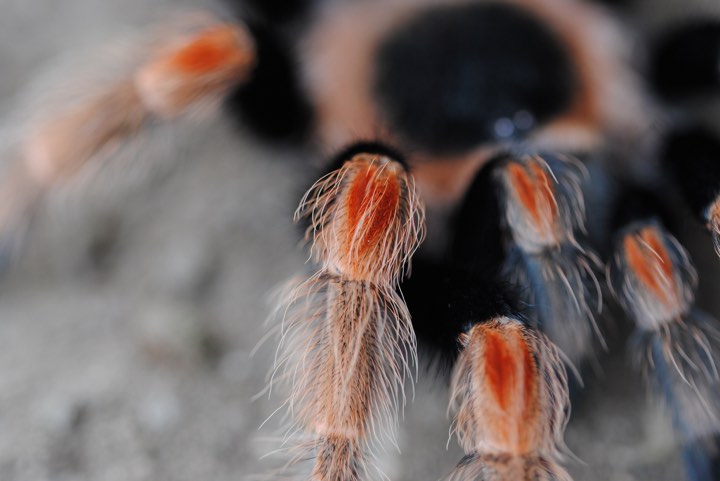
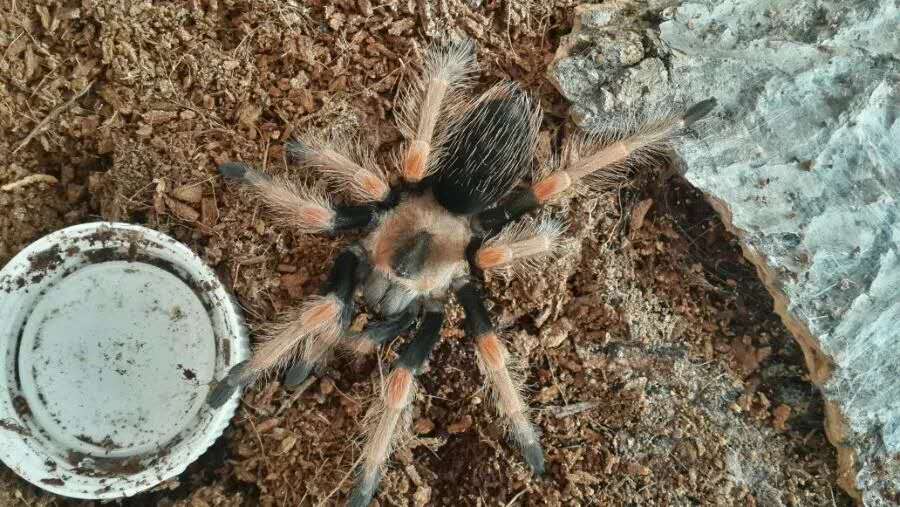
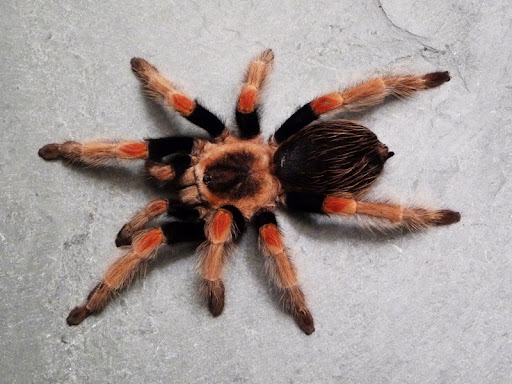
However, scientific descriptions and genetic analysis confirmed its status as a unique species. While it shares the vibrant orange-red coloration of its cousins, its specific pattern—particularly the way the orange “flames” extend up the patella and tibia—is distinct.
Physical Description
The Mexican Orange Beauty is a medium-to-large terrestrial tarantula known for its robust build and “fuzzy” appearance.
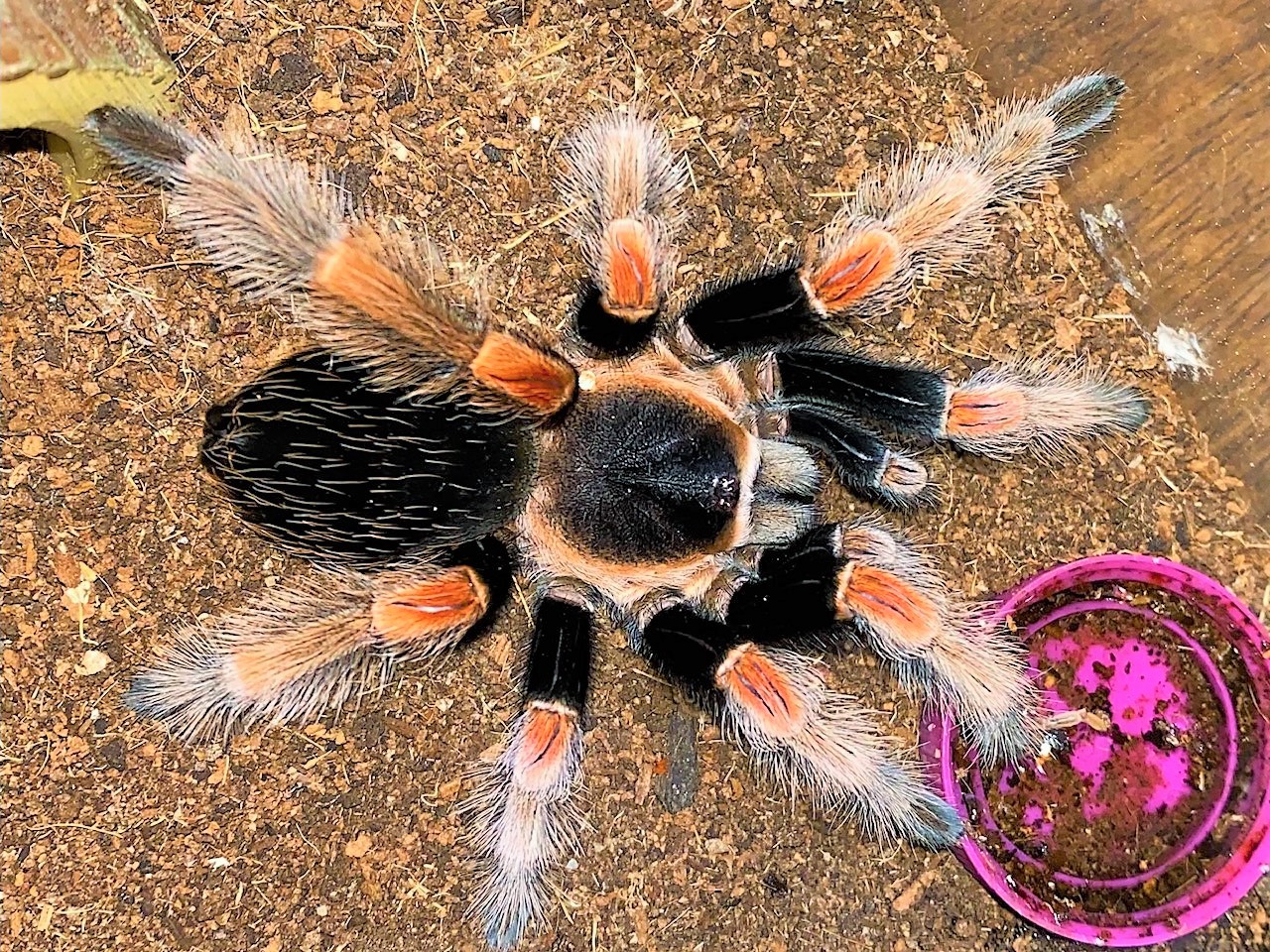
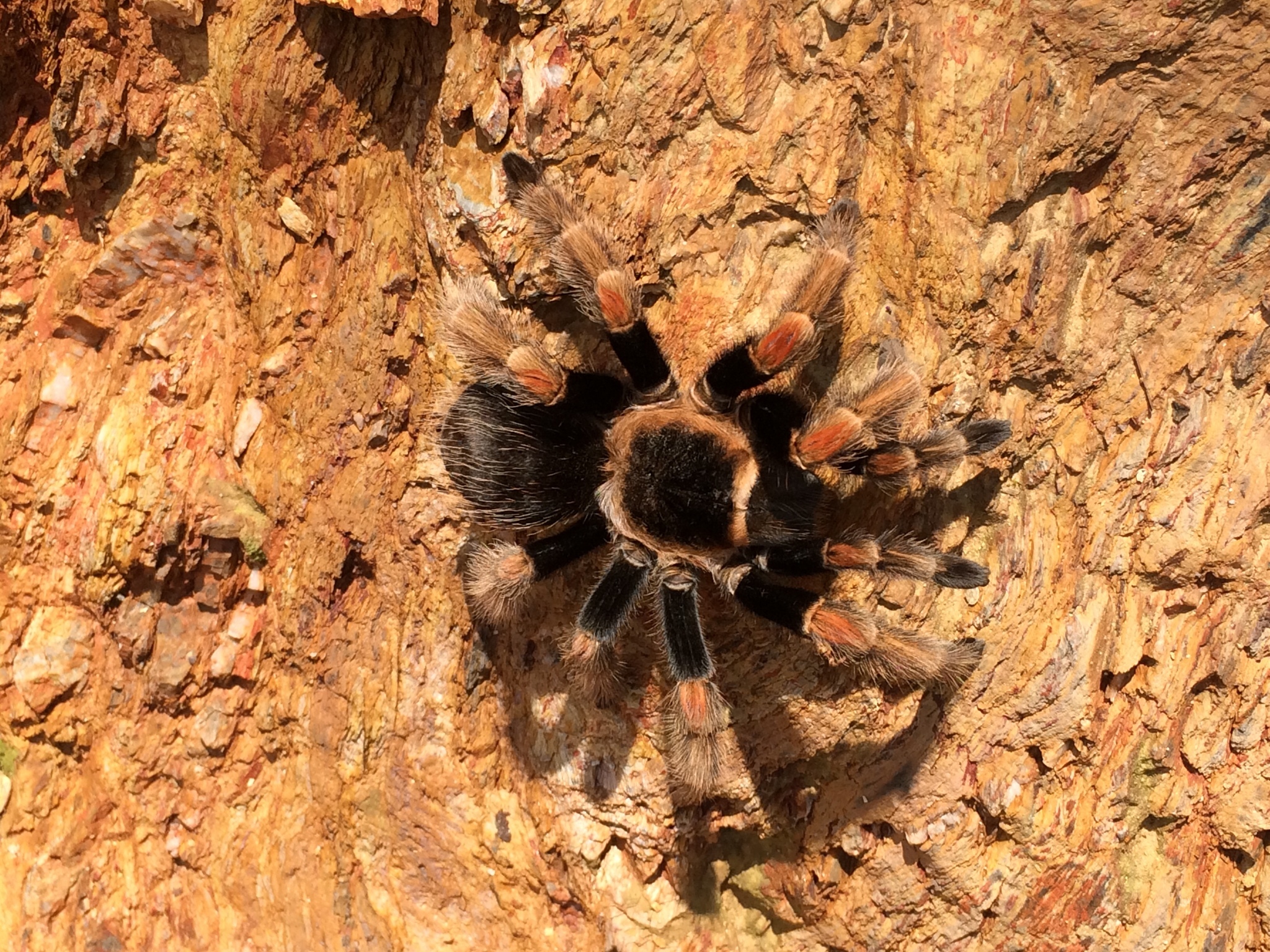
- Coloration: It features a deep black cephalothorax and abdomen, with brilliant, saturated orange legs. Unlike the “bands” seen on a Red Knee, the orange on a B. baumgarteni covers a larger portion of the leg segments.
- Size: Adults reach a diagonal leg span of approximately 5.5 to 6 inches.
- Growth Rate: Like most Brachypelma, they are notoriously slow growers. It can take several years for a spiderling to reach a size where its adult colors become truly vibrant.
Temperament and Behavior
In the world of tarantula keeping, B. baumgarteni is generally regarded as a “display” species.
- Docility: They are typically calm but can be skittish compared with the legendary B. hamorii. They prefer to retreat to their hide rather than stand their ground.
- Urticating Hairs: As a New World species, their primary defense is flicking urticating hairs from their abdomen. Owners should be cautious during tank maintenance to avoid skin or eye irritation.
- Visibility: One of their best traits is their tendency to sit out in the open. They are rarely “pet holes,” making them excellent for observers who want to see their spider daily.
Husbandry and Habitat
Caring for a Mexican Orange Beauty is straightforward, making them accessible to beginners who have the patience for their slow growth.
Enclosure Requirements
- Type: A terrestrial enclosure with more horizontal space than vertical height.
- Substrate: 4–6 inches of dry substrate (coco fiber or topsoil) to allow for occasional burrowing.
- Humidity: They thrive in arid conditions. Keep the substrate mostly dry, but provide a shallow water dish at all times. Overflowing the water dish once a week to create a small damp patch is sufficient.
Diet
They are excellent eaters once they move past the tiny spiderling stage.
- Frequency: Adults should be fed 2–3 large crickets or a large Dubia roach every two weeks.
- Spiderlings: Feed pinhead crickets or flightless fruit flies every 4–5 days to support their growth.
Conservation and Availability
B. baumgarteni is found in a very restricted range along the Pacific coast of Michoacán, Mexico. Due to habitat loss and historical over-collection for the pet trade, they are listed on CITES Appendix II.
Because they were once so rare in the hobby, they still command a higher price point than the more common Red Knees. It is vital to ensure you are purchasing captive-bred specimens to support sustainable hobby practices and protect the remaining wild populations.
To read my other blogs on tarantulas, click HERE!


Leave a Reply