
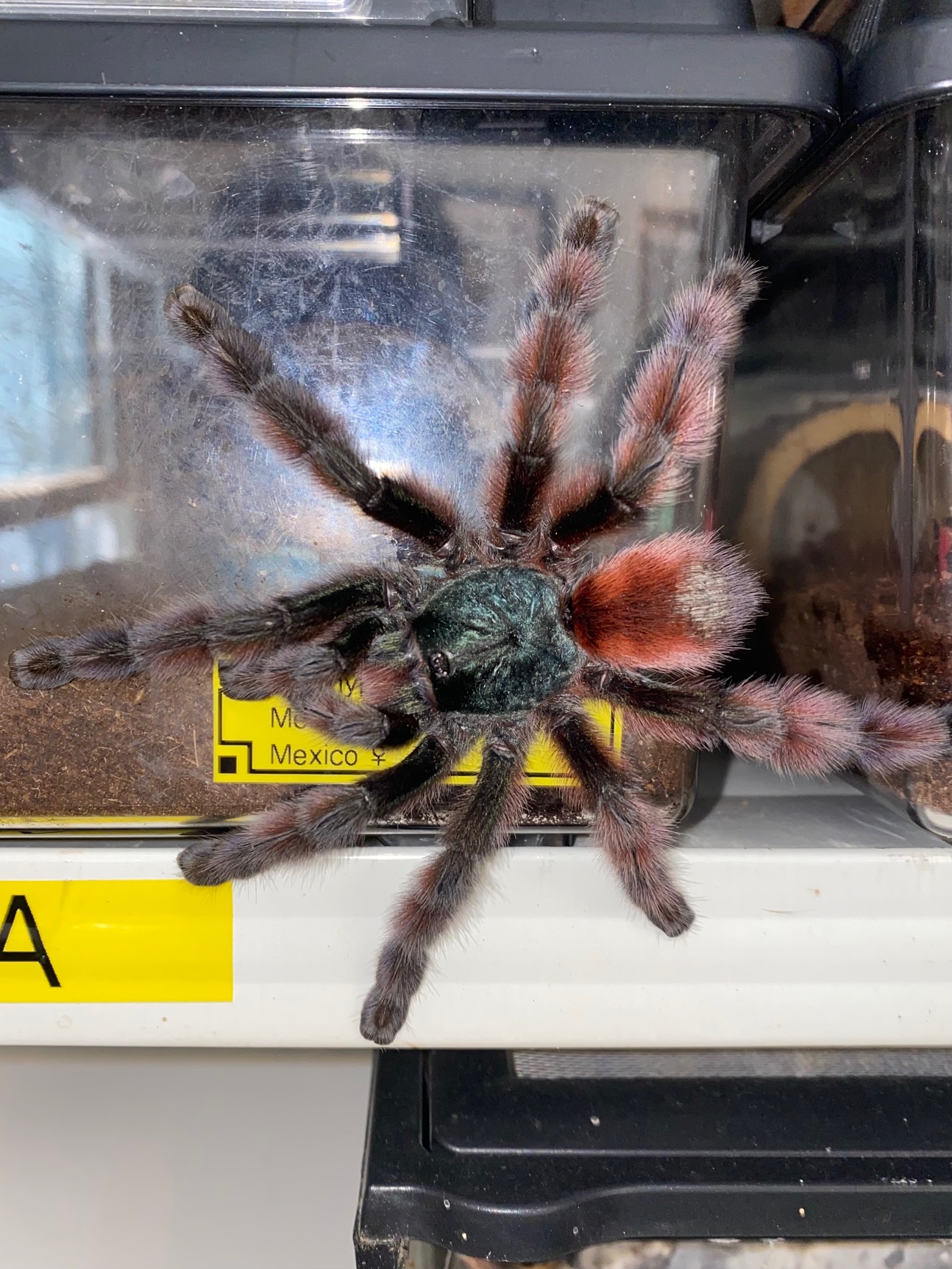
From the lush, humid rainforests and vibrant coastal areas of the Caribbean island of Martinique, and introduced to Guadeloupe, emerges one of the most stunning and iconic arboreal tarantulas – Caribena versicolor, universally known as the Antilles Pinktoe Tarantula or Martinique Pinktoe. Revered for its breathtaking iridescent colors that change dramatically from spiderling to adult, its delicate arboreal webbing, and its generally docile nature, this species is a true showstopper in the world of arachnids.
A Spectrum of Colors: Dynamic Appearance and Distinctive Hues:
Caribena versicolor is a medium-sized arboreal (tree-dwelling) tarantula, with adult females typically reaching a leg span of 4 to 5.5 inches (10 to 14 cm). Its most captivating feature is its dramatic color transformation throughout its life stages:
- Spiderlings: Hatch as tiny, bright blue individuals, often with faint dark markings on the abdomen.
- Juveniles: As they grow, the blue deepens, and patches of green and red begin to emerge, especially on the abdomen and legs.
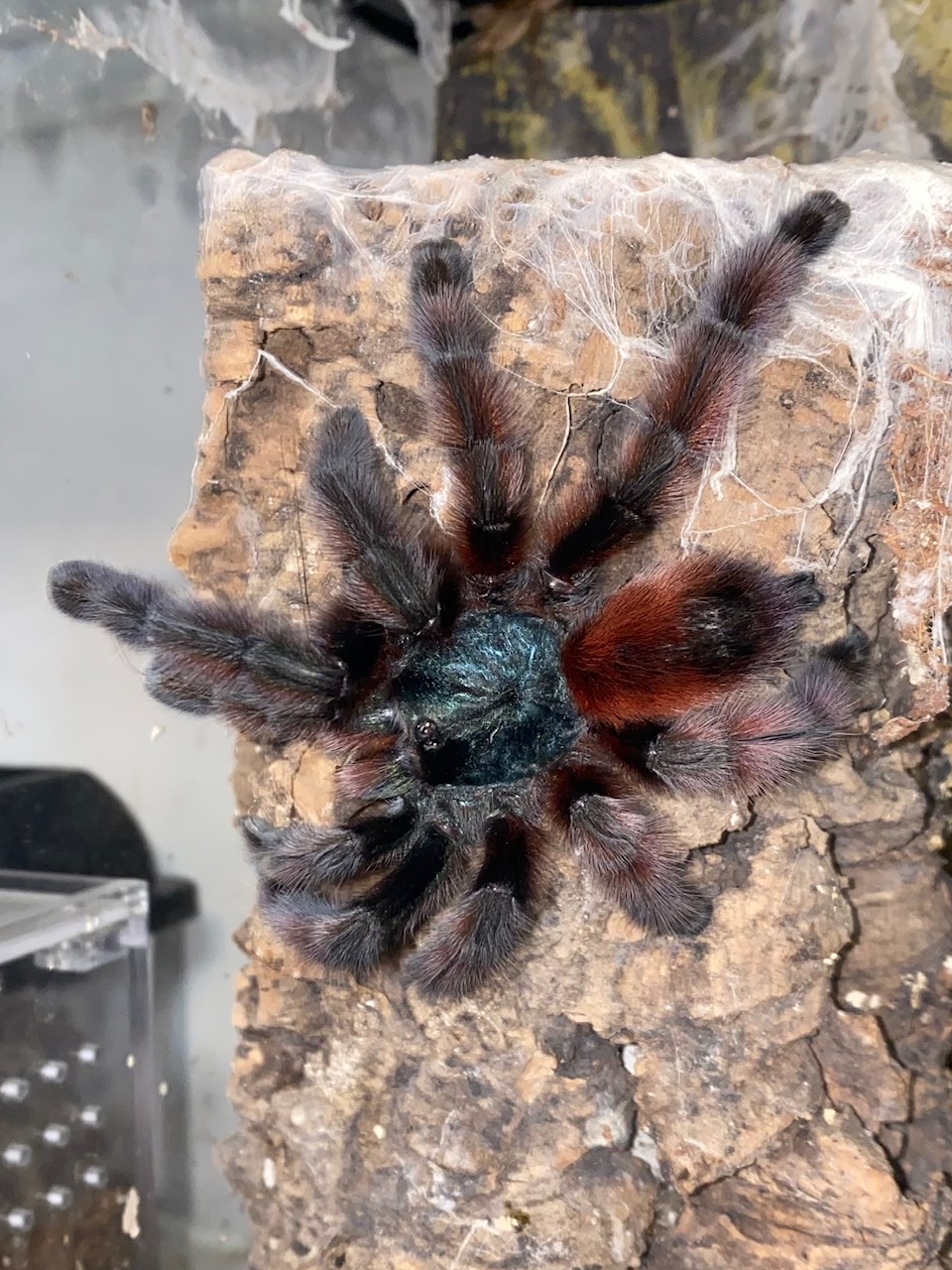
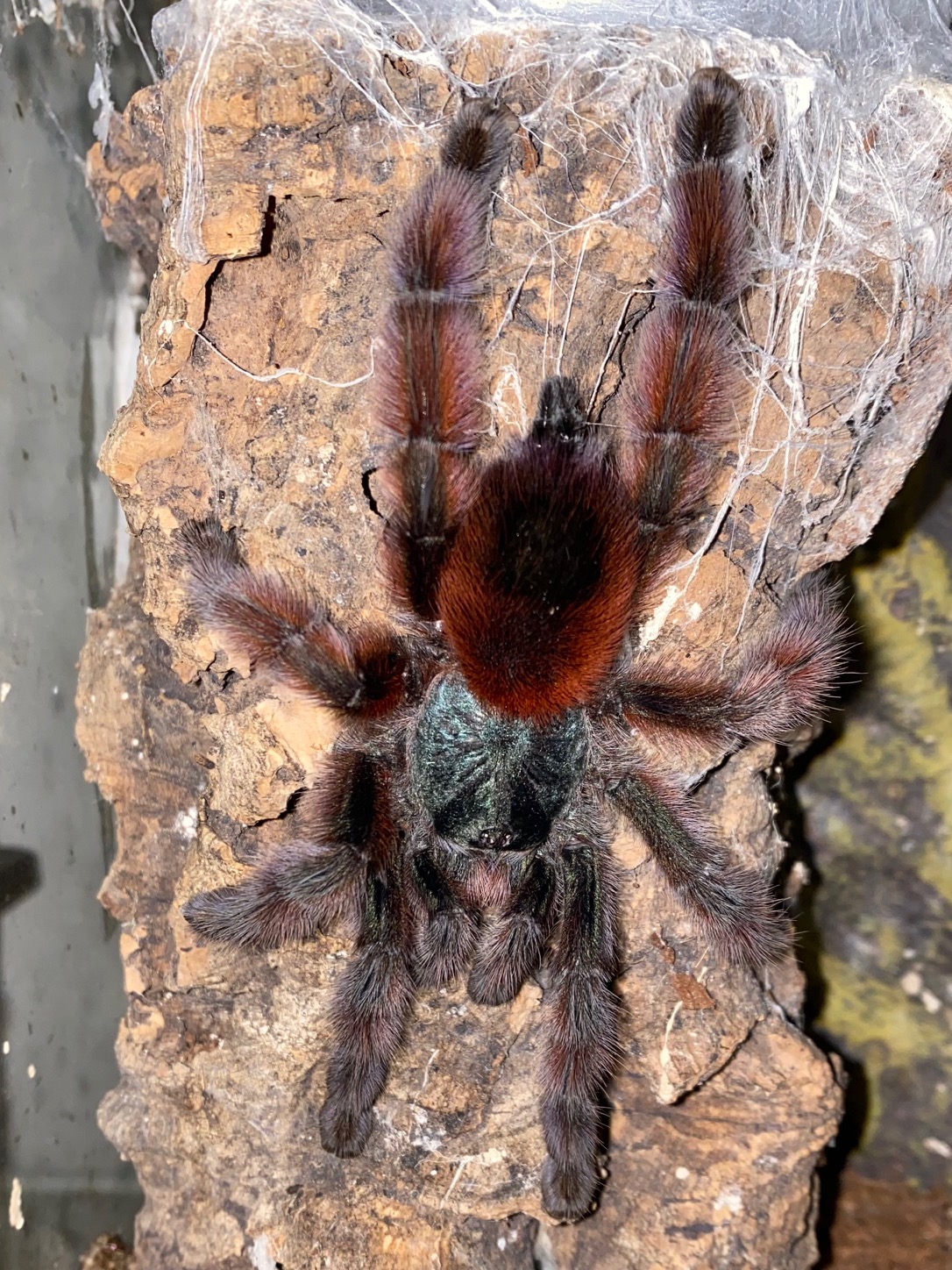
- Adults: The adult coloration is a breathtaking mosaic. The carapace (the hard upper shell of the cephalothorax) typically shifts to a metallic green or coppery-red. The legs become a vibrant, iridescent blue-green, sometimes with hints of purple. The abdomen (opisthosoma) is often a striking red or orange, covered with fine, silky hairs. The tarsi (feet) remain a distinctive light pink or yellowish, giving rise to its “pinktoe” common name.
This striking evolution of color makes C. versicolor an endlessly fascinating species to observe at every stage of its life. Males are typically more slender and have longer legs, but retain the general adult coloration.
Distribution and Habitat: An Arboreal Endemic of the Lesser Antilles:
Caribena versicolor is endemic to the Caribbean island of Martinique, part of the Lesser Antilles island chain. It has also been introduced and established populations on the neighboring island of Guadeloupe. Its natural habitat consists of humid tropical rainforests and coastal areas, where it lives arboreally, constructing intricate webbed retreats high in trees and shrubs. These silky “tunnels” or “hammocks” provide essential shelter from predators and the elements, serving as ambush points for prey. Its presence is indicative of a healthy and biodiverse forest canopy in its native range.
Lifestyle and Behavior: Agile Webbers and Docile Demeanor:
The Antilles Pinktoe Tarantula is known for its agility and its impressive ability to create elaborate web structures among branches and leaves. They are excellent climbers and will often create silken tubes or “tents” within dense foliage, from which they can emerge to hunt. They are primarily nocturnal, but can sometimes be observed during the day, particularly within their webbed retreats.
Compared to many other tarantula species, C. versicolor is renowned for its generally docile and calm temperament, making it a highly popular species among hobbyists. They are less prone to aggressive displays than Old World species and typically do not flick urticating hairs (though they possess them, they rarely use them in defense). Their primary defense mechanism when disturbed is to retreat rapidly into their webbed hide or simply jump away. Bites are exceedingly rare and their venom is considered mild, causing only localized discomfort to healthy humans.
Life Cycle: Rapid Growth and Moderate Longevity:
The life cycle of Caribena versicolor involves a relatively fast growth rate compared to some other tarantula species.
- Egg & Spiderlings: Females produce an egg sac, which they carefully guard within their webbed retreat. After a period of incubation, numerous small spiderlings emerge, already displaying their characteristic bright blue coloration.
- Juvenile Growth: Spiderlings and juveniles grow quickly, undergoing successive molts (shedding their exoskeleton) as they increase in size and progressively develop their stunning adult colors.
- Adult: Females typically reach sexual maturity around 1.5 to 2 years of age and can live for 8 to 12 years in captivity. Males mature more quickly (around 1 year) and have a significantly shorter adult lifespan, usually only 1-2 years after their ultimate molt to maturity, during which their sole purpose is to find a mate.
Ecological Role:
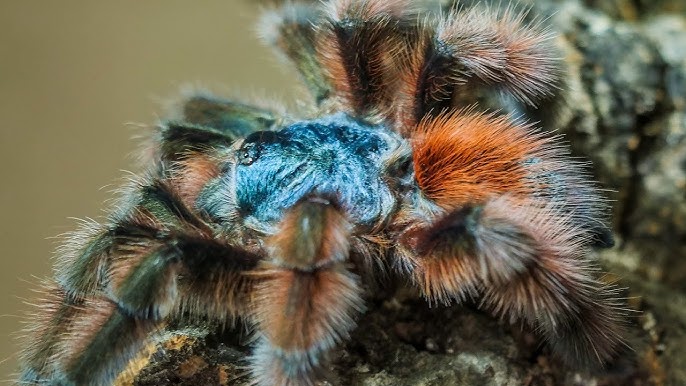
In their native Caribbean island ecosystems, Caribena versicolor plays a vital role as an arboreal invertebrate predator. They help regulate populations of various tree-dwelling insects and other small arthropods, contributing to the natural balance of their forest habitat. Their web construction may also contribute to the microhabitat structure within the canopy.
Conservation Status and Threats: Unlisted but Habitat Vulnerable:
While Caribena versicolor is not currently listed as endangered or threatened on major international conservation lists, its status as an endemic island species makes it inherently vulnerable. Its habitat on Martinique and Guadeloupe, like many island ecosystems, faces increasing pressures from:
- Habitat Loss and Fragmentation: Due to agricultural expansion (e.g., banana plantations), urbanization, tourism development, and natural disasters (hurricanes).
- Illegal Collection: While widely bred in captivity, demand can still lead to wild collection, potentially impacting local populations if unregulated.
- Climate Change: Changes in temperature and rainfall patterns could impact their specific microclimate requirements.
Protecting the unique and fragile forest ecosystems of the Caribbean islands is crucial for the long-term survival of this beautiful arboreal tarantula.

A Radiant Gem of the Antilles: The Enduring Allure of Caribena versicolor
Caribena versicolor, the Antilles Pinktoe Tarantula, stands as a breathtaking example of the unique biodiversity found on Caribbean islands. Its incredible color transformation, delicate arboreal webbing, and generally calm demeanor make it a true jewel in the arachnid world. Observing this radiant creature in its intricate web is a captivating experience, a vivid reminder of the vibrant and irreplaceable life that thrives within our planet’s tropical forests. Sources
To read my other Tarantula Genus Spotlights, click HERE.
Discover more from
Subscribe to get the latest posts sent to your email.
 davethebugguy.org