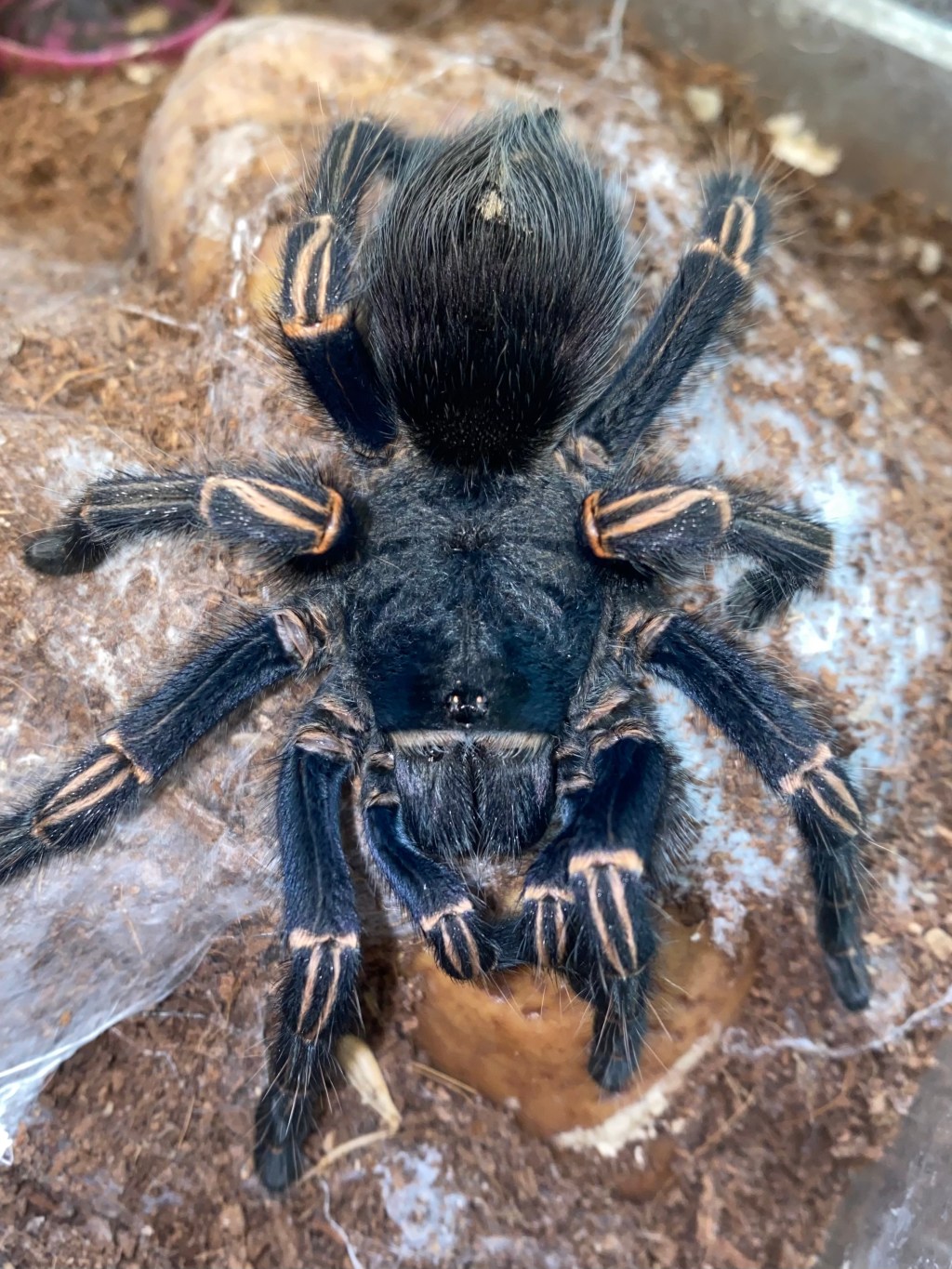
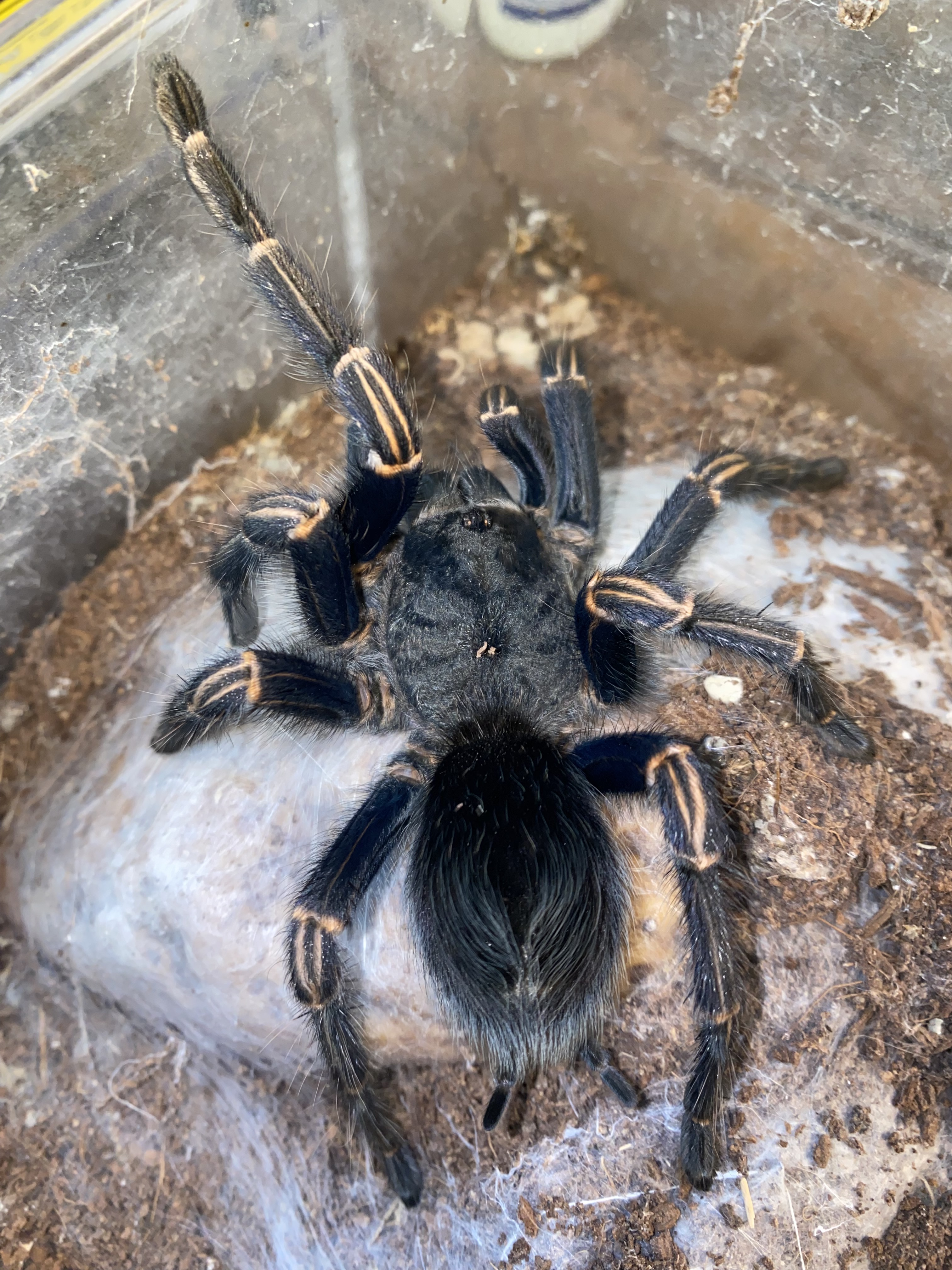
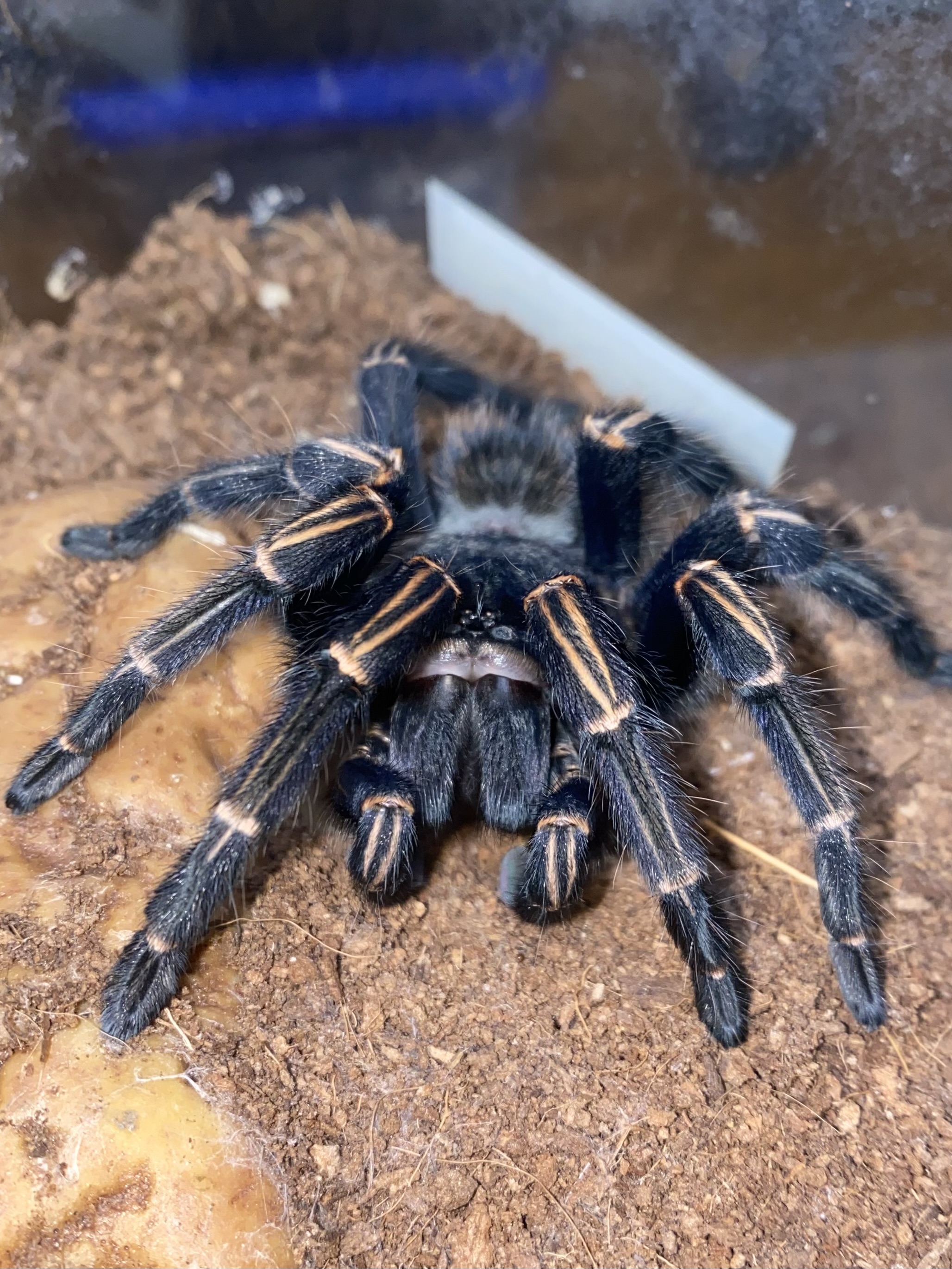
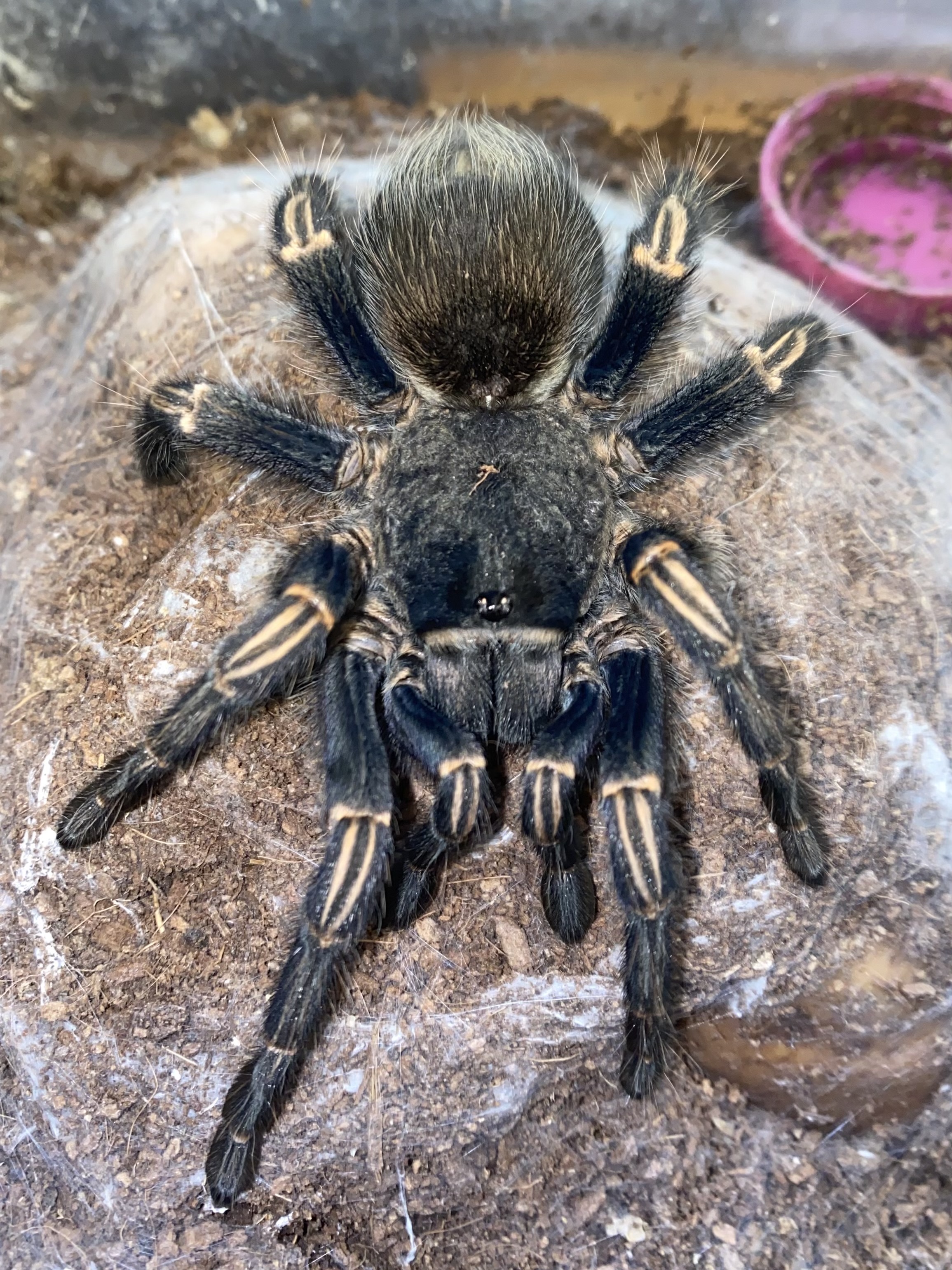
Long traded under the hobby moniker Homoeomma sp. “Blue” (as well as Homoeomma sp. “Blue Small” and “Blue Large”), this stunning South American species has been taxonomically resolved and placed within the genus Thrixopelma (most notably representing Thrixopelma cyaneolum and its close Peruvian counterpart Thrixopelma lagunas). While blue coloration in the tarantula world is notoriously dominated by lightning-fast, highly defensive Old World species, this Peruvian beauty delivers metallic cobalt-blue coloration in a hardy, calm New World package.
Quick Stats
| Feature | Details |
|---|---|
| Scientific Name | Thrixopelma cyaneolum (formerly Homoeomma sp. “Blue” / Thrixopelma sp. “Blue”) |
| Common Name | Cobalt Red Rump / Peruvian Blue Femur / “Homoeomma Blue” |
| Type | Terrestrial / Opportunistic Burrower |
| New World / Old World | New World |
| Growth Rate | Medium |
| Adult Size | 4.5 – 5.5 inches (11 – 14 cm) |
| Lifespan | Females: 15–20 years / Males: 4–6 years |
Natural Habitat & Temperament
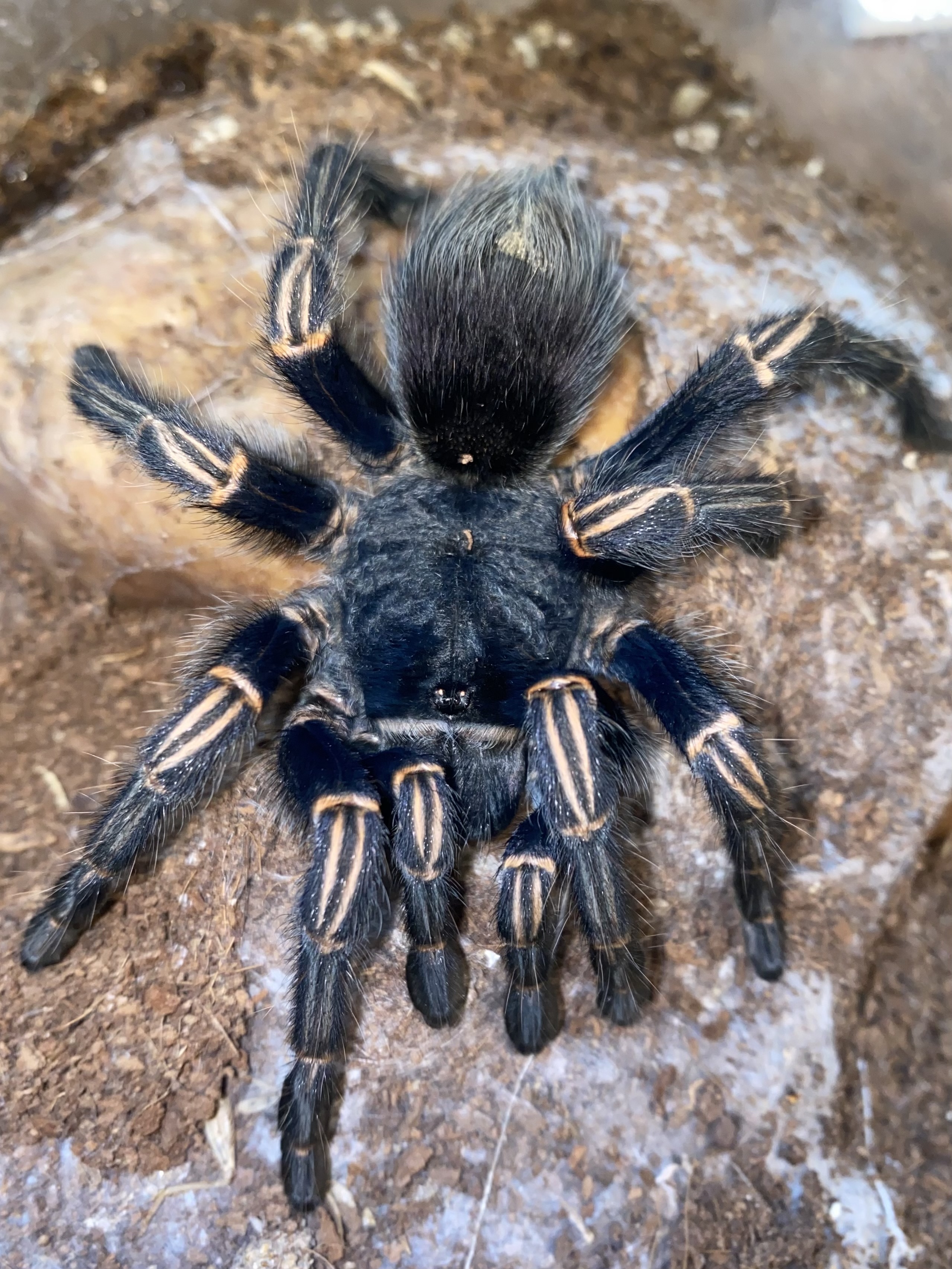
- Origin: Montane scrub and dry deciduous forests across Peru.
- Taxonomy Note: Historically imported and cataloged as Homoeomma sp. “Blue”, the presence of distinct male palpal bulb crests, unique spermathecal morphology, and specific urticating hair patterns placed this species firmly within Thrixopelma.
- Behavior: Highly docile, steady, and deliberate. Unlike nervous terrestrial species that bolt at slight vibrations, Thrixopelma specimens tend to be confident display animals that settle comfortably out in the open.
- Venom/Urticating Hairs: Mild venom. They possess Type III urticating setae on the abdomen, but they rarely kick hairs unless persistently harassed.
Enclosure Requirements
1. Housing Type
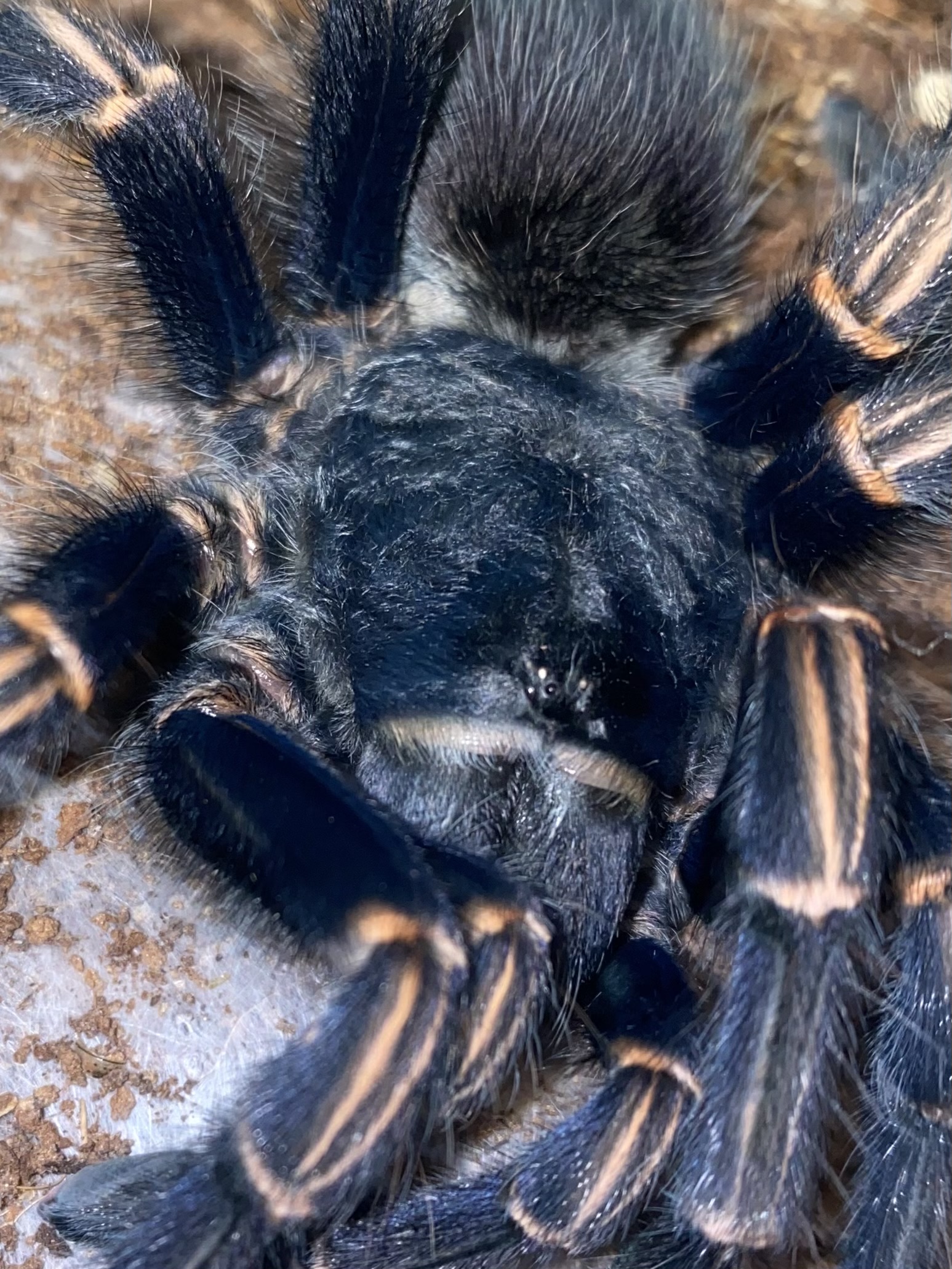
- Terrestrial: A medium horizontal acrylic terrarium or a 5-to-10 gallon glass tank. Horizontal floor space takes priority over vertical clearance.
- Safety Note: Maintain a maximum drop height of 1.5 times the spider’s diagonal leg span between the substrate surface and the lid to safeguard against abdominal rupture.
2. Substrate
- Type: A 70/30 blend of chemical-free topsoil and coconut coir, with a pinch of dry sphagnum moss worked in to help buffer moisture.
- Depth: 4 to 5 inches. Slings and younger juveniles will excavate a starter retreat, while adults tend to live as opportunistic surface-dwellers with a designated shelter.
- Moisture: Keep the lower substrate layer barely moist and the surface layer bone-dry. They do not tolerate swampy mud or stagnant, airless containers.
3. Decor & Hides
- Place a flat or half-round cork bark retreat partially submerged in the substrate.
- Add artificial foliage to provide cover and visual security near the burrow entrance.
Environmental Conditions
- Temperature: 70°F – 78°F (21°C – 26°C). As native inhabitants of elevated Peruvian regions, they thrive at comfortable household room temperatures; avoid overheating them past 82°F.
- Humidity: 55% – 65% (moderate).
- Maintenance: Ensure cross-ventilation is present. Rely on a clean water dish and overflow one corner every 10–14 days rather than misting down the entire enclosure.
Feeding & Hydration
- Slings: Feed every 5–7 days using pre-killed pinhead crickets, red runner nymphs (Shelfordella lateralis), or mealworm segments.
- Juveniles/Adults: Feed every 10–14 days. They are reliable eaters that eagerly accept adult crickets, medium Dubia roaches, and hornworms.
- Water: Keep a sturdy, shallow water dish filled with fresh water at all times.
Molting Process
- Signs of Premolt: The abdomen becomes swollen, tight, and develops a dark cast. The striking metallic blue sheen on the femurs and carapace will turn dusky and matte.
- Care: Ensure the water dish is full and avoid moving or disturbing the enclosure. Wait at least 10–14 days post-molt before offering live prey so the chelicerae can completely harden into a solid black.
Pro Tip: In older classifieds and forum posts, this spider was often sold as Homoeomma sp. “Blue II” or Thrixopelma lagunas. If you encounter captive-bred slings labeled under any of these names, their husbandry requirements are identical.
To read my other Tarantula Species Spotlights, click HERE! To order my “Tarantula Keeper’s Log Book,” click on the book cover below!


Leave a Reply