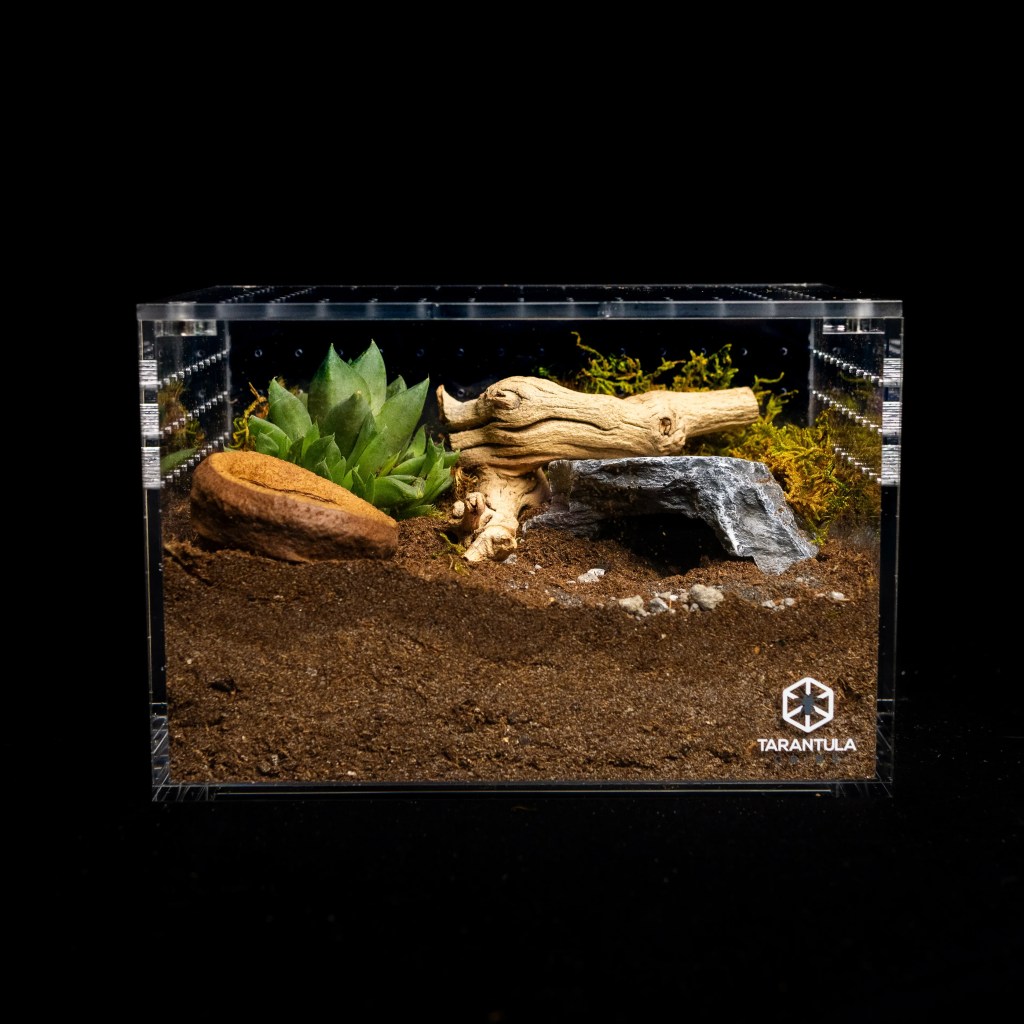
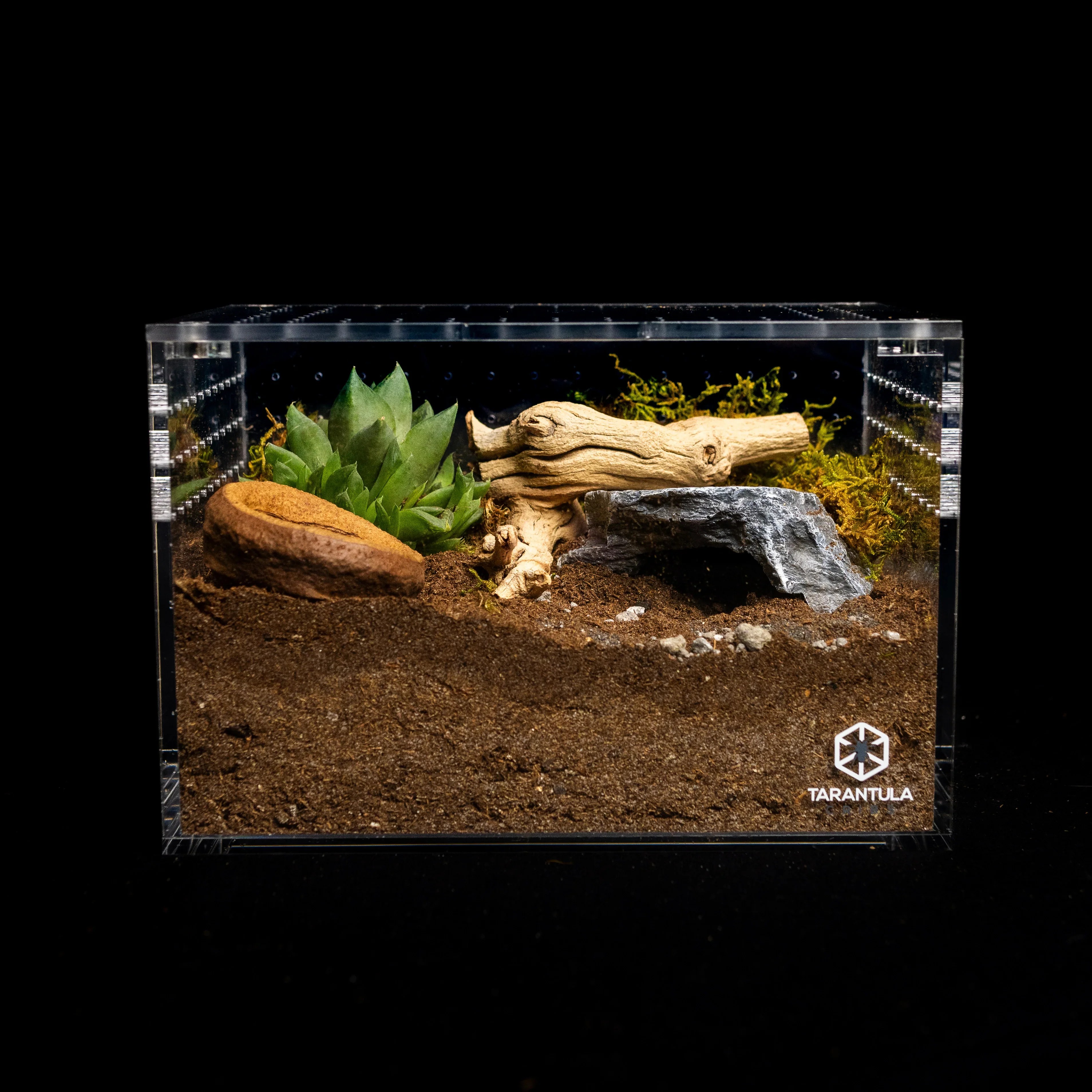
For years, tarantula keepers faced an awkward compromise: repurpose standard glass reptile terrariums with hazardous mesh lids, or modify translucent plastic storage tubs with a soldering iron. While utilitarian, neither option offered the ideal balance of safety, microclimate control, and crystal-clear display value.
Tarantula Cribs fundamentally altered that landscape. Designed by keepers for keepers, their enclosures have earned a reputation as the premier housing solution in modern arachnid husbandry.
1. Optical-Grade Clarity and Build Quality
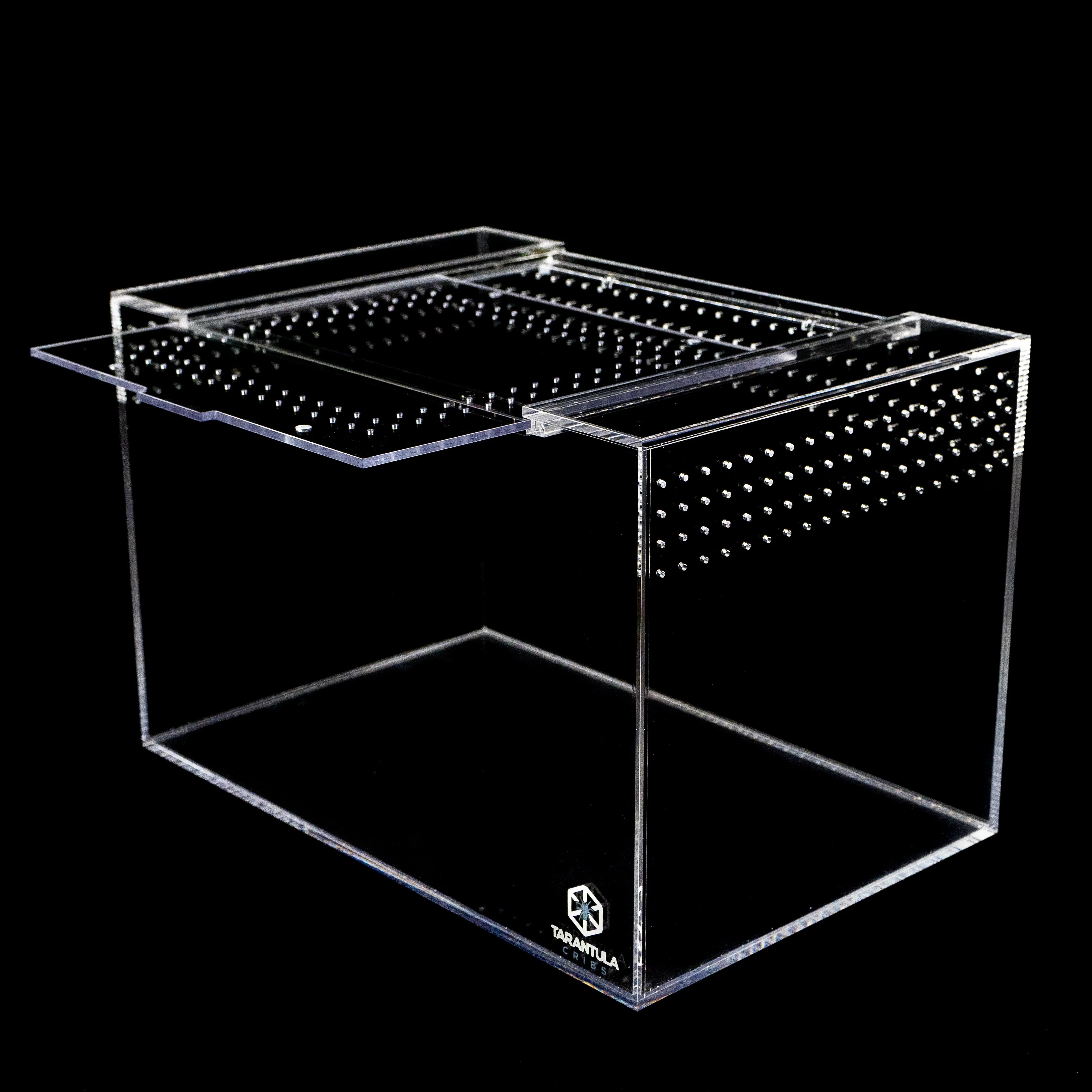
Unlike thin extruded plastic or glass terrariums with thick silicone seams, Tarantula Cribs uses thick, high-grade cast acrylic. The material boasts near-glass optical clarity without the brittle weight, allowing a 360-degree, distortion-free view of your specimen.
The seams are cleanly fused rather than crudely glued, producing smooth, rigid edges that resist bowing even when filled with moist substrate. This structural integrity is critical for species requiring deep burrowing depth or elevated humidity.
2. Tarantula-Specific Safety: Mesh-Free Design
Standard commercial terrariums rely heavily on woven wire mesh lids, which pose two major risks to tarantulas:
- Tarsal Claw Snagging: Tarantulas easily catch their delicate claws in fine wire mesh, often leading to panicky struggles, dropped legs, or fatal falls.
- Chewing Hazards: Larger heavy-webbing species and strong chewers can shear through thin mesh over time.
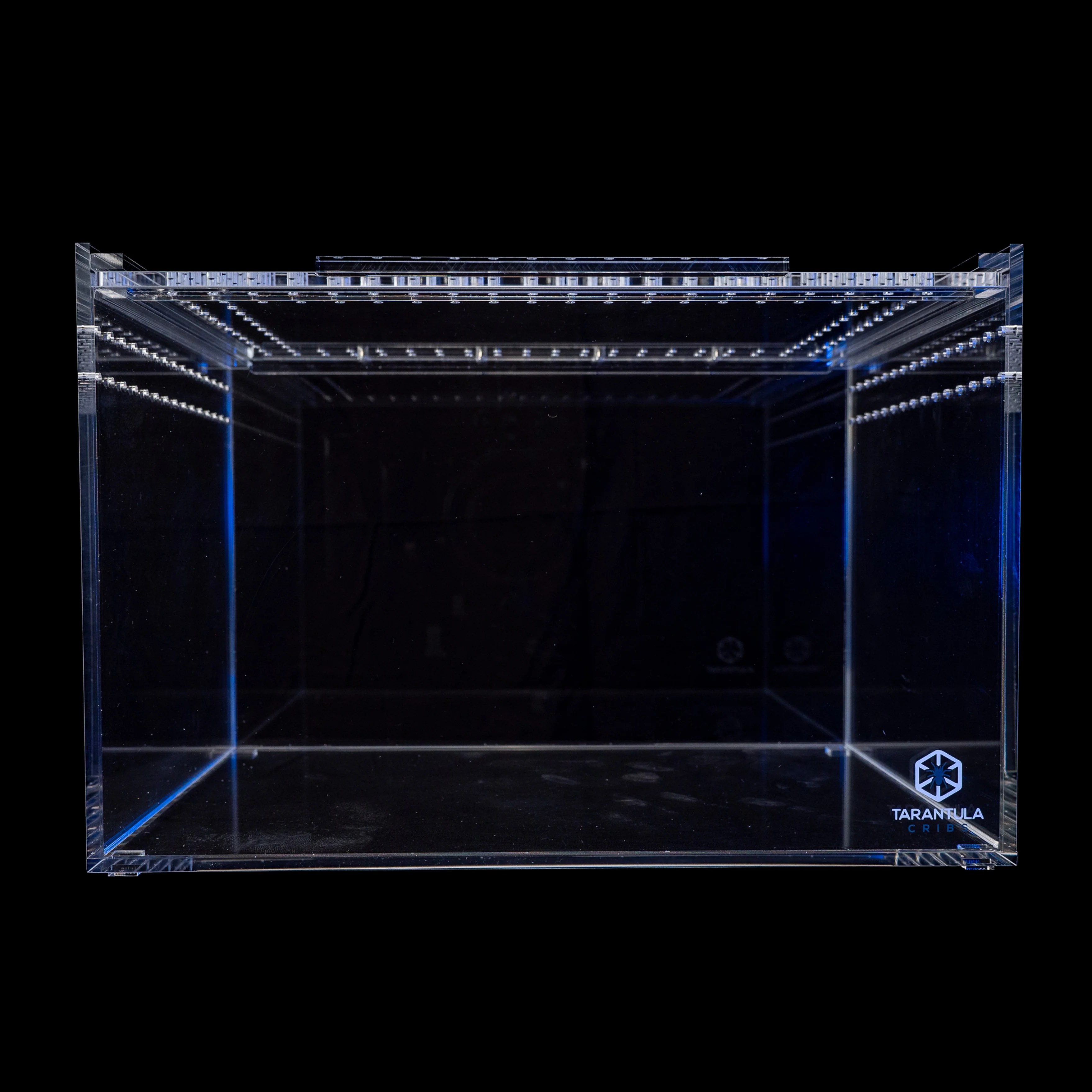
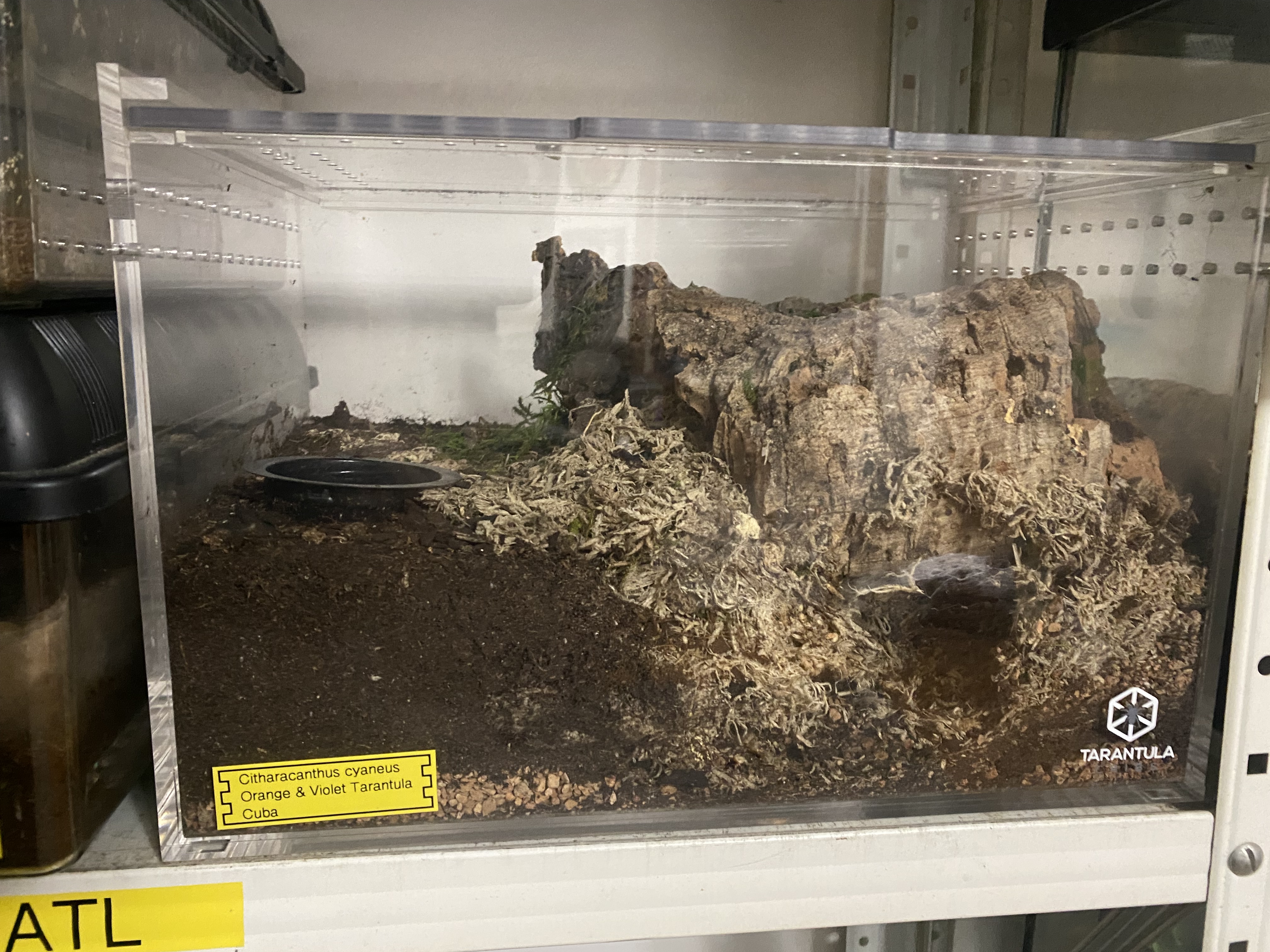
Tarantula Cribs eliminates mesh entirely. Lids and access doors are solid acrylic, laser-cut with precision micro-perforations that provide essential air movement while remaining completely impenetrable and claw-safe.
3. Engineered Cross-Ventilation
Stagnant air is an enclosure killer—it invites mold outbreaks, fungal blooms, and respiratory stress. Rather than relying solely on chimney-effect top venting (which dries out moisture-dependent setups), Tarantula Cribs incorporates intentional, high-density cross-ventilation patterns along the sides and top.
This airflow configuration provides:
- Consistent fresh air exchange across the substrate surface.
- Controlled evaporation that prevents moisture-dependent species from suffocating in stagnant humidity.
- Pinhole diameters sized to keep feeder insects like fruit flies, small roaches, and crickets securely inside.
4. Rock-Solid Magnetic Closures
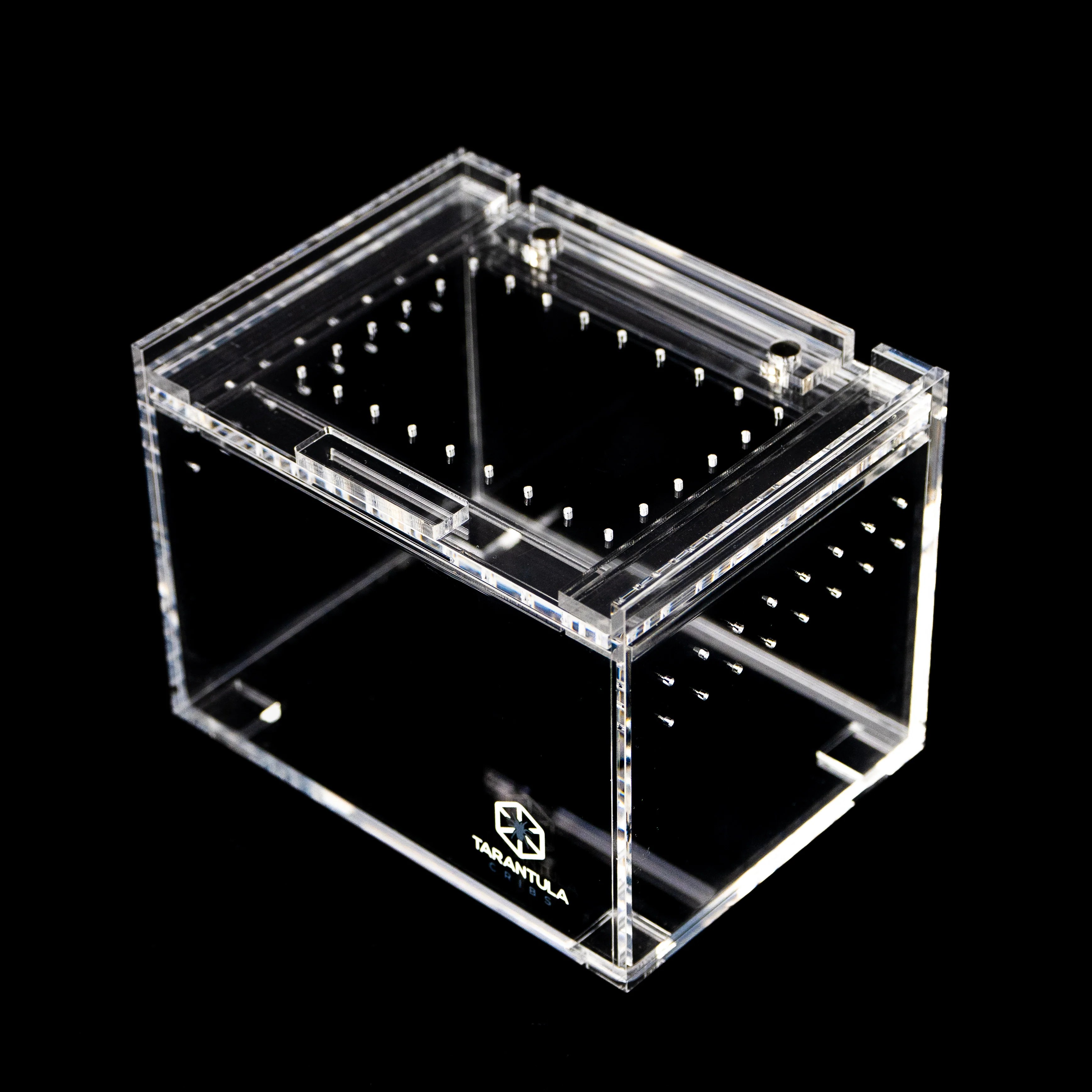
Escape prevention is paramount when housing fast Old World species or heavy burrowers capable of pushing up loose lids. Tarantula Cribs utilizes countersunk, high-strength neodymium rare-earth magnets paired with tight-tolerance sliding or drop-in mechanisms.
The latches engage with a satisfying, secure snap that tarantulas cannot push open from the inside. When performing routine maintenance or drop-feeding, the smooth sliding lids allow you to open just enough space to introduce prey without creating an open runway for a bolting spider.
5. Habitats Tailored to Every Lifestyle
| Series / Model | Ideal Ecological Niche | Notable Design Features |
|---|---|---|
| Terrestrial Cribs | Heavy-bodied ground dwellers (Grammostola, Brachypelma, Tliltocatl) | Wide floor footprint, high substrate dam to prevent dirt spillage, smooth sliding lid. |
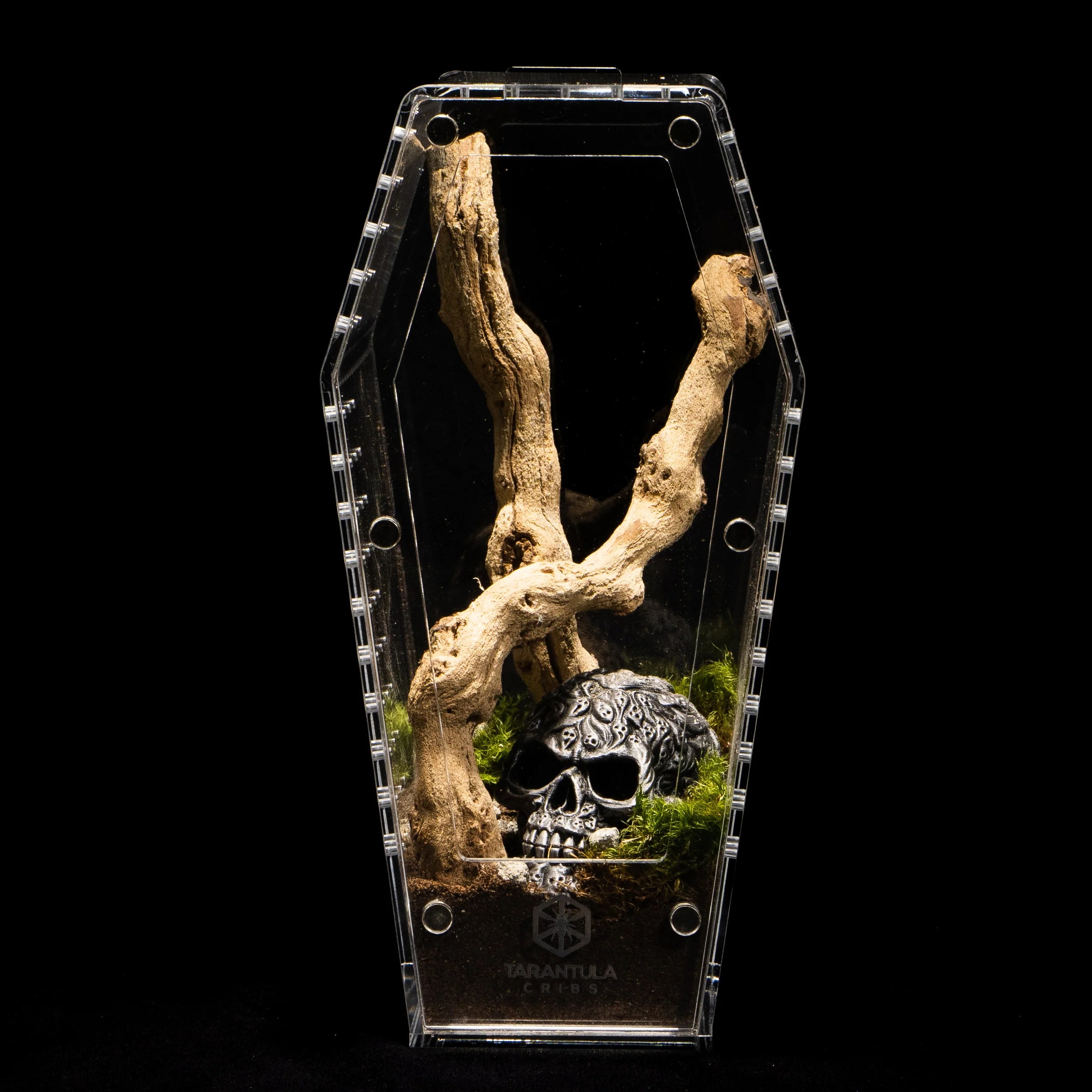
| Treehouse & Arboreal | Climbing species (Poecilotheria, Caribena, Psalmopoeus) | Vertical orientation, top/front dual-access doors that avoid tearing up high web funnels. |
| Fossorial Cribs | Obligate deep burrowers (Hysterocrates, Pelinobius, Ephebopus) | Deep-well acrylic basin allowing 8+ inches of packed dirt while maintaining upper airflow. |
| Slider & Cube Cribs | Slings and juveniles | Compact, stackable footprints tailored for fast-growing spiderlings without escape gaps. |
6. Premium Display Aesthetics
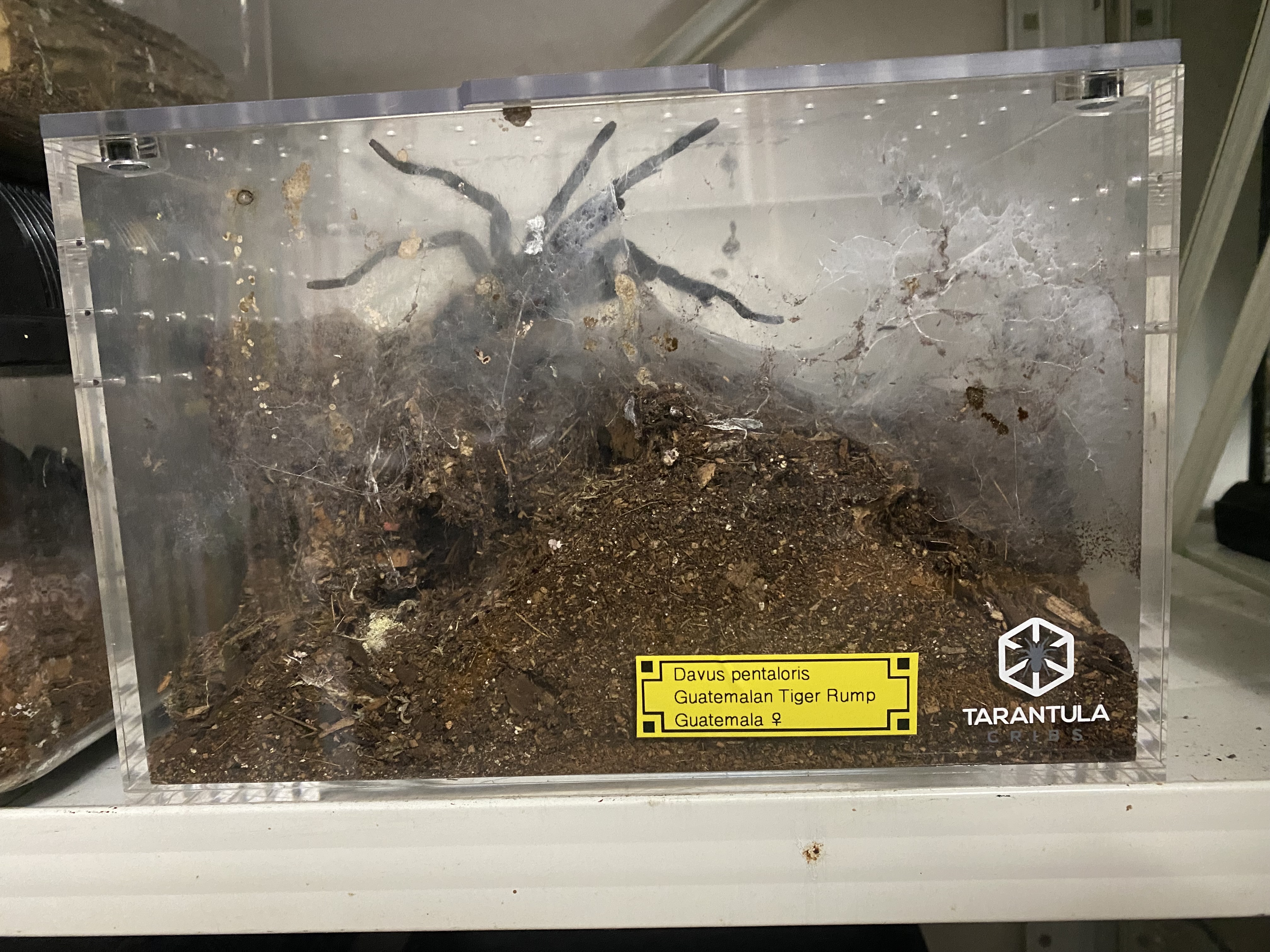
Tarantula keeping is as much about celebrating natural history as it is about animal care. Tarantula Cribs turns enclosures into living museum exhibits. Whether placed on a dedicated display shelf or an office desk, the clean minimalist geometry highlights the animal, its webbing architecture, and the naturalistic botanical scape inside without visual distraction.
By eliminating common husbandry hazards, perfecting ventilation, and elevating display aesthetics, Tarantula Cribs provides an enclosure setup that genuinely puts arachnid welfare and keeper peace of mind first.
I can’t recommend these enclosures enough. To order your own, visit their website HERE!


Leave a Reply