

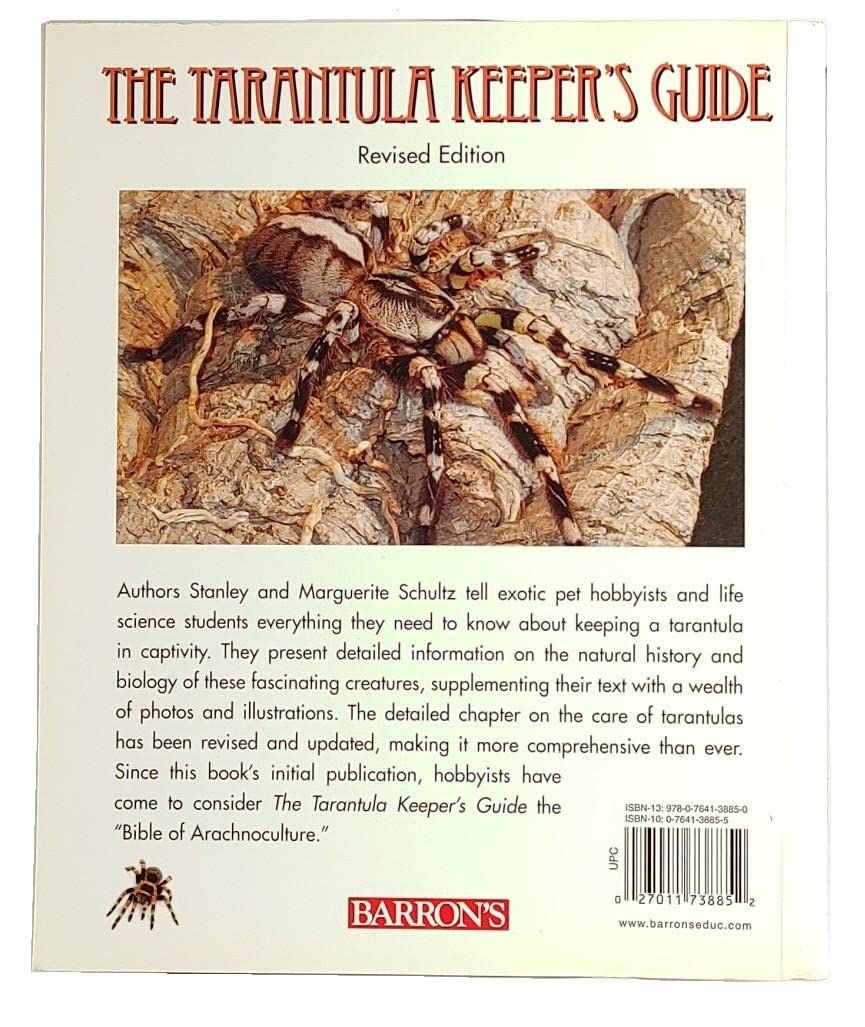
For decades, the world of arachnoculture has looked to a single, definitive source for wisdom, scientific insight, and practical care: The Tarantula Keeper’s Guide by Stanley A. Schultz and Marguerite J. Schultz. Often referred to by enthusiasts as the “Tarantula Bible,” this comprehensive work did more than just list husbandry requirements; it revolutionized the way these misunderstood creatures are perceived by the public and cared for by keepers. By blending rigorous biological study with a deep, palpable affection for their eight-legged subjects, the Schultzes created a manual that remains as inspiring today as it was upon its first publication in 1998.
A Foundation of Scientific Wonder
What sets this guide apart from many other pet manuals is its profound commitment to biological education. The authors do not simply tell a reader how to keep a tarantula alive; they explain the intricate physiological processes that make these animals so unique. The book provides a deep dive into the evolutionary history of the Theraphosidae family, offering readers a window into a world that has remained largely unchanged for millions of years. This focus on anatomy and physiology ensures that the keeper understands the “why” behind the “how,” fostering a deeper connection between the owner and the animal.
The Schultzes take great care to describe the complex sensory systems of the tarantula, from the delicate vibrations sensed by the slit sensilla to the remarkable process of ecdysis, or molting. By detailing the internal mechanics of a molt, the book transforms a stressful event for a new keeper into a fascinating display of biological engineering. This scientific grounding serves to strip away the “creepy-crawly” stigma, replacing fear with an informed sense of awe.
Mastering the Art of Husbandry
The practical advice contained within the guide is legendary for its clarity and common sense. In an era before the internet offered instant (and often conflicting) advice, the Schultzes provided a steady hand. They cover every essential aspect of care, including the selection of an appropriate enclosure, the importance of substrate depth, and the nuances of temperature and humidity management. Their approach is characterized by responsible minimalism, advocating for setups that prioritize the animal’s safety and natural behaviors over aesthetic complexity.
Beyond the basics, the book excels in its discussion of feeding and nutrition. It provides a thorough overview of prey types and the importance of a varied diet, while also addressing the common anxieties of new keepers, such as a spider’s refusal to eat for long periods. The Schultzes’ patient, reassuring tone helps keepers understand that these animals operate on a much slower biological clock than mammals, encouraging a “watch and wait” philosophy that is essential for successful long-term care.
Dismantling Myths and Cultivating Ethics
Perhaps the most significant contribution of The Tarantula Keeper’s Guide is its role in debunking the pervasive myths that have haunted spiders for centuries. The authors systematically dismantle the image of the “deadly” tarantula, replacing it with the reality of a fragile, shy predator that would much rather retreat than engage in conflict. Their discussion on venom and defensiveness is balanced and factual, providing safety guidelines that protect both the keeper and the spider.
Furthermore, the Schultzes were early advocates for ethical sourcing and conservation. Throughout the guide, there is a strong emphasis on the importance of captive breeding over wild collection. By encouraging keepers to support sustainable practices, they helped lay the groundwork for the modern hobby, which now thrives on a diverse array of captive-bred species. This ethical framework ensures that the hobby contributes to the preservation of these species rather than their depletion in the wild.
A Lasting Legacy for the Modern Keeper
Even as new species are discovered, and technology changes the way we heat and light our terrariums, the core philosophy of The Tarantula Keeper’s Guide remains unshakable. It is a testament to the power of observation and the value of treating even the smallest creatures with respect and curiosity. The warmth and passion of Stanley and Marguerite Schultz leap off every page, making it clear that for them, tarantulas are not just pets, but fascinating ambassadors of the natural world.
For the novice, this book is an essential roadmap that prevents common mistakes and builds confidence. For the veteran, it is a nostalgic touchstone and a reliable reference that continues to offer new insights upon every re-reading. It stands as a vibrant celebration of arachnology, proving that with the right guidance, anyone can find beauty and wonder in the life of a tarantula.
Discover more from
Subscribe to get the latest posts sent to your email.
 davethebugguy.org