
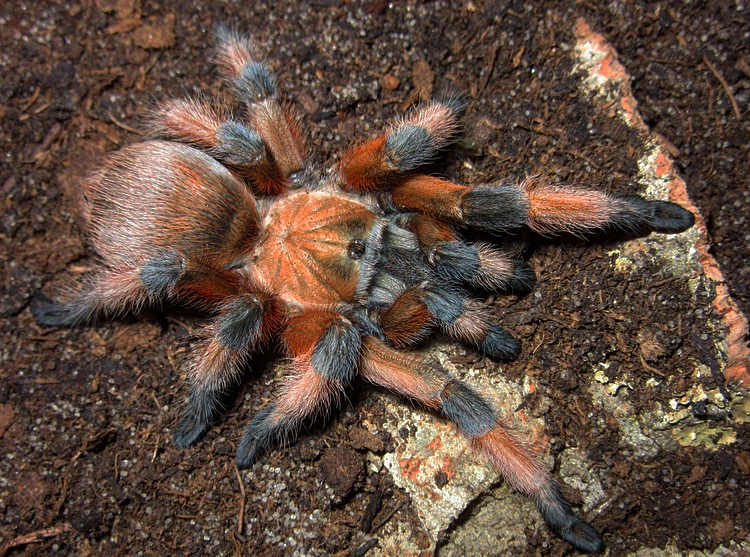
From the arid and semi-arid landscapes of the Rio Grande Valley in Texas, United States, comes Aphonopelma moderatum, popularly known as the Rio Grande Gold Tarantula. This striking terrestrial tarantula is highly regarded for its unique and beautiful coloration, combining golden hues with dark accents, making it one of the most visually distinctive members of the Aphonopelma genus found in the United States.
A Golden Canvas with Dark Accents: Appearance and Distinctive Patterns:
Aphonopelma moderatum is a medium to large-sized tarantula, with adult females typically reaching a leg span of 4.5 to 5.5 inches (11.4 to 14 cm). The most captivating aspect of its appearance is the striking contrast in its coloration, which exhibits significant sexual dimorphism.

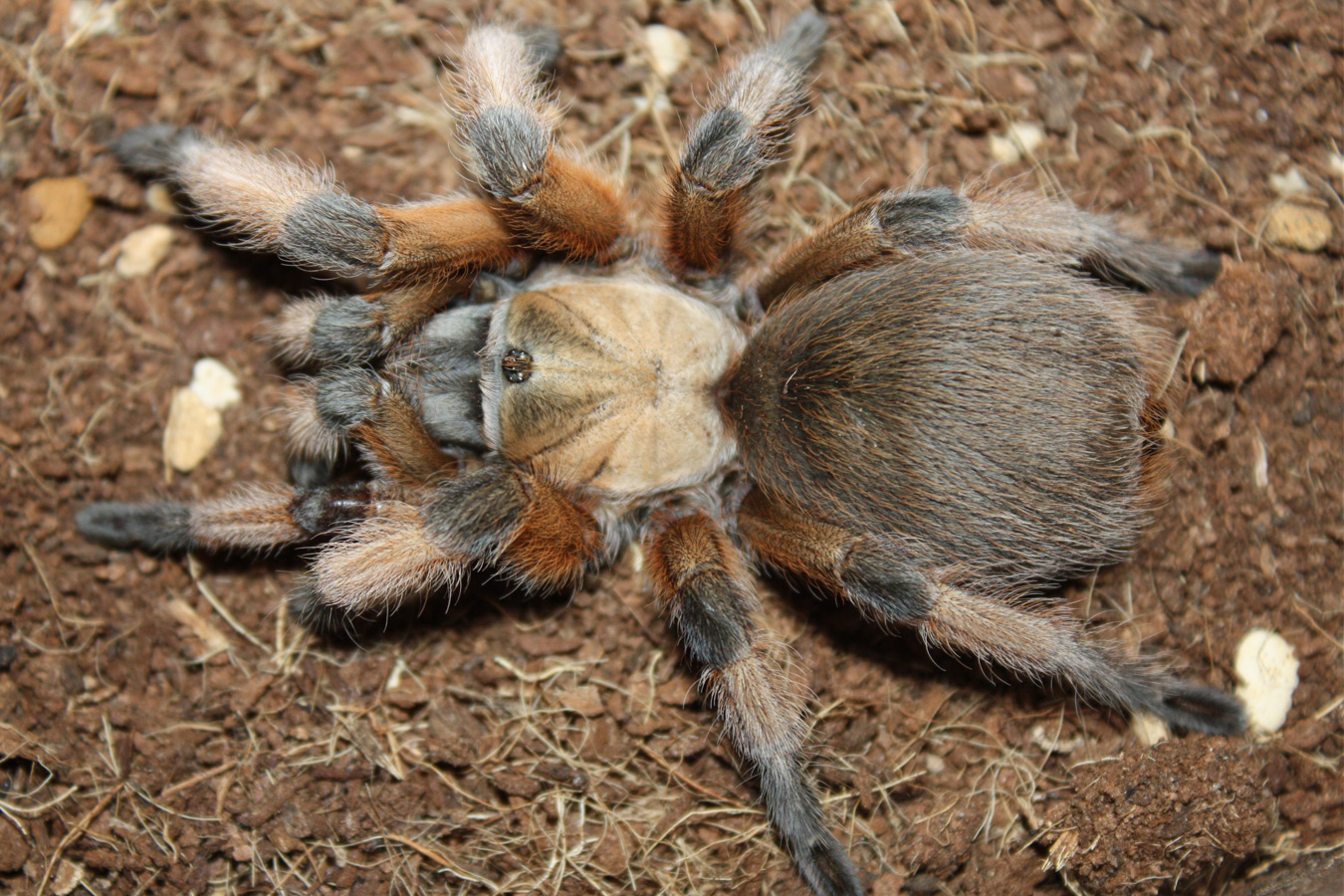
- Female: Females and immature specimens of both sexes display a truly unique color pattern. Their carapace (the hard upper shell of the cephalothorax) is a beautiful golden-yellow to tan. This vibrant hue stands in stark contrast to their legs, which feature distinct dark brown or black banding on the patellae (knees), metatarsi, and tarsi (the lower leg segments). The opisthosoma (abdomen) is typically darker, covered with a mix of short black and longer, often reddish or orange, urticating hairs.
- Male: Mature males undergo a notable color change, becoming generally darker and more uniform in coloration. Their carapace is usually dark brown, and their legs are predominantly black, often losing the distinct banding seen in females and juveniles. The opisthosoma is black, covered with dark orange hairs. Males are also typically more slender than females.
This combination of golden bodies and dark-banded legs in females makes the Rio Grande Gold Tarantula one of the most attractive Aphonopelma species.
Distribution and Habitat: A Texan Native:
Aphonopelma moderatum is endemic to the Rio Grande Valley region of southern Texas, United States. Its natural habitat includes dry grasslands, desert scrub environments, and roadside areas from the Amistad Reservoir to the Falcon Reservoir. These tarantulas are terrestrial, constructing silk-lined burrows in the soil. In areas with shallow soils, they may be found taking refuge under large, flat rocks. Their presence is a common sight in roadside picnic areas and along highway shoulders within their range, indicating their adaptability to somewhat disturbed, open environments.
Lifestyle and Behavior: Docile but Skittish Burrowers:
The Rio Grande Gold Tarantula is generally known for its docile temperament, which makes it a popular species among tarantula enthusiasts. While calm and unlikely to show aggression, they are often described as skittish and prone to rapid retreat when startled. If they feel threatened, their primary defense mechanism is to flick urticating hairs from their abdomen. These irritating bristles can cause itching and discomfort if they contact skin or mucous membranes. Bites are extremely rare and their venom is considered mild, causing only localized discomfort to healthy humans.
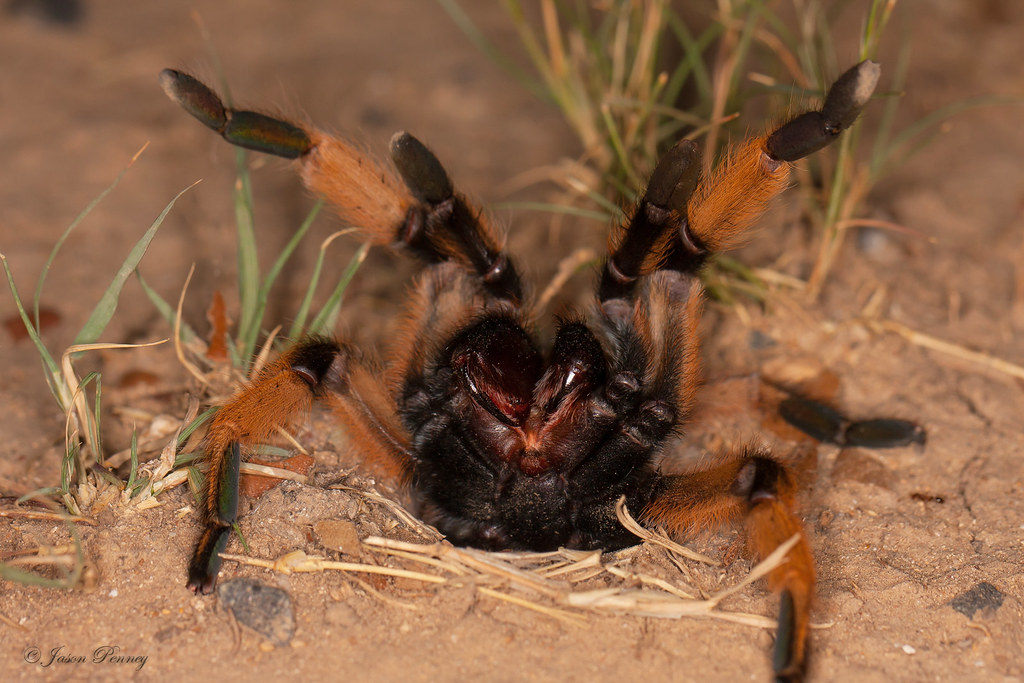
Unlike some other tarantulas that are obligate burrowers, adult A. moderatum will often utilize existing hides or make shallow burrows, and are known to spend a fair amount of time outside of their retreats, making them good display animals. Spiderlings and juveniles, however, are more prone to burrowing.
Life Cycle: Slow Growth and Impressive Female Longevity:
The life cycle of Aphonopelma moderatum is characterized by relatively slow growth and remarkable longevity for females.
- Egg & Spiderlings: Females produce an egg sac containing a moderate number of eggs (typically 200-500). The spiderlings that emerge are small but already begin to exhibit the distinct coloration of the species.
- Juvenile Growth: This species has a slow to medium growth rate, taking several years to reach maturity. They undergo successive molts, gradually increasing in size and solidifying their adult color patterns.
- Adult: Females are exceptionally long-lived, with lifespans often ranging from 20 to 40 years in captivity, making them a very long-term companion. Males, once they reach sexual maturity (typically 5-8 years), have a significantly shorter lifespan of only about 7 years. Their adult life is dedicated to finding a mate. Breeding this species can be a slow process due to their long maturation periods.

Ecological Role:
In their native Texan ecosystems, Aphonopelma moderatum functions as a terrestrial invertebrate predator. They contribute to the natural balance by preying on various ground-dwelling insects and other small arthropods. Their burrowing habits also play a role in soil aeration, influencing the microhabitat conditions within their range.
Conservation Status and Threats: Secure but Localized Pressures:
Aphonopelma moderatum is currently considered a common and secure species within its specific range in Texas. It is not listed as endangered or threatened on major conservation lists. Its prevalence in areas like roadside picnic areas suggests a degree of adaptability. However, as an endemic species with a relatively restricted geographical distribution, localized populations can face pressures from:
- Habitat Conversion: Loss of grasslands and desert scrub due to urbanization and agricultural expansion.
- Pesticide Use: Widespread use of insecticides in agricultural or residential areas can directly impact tarantula populations and their prey.
- Unregulated Collection: While currently not a significant threat according to some sources, excessive or illegal collection for the pet trade could potentially impact local wild populations if not managed sustainably.
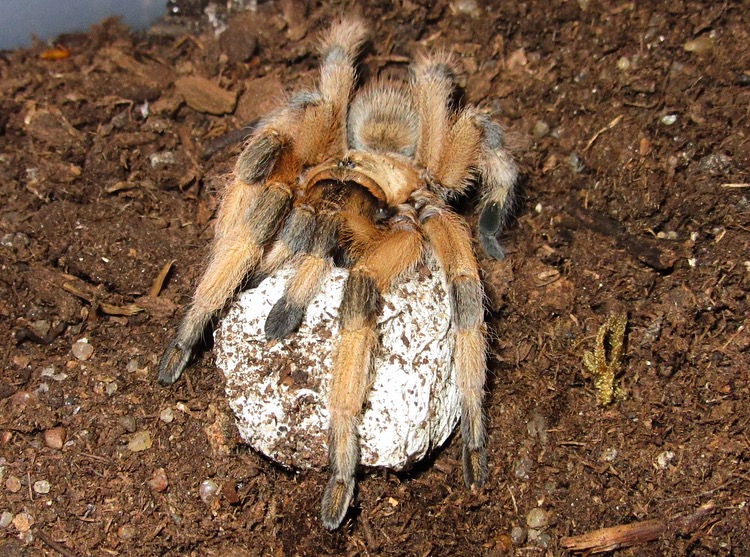
Supporting captive breeding efforts helps to ensure the species’ availability in the hobby without impacting wild populations.
A Golden Guardian of the Rio Grande: The Enduring Allure of Aphonopelma moderatum
The Rio Grande Gold Tarantula, Aphonopelma moderatum, with its striking golden and black coloration, docile yet skittish nature, and remarkable female longevity, stands as a testament to the unique biodiversity of the North American Southwest. This fascinating arachnid, often encountered in its natural Texan home, offers a compelling glimpse into the silent, intricate lives that thrive beneath the desert’s surface, reminding us of the enduring beauty and ecological importance of even the most subtle creatures in our natural world.
Discover more from
Subscribe to get the latest posts sent to your email.
 davethebugguy.org