

From the sun-baked, rocky savannas of southeastern Brazil emerges a miniature marvel of the tarantula world – Dolichothele diamantinensis, commonly known as the Brazilian Blue Dwarf Beauty. Described in 2009, this charming terrestrial tarantula captivates enthusiasts with its vibrant blue coloration, intricate webbing habits, and a deceptively feisty nature, proving that beauty and intensity can come in small packages.
A Pocket-Sized Palette: Appearance and Distinctive Hues:
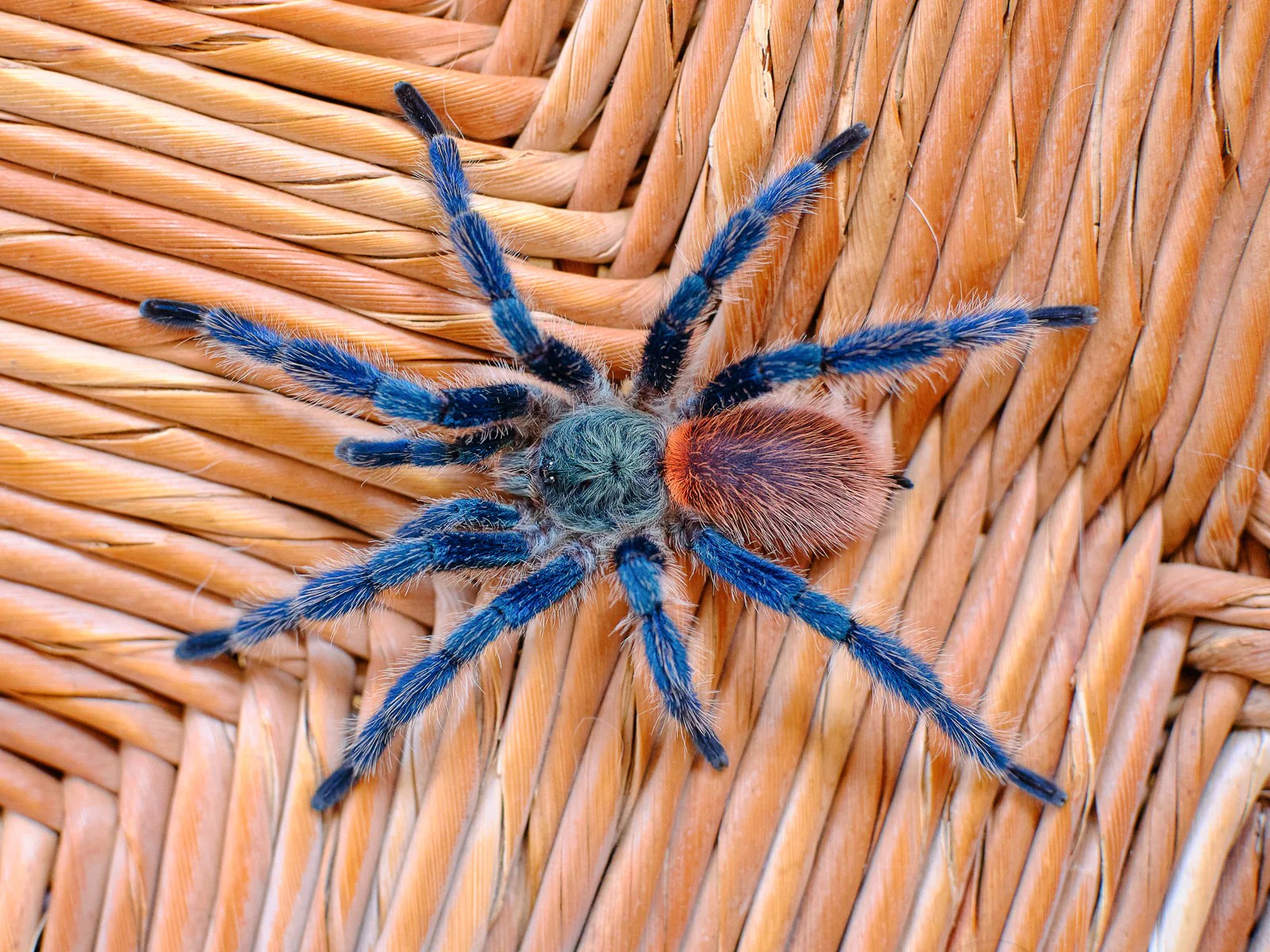
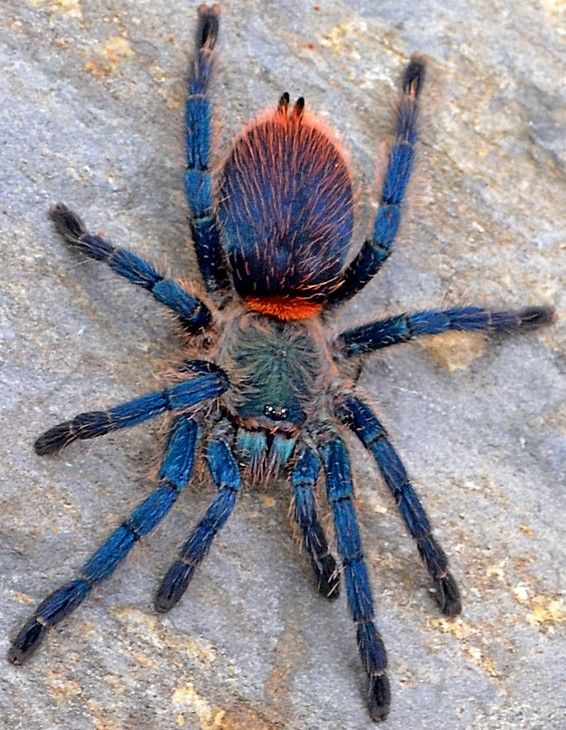
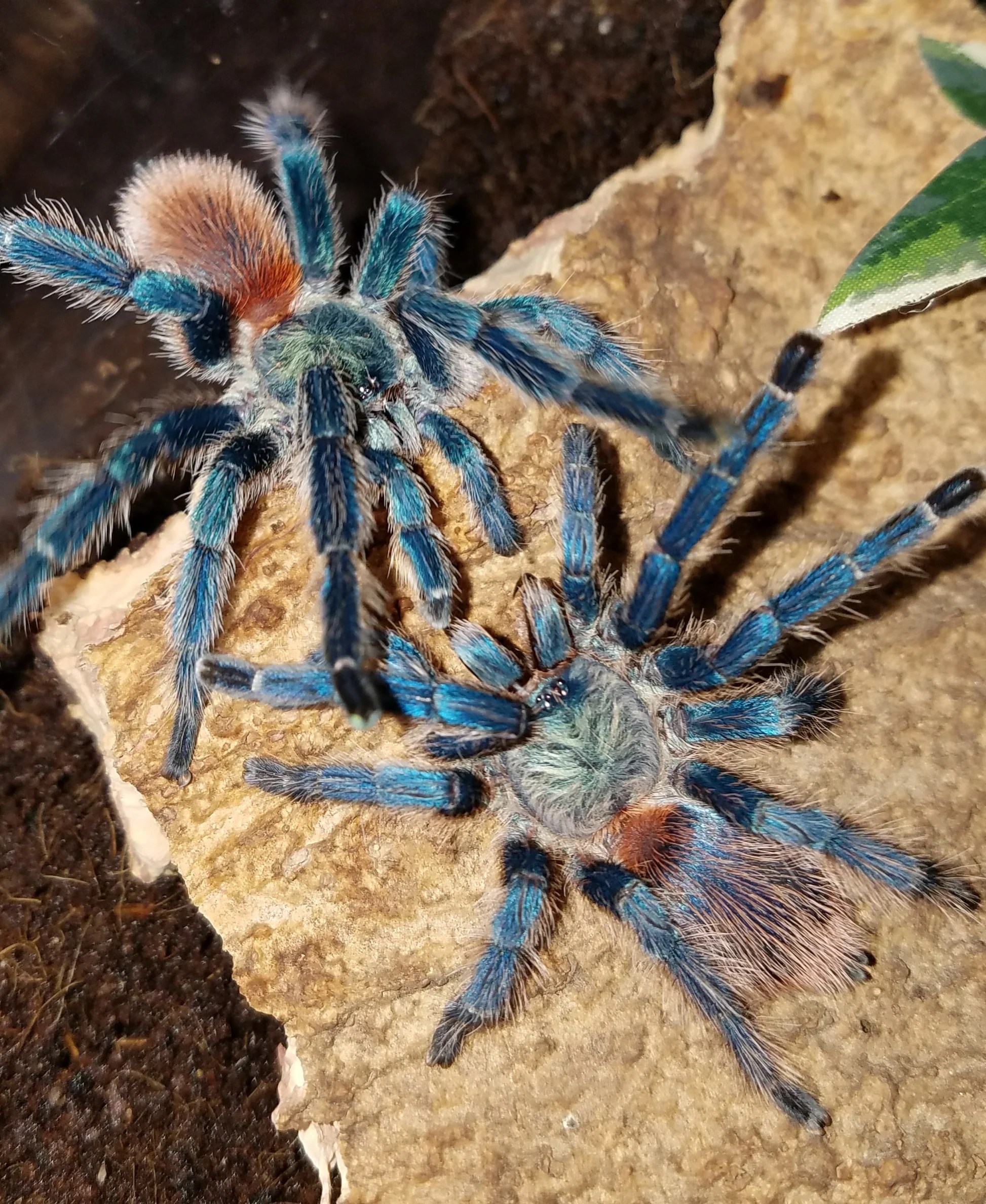
Dolichothele diamantinensis is a dwarf species, typically reaching a modest leg span of about 3 inches (7.5 cm), though some larger females may approach 3.5-4 inches. Despite its diminutive size, its coloration is anything but understated. The legs are a striking, iridescent blue, often described as electric or sapphire, sometimes with white hairs covering them that add to the vibrancy. The carapace (the hard upper shell of the cephalothorax) typically boasts a metallic bluish-greenish hue, which beautifully contrasts with the blue legs. The opisthosoma (abdomen) is generally blue, covered with long, reddish or golden hairs, completing its dazzling multi-colored display.
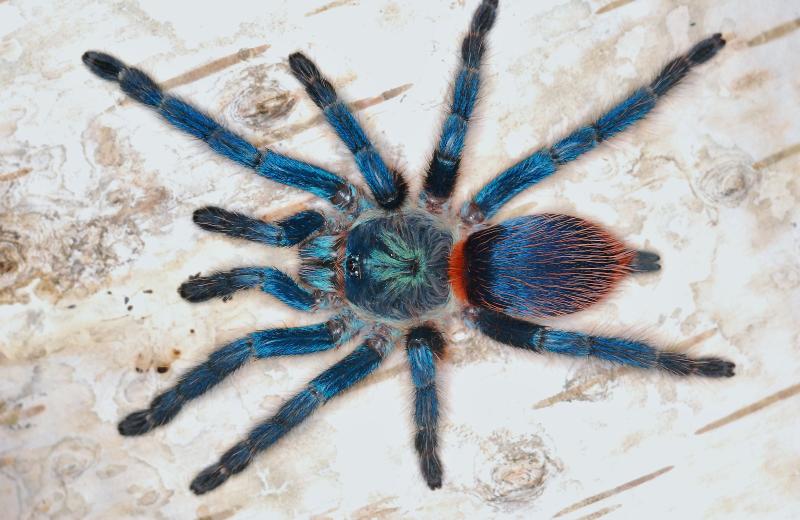
This vibrant array of colors, reminiscent of larger, more famous species like the Green Bottle Blue (Chromatopelma cyaneopubescens), makes D. diamantinensis a highly sought-after display tarantula. Males, while generally smaller and lankier, retain much of this stunning coloration.
Distribution and Habitat: Endemic to Brazilian Scrublands:
Dolichothele diamantinensis is endemic to the Diamantina region in the Brazilian state of Minas Gerais. Here, it inhabits rupestrian grasslands, which are characterized by rocky terrain, dry forests, and scrublands. These habitats experience significant seasonal variations in rainfall and can have wide temperature swings. Unlike some deep-burrowing tarantulas, D. diamantinensis is often an opportunistic burrower, preferring to utilize existing shelters such as crevices, under logs, or beneath bark. Its adaptability to these somewhat harsh, dry conditions is key to its survival in its native range.
Lifestyle and Behavior: Prolific Webbers with a Skittish Streak:
The Brazilian Blue Dwarf Beauty is renowned for being a prolific webber. They construct intricate tunnels and web extensive anchor points, often incorporating substrate particles into their silk structures. This heavy webbing serves multiple purposes: creating retreats, providing hunting perches, and potentially aiding in humidity regulation within their microhabitat. They can often be seen outside their tunnels, especially when actively webbing, making them excellent display species.
Despite their beautiful appearance, D. diamantinensis are known to be quite skittish and fast-moving, especially as spiderlings. They are often described as “teleporters” due to their rapid bursts of speed when startled. As a New World species, they primarily rely on running as a defense mechanism, as they are one of the few New World tarantulas that do not possess urticating hairs (the irritating bristles found on many New World species that can be kicked off as a defense). While generally docile and rarely striking a threat pose, they may do so under persistent provocation, and their venom, though considered mild to healthy humans, can cause localized discomfort.
Life Cycle: Fast Growers with a Decent Lifespan:
The life cycle of Dolichothele diamantinensis progresses through typical tarantula stages, with a notably fast growth rate for a dwarf species.
- Egg & Spiderlings: Females will produce an egg sac from which numerous spiderlings emerge. These tiny spiderlings already exhibit some of the adult coloration.
- Juvenile Growth: D. diamantinensis grows relatively quickly, often reaching maturity in about 18 months. They undergo successive molts, shedding their exoskeleton as they grow.
- Adult: Females are long-lived for a dwarf species, typically reaching lifespans of 12 to 15 years in captivity. Males have a significantly shorter lifespan, usually living around 3 years, especially after their final molt to maturity. Adults remain active webbers and have a strong feeding response, eagerly pursuing prey.
Ecological Role:
In their natural Brazilian scrubland habitat, Dolichothele diamantinensis functions as a terrestrial invertebrate predator. They help control populations of insects and other small arthropods, contributing to the balance of their unique ecosystem. Their opportunistic burrowing and webbing also likely play a role in aerating the soil.
Conservation Status and Threats: Unlisted but Habitat Vulnerable:
As a relatively recently described species (2009) endemic to a specific region of Brazil, comprehensive conservation status information for Dolichothele diamantinensis is not widely available on global conservation lists like the IUCN Red List. However, like many species with restricted ranges, it is inherently vulnerable to habitat degradation and fragmentation due to human activities, including agriculture, development, and climate change impacting its specific dry forest and scrubland environment. Sustainable practices and habitat preservation in the Diamantina region are crucial for ensuring the long-term survival of this beautiful dwarf tarantula.

A Mini-Jewel of Brazil: The Enduring Allure of Dolichothele diamantinensis
Dolichothele diamantinensis, the Brazilian Blue Dwarf Beauty, stands as a stunning example of the rich biodiversity found in Brazil. Its vibrant blue coloration, combined with its fascinating webbing behavior and unique lack of urticating hairs, makes it a captivating species. Despite its small size, it leaves a big impression, reminding us of the intricate beauty and ecological importance of even the smallest inhabitants of our planet’s diverse ecosystems.
Discover more from
Subscribe to get the latest posts sent to your email.
 davethebugguy.org