
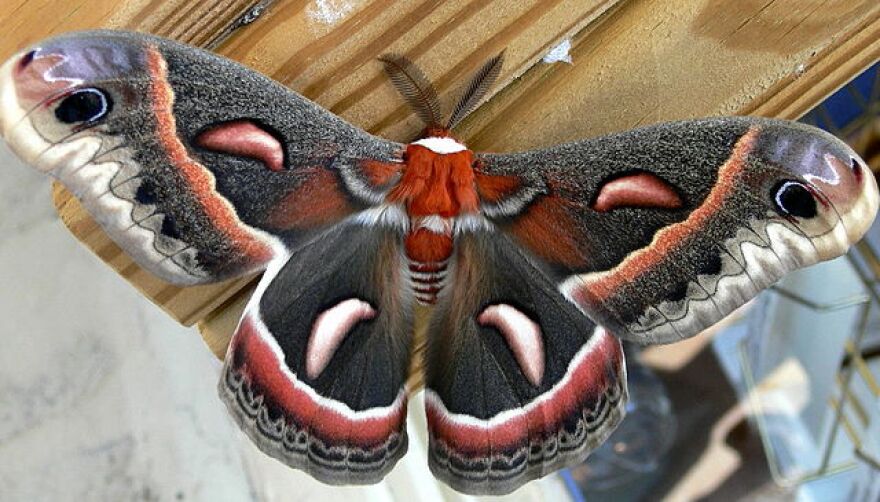
The Cecropia moth (Hyalophora cecropia) stands as one of the largest moths found in North America, easily recognized by its impressive size, striking coloration, and intricate wing patterns. Belonging to the Saturniidae family, the giant silk moths, it has captivated naturalists and enthusiasts for centuries with its beauty and life cycle.
Physical Characteristics
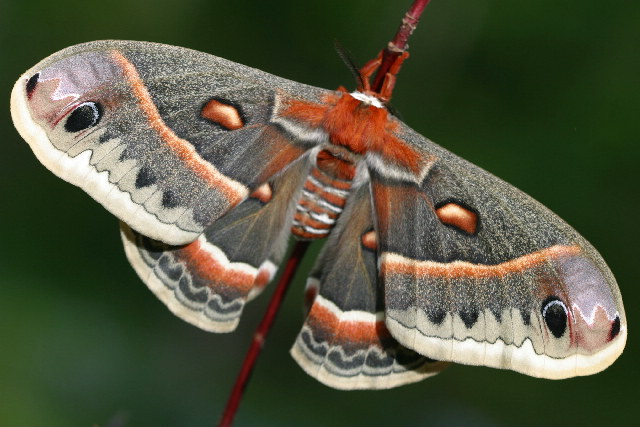
Prepare to be amazed by the sheer scale of the Cecropia moth. Its wingspan can reach an impressive 5 to 7 inches (13 to 18 cm), making it a truly substantial insect. The wings are a rich reddish-brown, adorned with prominent crescent-shaped spots of white, red, and tan. A thick band of white and red hairs runs along the leading edge of each wing. The abdomen is also banded in alternating shades of red and white.
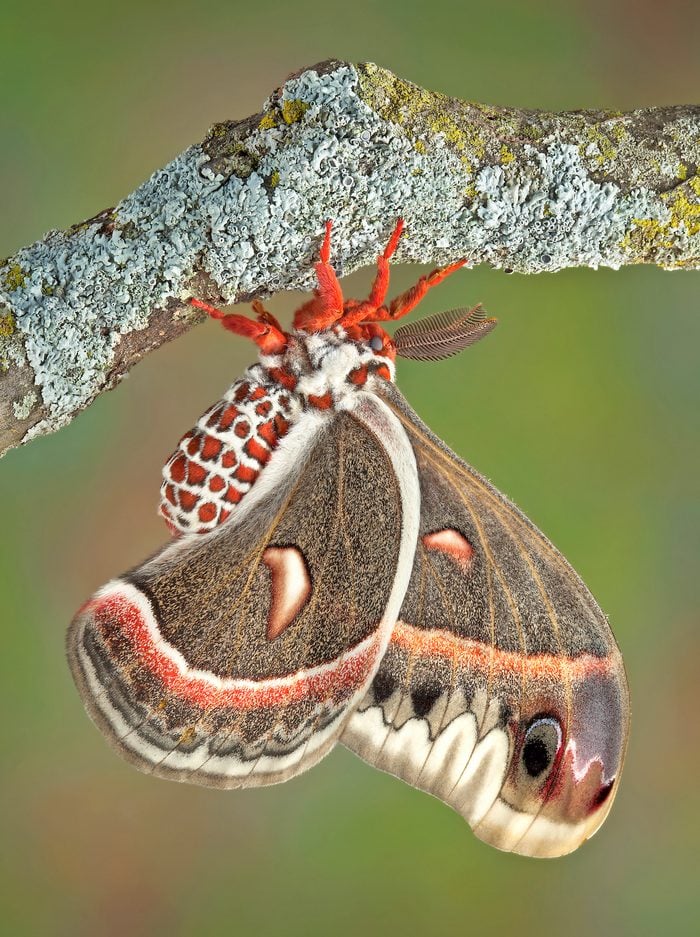
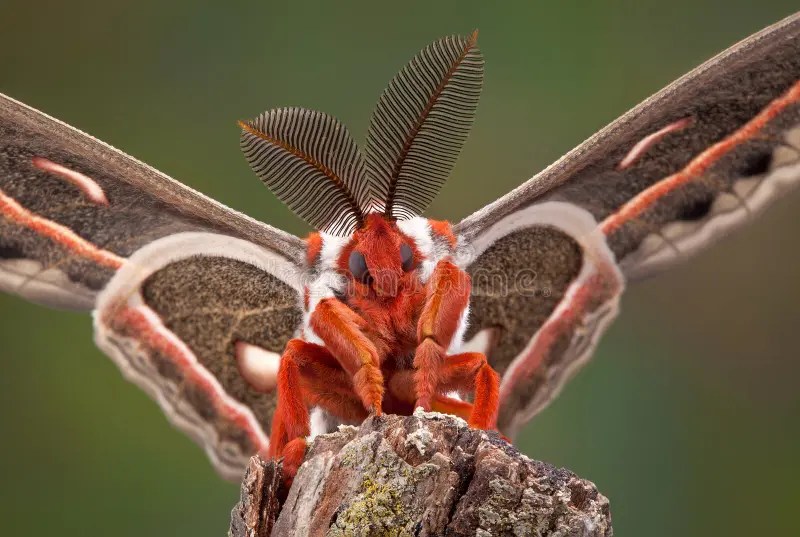
Adding to its grandeur are the large, feathery antennae, particularly prominent in males. These intricate sensory organs are crucial for detecting the pheromones released by females, even from great distances. The legs are stout and hairy, and the entire body is covered in soft scales, giving it a velvety appearance.
Distribution and Habitat
Hyalophora cecropia boasts a wide distribution across North America, ranging from the eastern provinces of Canada south through the United States east of the Rocky Mountains. They thrive in a variety of deciduous woodland habitats, including forests, suburban areas with ample trees, and even open fields where their host plants are found. Their adaptability allows them to inhabit diverse environments, making them a relatively common sight in their range.
Life Cycle: A Transformation Tale
The life cycle of the Cecropia moth is a remarkable example of complete metamorphosis, undergoing four distinct stages: egg, larva (caterpillar), pupa (chrysalis), and adult moth.

1. Egg: The life cycle begins with the deposition of large, creamy-white to brownish eggs by the female moth. These eggs are typically laid singly or in small clusters on the leaves or twigs of various host plants.
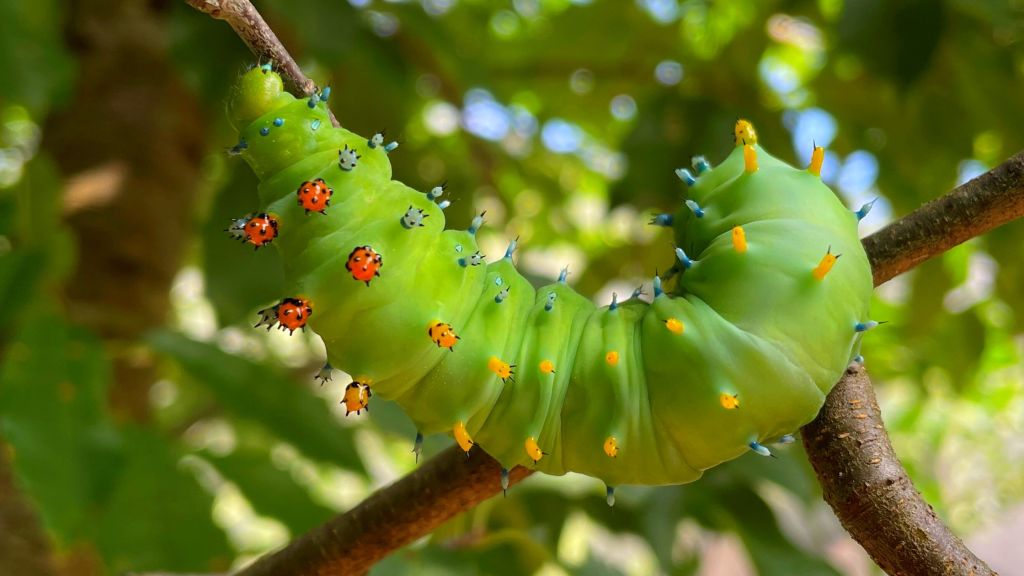
2. Larva (Caterpillar): Upon hatching, the young larva, or caterpillar, emerges as a small, spiny creature. As it grows, it molts several times, revealing increasingly vibrant colors. The mature Cecropia caterpillar is a magnificent sight, reaching up to 4 inches in length. It is characterized by its plump, pale green body adorned with colorful tubercles (wart-like projections). These tubercles are typically yellow, blue, and sometimes red, adding to its striking appearance. The caterpillar is a voracious eater, feeding on the leaves of a wide range of deciduous trees, including maple, oak, cherry, birch, and willow.
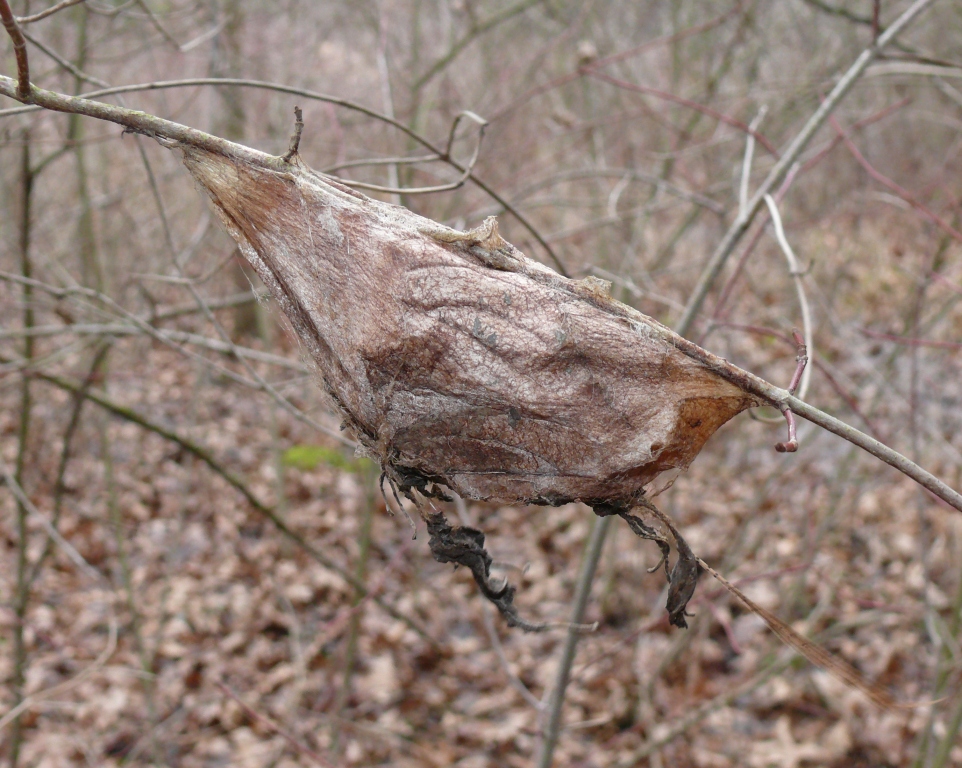
3. Pupa (Chrysalis): Once the caterpillar has reached its full size, it spins an impressive silken cocoon. This oblong, grayish-brown cocoon is often attached to a twig or branch of its host plant and provides a protected environment for the next stage of transformation. Inside the cocoon, the caterpillar undergoes metamorphosis, transforming into a pupa, also known as a chrysalis. This stage can last through the winter months in colder climates.
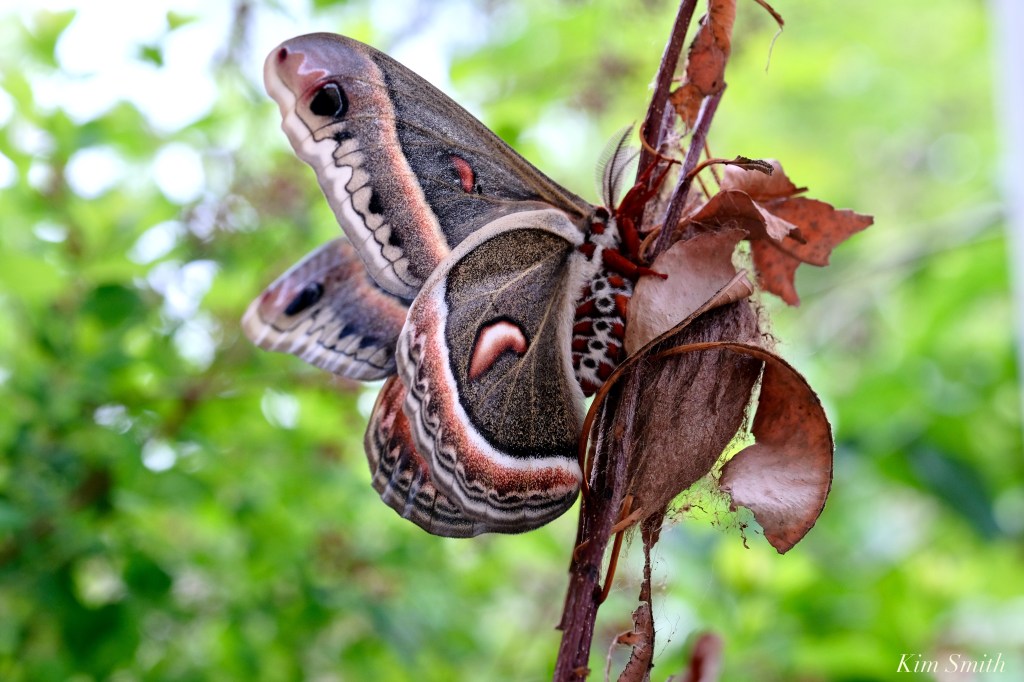
4. Adult Moth: Finally, in the spring or early summer, the adult moth emerges from the pupal case. This is the most visually stunning stage of the life cycle. The newly emerged moth will hang upside down, allowing its wings to fill with hemolymph (insect blood) and expand. Once the wings are dry and hardened, the moth is ready to fly and reproduce.
It’s important to note that the adult Cecropia moth has a relatively short lifespan, typically around one to two weeks. During this time, the adult moths do not feed; their sole purpose is to mate and for the females to lay eggs, thus continuing the cycle. They rely on the energy reserves accumulated during their larval stage.
Diet
As mentioned, the larval stage is characterized by significant feeding. Cecropia caterpillars are polyphagous, meaning they feed on a variety of host plants. Some of their preferred food sources include:
- Maple (Acer spp.)
- Oak (Quercus spp.)
- Cherry and Plum (Prunus spp.)
- Birch (Betula spp.)
- Willow (Salix spp.)
- Alder (Alnus spp.)
- Apple (Malus spp.)
The adult moths, however, do not possess functional mouthparts and therefore do not feed. They rely entirely on the energy stored from their time as a caterpillar to fuel their brief adult lives dedicated to reproduction.
Conservation Status
Currently, Hyalophora cecropia is not considered endangered or threatened across its entire range. However, like many insect species, their populations can be affected by habitat loss, pesticide use, and light pollution, which can disrupt their nocturnal mating behaviors.
Fascinating Facts
- The intricate patterns on the Cecropia moth’s wings serve as camouflage, helping them blend in with their surroundings and avoid predation.
- The large, feathery antennae of the male are incredibly sensitive, capable of detecting minute amounts of female pheromones from several miles away.
- The silk produced by the Cecropia caterpillar is strong and has been studied for its potential commercial applications, although it is not as widely cultivated as the silk of the silkworm moth (Bombyx mori).
- Observing a Cecropia moth emerge from its cocoon is a truly awe-inspiring experience, showcasing the wonders of nature’s transformations.
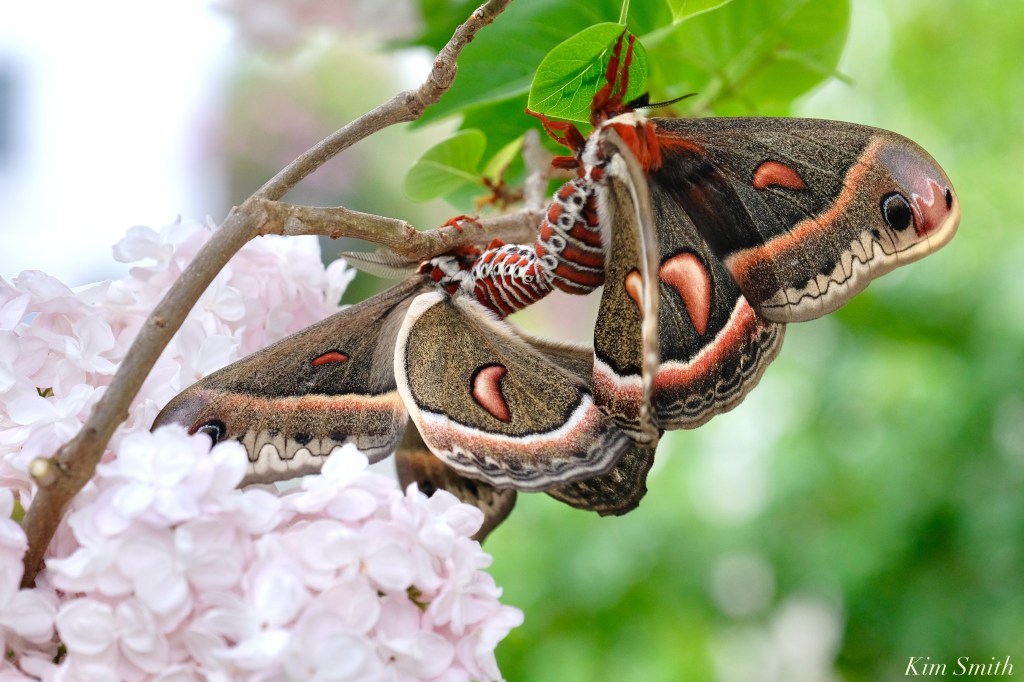
The Cecropia moth, with its impressive size and striking beauty, serves as a captivating reminder of the diversity and wonder of the insect world. Its life cycle, from a tiny egg to a magnificent, winged adult, is a testament to the incredible processes of nature. Encountering one of these gentle giants is an unforgettable experience for any nature enthusiast.
Discover more from
Subscribe to get the latest posts sent to your email.
 davethebugguy.org