
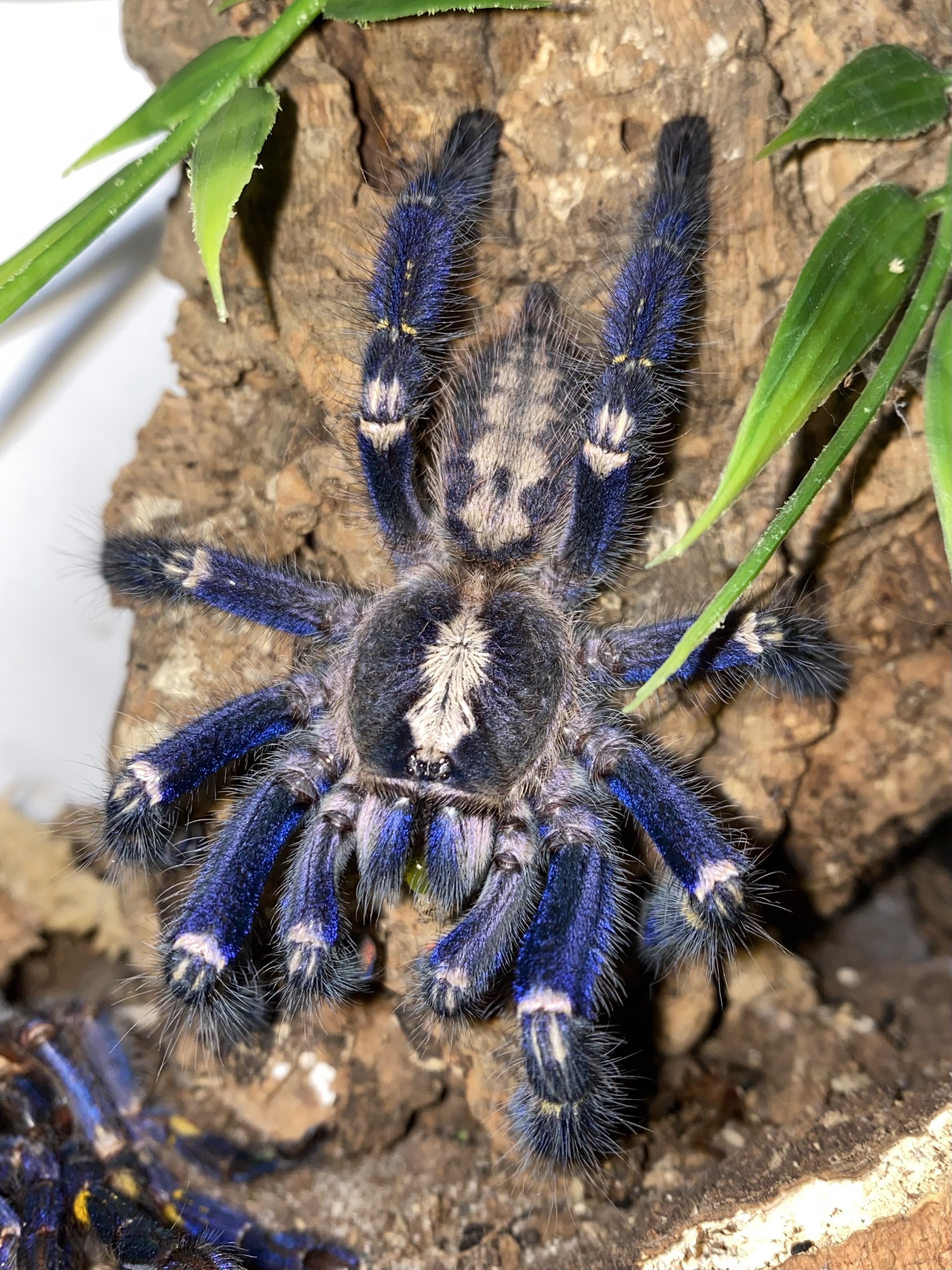
Among arachnid enthusiasts, few creatures command as much awe as Poecilotheria metallica. Known commonly as the Gooty Sapphire Ornamental or the Peacock Tarantula, this species is the “crown jewel” of the hobby. With its electrifying blue coloration and intricate geometric patterns, it looks more like a high-end digital render than a living organism.
However, beneath that stunning exterior lies a sophisticated arboreal predator that requires respect, experience, and specific care.
Taxonomy and Origin
First described by Pocock in 1899, P. metallica belongs to the subfamily Selenocosmiinae.
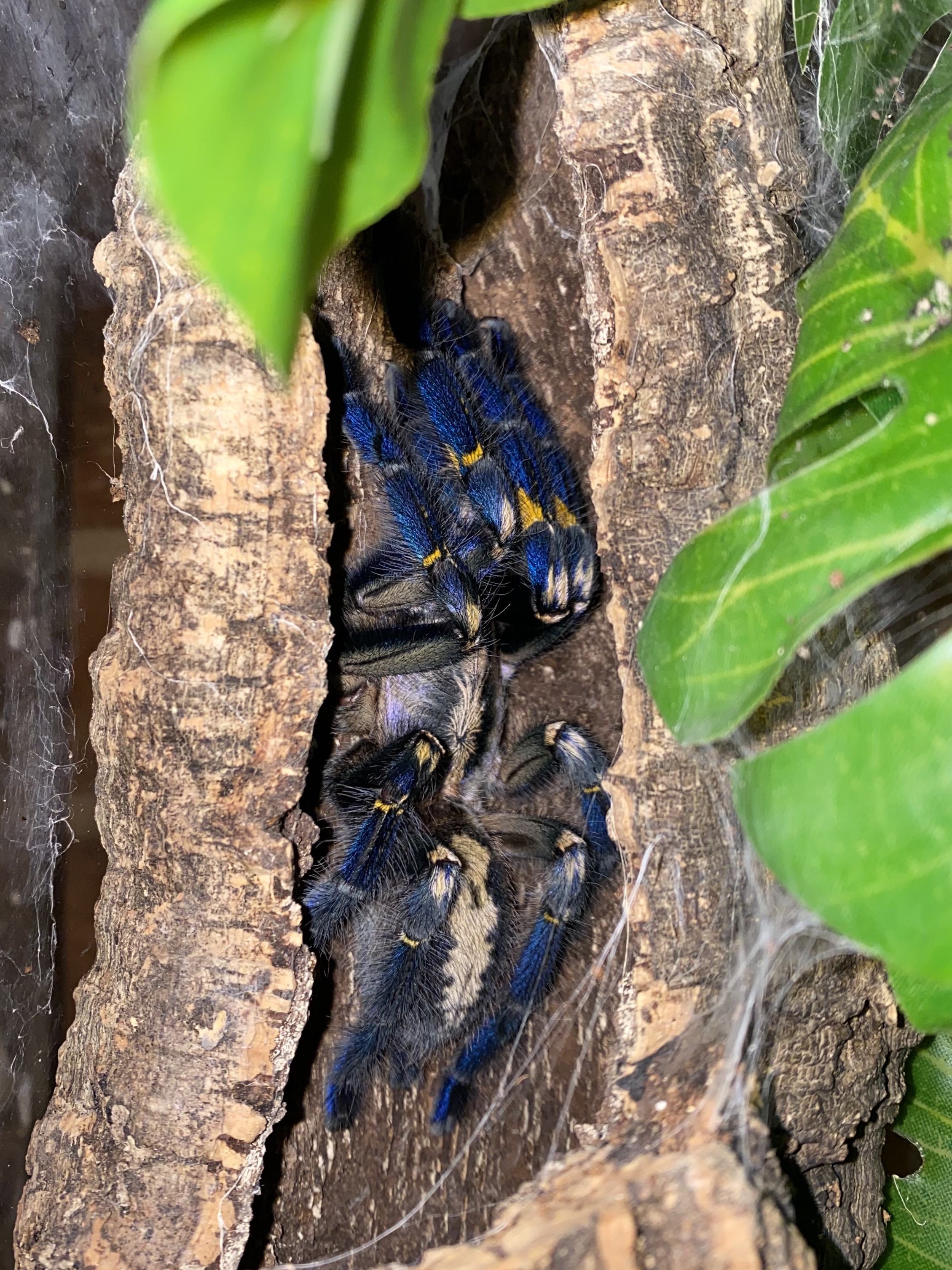
- Native Habitat: A tiny, highly fragmented area of deciduous forest in Andhra Pradesh, Central Southern India.
- Conservation Status: Listed as Critically Endangered by the IUCN. Their natural habitat is under constant threat from logging and firewood harvesting, making captive breeding programs essential for the species’ survival.
Physical Characteristics
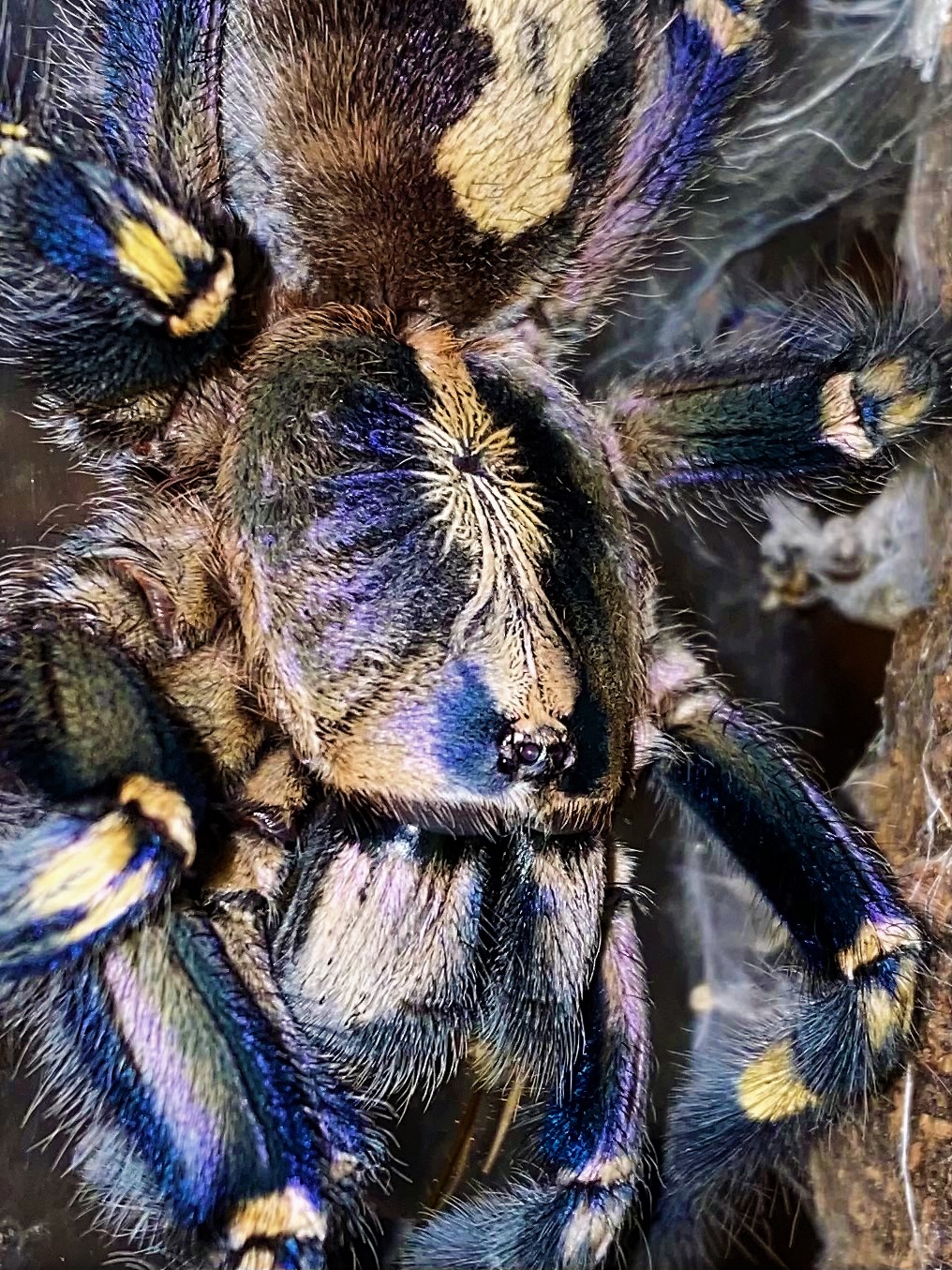
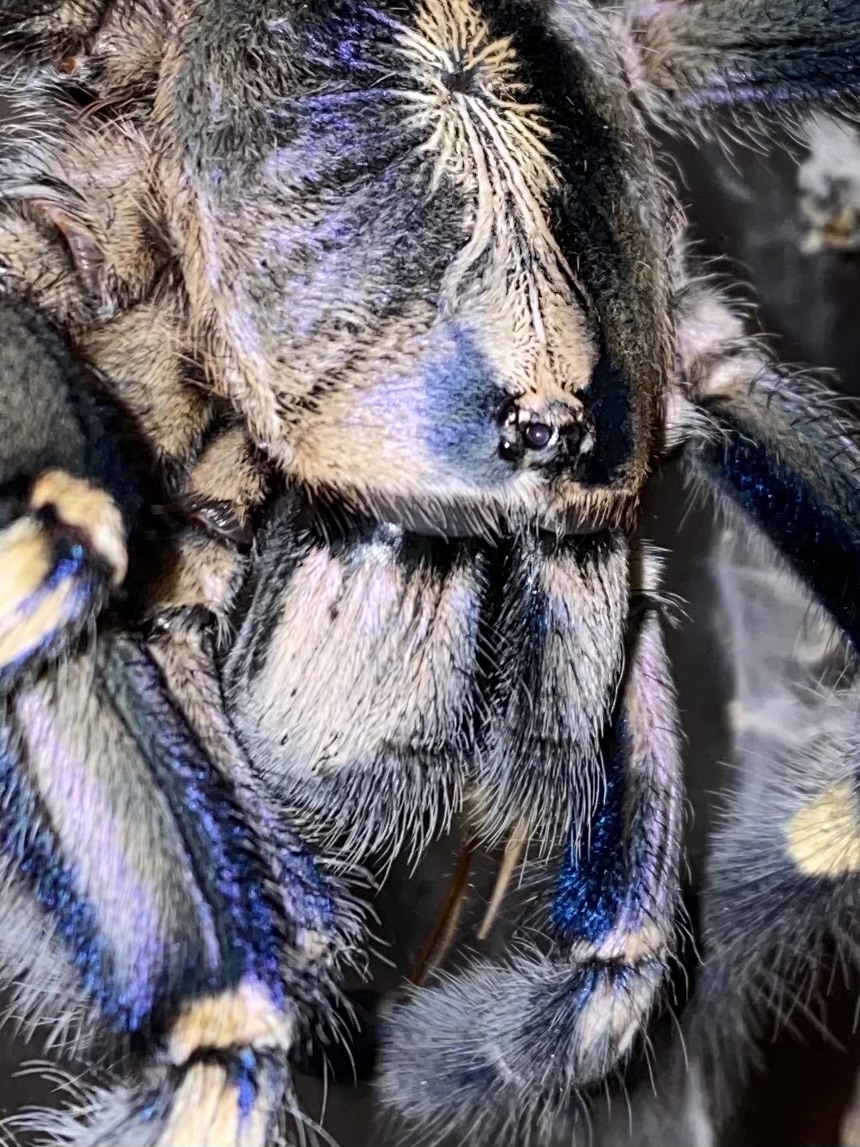
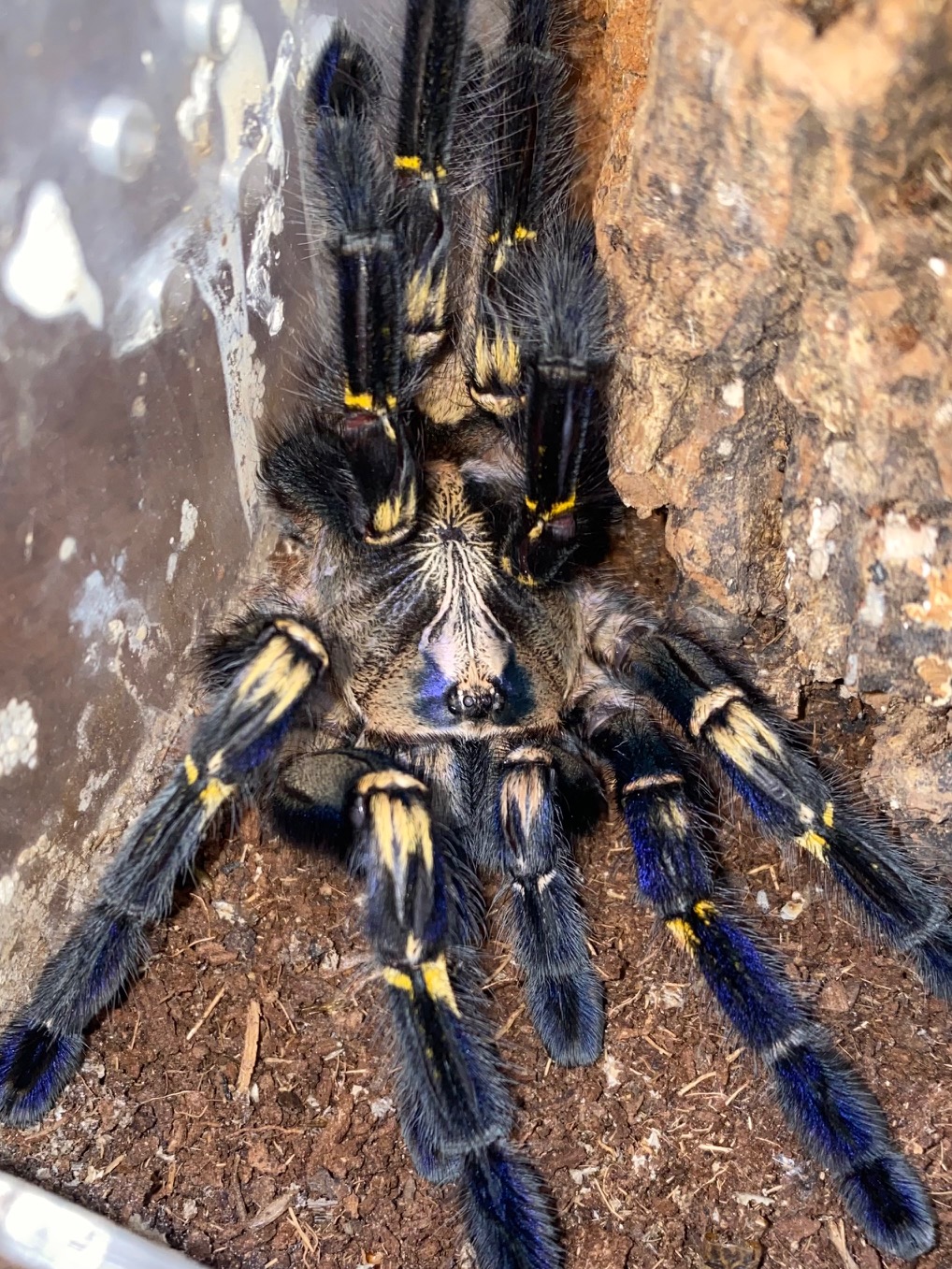
The most striking feature of the Gooty Sapphire is its dorsal coloration. While spiderlings (slings) start as a modest grey, adults erupt into shades of metallic indigo and violet.
- Size: An impressive leg span of 15–20 cm (6–8 inches) for females. Males are significantly smaller and less vibrant.
- The “Yellow Flash”: If you look at the underside of the first and second pairs of legs, you’ll see bright yellow patches. In the wild, these are used as a warning signal to predators—a “stop sign” before the spider resorts to a bite.
- Morphology: Like all Poecilotheria species, they have a flattened body and elongated legs, designed for clinging to tree trunks and darting into crevices.
Behavior and Temperament
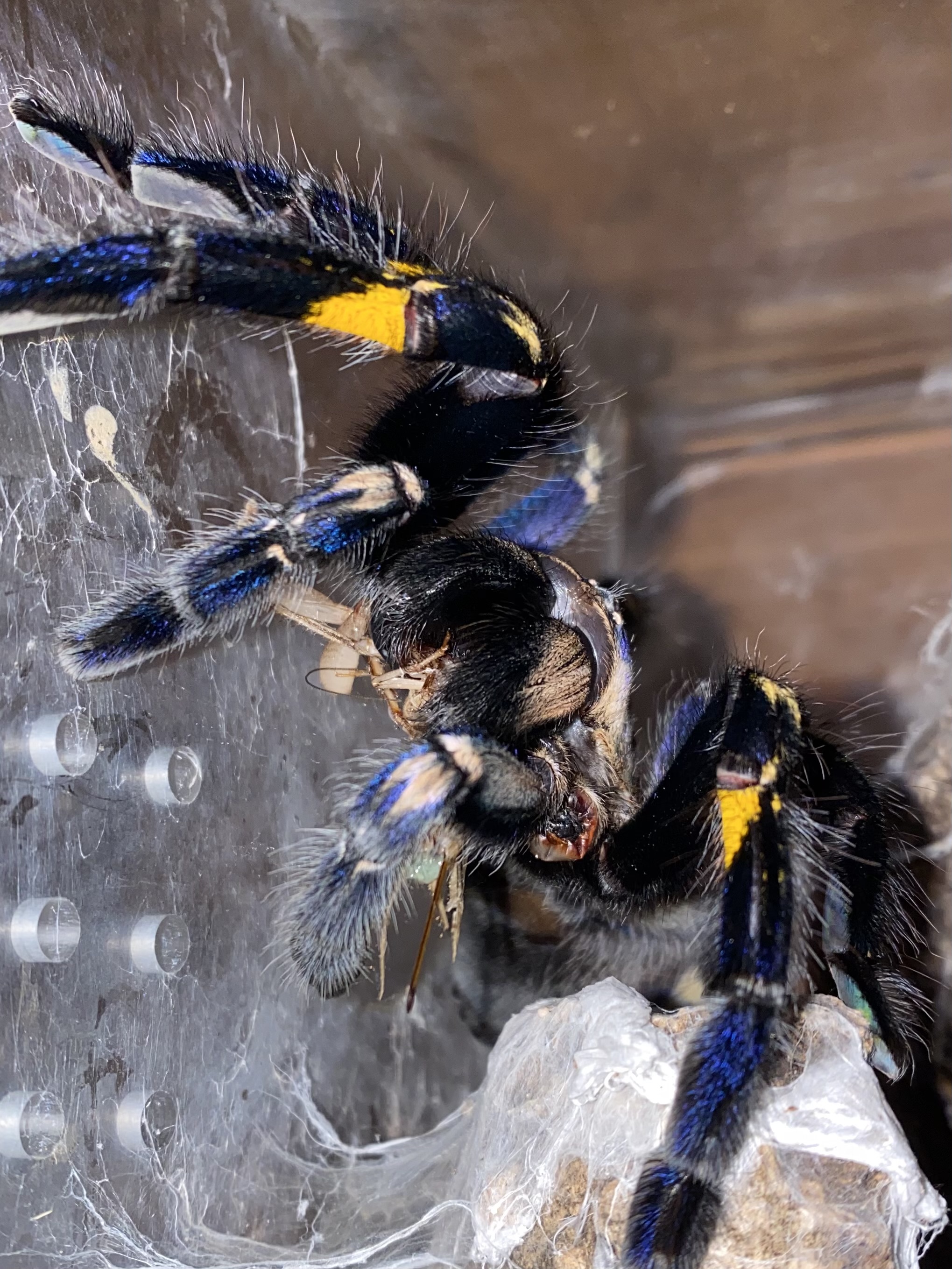
Don’t let the beauty fool you; P. metallica is an Old World tarantula. This means they lack the urticating (itching) hairs found on New World species. Instead, they rely on two primary defenses:+1
- Speed: They are “teleportation” fast. One moment, they are in their hide; the next, they are on the enclosure’s ceiling.
- Potent Venom: While not lethal to healthy humans, a bite is medically significant. It can cause intense localized pain, muscle cramping, sweating, and heart palpitations.
Note: This species is generally shy and prefers flight over fight. However, if cornered, they will not hesitate to give a defensive display or bite.
Husbandry Requirements
Keeping a Gooty Sapphire alive and thriving requires mimicking the humid, warm environment of the Indian monsoon forests.
1. The Enclosure
As an arboreal species, vertical space is more important than floor space.
- Size: A 30x30x45 cm (12x12x18 inch) glass terrarium is ideal for an adult.
- Decoration: Provide plenty of cork bark tubes and vertical branches. They love to build “curtain webs” that span from a hide to the glass.
2. Temperature and Humidity
- Temperature: Aim for 24°C–28°C (75°F–82°F).
- Humidity: Maintain roughly 70–80%. This is achieved through a moist (but not swampy) substrate and a large water bowl. Cross-ventilation is critical to prevent stagnant air, which can lead to mold or respiratory issues.
3. Diet
They are opportunistic hunters with high metabolisms.
- Slings: Fruit flies or pinhead crickets.
- Adults: Dubia roaches, crickets, and occasional locusts.
Why the Gooty Sapphire is Iconic
It represents the pinnacle of the Poecilotheria genus. It combines the geometric “ornamental” patterns typical of the group with a color palette that is nearly unique in the animal kingdom. For many keepers, successfully raising a P. metallica from a tiny, colorless spiderling to a shimmering sapphire adult is a true rite of passage.
To read my other tarantula blogs, just click HERE!
Discover more from
Subscribe to get the latest posts sent to your email.
 davethebugguy.org