
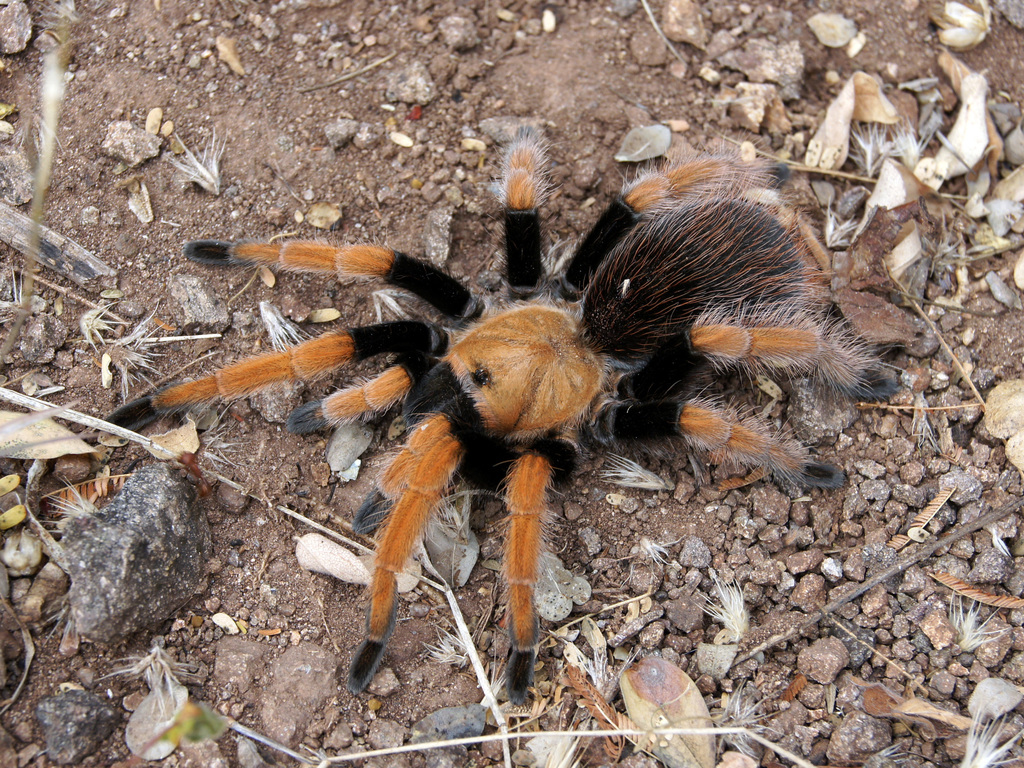
Often referred to as the “Holy Grail” of the Aphonopelma genus, the Mexican Blood Leg (Aphonopelma bicoloratum) is one of the most visually stunning and sought-after tarantulas in the hobby. Known for its vibrant sunset-orange coloration and incredibly docile nature, it is a favorite for both beginners and veteran collectors.
Below is a detailed guide to this species’ biology, habitat, and captive care.
1. Natural History & Appearance
First described in 1996, A. bicoloratum is endemic to the Pacific coast of Southwestern Mexico. It primarily inhabits dry scrublands and semi-arid desert regions, where it survives the heat by burrowing deep underground.
Visual Characteristics
The Mexican Blood Leg is often confused with the Mexican Fire Leg (Brachypelma boehmei). However, there are distinct differences:
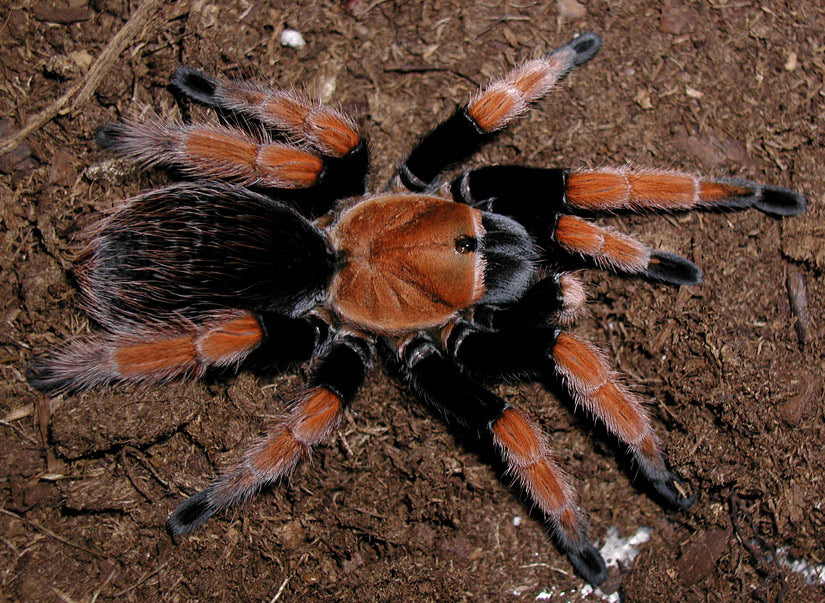
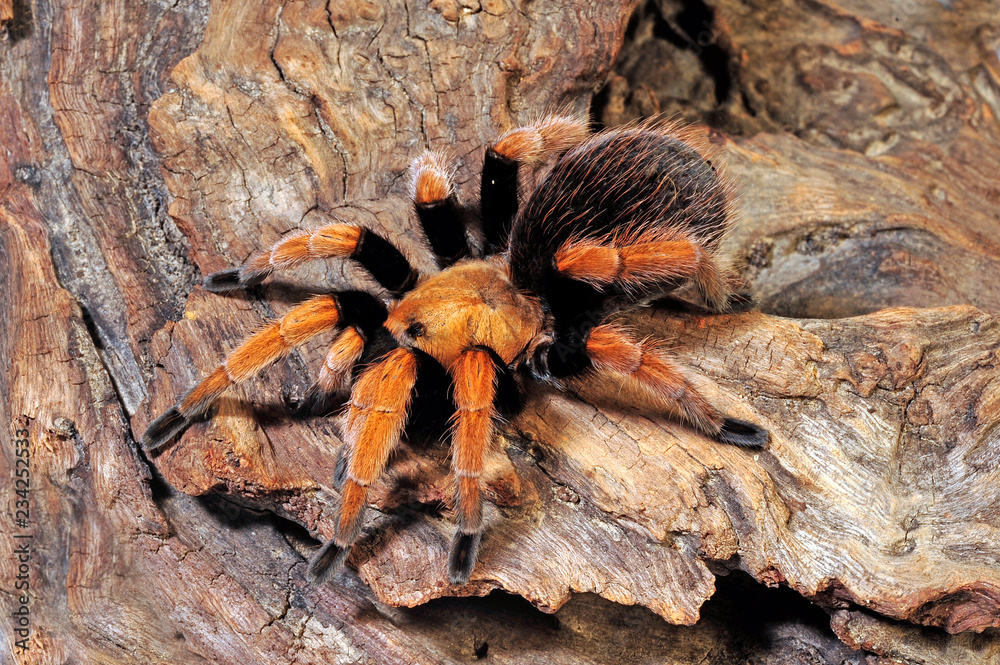
- Coloration: It features a bright, uniform orange carapace and legs. The “feet” (tarsi) and the femur are jet black, creating a high-contrast “socks” appearance.
- Abdomen: Black, covered with long, slender, reddish-orange guard hairs.
- Size: They are a medium-sized terrestrial species, reaching an adult diagonal leg span (DLS) of approximately 5 to 6 inches.
Growth & Longevity
This species is notoriously slow-growing. It can take 5 to 10 years for a spiderling to reach maturity. However, the trade-off for this slow growth is incredible longevity:
- Females: Can live 25 to 40+ years.
- Males: Typically live 5 to 7 years.
2. Temperament and Behavior
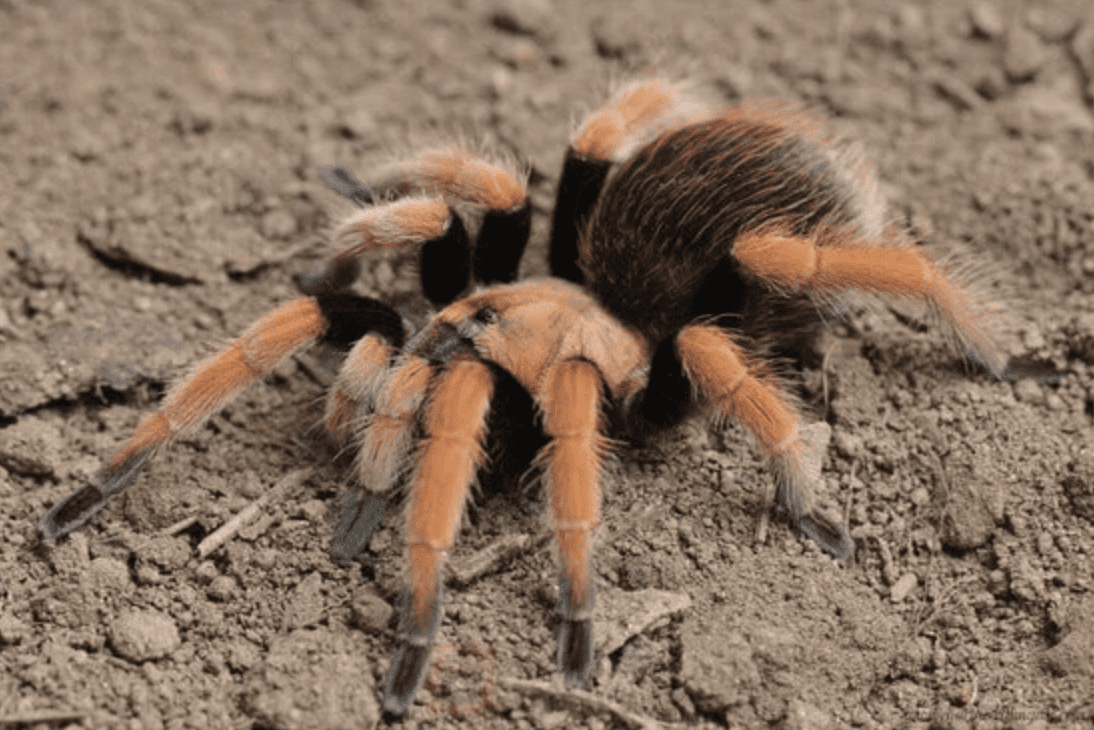
The Mexican Blood Leg is widely considered one of the most “laid-back” tarantulas in existence.
- Docility: Unlike many other colorful Mexican species that can be “skittish” or prone to kicking hair, A. bicoloratum is generally very calm and slow-moving.
- Defensive Traits: As a New World tarantula, it possesses urticating hairs (type I and III) which it can flick if threatened. However, keepers often report that this species is far less likely to do so than members of the Brachypelma genus.
- Visibility: While spiderlings are “obligate burrowers” (meaning they stay hidden underground), adults often become quite confident and will spend much of their time out in the open, making them excellent display animals.
3. Captive Care (Husbandry)
Because they originate from arid environments, their care requirements are straightforward, making them excellent “low-maintenance” pets.
Enclosure Setup
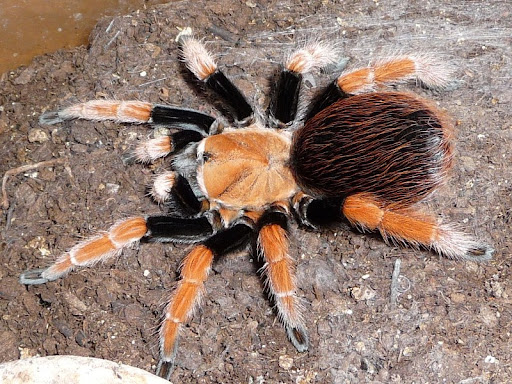
- Type: Terrestrial. Focus on floor space rather than height. A fall from a significant height can be fatal for a heavy-bodied tarantula.
- Substrate: 4–6 inches of a dry substrate mix (coco fiber, topsoil, or peat). Even though they are desert-dwellers, they appreciate a slightly damp corner during molting periods.
- Decor: Provide a secure hide (cork bark or a half-log). While adults may not burrow as much as slings, they still need a “home base” to feel secure.
Environmental Conditions
- Temperature: Room temperature is perfect (70–80°F). If you are comfortable, they are comfortable.
- Humidity: Low to medium (55–65%). You do not need to mist the enclosure frequently. A shallow water dish (kept clean and full) is sufficient for their hydration needs.
Diet and Feeding
- Spiderlings: Pinhead crickets or flightless fruit flies twice a week.
- Juveniles/Adults: Large crickets, Dubia roaches, or mealworms every 7–14 days.
- Note: Always remove uneaten prey after 24 hours, especially if the spider appears to be entering a “pre-molt” phase (indicated by a darkened, shiny abdomen and a refusal to eat).
4. Why Keep Aphonopelma bicoloratum?
| Pros | Cons |
| Stunning “Sunset” colors | Very slow growth rate |
| Extremely docile temperament | Often more expensive than other species |
| Incredible lifespan (long-term companion) | Slings spend a lot of time underground |
| Very hardy and easy to care for |
Summary Table: Quick Facts
- Scientific Name: Aphonopelma bicoloratum
- Common Name: Mexican Blood Leg / Mexican Beauty
- Type: New World Terrestrial
- Origin: Southwest Mexico
- Venom: Mild (comparable to a bee sting)
- Experience Level: Beginner to Expert
Pro-Tip: If you purchase a spiderling, be prepared for the “pet hole” phase. They may stay buried for months at a time as they grow. Patience is key—the adult display spider is well worth the wait!
To view my other Species Spotlight blogs, click HERE!
Discover more from
Subscribe to get the latest posts sent to your email.
 davethebugguy.org