
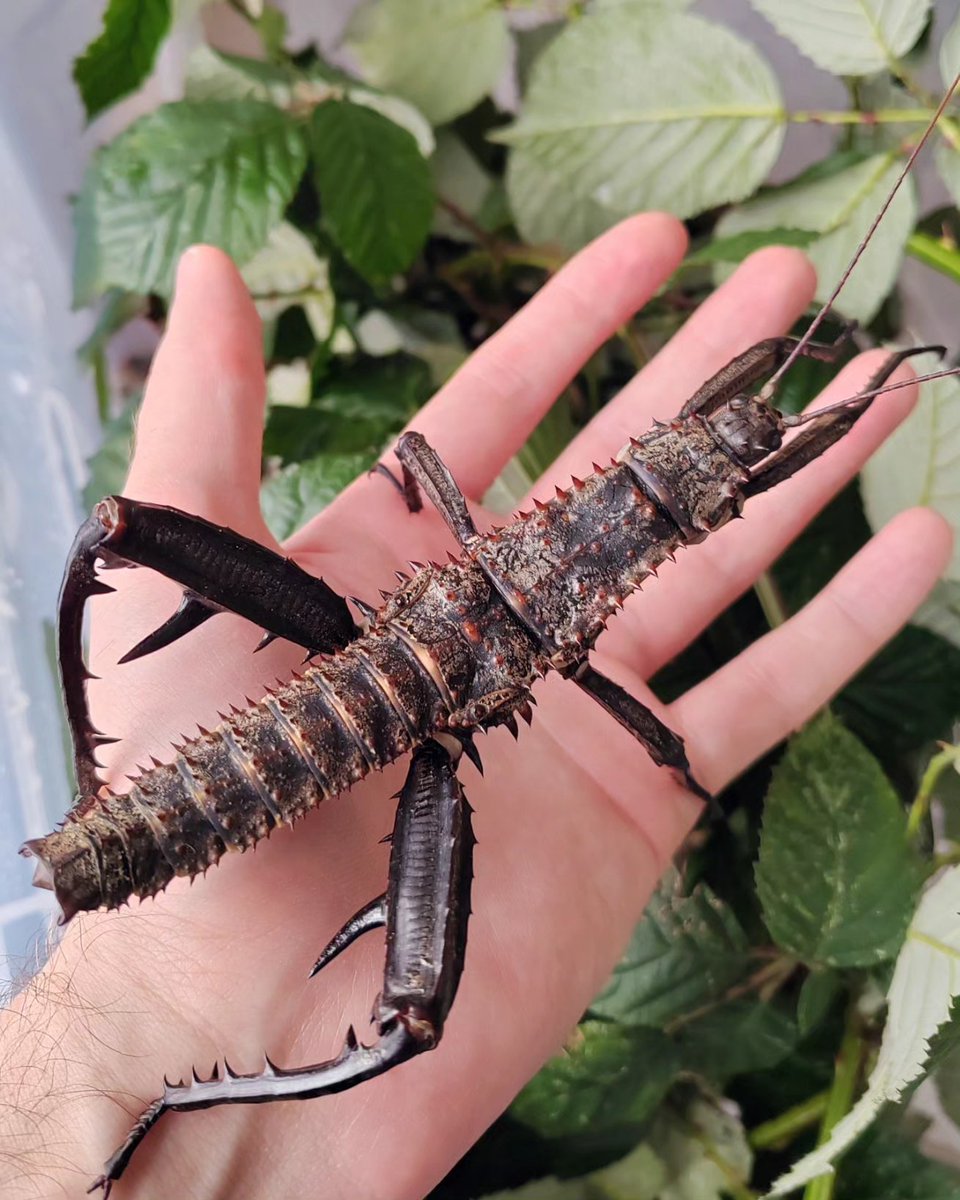
Commonly known as the Spiny Devil Walkingstick or the New Guinean Land Lobster, Eurycantha horrida is a formidable and fascinating member of the order Phasmatodea. Native to the tropical rainforests of Papua New Guinea—specifically the Popondetta region—this species has long been considered a “holy grail” for insect enthusiasts due to its impressive size, prehistoric appearance, and unique behaviors.
Physical Characteristics
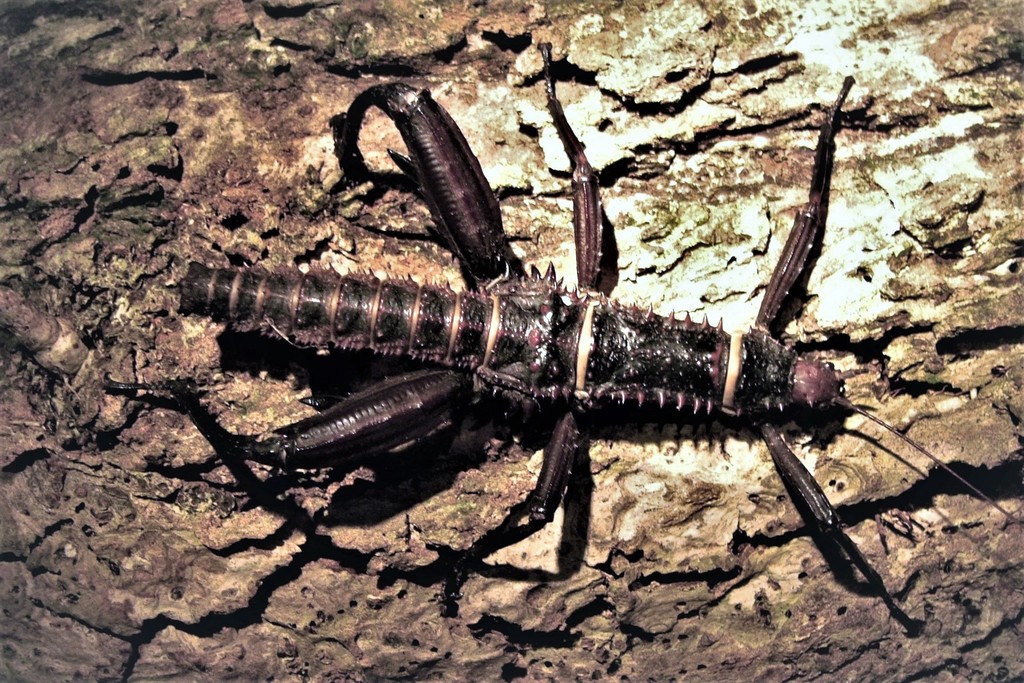
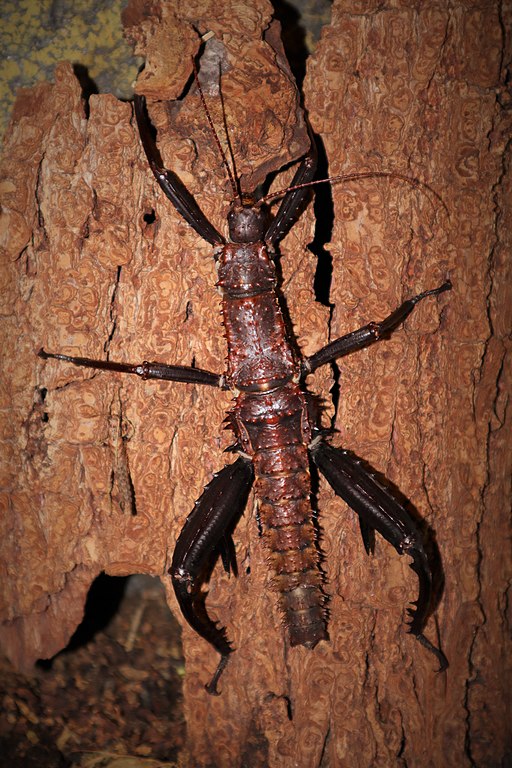
Eurycantha horrida is built for durability rather than the delicate, twig-like mimicry seen in many other stick insects. They are ground-dwellers that resemble pieces of bark or rotten wood.
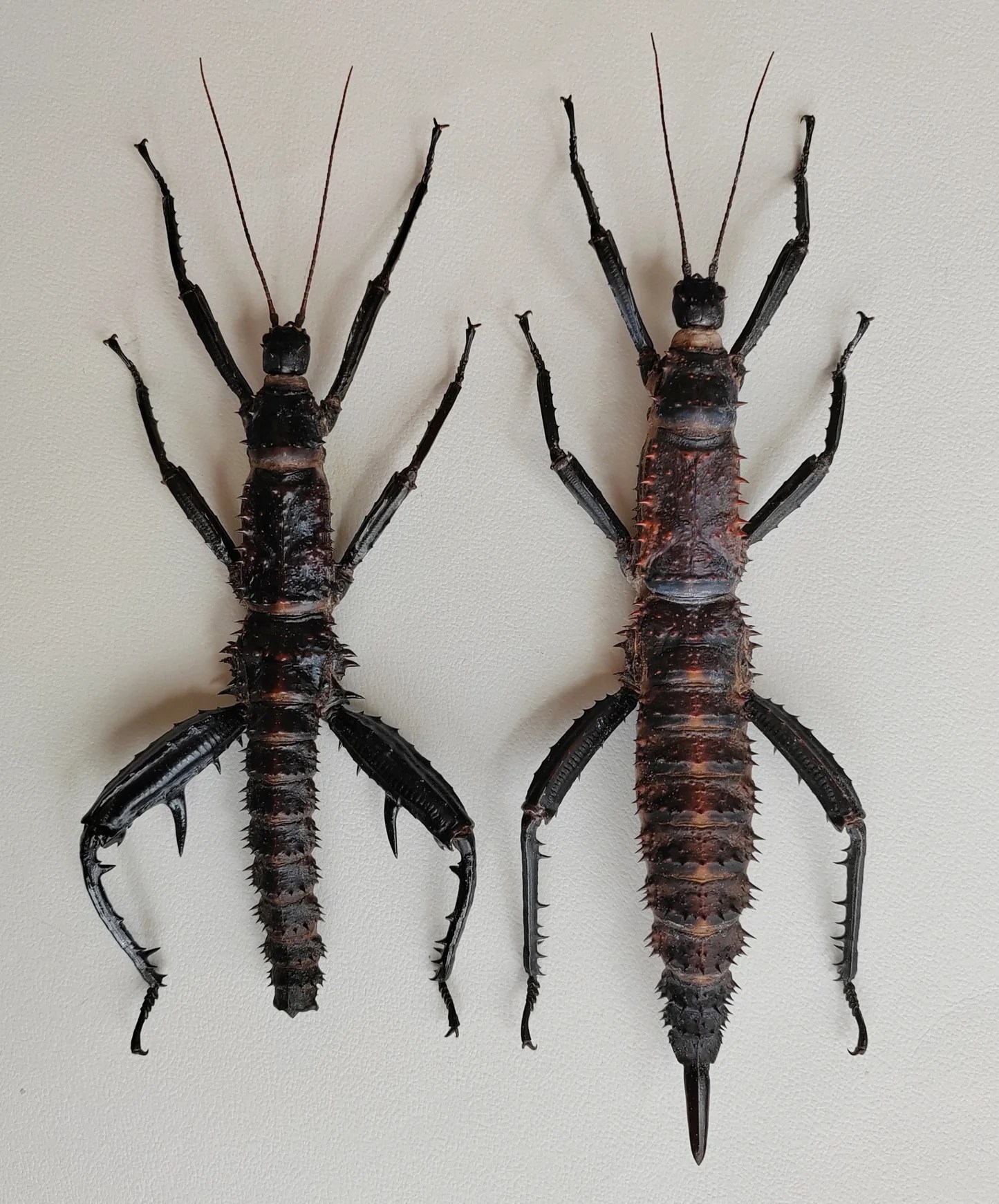
- Size: They are among the larger phasmids. Females typically reach lengths of 17–19 cm, while males are slightly smaller, averaging 14–16 cm.
- Arming and Armor: Both sexes are wingless and covered in numerous small, sharp spines. The most striking feature, however, belongs to the male: a massive, curved spur located on the femur of the hind legs.
- Coloration: Adults range from dark brown to nearly black with an oily, leather-like sheen. Nymphs (juveniles) start as mossy green or mottled brown, providing excellent camouflage against the forest floor.

Behavior and Defense
Unlike many phasmids that rely solely on staying still (catalepsy), the Spiny Devil is known for its active and sometimes aggressive defense posture.
- The “Scorpion” Pose: When threatened, E. horrida will curl its abdomen over its back, much like a scorpion.
- Leg Snapping: Males use their powerful hind legs to “snap” shut, attempting to pinch an aggressor with those large femoral spurs. In humans, these spurs are sharp enough to draw blood.
- Chemical Warfare: As a secondary defense, they can emit a pungent, nauseating odor from glands in their abdomen to deter predators.
- Social Structure: Interestingly, they are somewhat gregarious. During the day, they often congregate in groups, hiding together under bark or in hollow logs.

Diet and Habitat
In the wild, these insects are nocturnal herbivores with hearty appetites. They are polyphagous, meaning they feed on a variety of plants. Common host plants include:
- Bramble (Blackberry/Raspberry)
- Oak and Beech
- Guava and Ficus
- Rose
Reproduction and Life Cycle
Eurycantha horrida reproduces sexually, though like many stick insects, some related species are capable of parthenogenesis (asexual reproduction).
- Oviposition: The female uses a shovel-like organ called an ovipositor at the end of her abdomen to bury her eggs deep into damp soil or moss.
- Incubation: The eggs are large (about 7–10 mm) and take approximately 4 to 7 months to hatch, depending on the temperature.
- Maturation: Nymphs undergo 5 to 6 molts over the course of 4 to 6 months before reaching adulthood.
- Lifespan: Once mature, they typically live for another 6 months to a year, though total lifespan from egg to death can reach up to 2 years in stable conditions.
Significance to Humans
In their native Papua New Guinea, Eurycantha species are sometimes considered pests in oil palm plantations due to their voracious eating habits. Conversely, the large hind-leg spines of the males have historically been used by local people as fish hooks.
Today, they are becoming increasingly popular in the exotic pet trade, prized for their imposing appearance and the relative ease of care, provided they have a humid environment and plenty of climbing space.
To view my other Species Spotlight blogs, click HERE!
Discover more from
Subscribe to get the latest posts sent to your email.
 davethebugguy.org