
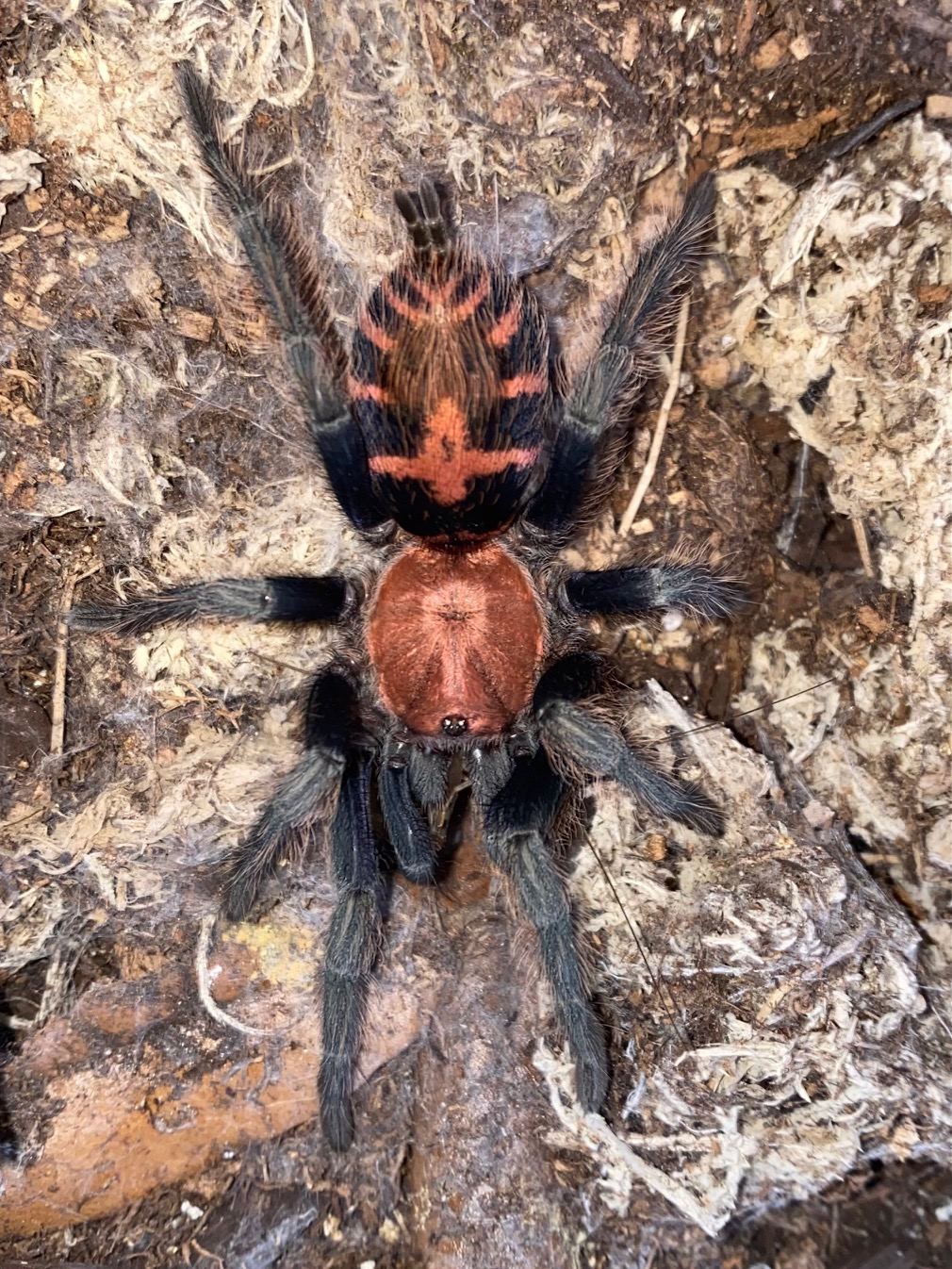
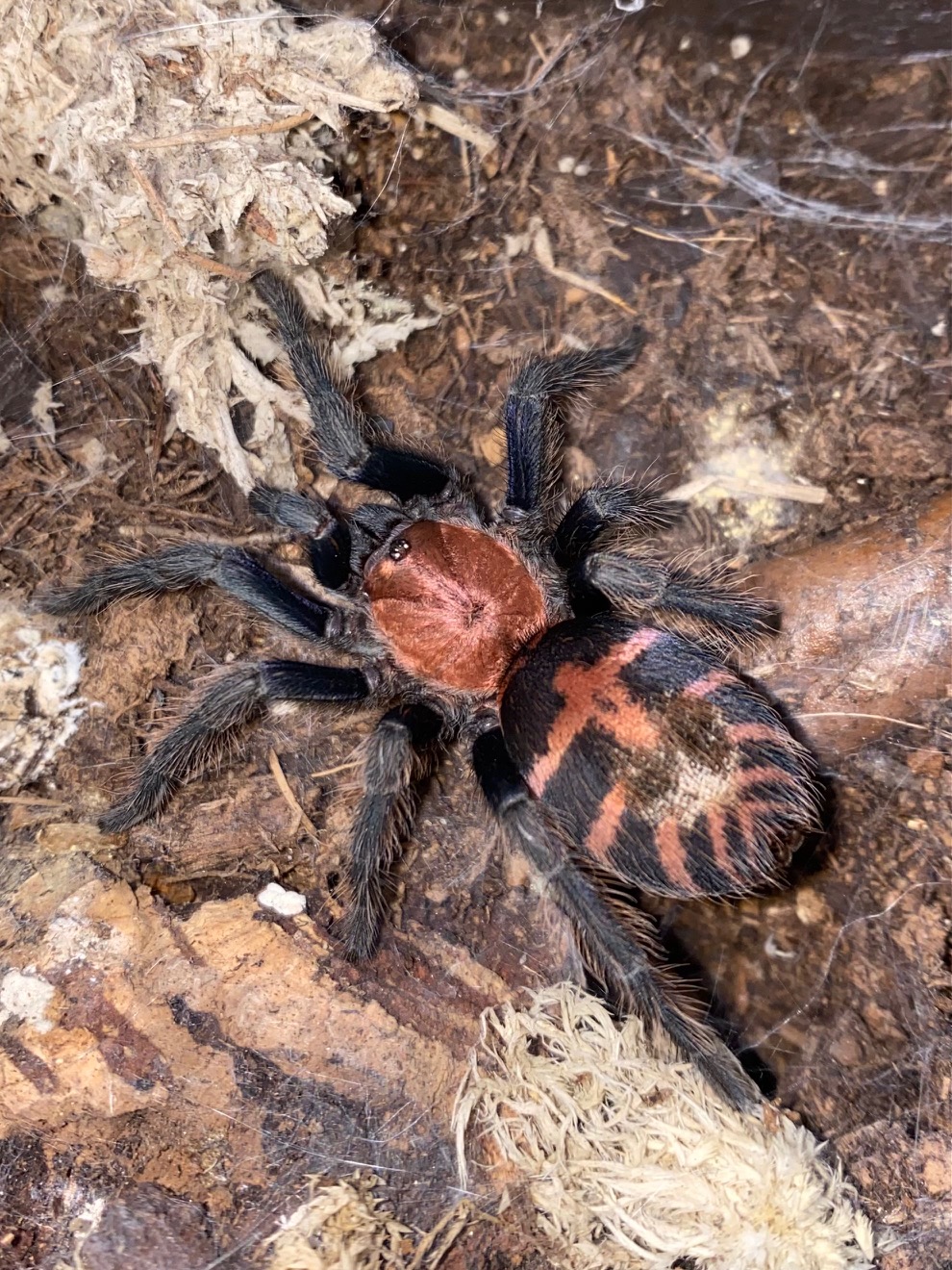
Among tarantula enthusiasts, Davus pentaloris (commonly known as the Guatemalan Tiger Rump) is celebrated as a “pocket-sized” masterpiece. While many large terrestrial tarantulas are shades of brown or gray, this species offers a vivid, high-contrast aesthetic that makes it a standout display animal in any collection.
Natural History and Taxonomy
Davus pentaloris is native to the tropical forests of Guatemala and Southern Mexico. For years, it was frequently confused with its cousin, Davus fasciatus (the Costa Rican Tiger Rump), leading to significant mislabeling in the pet trade. However, D. pentaloris is distinct for its copper-to-orange carapace and specific abdominal patterns.
Recent molecular studies suggest that D. pentaloris may actually be a “species complex,” meaning there could be more than a dozen closely related but distinct species currently grouped under a single name.
Appearance and Anatomy
This is considered a dwarf to medium-sized species, making it ideal for keepers with limited space.
- Size: Adult females typically reach a leg span of 3.5 to 4.5 inches, while males remain slightly smaller and more slender.
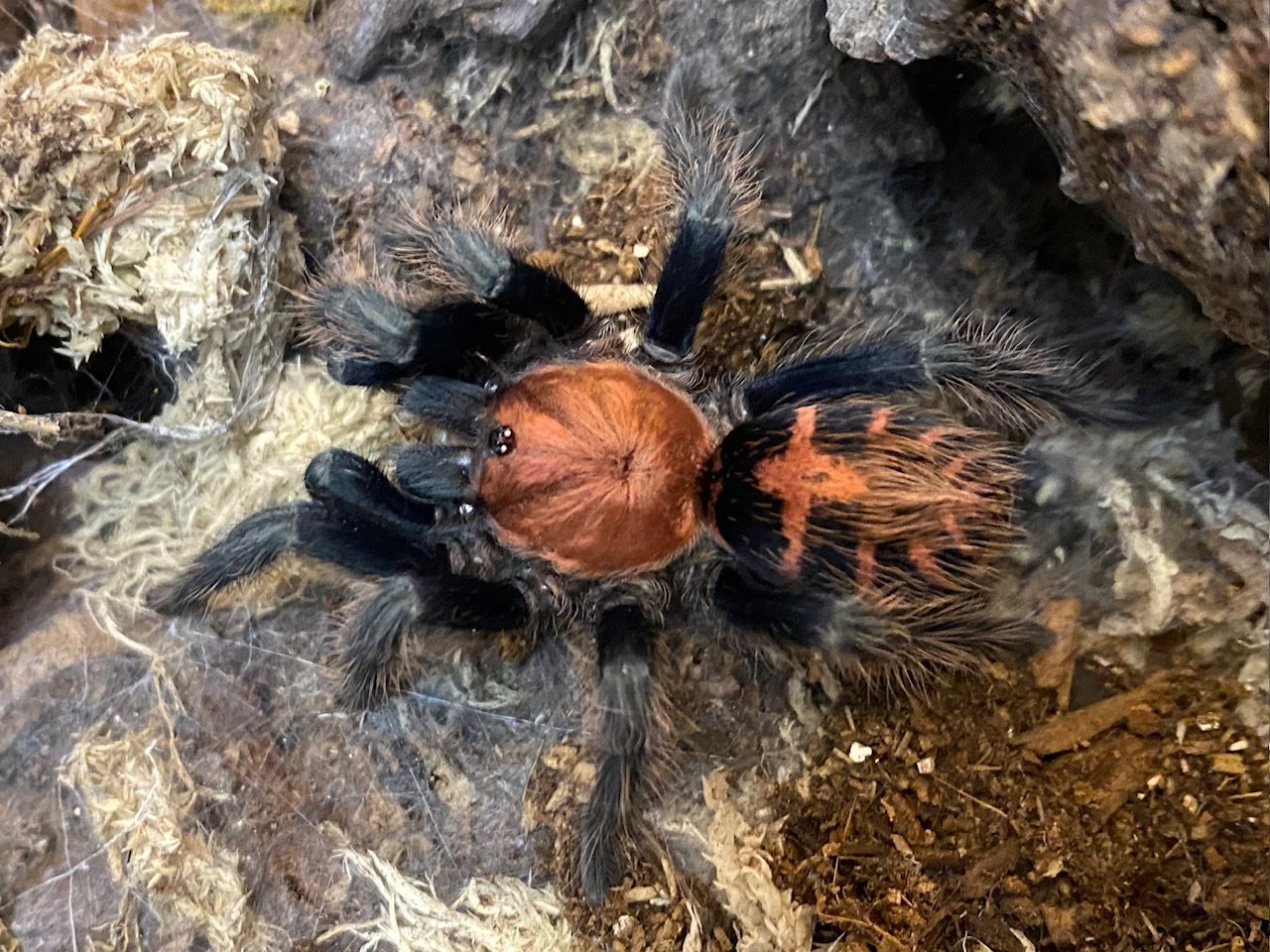
- Coloration: They feature a stunning copper or reddish-orange carapace. Their legs are jet black (sometimes showing blue or bronze iridescence after a molt), and their abdomen is decorated with brilliant orange-and-black “tiger stripes.”
- Defense: Like most New World species, they possess urticating hairs on their abdomen, which they can flick if they feel threatened.
Behavior and Temperament
The Guatemalan Tiger Rump is often described as skittish but docile.
- Speed: They are incredibly fast, especially as spiderlings (slings). They are more likely to “bolt” back into their burrow than to stand their ground and bite.
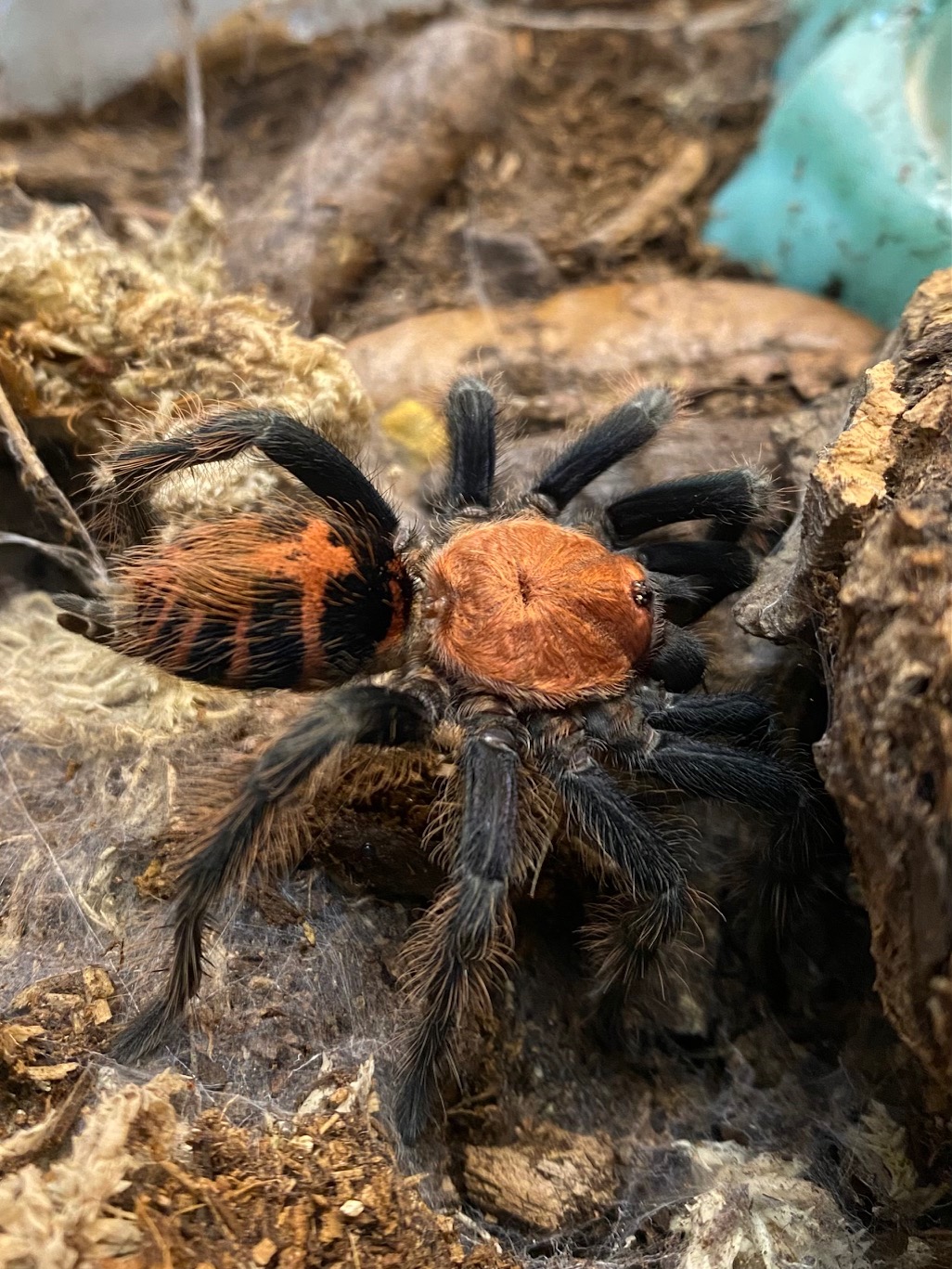
- Activity: Unlike many “pet rocks” that sit still for days, D. pentaloris is an active, energetic species. They are opportunistic burrowers and heavy webbers, often transforming their enclosure into a complex network of silk-lined tunnels.
Captive Care Requirements
Because of its hardiness and manageable size, this species is frequently recommended for beginners, though its speed requires a bit of caution during rehousing.
1. Enclosure Setup
- Type: Terrestrial. While they are ground-dwellers, they appreciate a little vertical space for webbing.
- Substrate: Provide 3–4 inches of moisture-retaining substrate (like coco fiber or topsoil). Slings prefer to burrow deeply, while adults may simply use a pre-made hide.
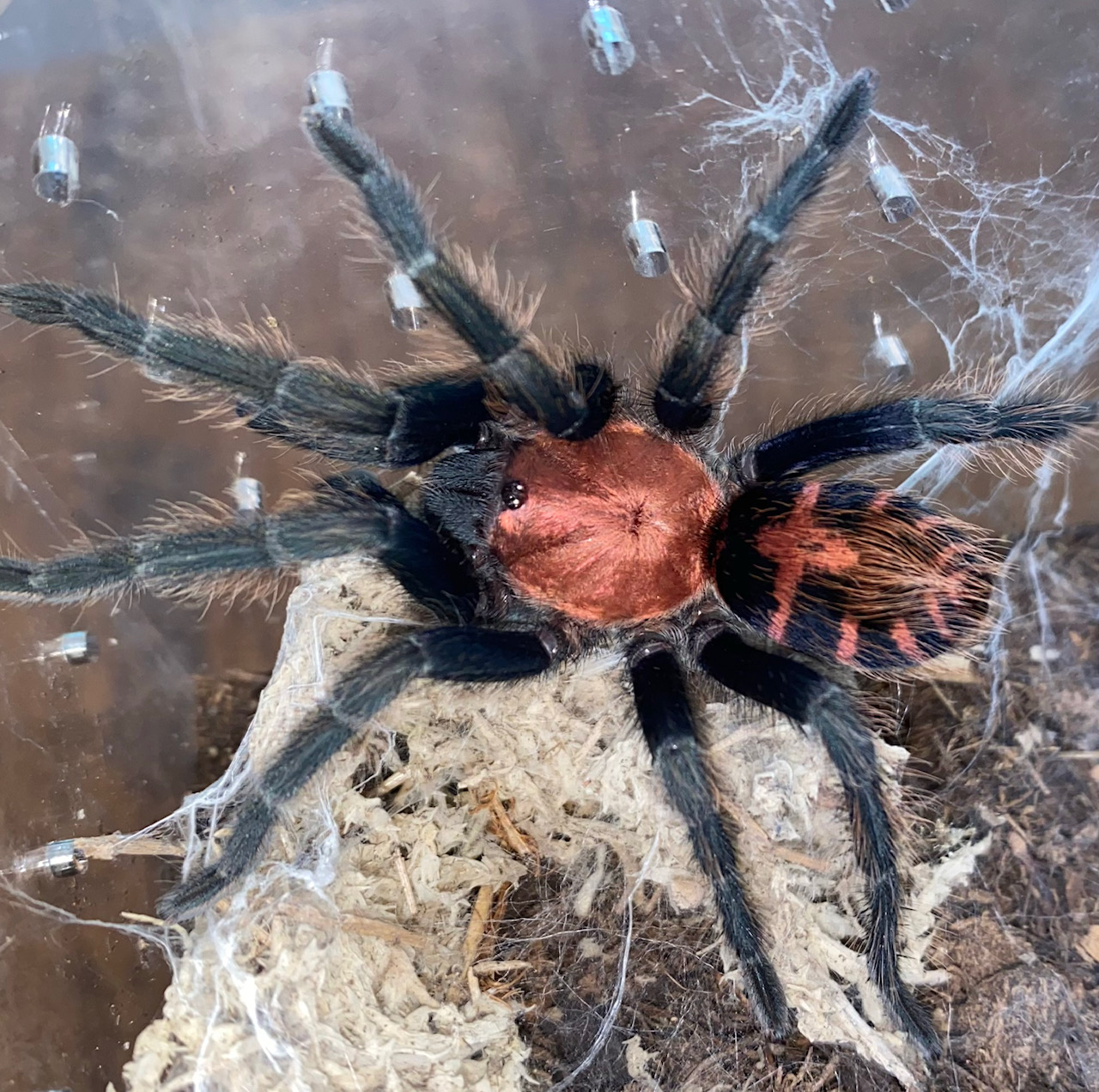
- Decor: Include cork bark hides and artificial plants. They will often incorporate these into their elaborate webbing structures.
2. Environmental Conditions
- Temperature: They thrive at standard room temperatures, ideally between 75°F and 82°F.
- Humidity: Moderate humidity (60–70%) is best. It is helpful to keep one corner of the substrate damp while allowing the rest to stay dry. A shallow water dish should always be available.
3. Diet and Growth
- Feeding: They have a legendary feeding response and will tackle prey nearly their own size. Offer crickets, roaches, or mealworms once a week for adults; slings can be fed every 4–5 days to support their fast growth rate.
- Lifespan: Females can live 10–12 years, while males typically mature within 2–3 years and live shortly thereafter.
Summary Table
| Feature | Detail |
| Common Name | Guatemalan Tiger Rump |
| Type | New World Terrestrial / Opportunistic Burrower |
| Origin | Guatemala, Mexico |
| Max Size | ~4.5 inches |
| Temperament | Skittish, fast, rarely defensive |
| Difficulty | Beginner to Intermediate |
Discover more from
Subscribe to get the latest posts sent to your email.
 davethebugguy.org