
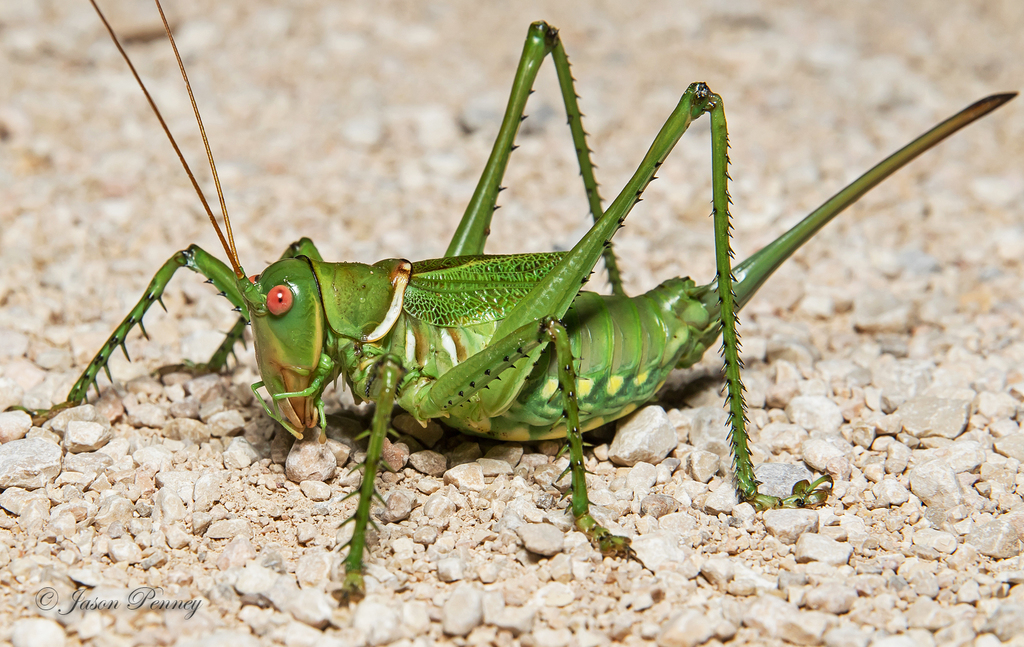
While most people associate katydids with the gentle, rhythmic chirping of a summer evening, Neobarrettia spinosa—commonly known as the Greater Arid-Land Katydid or the Red-Eyed Devil—is a creature of a much more formidable nature. Found primarily in the southwestern United States and Northern Mexico, this insect is a striking example of predatory evolution within the Orthoptera order.
Physical Characteristics: Built for Combat
The Greater Arid-Land Katydid is one of the largest and most aggressive katydids in North America. Its physical appearance is designed for both intimidation and efficiency:
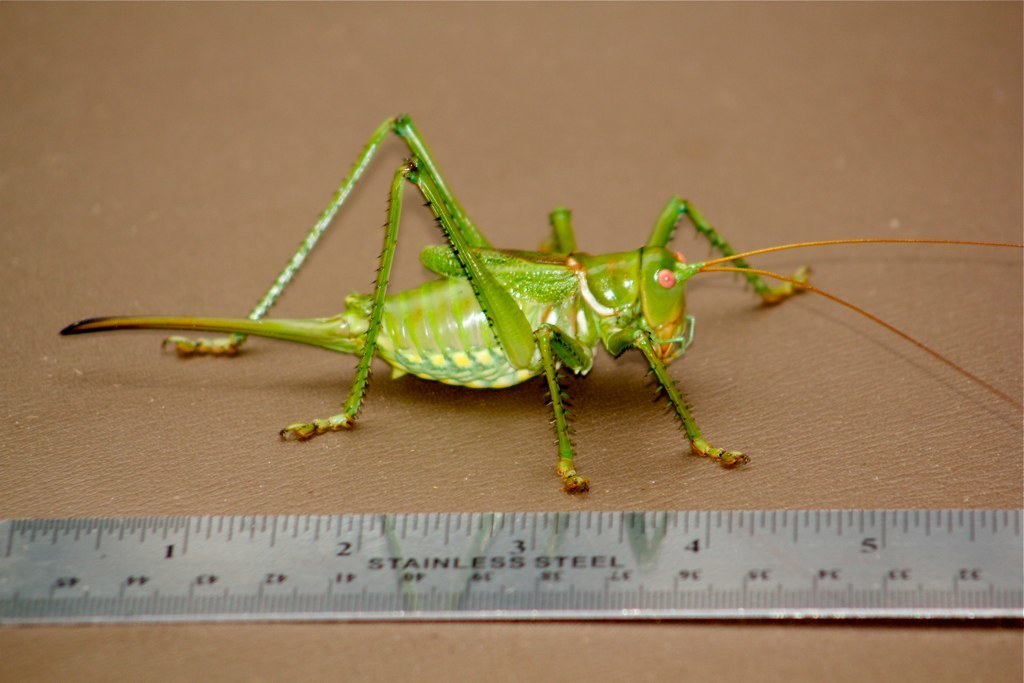
- Size and Color: They typically reach lengths of 2 to 3 inches. Their bodies are a vibrant, leafy green, providing excellent camouflage against the scrub brush and cacti they inhabit.
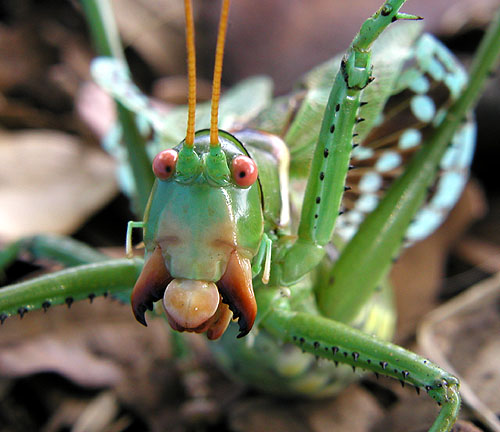
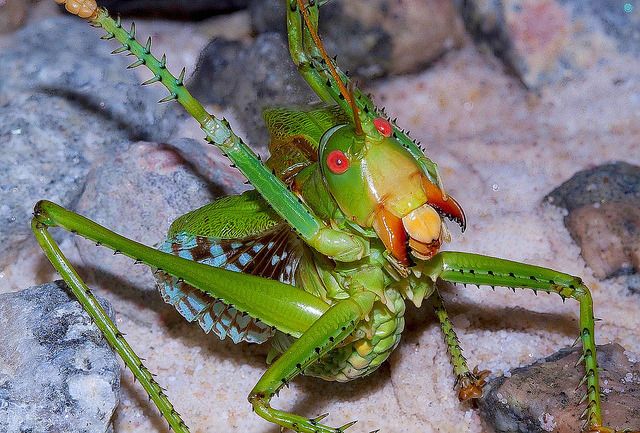
- The “Red Eyes”: One of their most distinctive features is their striking, often deep-red or dark compound eyes, which give them an intense, almost “ferocious” look.
- The Spiny Armor: The scientific name spinosa refers to the formidable rows of sharp spines lining their elongated front legs. These spines act as a “raptorial” trap, much like those of a praying mantis, used to snatch and hold onto struggling prey.
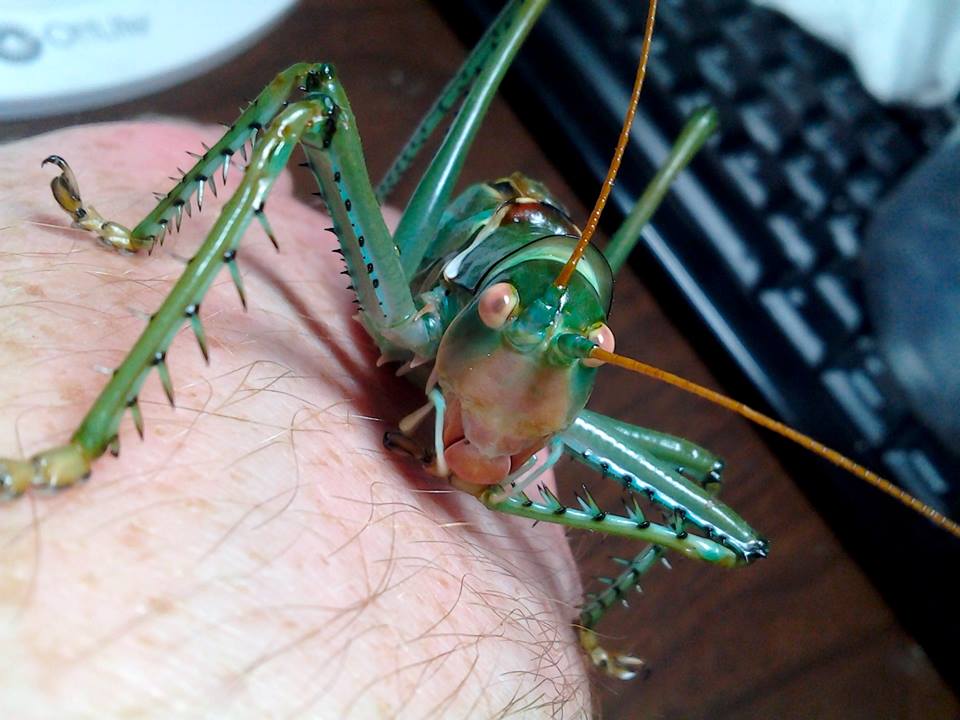
- Powerful Mandibles: Unlike herbivorous katydids, N. spinosa possesses large, powerful jaws capable of delivering a painful bite to humans and easily crushing the exoskeletons of other insects.
Habitat and Range
These insects are highly specialized for semi-arid environments. Their range primarily spans:
- Texas: They are widely distributed throughout the Lone Star State, particularly in the Edwards Plateau and the Trans-Pecos regions.
- New Mexico and Oklahoma: Found in the drier, scrubby grasslands.
- Northern Mexico: They thrive in the Chihuahuan Desert and surrounding Tamaulipan matorral.
They are most active during the late summer and early autumn, often found perched atop low-lying shrubs like mesquite or acacia, where they wait for their next meal.
Behavior and Diet: The Insect Apex Predator
What truly sets Neobarrettia spinosa apart is its diet. While many katydids feed on foliage, the Greater Arid-Land Katydid is primarily carnivorous.
| Aspect | Description |
| Diet | They hunt other insects, including grasshoppers, cicadas, other katydids, and even small lizards or frogs if the opportunity arises. |
| Hunting Style | They are “sit-and-wait” predators, using their sensitive antennae to detect vibrations before lunging forward with their spiny forelegs. |
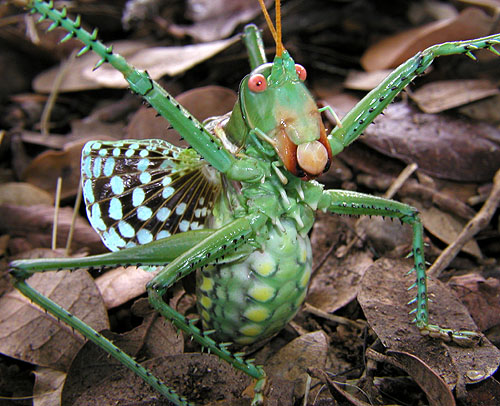
| Defensive Display | When threatened, they flare their wings to reveal bright, startling patterns (eyespots) and raise their front legs in a “decapod” stance, clicking their mandibles to warn off predators. |
The Song of the “Devil”
The call of N. spinosa is not the melodic “katy-did” phrase of its eastern cousins. Instead, it produces a loud, harsh, and rhythmic “shuck-shuck-shuck” sound. This stridulation (produced by rubbing their wings together) is incredibly loud, designed to carry across the vast, open spaces of the desert to attract mates.
Ecological Significance
Despite their aggressive reputation, these katydids play a vital role in their ecosystem. By preying on grasshoppers and other herbivorous insects, they act as a natural form of pest control. They are also a high-protein food source for larger desert dwellers, including birds of prey, roadrunners, and bats.
Fast Facts
- Order: Orthoptera
- Family: Tettigoniidae
- Common Names: Greater Arid-Land Katydid, Red-Eyed Devil, Spiny-Legged Katydid.
- Lifespan: Generally one season; eggs are laid in the soil to overwinter and hatch the following spring.
Discover more from
Subscribe to get the latest posts sent to your email.
 davethebugguy.org