
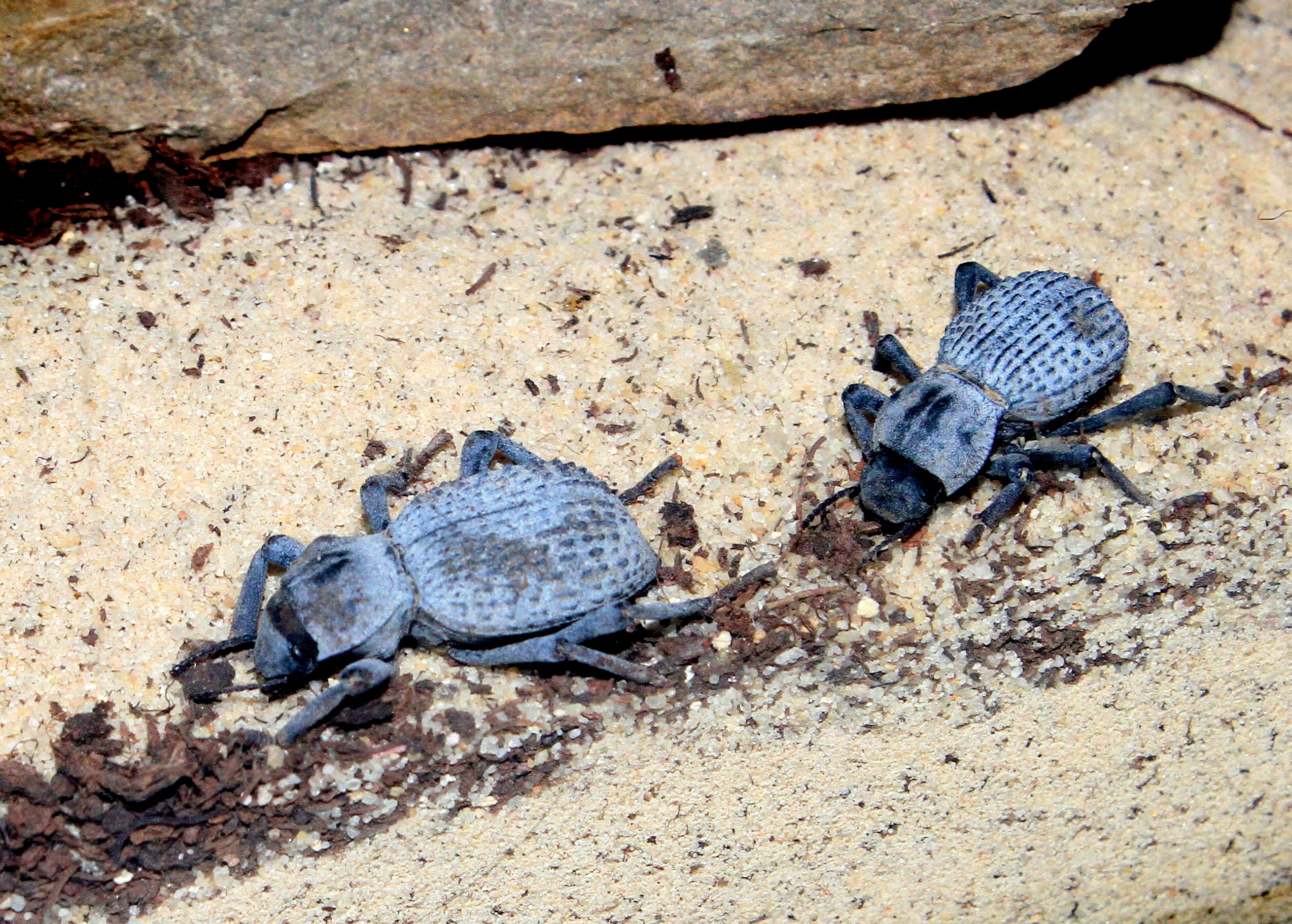
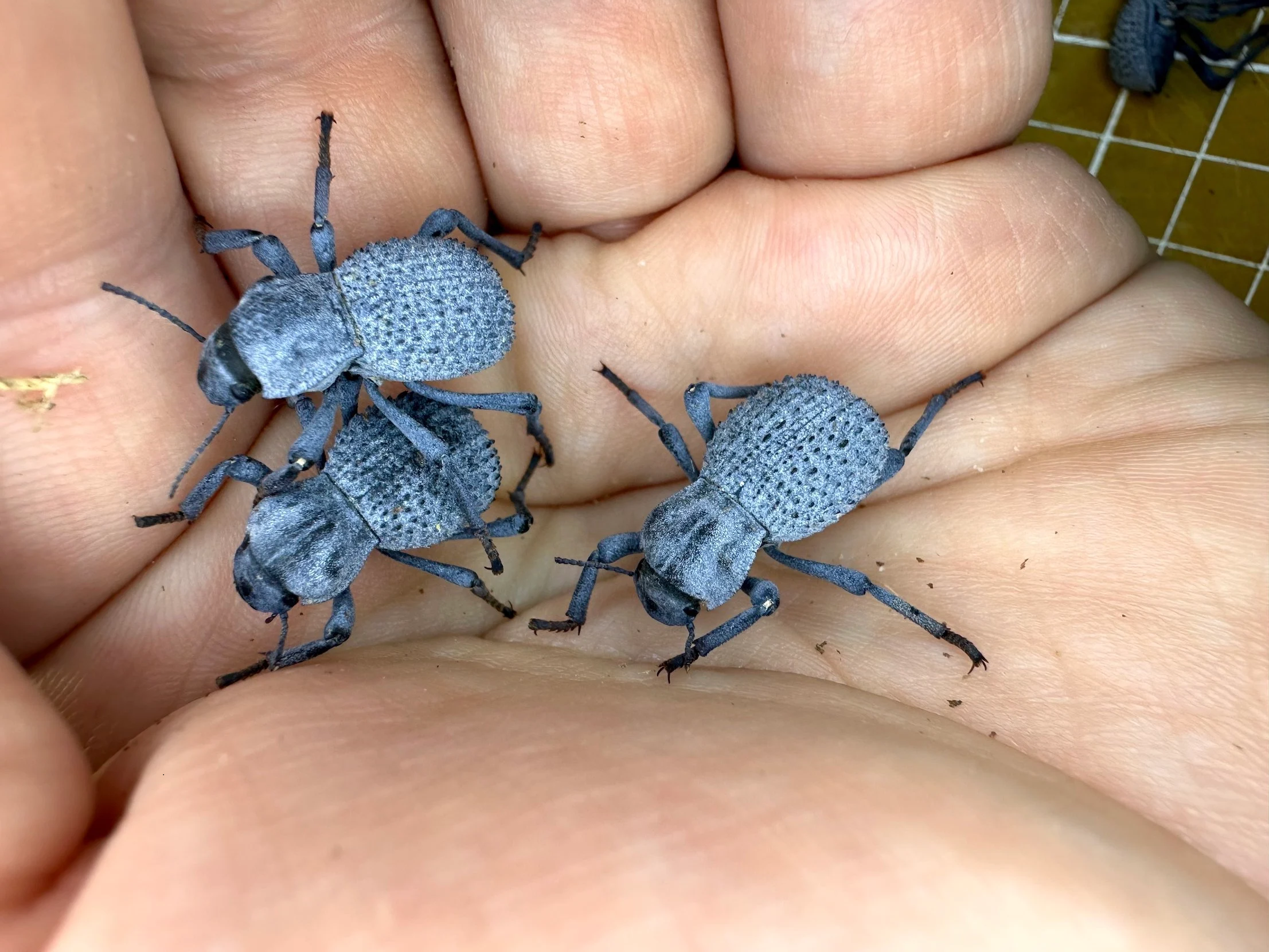
Often appearing like a cluster of living blueberries on a desert floor, Asbolus verrucosus—commonly known as the Blue Death-Feigning Beetle—is one of the most charismatic and hardy invertebrates in North America. These beetles have become a sensation in the exotic pet trade, not only for their striking powdery-blue hue but for their dramatic “acting” skills and extreme longevity.
Taxonomy and Physical Description
Asbolus verrucosus belongs to the family Tenebrionidae (darkling beetles), a group known for their incredible adaptations to arid environments.
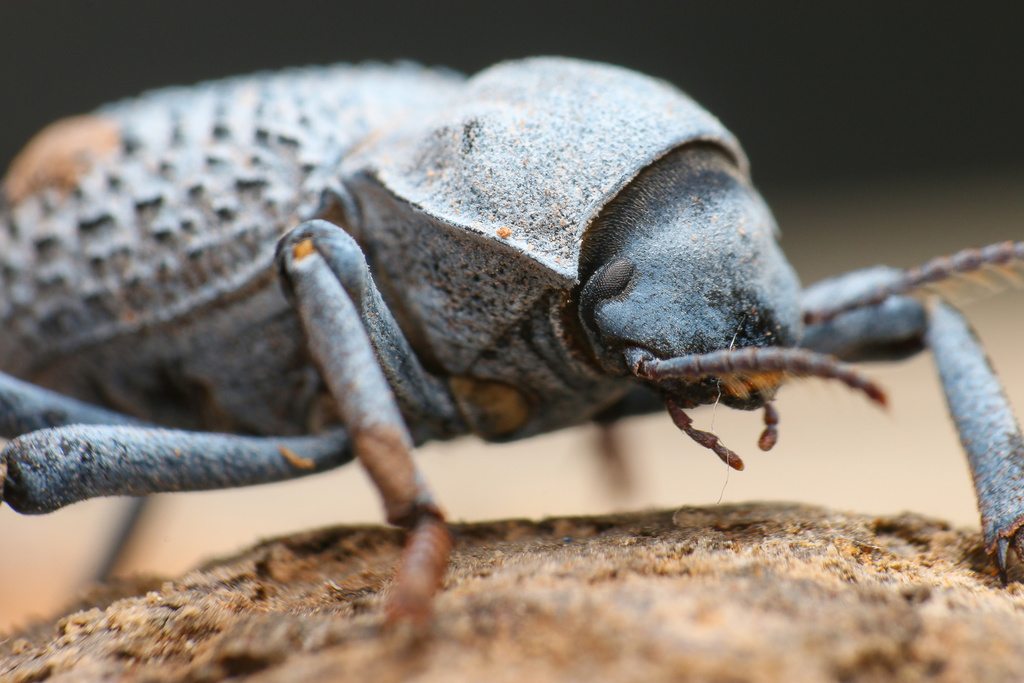
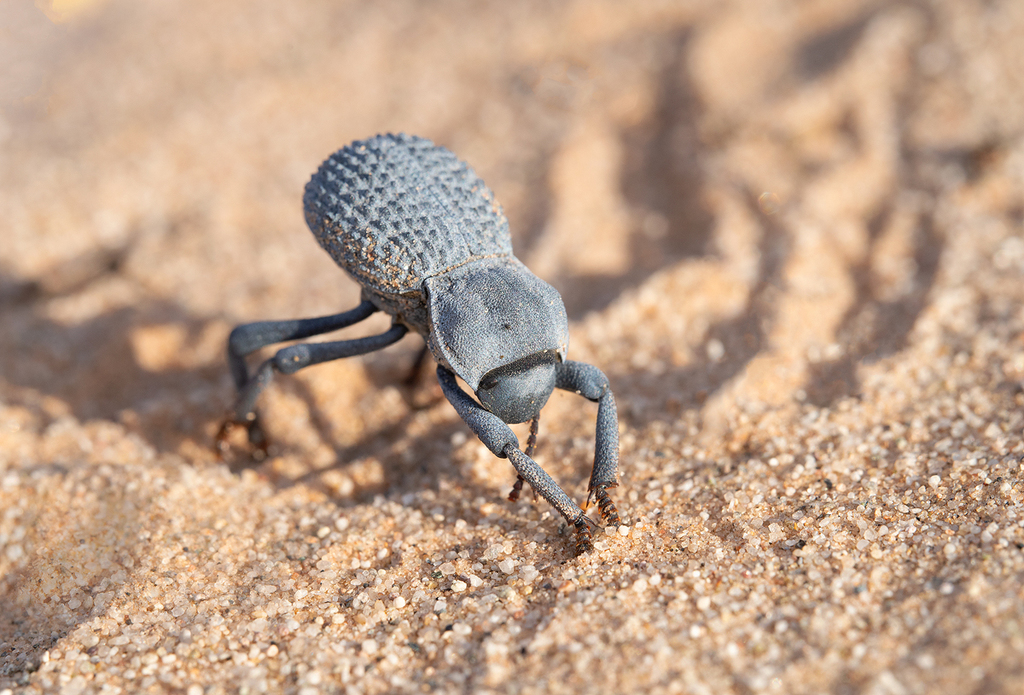
- The “Blue” Coating: Interestingly, the beetle is naturally black. Its signature blue color comes from a waxy secretion that covers its exoskeleton. This wax acts as a high-SPF “sunblock” and a waterproof seal, preventing the beetle from losing precious moisture in the blistering desert heat.
- Warty Texture: The species name verrucosus is Latin for “warty,” referring to the distinct rows of bumps on its elytra (wing covers).
- Size and Dimorphism: Adults typically measure between 18 mm and 21 mm. Males are generally slightly smaller than females and can be identified by tiny, bristly red hairs on their antennae.
- Flightless: Like many desert beetles, their elytra are fused together, making them incapable of flight but providing a sturdier armor against predators and desiccation.
The Ultimate Defense: Thanatosis
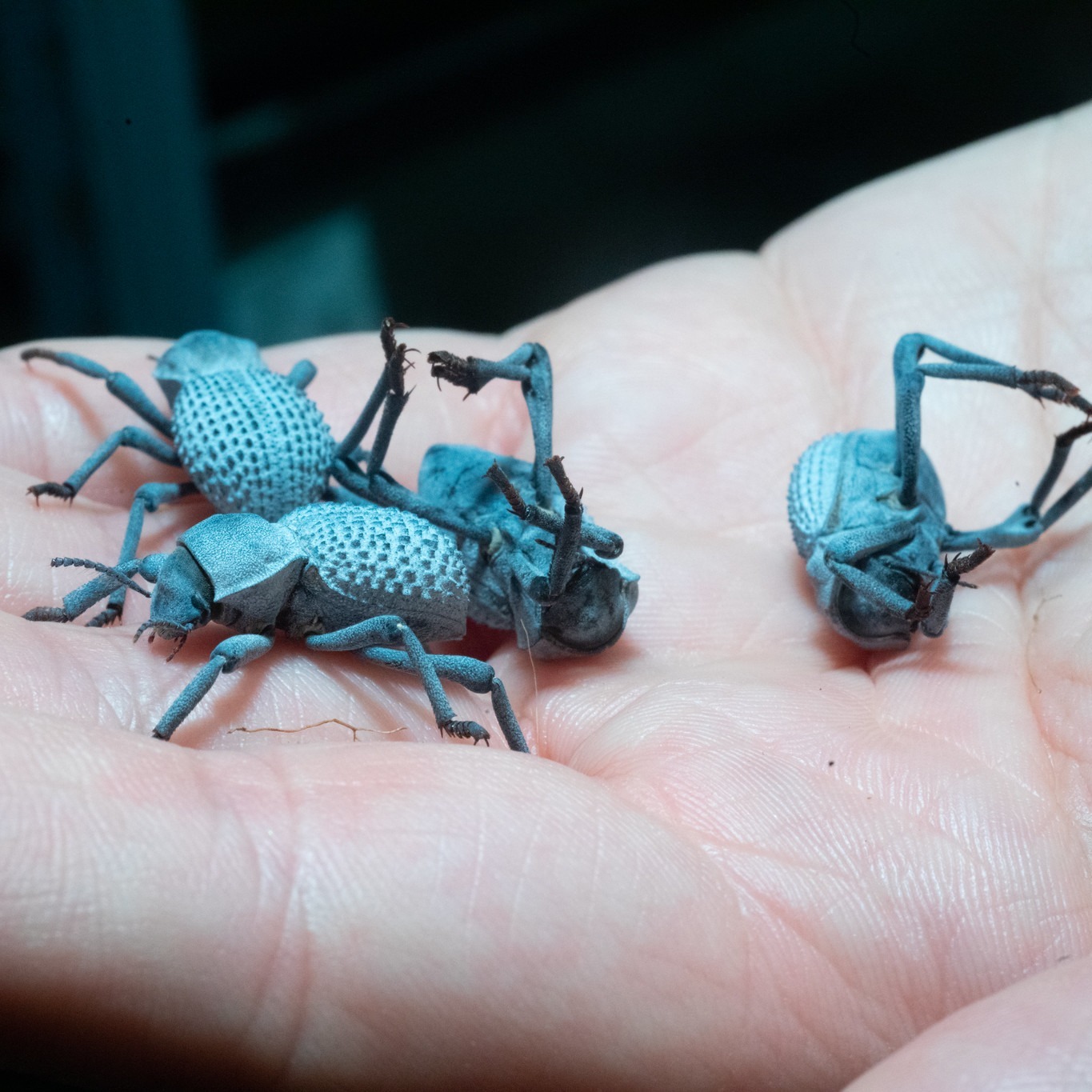
The beetle’s common name comes from its primary defense mechanism: thanatosis, or death-feigning. When it perceives a threat—such as a sudden vibration or the touch of a predator—it will immediately flip onto its back, stiffen its legs, and remain motionless for minutes or even hours.
Because many desert predators (like certain spiders and lizards) are hard-wired to prefer live, moving prey, they often ignore the “dead” beetle, allowing it to survive another day.
Habitat and Distribution
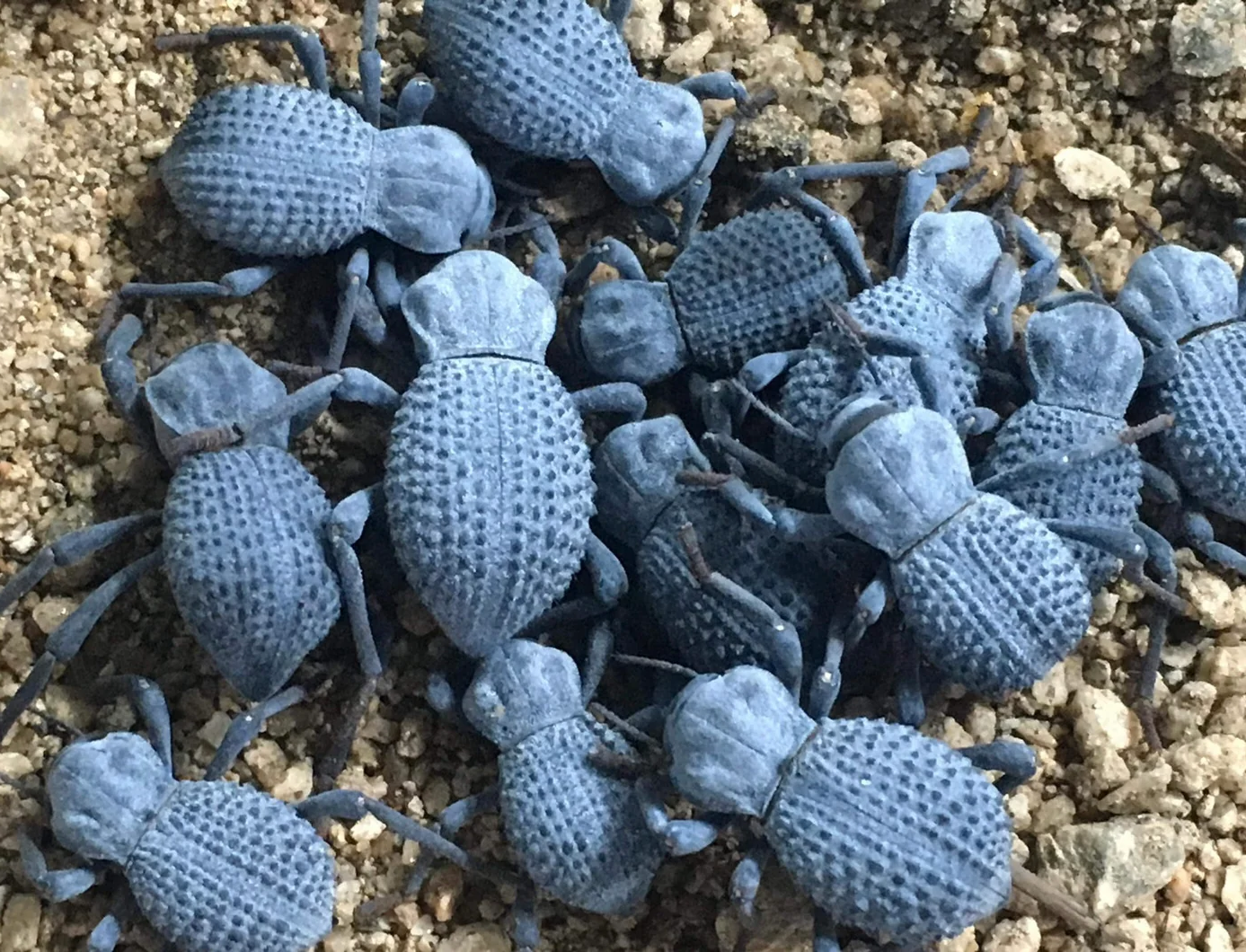
These beetles are native to the southwestern United States and northwestern Mexico. They are most abundant in the Sonoran and Mojave Deserts, particularly in regions with sandy dunes and arid scrubland.
They are primarily crepuscular (active at dawn and dusk) or nocturnal, which allows them to avoid the peak heat of the day. During the afternoon, they burrow into the sand or hide under rocks and fallen debris to stay cool.
Diet and Ecology
In the wild, Asbolus verrucosus serves as a vital scavenger (detritivore). Their diet is incredibly opportunistic and includes:
- Decaying plant matter and fallen fruit.
- Lichen and moss.
- Carrion (dead insects or small animals).
In a captive setting, they are famous for being “garbage disposals,” happily eating everything from dried shrimp and fish flakes to fresh carrots and beetle jelly.
Lifespan and Life Cycle
One of the most remarkable features of this beetle is its lifespan. While most insects live for a single season, Asbolus verrucosus can live for 8 to 15 years or more.
The Breeding Mystery
Despite their popularity, they are notoriously difficult to breed in captivity.
- Egg/Larvae: Females lay eggs in moist soil. The larvae resemble mealworms and are also capable of feigning death.
- The Pupation Hurdle: Getting larvae to successfully pupate into adults is the “holy grail” for hobbyists. It requires very specific, fluctuating humidity and temperature gradients that mimic the deep underground desert environment. Consequently, most beetles in the pet trade are still wild-caught.
Captive Care Summary
Due to their hardiness and lack of aggression, they are often considered the “perfect” beginner invertebrate.
| Feature | Requirement |
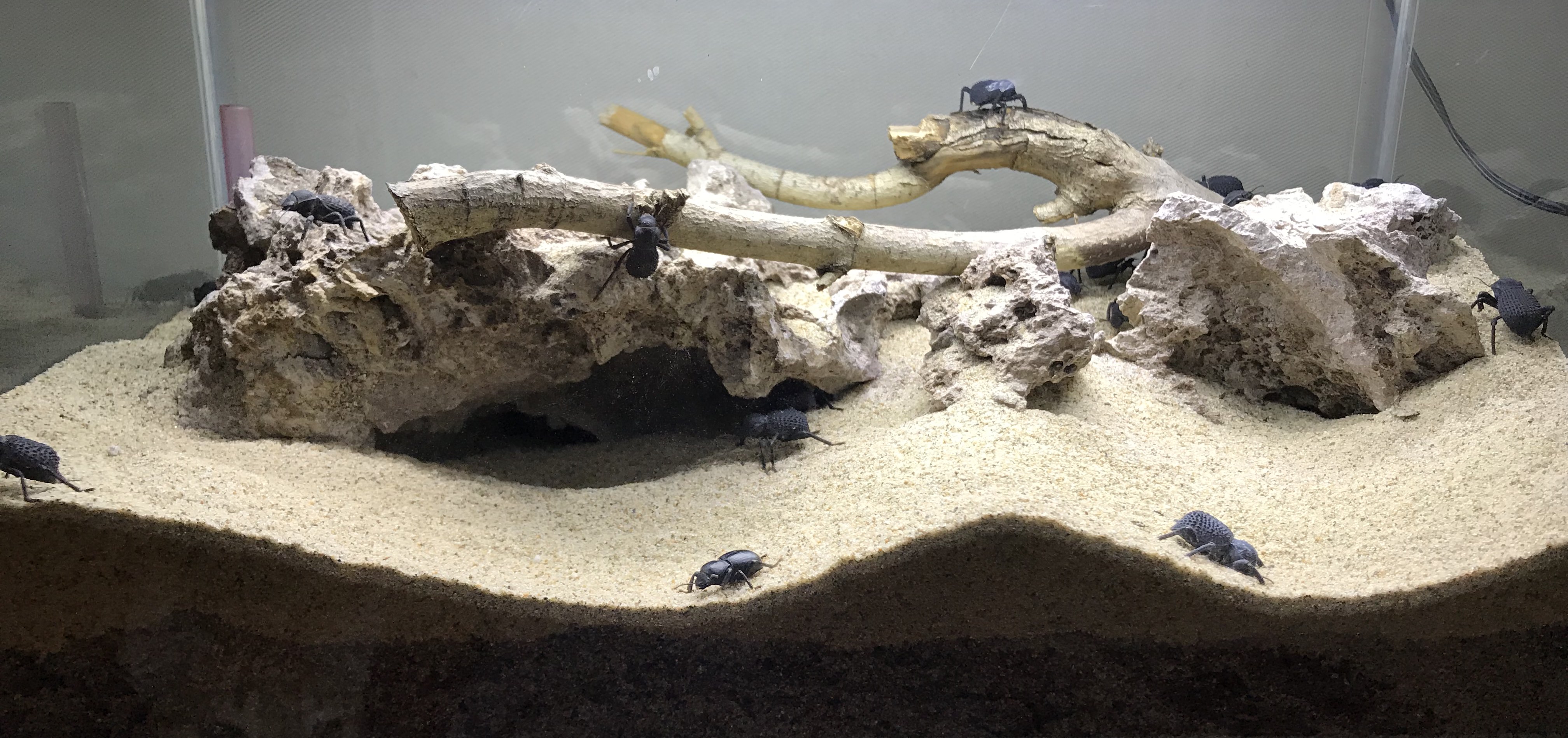
| Enclosure | 5–10 gallon glass tank (they cannot climb smooth glass). |
| Substrate | Play sand or a sand/coco-fiber mix (at least 2 inches deep). |
| Humidity | Very low. High humidity or getting them wet will wash off their blue wax, turning them black. |
| Temperature | 70°F – 85°F (Room temperature is usually fine). |
| Hydration | No water bowl (they can drown). They get moisture from fresh vegetables. |
Discover more from
Subscribe to get the latest posts sent to your email.
 davethebugguy.org