
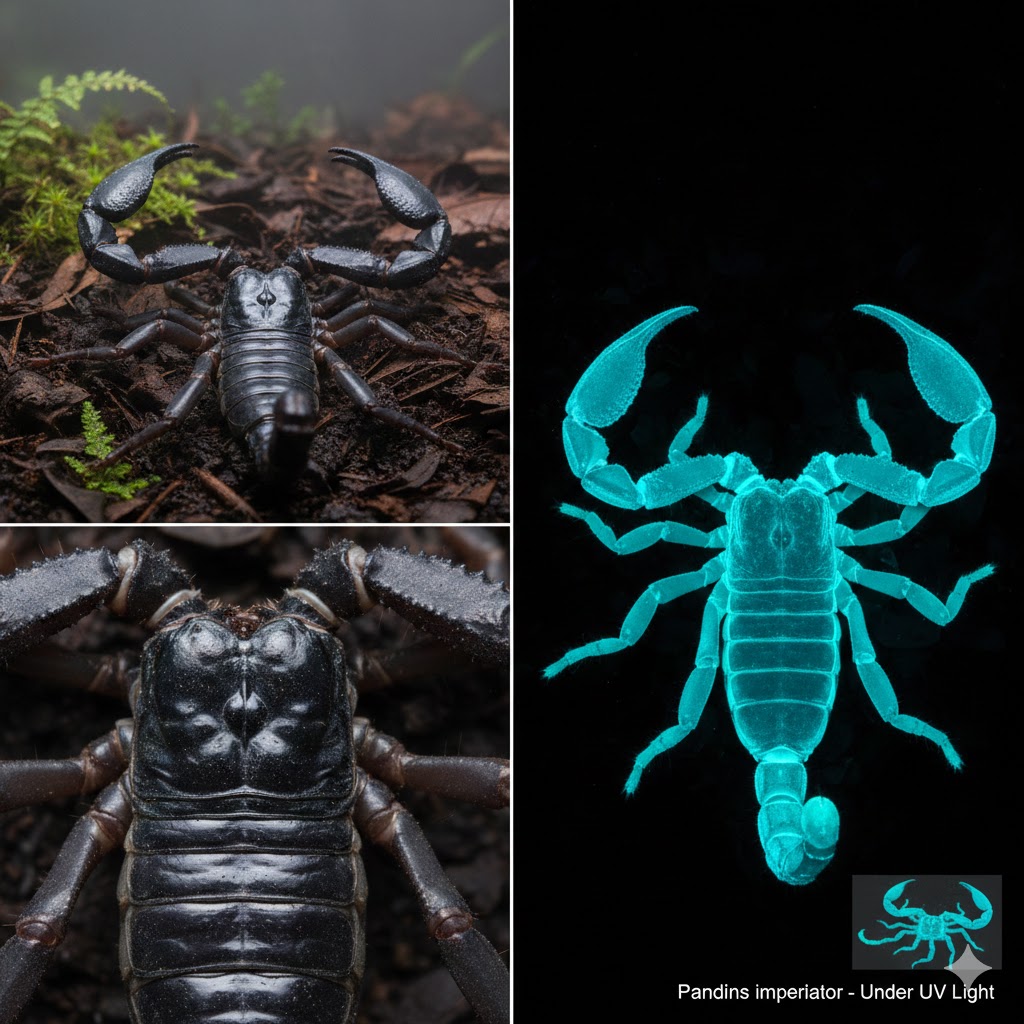
Often called the “Gentle Giant” of the arachnid world, Pandinus imperator, or the Emperor Scorpion, is one of the most iconic and recognizable invertebrates on the planet. Native to the steaming rainforests and humid savannas of West Africa, it has earned a reputation for its massive size, striking ebony appearance, and surprisingly docile nature.
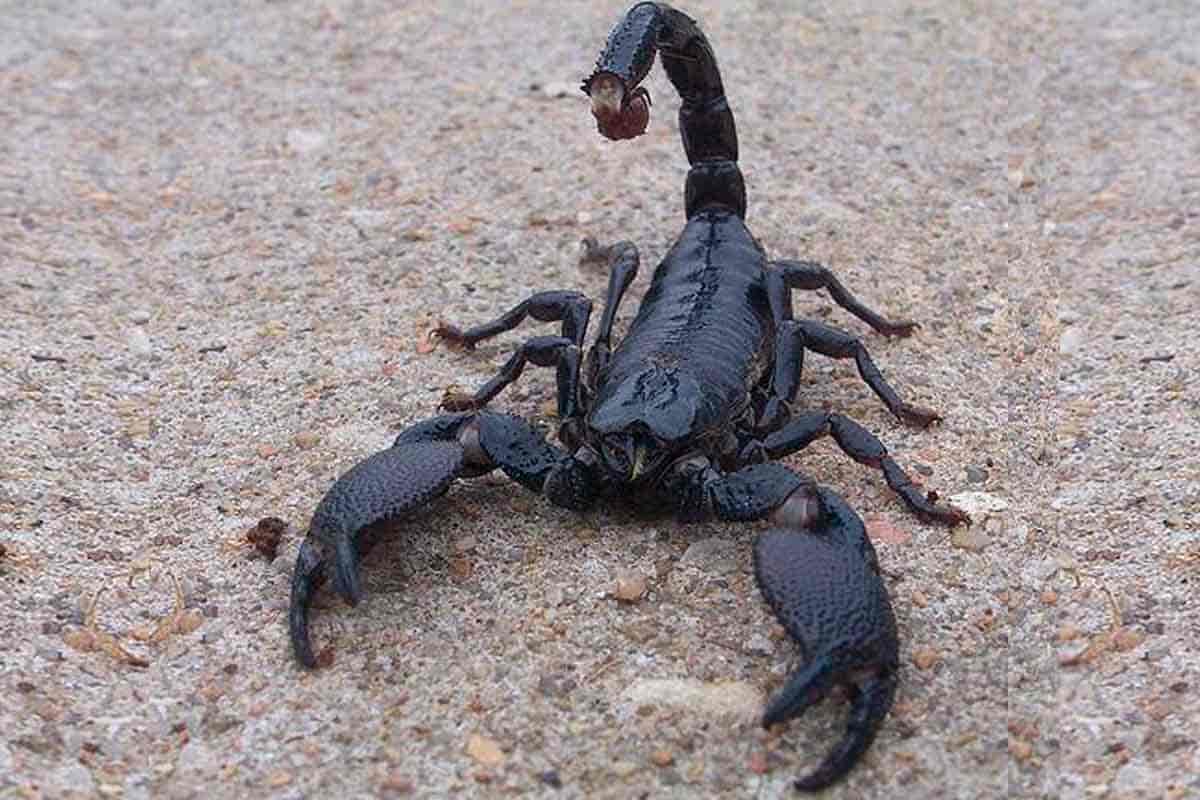
Biological Classification & Taxonomy
- Class: Arachnida
- Order: Scorpiones
- Family: Scorpionidae
- Genus: Pandinus
- Species: P. imperator
While often cited as the largest scorpion in the world, it technically shares that title with the Giant Forest Scorpion (Heterometrus swammerdami). However, the Emperor remains the “heavyweight” champion in terms of bulk, with gravid (pregnant) females reaching weights of nearly 30 grams.
Physical Characteristics
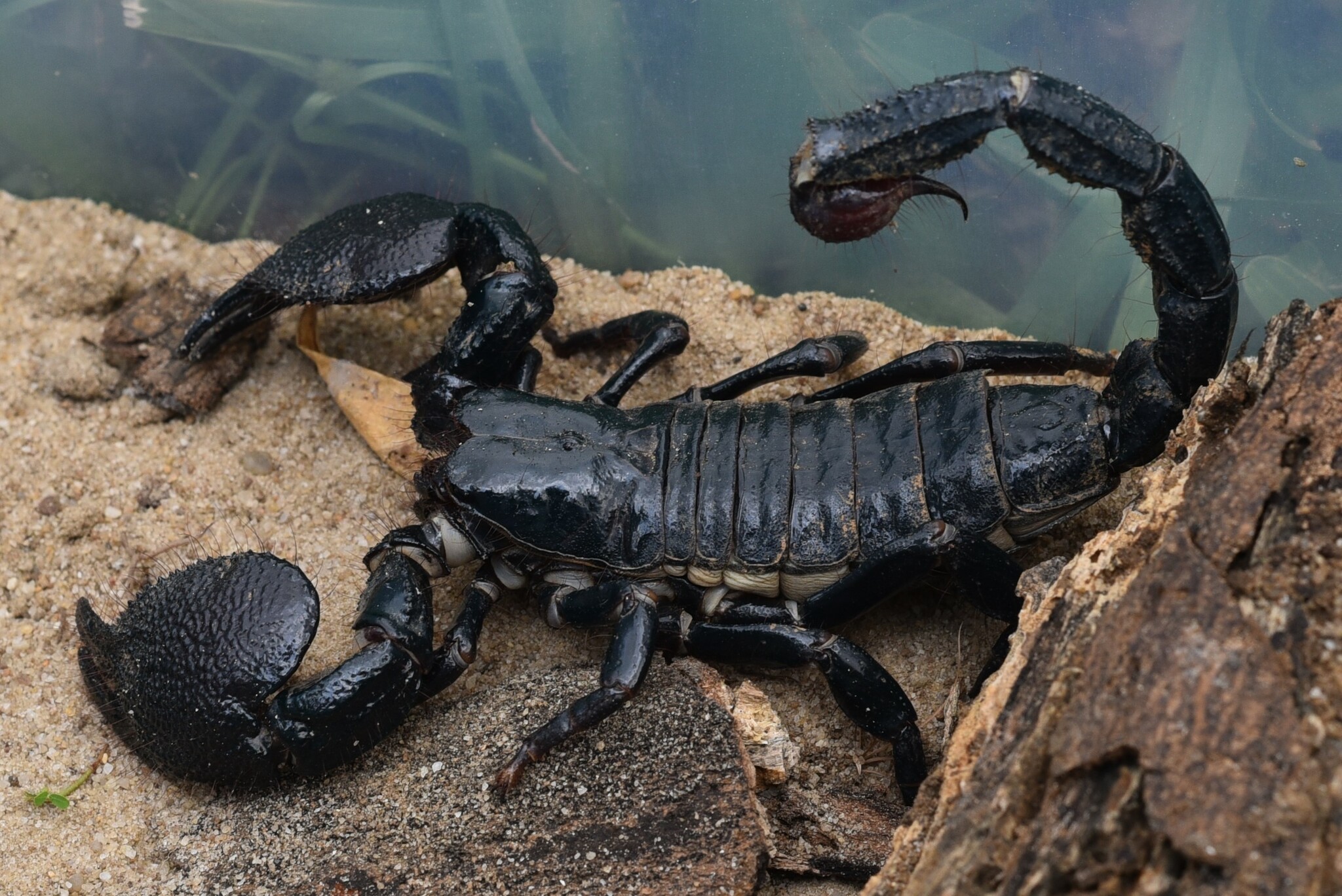
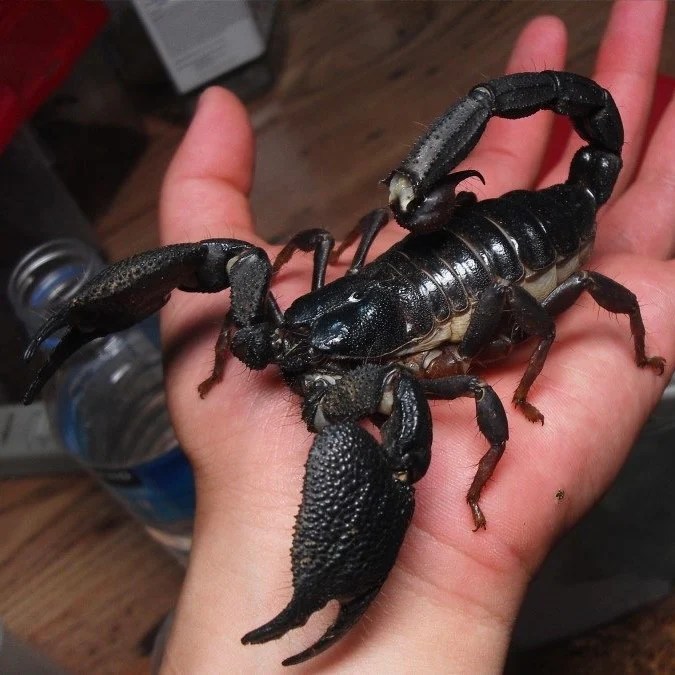
The Emperor Scorpion is a masterclass in evolutionary armor. Adults typically average 20 cm (7.9 inches) in length.
Anatomy and Coloration
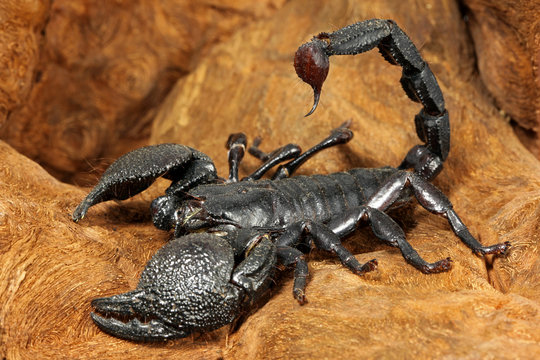
- The Exoskeleton: They possess a deep, glossy black exoskeleton that can sometimes appear dark blue or green under certain lighting.
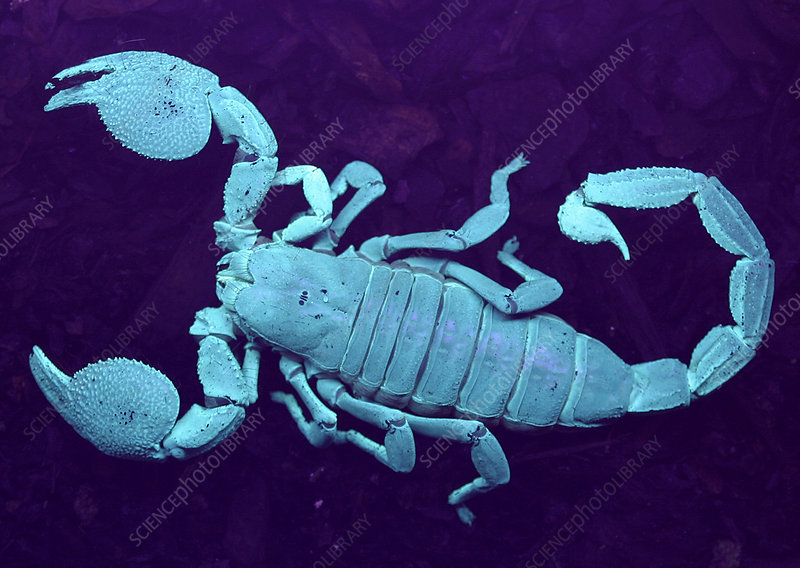
- Fluorescence: Like all scorpions, they glow a brilliant neon blue-green under ultraviolet (UV) light. This is due to beta-carbolines in their cuticle, though the evolutionary purpose—whether for mate signaling or light detection—is still debated.
- The Pedipalps (Claws): Their pincers are large, powerful, and covered in granular bumps. Because their venom is relatively weak, they rely on these “muscular” arms to crush prey.
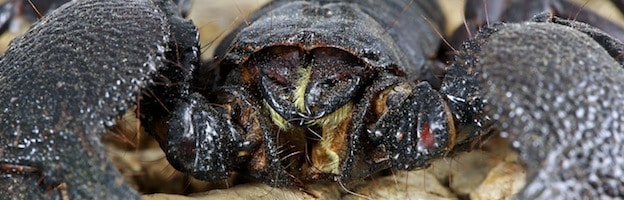
- Sensory Pectines: On their underside, they have comb-like structures called pectines, which they use to “smell” the ground and detect chemical trails or vibrations.
Venom Potency
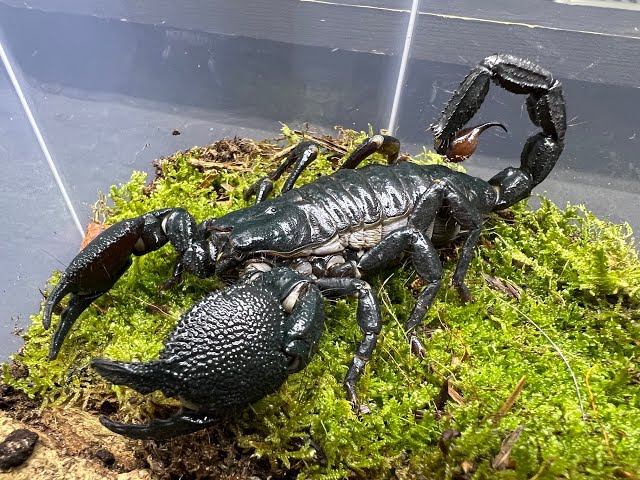
Contrary to their intimidating appearance, the Emperor’s sting is mild. It is often compared to a bee sting for most humans. They are notoriously reluctant to sting, usually opting to use their massive claws for defense or to flee entirely.
Natural Habitat and Distribution
Emperor scorpions are found across West Africa, including nations such as Ghana, Togo, Nigeria, and Guinea.
They are fossorial creatures, meaning they live underground. In the wild, they inhabit:
- Tropical Rainforests: Deep leaf litter and the humid soil of forest floors.
- Termite Mounds: They are frequently found living within (and feeding upon) large termite colonies.
- Burrows: They can dig tunnels up to 30 cm deep to maintain the high humidity levels (70–80%) they need to survive.
Behavior and Social Life
One of the most unique aspects of P. imperator is its social tendency. Unlike many solitary and cannibalistic scorpion species, Emperors can be surprisingly communal.
- Colony Living: They are known to live in small family groups or colonies of up to 15 individuals, often sharing the same burrow system.
- Nocturnal Hunters: They emerge at night to hunt. While they primarily eat termites, they are opportunistic and will take down crickets, roaches, and occasionally small vertebrates like lizards or mice.
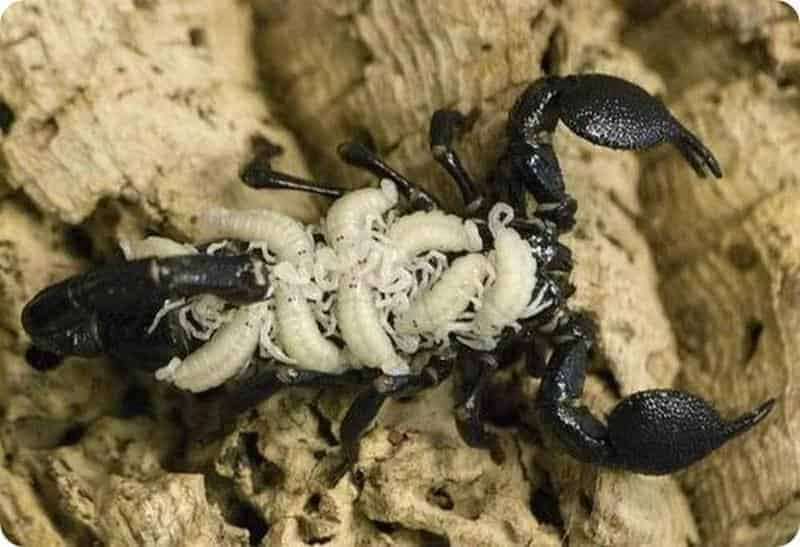
- Parental Care: Females give birth to live young (scorplings)6 The babies are born white and defenseless, riding on their mother’s back for several weeks until their first molt, during which she protects them and provides food.
Conservation Status & The Pet Trade
Due to their docile nature and impressive size, Emperor scorpions became the “gold standard” for the exotic pet trade in the 1990s. This popularity led to massive over-collection in the wild.
- CITES Appendix II: To prevent the species from becoming endangered, they are protected under CITES Appendix II. This means international trade is strictly regulated and requires specific permits.
- Sustainability: Today, most Emperors in the hobby are captive-bred, which helps protect wild populations from further depletion.
Quick Comparison: Emperor vs. Asian Forest Scorpion
It is common for beginners to confuse the Emperor with the Asian Forest Scorpion (Heterometrus). Here is how to tell them apart:
| Feature | Emperor Scorpion (P. imperator) | Asian Forest Scorpion (Heterometrus) |
| Claw Texture | Rough, bumpy, and granular | Smooth and elongated |
| Color | Matte or “lacquered” black | Glossy, often with a reddish tint |
| Temperament | Very docile, rarely stings | More defensive and “nervous” |

Keeping an Emperor Scorpion (Pandinus imperator) is a rewarding experience, but because they are a tropical species, their care revolves entirely around humidity and temperature management. If you get the environment right, they are incredibly hardy.
1. Housing & Enclosure
- Tank Size: A 10-gallon glass aquarium is sufficient for one adult. If you plan to keep a communal group, a 20-gallon “long” tank is better to provide enough floor space.
- Security: Use a tight-fitting mesh screen lid with security clips. While they aren’t great climbers, they are surprisingly strong and can push off loose lids.
- Substrate (Crucial): They are a burrowing species. You need 4–6 inches of moisture-retaining substrate. A mix of coconut husk fiber (Eco Earth), peat moss, and topsoil works best. Avoid sand or gravel.
2. Environmental Needs
The most common cause of health issues in Emperors is a dry environment.
- Humidity: Maintain 75% to 85% humidity.
- How to achieve this: Mist the enclosure daily with dechlorinated water. The substrate should be damp (like a wrung-out sponge) but not swampy.
- Temperature: Aim for a gradient of 24°C to 29°C (75°F to 85°F).
- Lighting: They are nocturnal. No special UV lighting is required for their health. In fact, prolonged exposure to bright light can stress them.
3. Decor and Enrichment
- Hiding Spots: Provide at least two hides (cork bark, hollow logs, or ceramic caves)—one on the warm side and one on the cool side.
- Water Dish: A shallow water bowl is mandatory. Ensure it is shallow enough that the scorpion cannot drown, and keep the water fresh.
- Plants: Live plants like Pothos can help maintain humidity, though the scorpion may dig them up.
4. Diet and Feeding
Emperors are opportunistic predators with slow metabolisms.
- What to Feed: Gut-loaded crickets, dubia roaches, and occasionally mealworms or waxworms.
- Frequency: Adults only need to eat 2–3 insects once a week.
- Removal of Prey: Always remove uneaten live insects after 24 hours. A cricket can actually harm or stress a molting scorpion.
5. Handling and Safety
While “docile,” handling should be kept to a minimum.
- The “Pinch”: You are far more likely to be pinched by their powerful claws than stung. A pinch from an adult can draw blood.
- How to Move Them: Use long rubber-tipped feeding tongs or gently nudge them into a plastic container if you need to move them for tank cleaning.
- Molting: If your scorpion becomes lethargic and stops eating, it may be preparing to molt. Do not handle or feed them during this time. Their new exoskeleton is soft and extremely fragile for several days.
Care Summary Table
| Requirement | Ideal Level |
| Temperature | 24°C – 29°C (75°F to 85°F) |
| Humidity | 75% – 85% (daily misting) |
| Substrate Depth | 10 – 15 cm (4 – 6 inches) |
| Feeding | 2–3 insects per week |
Discover more from
Subscribe to get the latest posts sent to your email.
 davethebugguy.org