
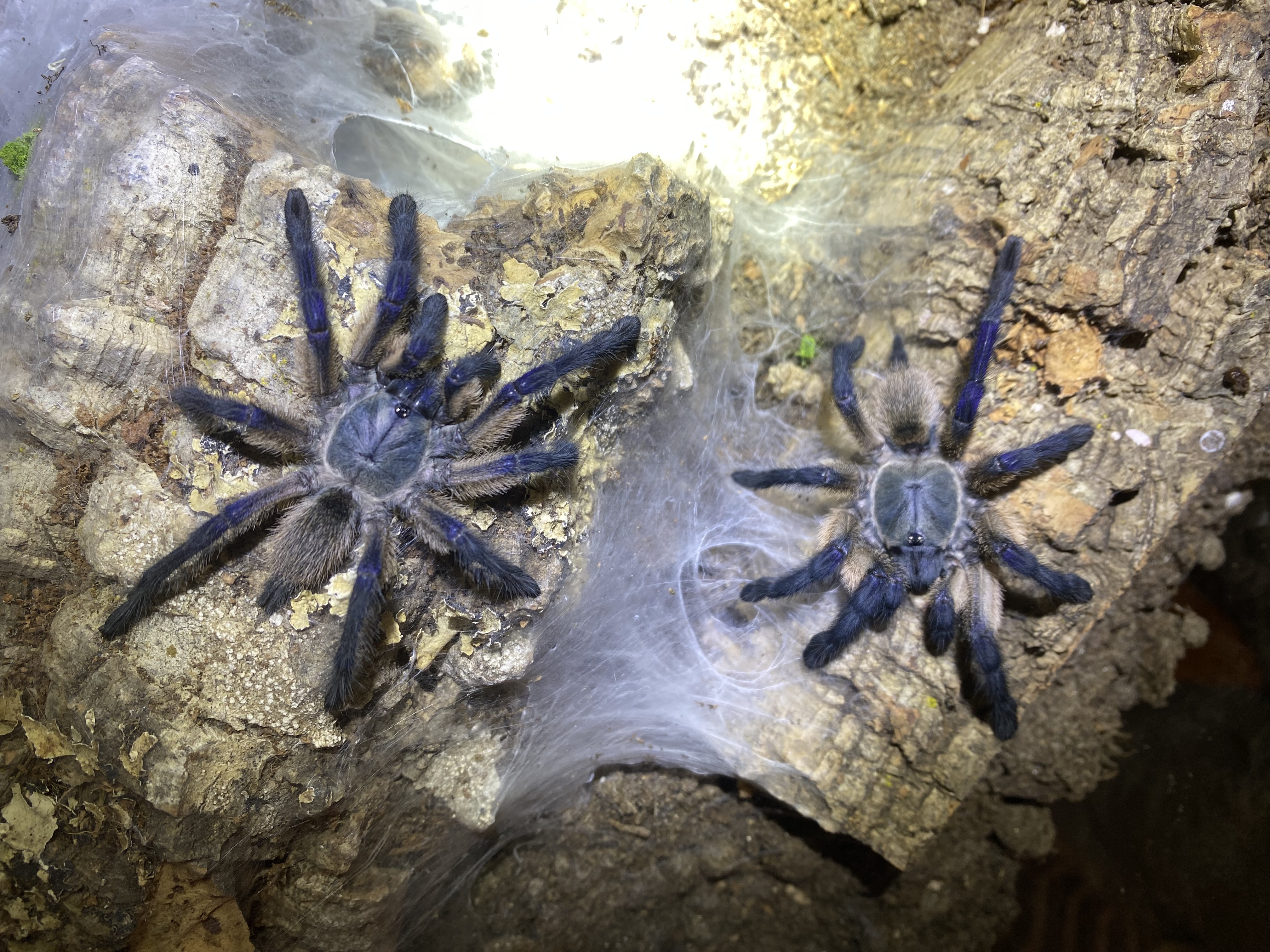
The Monocentropus balfouri, also known as the Socotra Island Blue Baboon, is a highly coveted and visually striking tarantula species. Endemic to the Socotra Archipelago, this Old World spider is famous among hobbyists not only for its beautiful coloration but also for its unique, communal-living behavior, which is rare in the tarantula world.
Scientific Classification and Origin
- Scientific Name: Monocentropus balfouri
- Genus: Monocentropus
- Family: Theraphosidae
- Origin: The Socotra Archipelago (Yemen), a UNESCO World Heritage site known for its exceptional biodiversity and endemic species.

Physical Characteristics
- Size and Build: M. balfouri is a medium to large-sized tarantula, typically reaching a leg span of 5 to 6 inches (13–15 cm) when fully mature. It has a sturdy, robust build characteristic of baboon spiders.
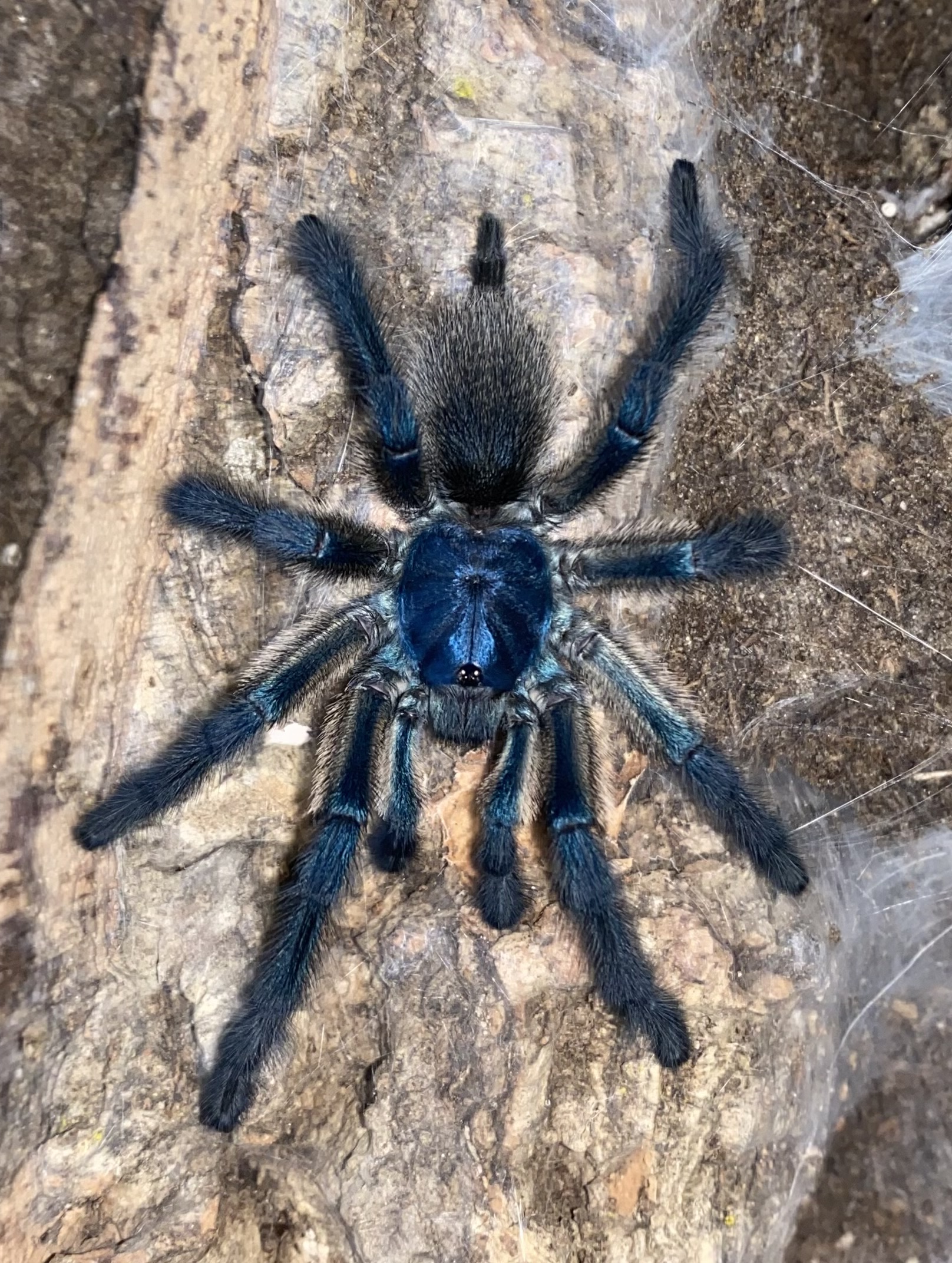
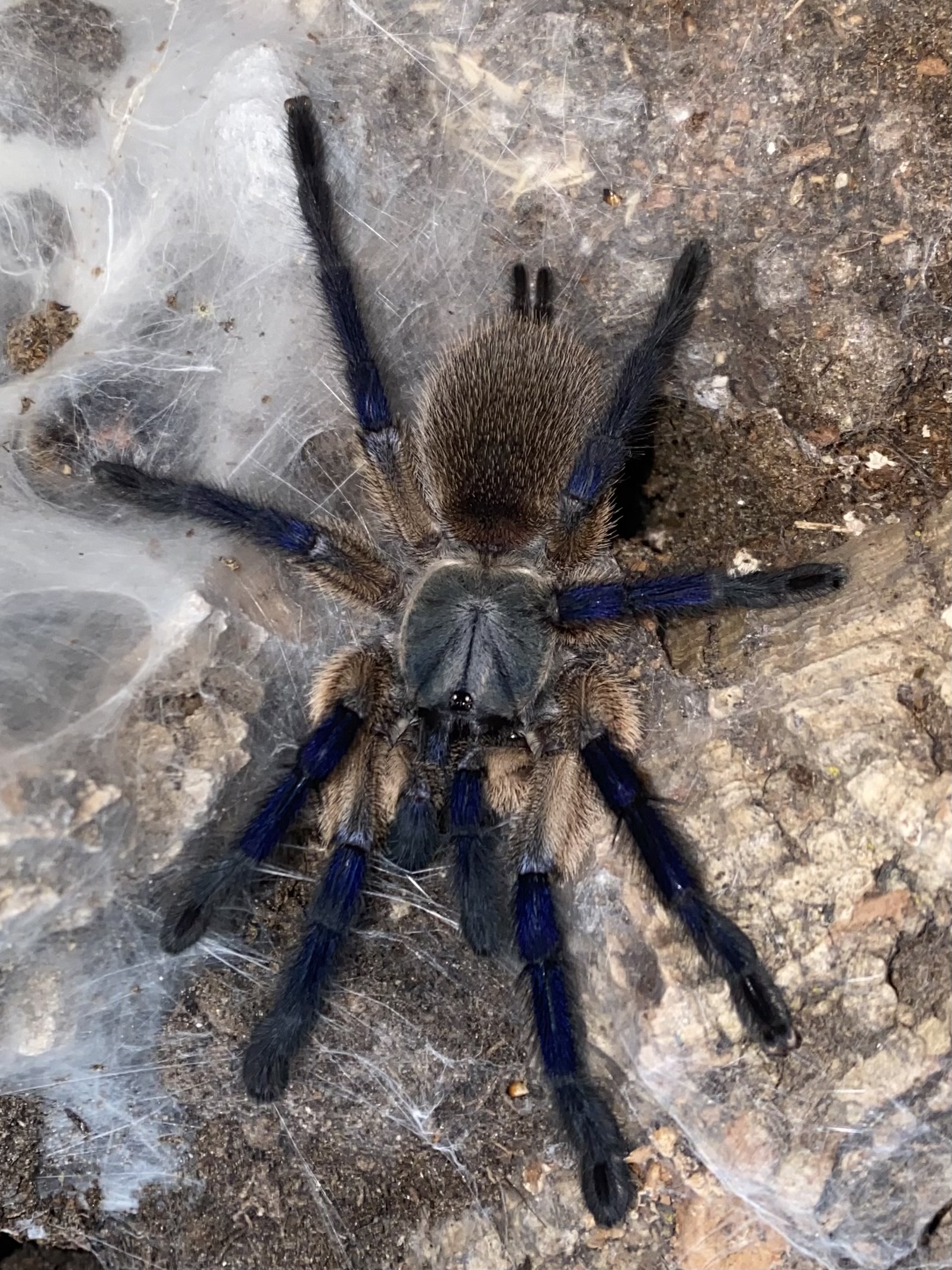
- Coloration: The species exhibits a stunning and distinct coloration:
- Carapace: Often a creamy beige or light brown.
- Abdomen: Dark brown to black, sometimes with lighter setae (hairs).
- Legs: The legs are the most eye-catching feature, featuring a metallic blue or purplish sheen, particularly near the joints and tips, which intensifies as the spider matures.
- Sexual Dimorphism: Males tend to be slightly smaller and leggier than the bulkier females.

Behavior and Temperament
- Temperament: As an Old World tarantula, M. balfouri is generally more calm than other Old Worlds. When frightened, they will usually quickly retreat to one of the many tunnels that they make in their webbing.
- Defense Mechanism: Like other Old World species, they lack urticating hairs (the primary defense of New World tarantulas). If they cannot make a hasty retreat, they may go into threat posture. Bites are rare.
- Lifestyle: They are considered semi-fossorial, meaning they spend time both above ground and in burrows. They are excellent webbers and will line their enclosures/territory with extensive silk tunnels.
- Unique Communal Behavior: This is one of the species’ most defining traits. While most tarantulas are strict solitary cannibals, M. balfouri is known to be communal or semi-communal, especially during their juvenile stages. If conditions (space and food) are adequate, siblings hatched from the same egg sac can often be kept together for extended periods and sometimes into adulthood without killing each other, a highly unusual trait among large tarantulas.
Habitat and Care in Captivity
Due to their endemic and protected status, all M. balfouri in the hobby are captive-bred.
- Temperature and Humidity: They are hardy and tolerate typical room temperatures, but prefer slightly warmer conditions around 75–82°F (24–28°C). They thrive in relatively low to moderate humidity, reflecting their arid island home.
- Enclosure Setup:
- Substrate: Requires a deep layer of dry or slightly damp substrate to allow for burrowing and creating tunnels.
- Hides: Providing cork bark or other structures is essential for creating anchors for their webbing and initial hides.
- Ventilation: Excellent cross-ventilation is necessary due to their preference for dry conditions.
- Communal Keeping: If attempting to keep them communally:
- The enclosure must be very spacious to allow each spider its own territory.
- Abundant, frequent feeding is critical to prevent cannibalism.
- Note: Even in communal setups, occasional losses can occur, making it a technique only advised for experienced keepers.
Discover more from
Subscribe to get the latest posts sent to your email.
 davethebugguy.org