
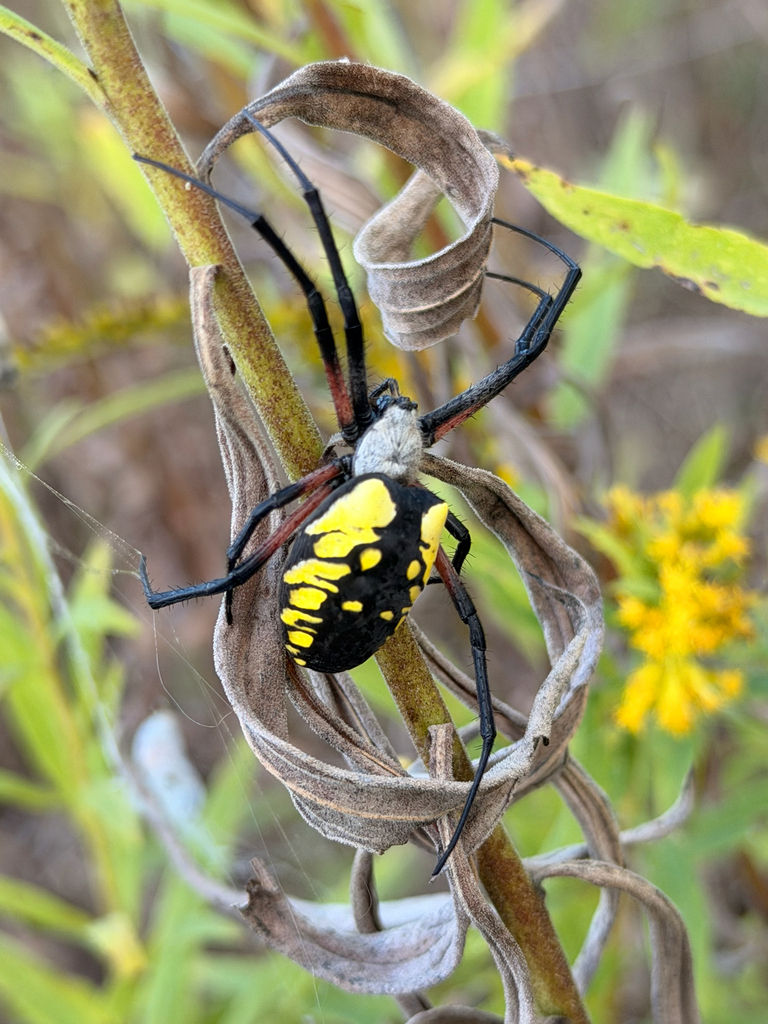
From the temperate gardens, meadows, and open woodlands across North America comes Argiope aurantia, popularly known as the Black and Yellow Garden Spider, Writing Spider, or Corn Spider. This visually stunning orb-weaver is celebrated for its dramatic, bright coloration, impressive size, and the creation of one of the most distinctive and intricate spider webs in the animal kingdom, complete with a prominent zigzag pattern.
A Bold Designer: Appearance and Distinctive Patterns
Argiope aurantia is a large and easily recognizable spider, with females being significantly larger and more colorful than males. Adult females typically reach a body length of 1 to 1.5 inches (2.5 to 3.8 cm), with a total leg span reaching up to 3 inches (7.6 cm).
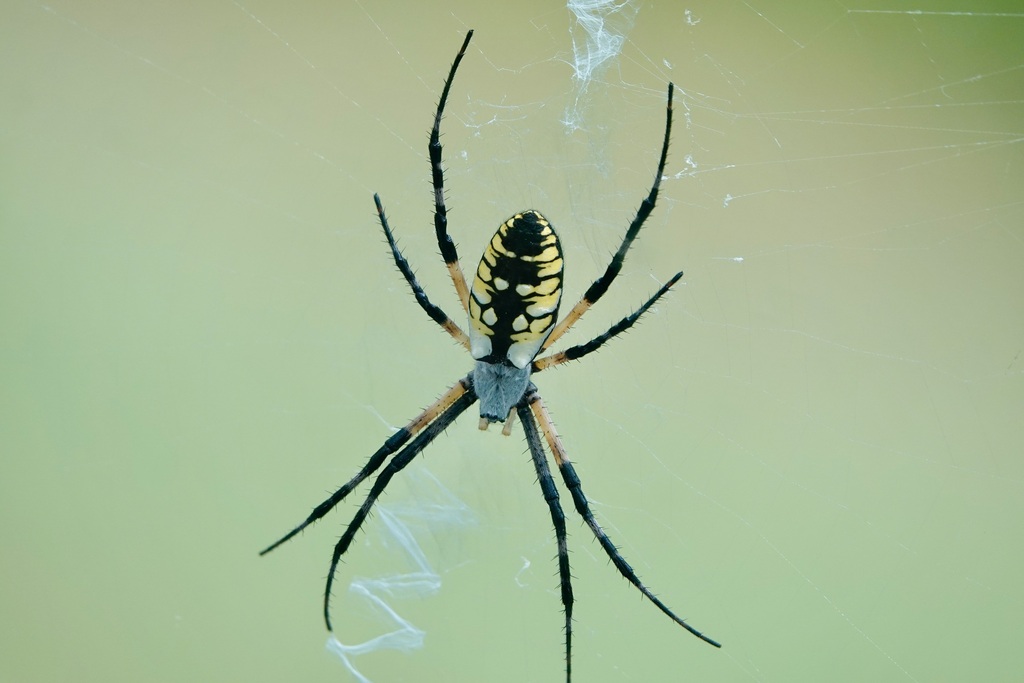
Female: The female is the centerpiece of the species. Her opisthosoma (abdomen) is the most striking feature, being large, oval, and covered in a highly contrasting pattern of brilliant yellow and black. The pattern often consists of vertical yellow stripes or spots on a black background. Her cephalothorax is covered in dense, silvery-white or grey hairs, giving it a metallic sheen. The legs are generally black, often with bands of yellow or red near the joints. These vibrant colors are a form of aposematism, serving as a warning to potential predators that the spider is potentially toxic or distasteful.
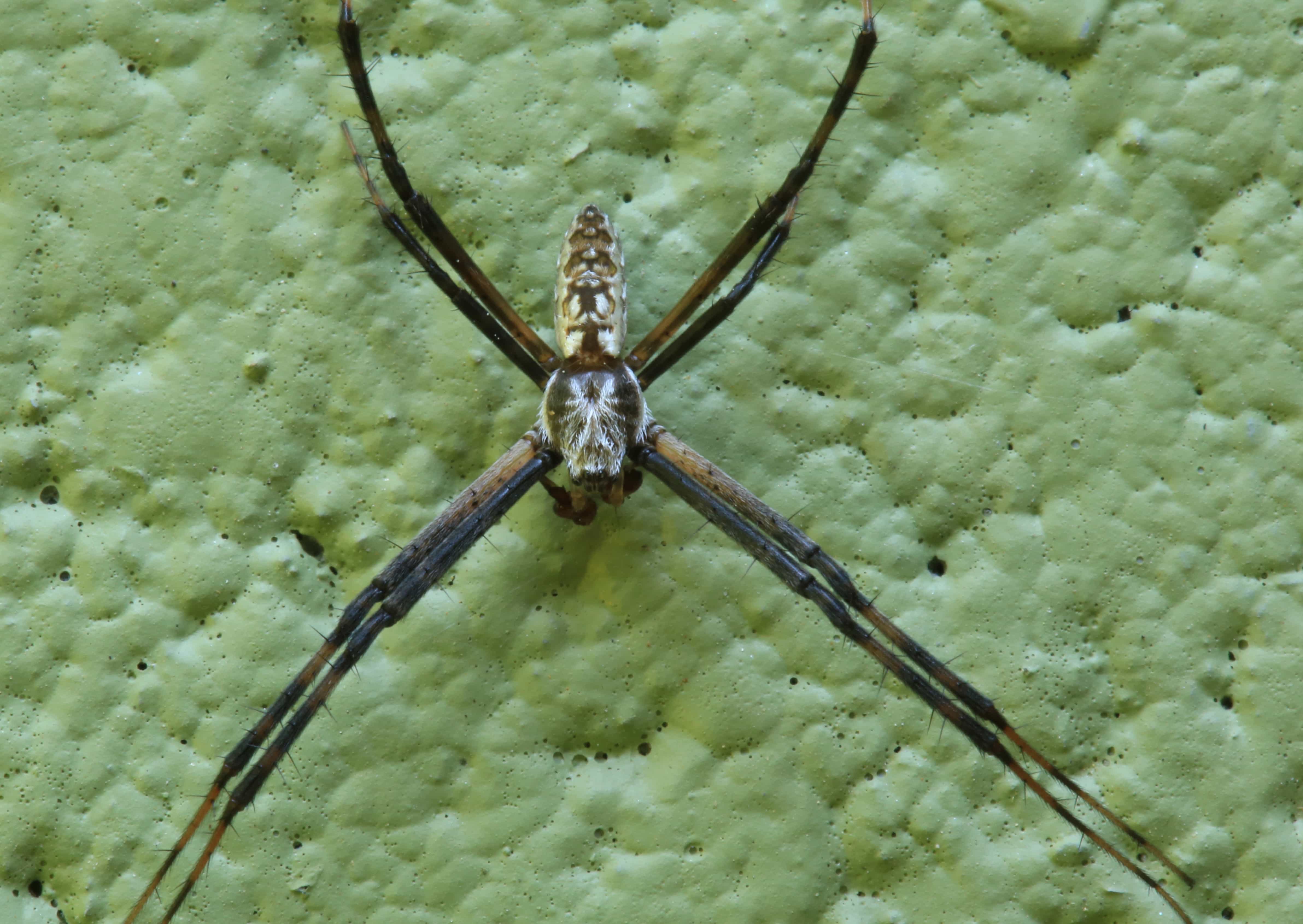
Male: Mature males are dramatically smaller and far less conspicuous than females, usually measuring only about 1/4 inch (0.6 cm) in length. They are typically a drab brown or light yellow, often lacking the vibrant, high-contrast patterns of the female. They are often found lurking on the outer edges of the female’s web, waiting for a mating opportunity.
This combination of large size and bold, high-contrast colors makes the Black and Yellow Garden Spider one of the most visible and easily identifiable spiders in its range.
Distribution and Habitat: A Common North American Orb-Weaver

Argiope aurantia has a very wide distribution, spanning temperate regions across the entire contiguous United States, southern Canada, and down into Mexico and Central America.
Its natural habitat includes:
- Open Fields and Meadows: Areas with tall grass and herbaceous plants where it can anchor its large web.
- Gardens and Yards: A very common sight in backyard gardens, particularly near shrubs or other supportive structures.
- Roadsides and Forest Edges: Anywhere there is enough vertical space and open air to build its characteristic orb-web.
These spiders are arboreal but build their webs close to the ground, usually less than 3 feet (1 meter) high, stretched between plants, deck railings, or other vertical structures.
Lifestyle and Behavior: The Master Web-Builder
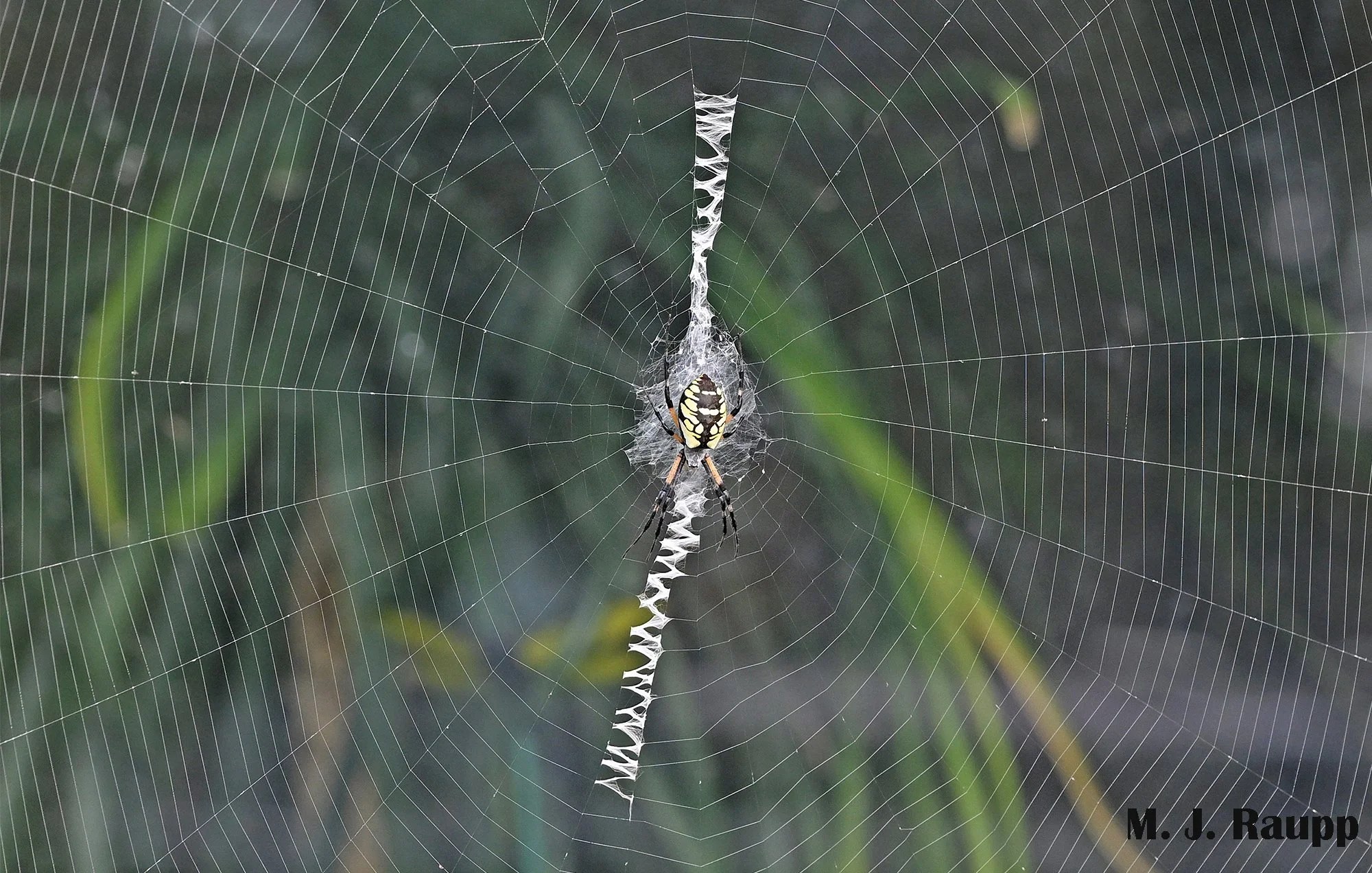
The Black and Yellow Garden Spider is an orb-weaver, known for constructing large, circular webs that can be several feet in diameter. The most distinctive feature of its web is the stabilimentum.
The Stabilimentum (Writing): This is the dense, zigzag pattern of non-sticky silk spun directly through the center of the web. It is what gives the spider its common name, “Writing Spider.” The exact purpose of the stabilimentum is debated, but theories suggest it may:
- Warn Birds: Make the web more visible to large animals, preventing destructive collisions.
- Attract Prey: Reflect UV light, potentially luring insects like flies and bees.
- Stabilize the Web: Provide structural integrity (hence the name).
Temperament: This species is incredibly docile and non-aggressive. When disturbed, the spider’s primary defense is to drop from its web and hide among the ground litter, or, if in its web, it may shake the web violently to confuse a potential threat. Bites are extremely rare and occur almost exclusively if the spider is accidentally trapped or squeezed.

Hunting: The spider remains largely motionless in the center of its web, often head-down, waiting for prey—usually grasshoppers, flies, bees, and wasps—to become entangled in the sticky silk. Once prey is caught, the spider rapidly immobilizes it by wrapping it in silk before delivering a venomous bite.
Venom: The venom of A. aurantia is potent for insects but considered non-toxic to humans. A bite is generally compared to a bee sting, causing only localized, minor pain, redness, and swelling.
Life Cycle: Annual Maturation and Reproduction
Argiope aurantia has an annual life cycle, which is relatively short compared to long-lived tarantulas.

Egg: In late summer or early fall, the female produces one or more egg sacs. These are large (about 1 inch wide), brown, papery, and teardrop-shaped, containing hundreds of eggs. She attaches the sac to a nearby branch or structure, providing protection over the winter. The female typically dies shortly after producing the last egg sac, often with the first hard frost.
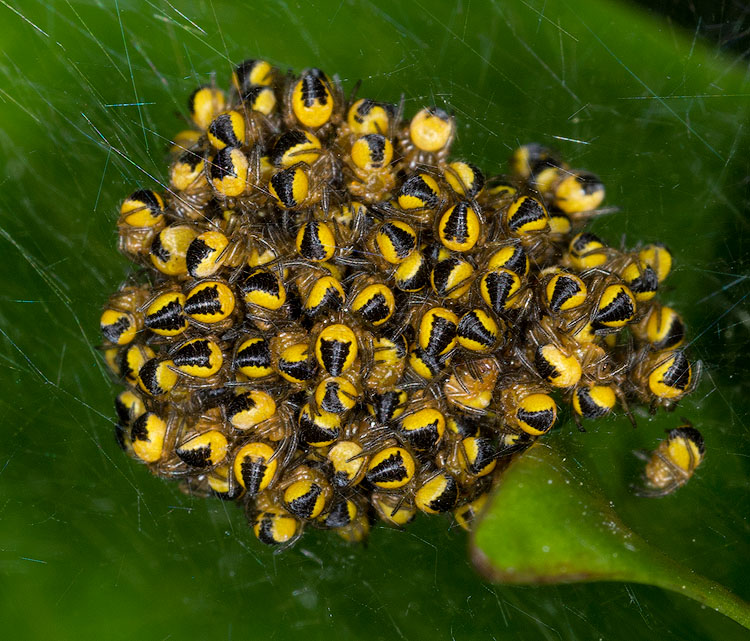
Spiderlings: The eggs hatch inside the sac, and the spiderlings usually overwinter there, emerging in the following spring.
Growth: The spiderlings disperse, often using a behavior called ballooning (releasing silk into the air to be carried by the wind), and grow rapidly through successive molts over the summer.
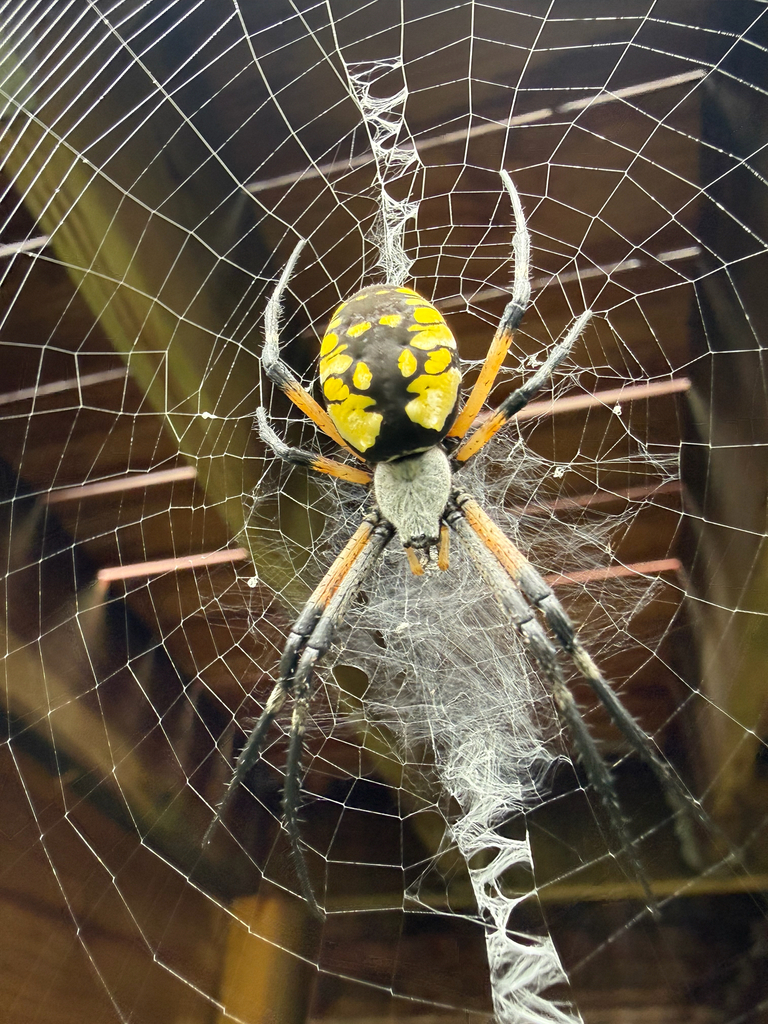
Adult: They reach full size by late summer, ready to mate and begin the cycle again. Males typically mature before females, and the mating process is dangerous for the male, who risks being eaten by the larger female.
Ecological Role: A Key Insect Controller
In North American ecosystems, Argiope aurantia plays a vital role as a terrestrial invertebrate predator. By constructing large, efficient traps in open areas, they are highly effective natural controls for pest insects, including grasshoppers, flies, and mosquitoes. Their large size allows them to capture and consume substantial amounts of insect biomass throughout the summer months, contributing significantly to the balance of their local environment.
Conservation Status and Threats: Common and Secure
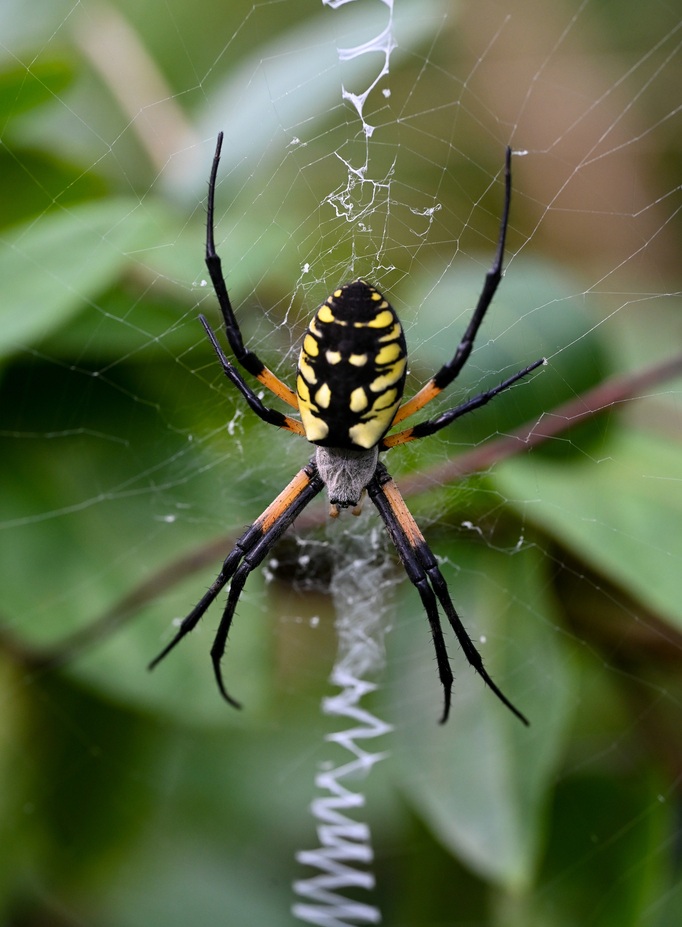
Argiope aurantia is a common and widespread species throughout its vast range in North America. It is not listed as endangered or threatened on any major conservation lists. Its ability to thrive in disturbed areas, such as gardens and backyards, contributes to its security. The primary “threats” are localized and mostly involve:
- Pesticide Use: Widespread use of insecticides, particularly in gardens and agricultural areas, can directly harm the spiders and their prey base.
- Habitat Destruction: Clearing of tall grasses and shrubs eliminates the necessary anchor points for their webs.
Its continued presence is a healthy sign of a balanced ecosystem.
The Jewel of the Garden: The Enduring Allure of Argiope aurantia
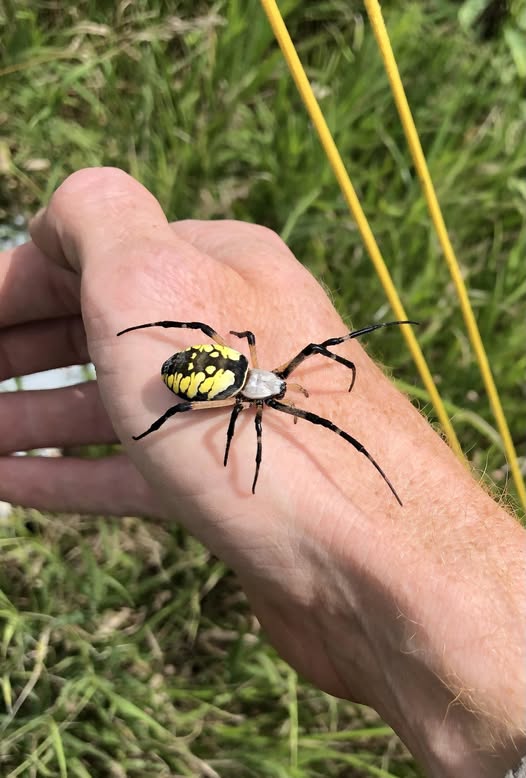
The Black and Yellow Garden Spider, Argiope aurantia, with its striking colors, impressive size, and unique zigzag-adorned webs, stands as one of the most recognizable and beneficial arachnids in North America. This magnificent orb-weaver, often feared but completely harmless to humans, offers a fascinating glimpse into the silent, complex lives that thrive just outside our doors, reminding us of the intricate beauty and ecological importance of the natural world.
Discover more from
Subscribe to get the latest posts sent to your email.
 davethebugguy.org