
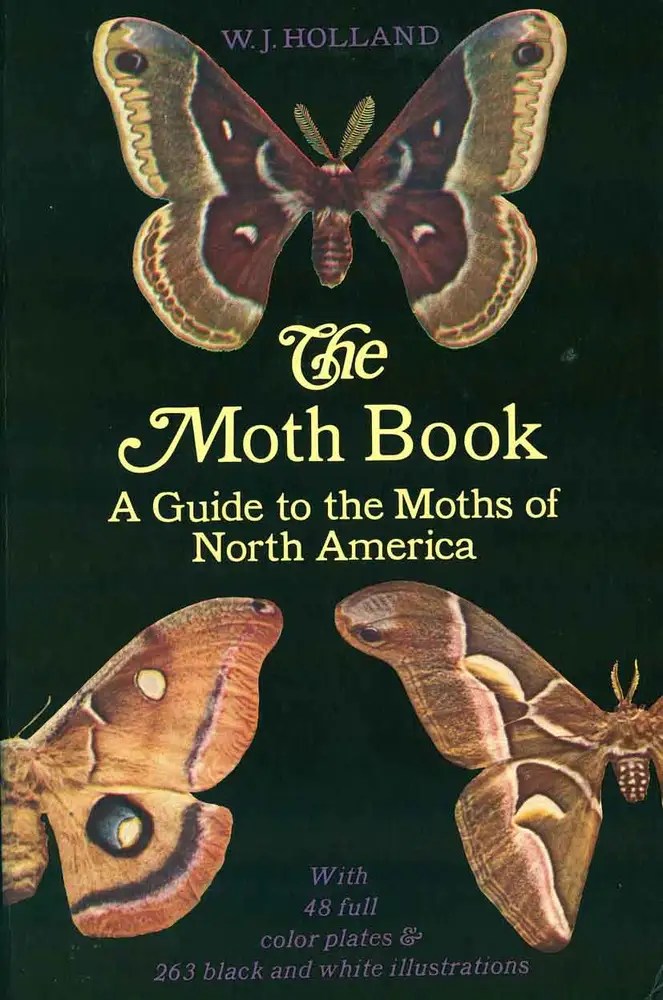
The Moth Book by W.J. Holland, first published in 1903, remains a remarkable and foundational work in the study of North American moths. While many scientific texts from that era have become obsolete, Holland’s masterpiece endures as a testament to his passion for the subject and his skill as both a scientist and a writer. It’s a book that masterfully combines scientific rigor with an accessible, engaging style, making it a true classic for both professional entomologists and amateur naturalists alike.
A Comprehensive and Accessible Guide
One of the book’s greatest strengths is its comprehensive nature. Holland meticulously documented over 1,500 species of moths, providing detailed descriptions of their appearance, life cycles, and geographical distribution. He didn’t just catalog; he brought the insects to life with vivid prose. His descriptions are not merely technical; they are often poetic, revealing a deep admiration for the beauty and diversity of these often-overlooked creatures.
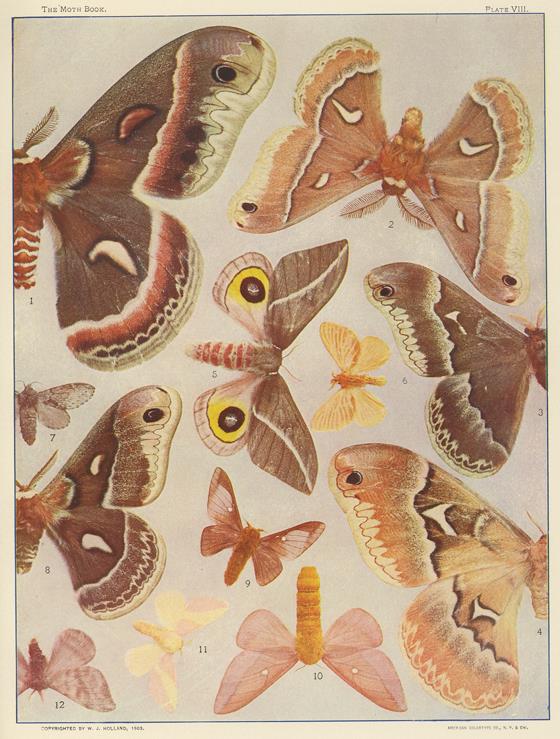
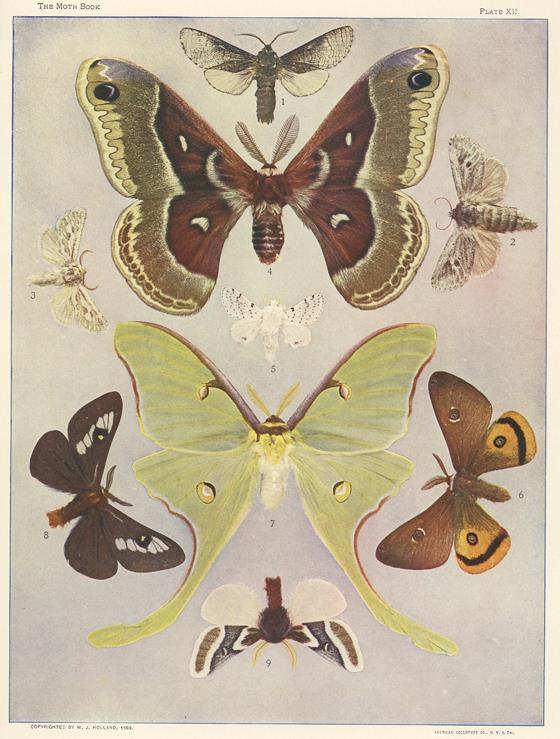
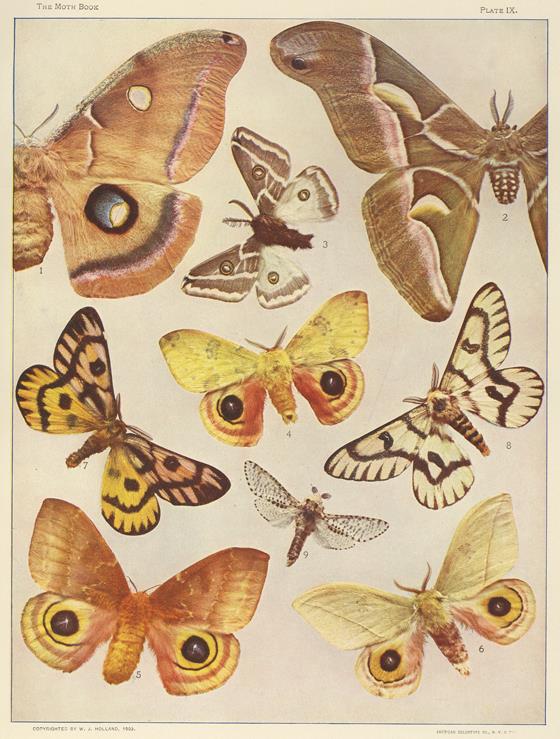
The book is also notable for its beautiful illustrations. The color plates, many of them hand-colored in the original editions, are a major highlight. They are not just scientifically accurate but also aesthetically stunning, providing an invaluable visual aid for identification. This combination of detailed text and high-quality illustrations is what makes The Moth Book so effective as a field guide and a reference work.
More Than Just a Field Guide
What sets The Moth Book apart from a simple field guide is its broader scope. Holland wasn’t content with just describing species. He included extensive introductory chapters that cover the fundamental principles of entomology, from the basic anatomy of moths and their classification to methods for collecting and preserving specimens. He shares personal anecdotes and insights gained from his decades of fieldwork, making the book a fascinating narrative as well as a scientific treatise.
Holland’s writing is infused with a sense of wonder and excitement. He invites the reader to share in his fascination with the natural world, transforming what could be a dry academic subject into a thrilling journey of discovery. His enthusiasm is infectious, and it’s easy to see why the book inspired generations of naturalists. It’s a celebration of the intricate and often hidden beauty of the nocturnal world.
A Legacy That Continues to Inspire
More than a century after its initial publication, The Moth Book remains a beloved resource. While modern DNA analysis and digital photography have provided new tools for entomologists, Holland’s foundational work continues to be relevant. The book provides a historical snapshot of North American moth populations and a benchmark against which modern observations can be compared.
The Moth Book is a timeless work that transcends its original purpose. It is a testament to the power of observation, the importance of careful documentation, and the enduring beauty of the natural world. For anyone with even a passing interest in moths, butterflies, or the history of natural science, Holland’s masterpiece is an essential and rewarding read. It’s a book that reminds us to look closer at the world around us, especially the creatures that come alive when the sun goes down.
Discover more from
Subscribe to get the latest posts sent to your email.
 davethebugguy.org