
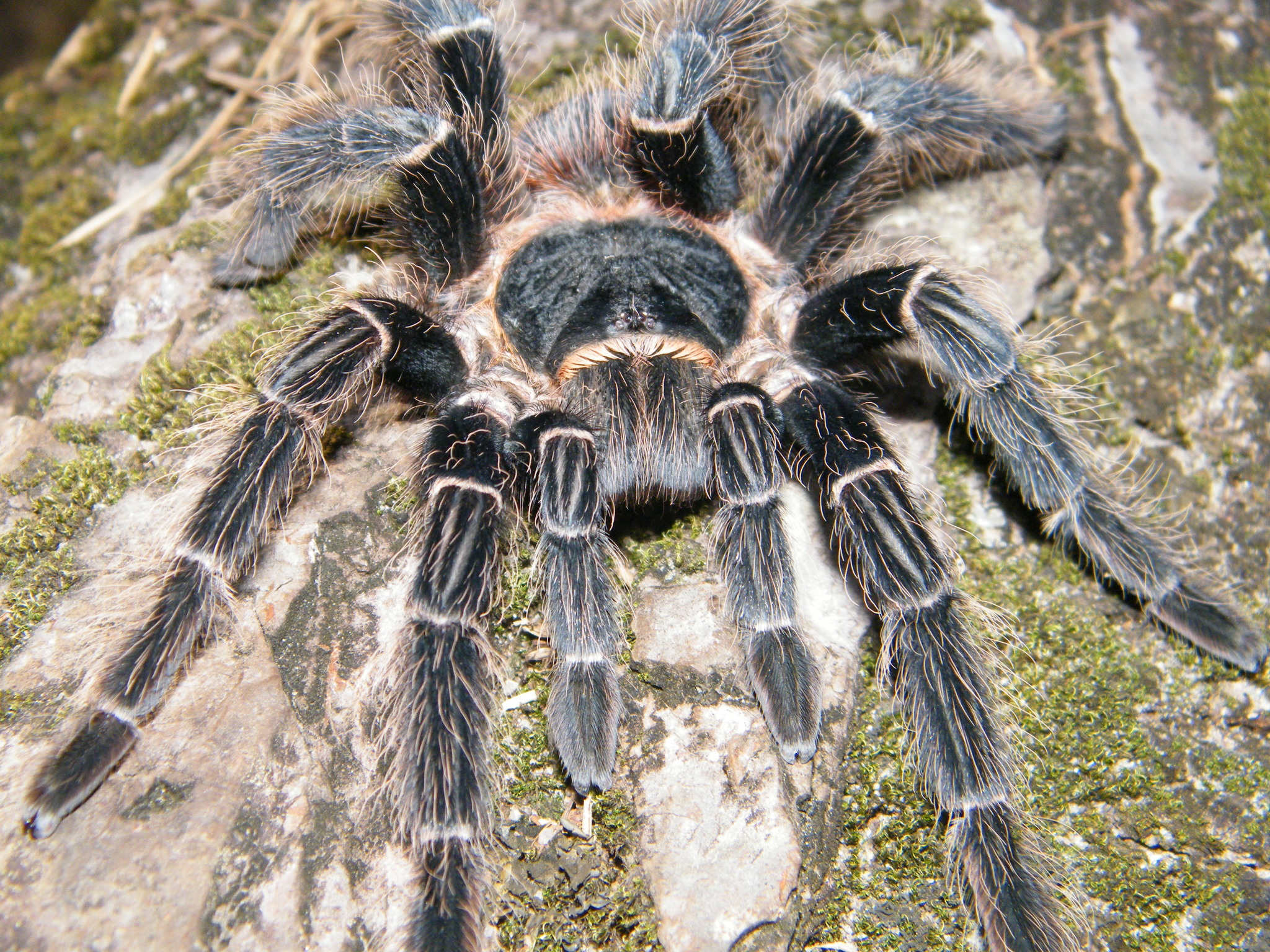
Often admired for its impressive size and surprisingly docile nature, Lasiodora parahybana, more commonly known as the Brazilian salmon pink bird-eater, is one of the world’s largest species of tarantula. Despite its intimidating common name, this terrestrial tarantula is a popular pet among enthusiasts for its hardiness, calm temperament, and awe-inspiring growth. Native to the humid forests of Brazil, this gentle giant brings a unique presence to the world of arachnids.
A Mosaic of Black, Brown, and Pink: Appearance and Subtle Variations
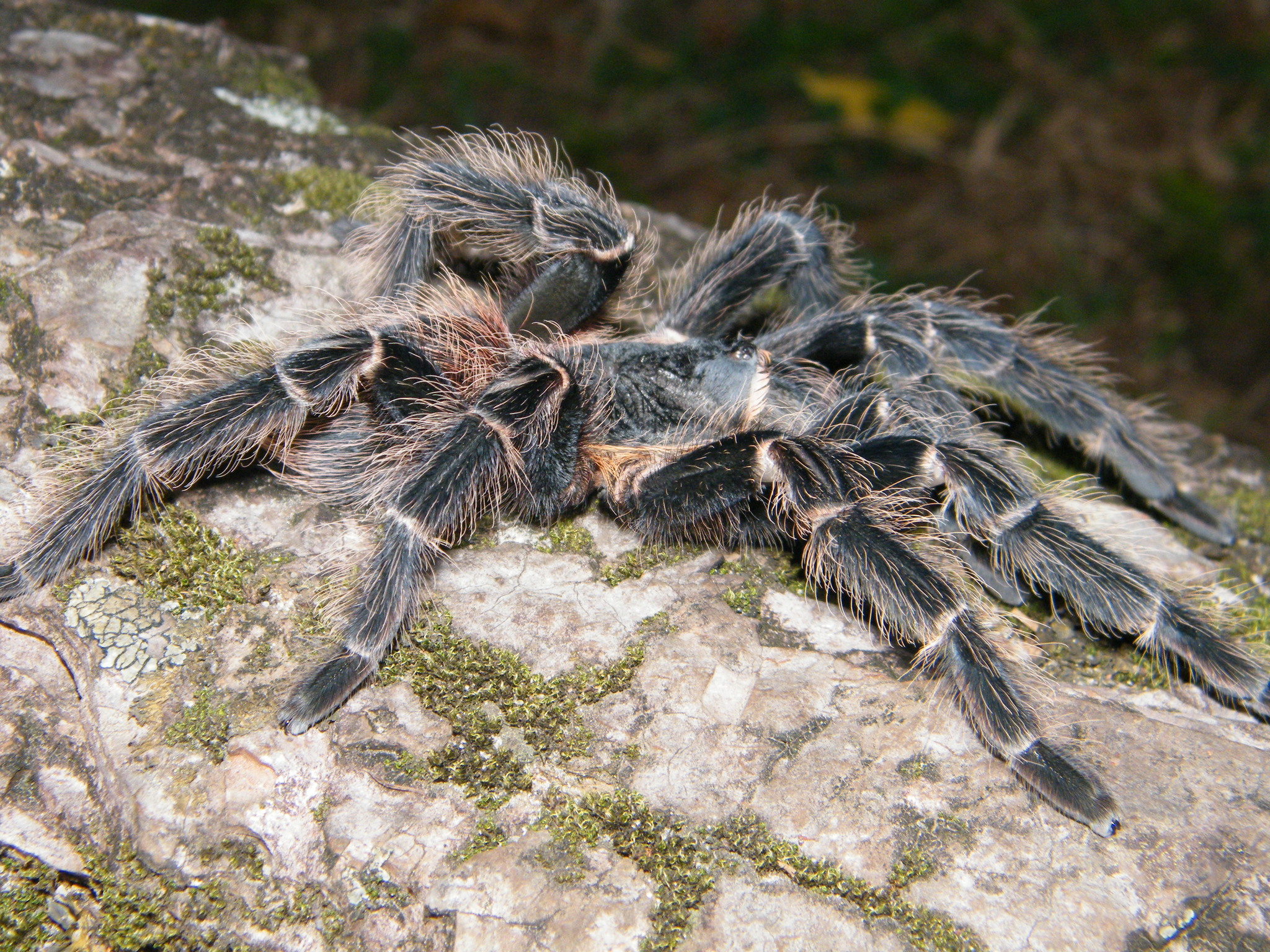
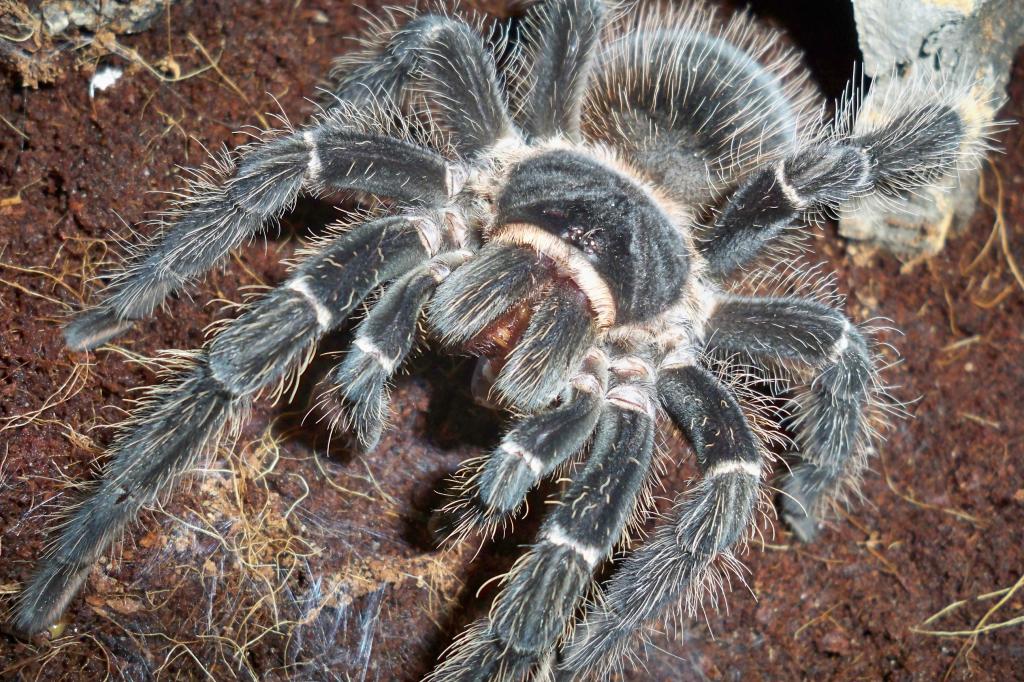
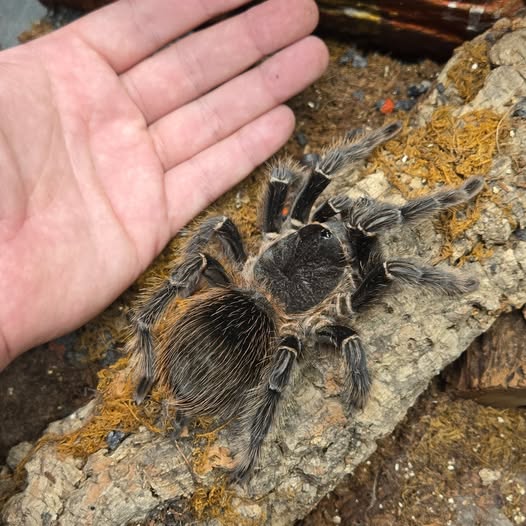
The Brazilian salmon pink bird-eater is a colossal tarantula, boasting a leg span that can reach up to 10 inches (25 cm), with some larger individuals exceeding this. Its body is robust, thick, and covered in a dense coat of fine hairs. The overall coloration is a dark, velvety black or deep brown, which makes the most striking feature even more noticeable: the long, spiky hairs on its legs and abdomen have a distinct salmon pink hue. These hairs, particularly visible on the hind legs and abdomen, give the species its memorable common name.
Juveniles of the species are much smaller and often have a more grayish-brown coloration with a less prominent pink sheen. As they grow and molt, their adult coloration and distinctive pink hairs become more apparent. Females are generally larger and more robust than males. The males, once mature, will have tibial hooks on their front legs, which are used to hold the female’s fangs during mating.
Distribution and Habitat: The Ground Dweller of Brazil
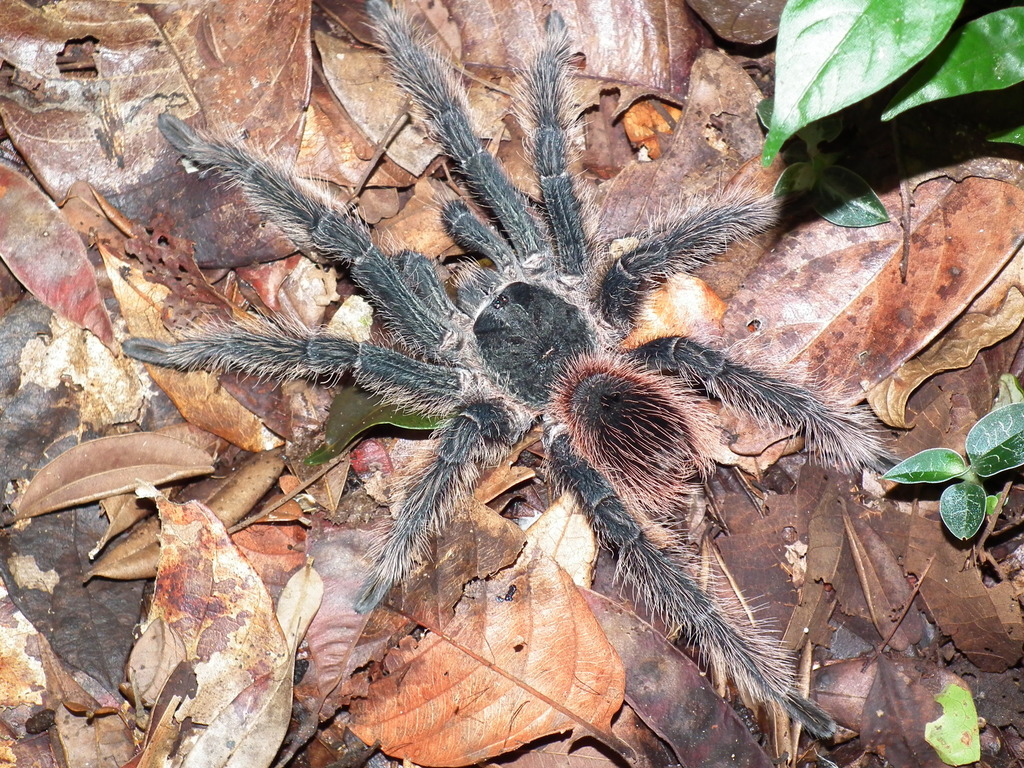
Lasiodora parahybana is native to the Atlantic forest region of eastern Brazil, specifically in the state of Paraíba, from which its scientific name is derived. In the wild, they are primarily terrestrial, meaning they spend most of their lives on the ground.
Their preferred environments include:
- Humid Forests: They thrive in the warm, humid climate of Brazil’s rainforests.
- Burrows: They are burrowing spiders, often creating burrows under logs, rocks, or in the soft forest floor to escape predators and regulate their body temperature and humidity.
- Leaf Litter: They can also be found hiding among the thick leaf litter on the forest floor.
Due to their large size, they are considered an apex predator within their microhabitat, playing a crucial role in controlling insect populations.
Life Cycle: A Journey of Molting and Growth
The life cycle of Lasiodora parahybana is a long and fascinating one, marked by a series of significant molts.
- Egg Sac: After mating, the female will create a silken egg sac and carefully lay hundreds of eggs inside. She will then diligently guard the sac, often holding it in her jaws or on her spinnerets, for several weeks or months.
- Sling (Spiderling): Once the spiderlings, or “slings,” hatch, they will remain in the safety of the sac for some time before dispersing. They are tiny versions of the adult, and from the moment they emerge, they are independent.
- Molting: As the slings grow, they must shed their exoskeleton (molt). This process is critical and stressful. They will typically lie on their backs for several hours, or even days, to push out of their old skin. It is during this time that they are most vulnerable. Millipedes also consume their shed exoskeletons to reabsorb valuable nutrients. They can take up to 7-10 years to reach full size.
- Adult: The adult stage is reached after a series of molts. Females are notably long-lived, with some individuals surviving for 20 years or more in captivity. Males have a much shorter lifespan after maturing, typically living for only a few years, as their primary goal becomes finding a mate.
Host Plants and Nectar Sources: The Carnivorous Hunter’s Diet
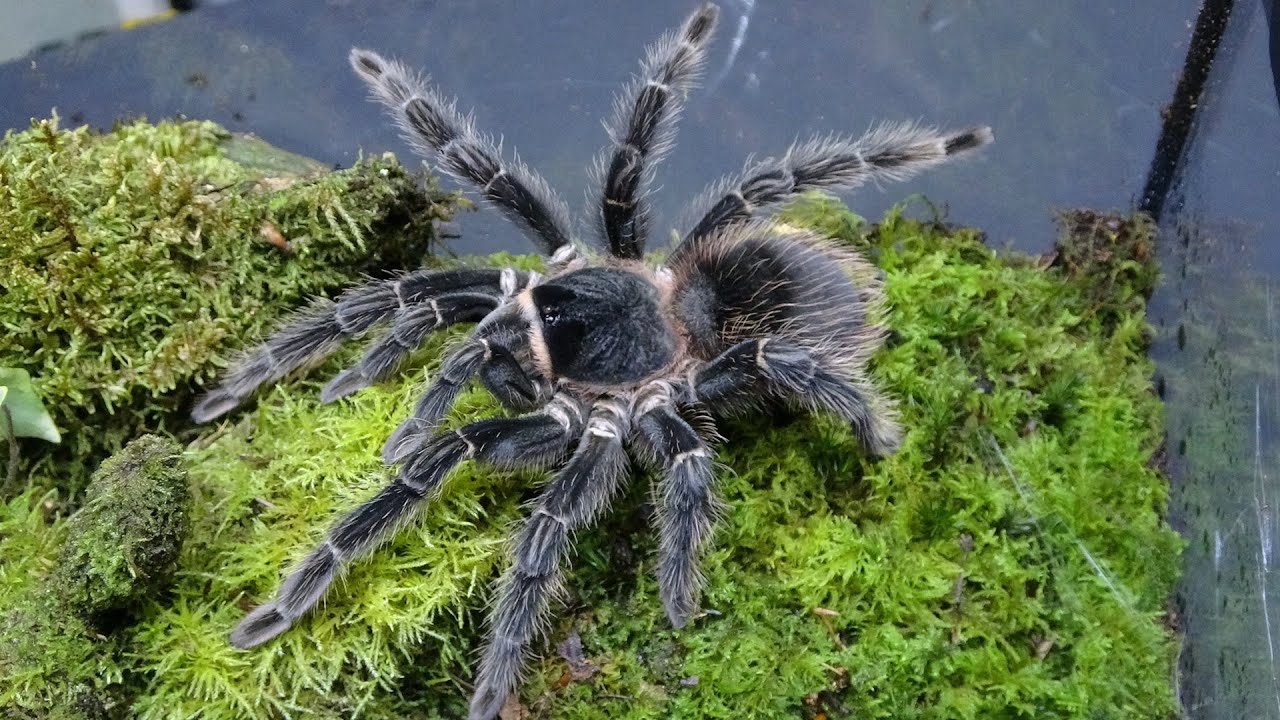
Like all spiders, L. parahybana is a carnivore. It does not consume plants or nectar. Instead, it is a voracious ambush predator that hunts and subdues its prey. Its large fangs are capable of delivering venom to immobilize prey.
Their diet includes:
- Insects: A wide variety of insects, including crickets, roaches, and beetles.
- Small Lizards and Rodents: Due to their massive size, they are capable of preying on small vertebrates like frogs, lizards, and even small mice in the wild.
- Other Spiders: They may also prey on other smaller arachnids.
In a captive environment, they are most often fed a diet of crickets, roaches, and occasionally a pinky mouse as a treat for adult females.
Behavior and Ecology: Calm, Curious, and Cautious
L. parahybana is generally considered a calm and docile species. While they can be quick to flick their urticating hairs (barbed, irritating hairs on their abdomen) when they feel threatened, they are much less likely to bite than other species. A bite is typically a last resort and can be painful but is not medically significant to humans. They are also known for their curious nature, often exploring their enclosure.
When threatened, their primary defense is to retreat into their burrow or stand their ground and raise their front legs in a threat posture. If the threat persists, they will use their hind legs to scrape the irritating urticating hairs from their abdomen and flick them at the perceived threat.
Conservation Status and Threats: A Resilient Arachnid
Lasiodora parahybana is not currently listed as endangered or threatened by international conservation organizations. It is a robust species that is well-established in the pet trade, with a significant number of individuals being captive-bred. This helps reduce pressure on wild populations.
A primary threat to the species in its native habitat is the continued deforestation of the Atlantic Forest. However, due to its adaptability and popularity in the pet trade, the species as a whole is not considered at high risk.

A Gentle Giant: The Enduring Allure of the Brazilian Salmon Pink Bird-eater
The Brazilian salmon pink bird-eater, with its intimidating size and surprisingly calm demeanor, stands as a fascinating example of how perception can differ from reality. Its crucial role as a predator in its ecosystem and its unique appearance make it an alluring subject for both researchers and hobbyists. Encountering this gentle giant is a profound reminder of the diversity and quiet power that defines the natural world.
Discover more from
Subscribe to get the latest posts sent to your email.
 davethebugguy.org