
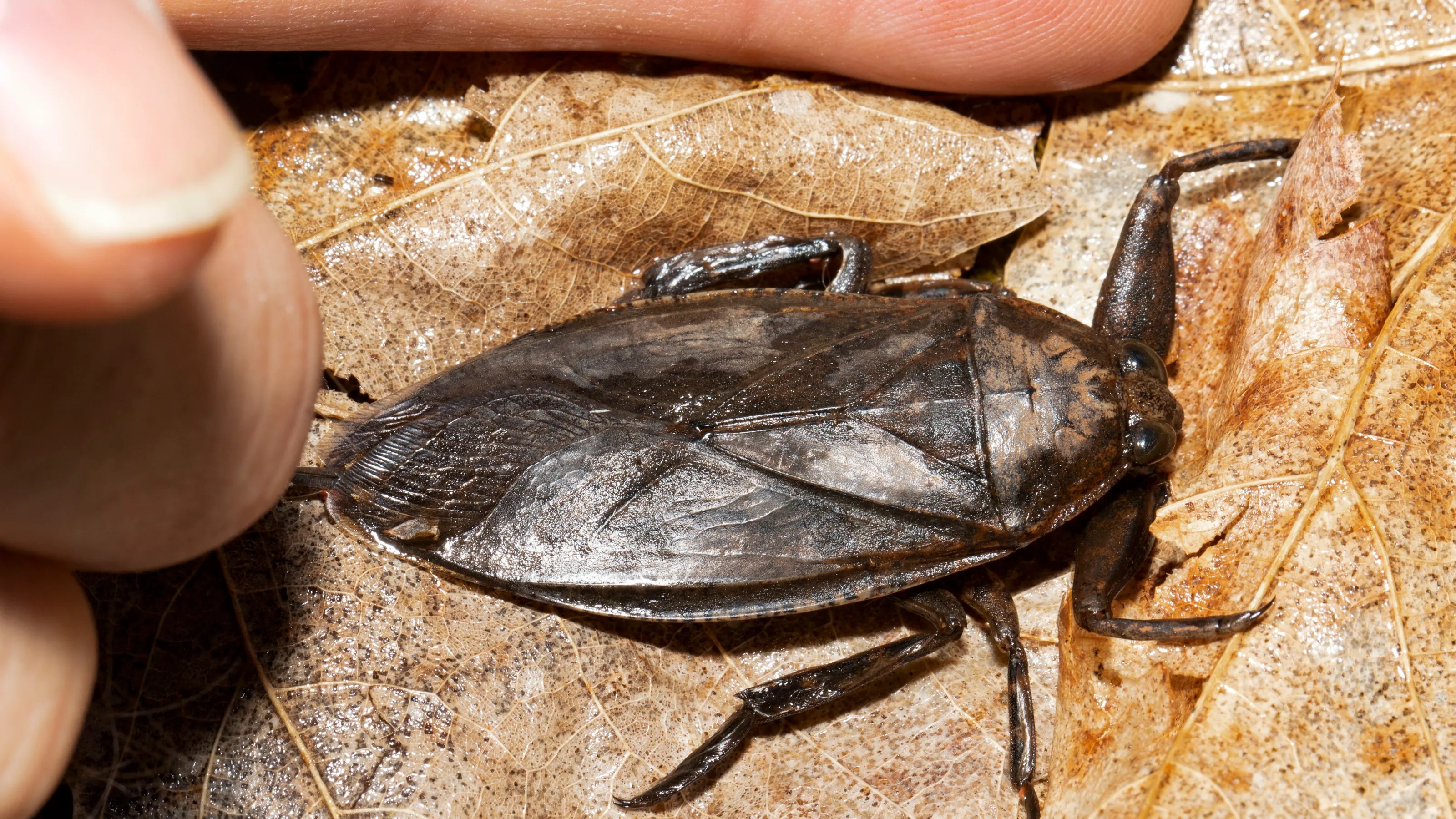
Often feared and respected for its powerful bite, the giant water bug, scientifically known as Lethocerus americanus, is a formidable insect predator of North American wetlands. With its large, flat, brownish body, a fearsome grasping foreleg, and its ability to inflict a painful bite, this aquatic hunter is a master of ambush and a crucial part of its ecosystem. Known by many common names, including “toe-biter” and “electric-light bug,” its presence is a testament to the raw power of nature found just below the water’s surface.
A Mosaic of Brown and Flat: Appearance and Subtle Variations
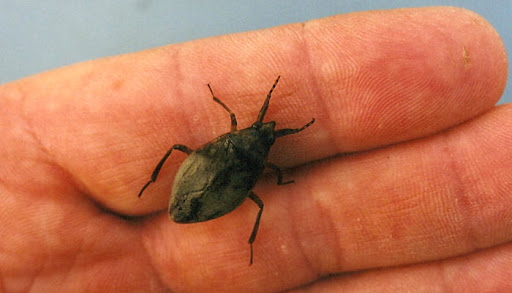
The giant water bug is a large insect, typically reaching lengths of 2 to 3 inches (5 to 7.5 cm). Its body is broad, oval, and flattened, which is an adaptation for its aquatic life. The coloration is generally a mottled brownish-tan to a darker brown, allowing it to blend in perfectly with the murky bottoms of ponds and streams.
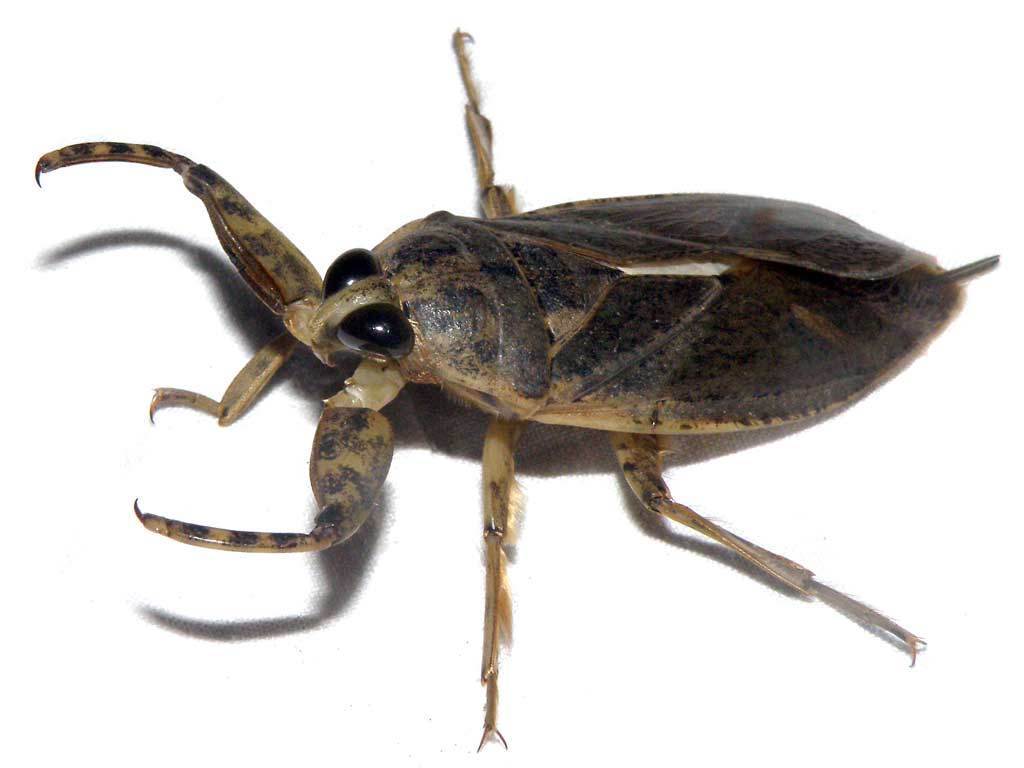
Its most distinctive and intimidating features are its front legs. These are thick, raptorial (grasping), and powerful, resembling the claws of a praying mantis. They are equipped with a sharp hook at the end, used to seize and hold onto prey. The other two pairs of legs are flatter and fringed with hair, acting as paddles to help it swim.
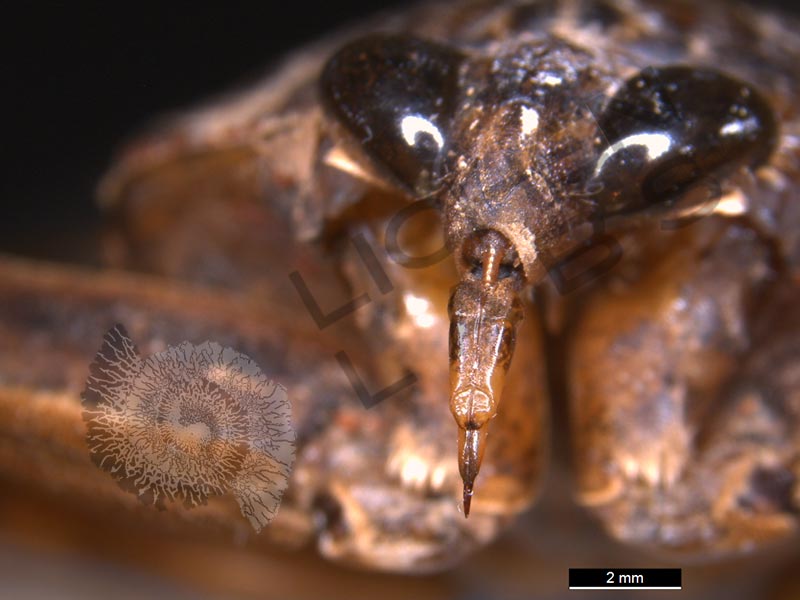
The head is small and triangular, with large, compound eyes. The most crucial part of its feeding apparatus is a sharp, stout proboscis (beak) that it uses to inject a powerful digestive saliva into its prey. There is little significant sexual dimorphism, with males and females appearing very similar.

Distribution and Habitat: A Widespread Aquatic Predator
Lethocerus americanus is a common and widespread species across North America. Its range extends from southern Canada down through the United States and into Mexico. Its extraordinary distribution is a testament to its adaptability to an incredibly diverse range of freshwater habitats, including:
- Ponds and Lakes: Especially shallow areas with abundant vegetation.
- Marshes and Swamps: Slow-moving, vegetated wetlands.
- Slow-moving Rivers and Streams: Where there are quiet backwaters.
Its name “electric-light bug” comes from its habit of flying at night and being attracted to porch lights and streetlights. It can be found in a variety of landscapes as long as a suitable water body is nearby.

Life Cycle: An Aquatic Metamorphosis
The life cycle of Lethocerus americanus is a relatively straightforward one, undergoing incomplete metamorphosis.
- Egg: Females lay their eggs in clutches on submerged vegetation, like cattail stalks or reeds, often just above the water line. The male then guards the eggs, sometimes even moving them to keep them moist and to protect them from predators.
- Nymph: The young, or nymphs, hatch from the eggs and immediately begin their predatory life in the water. They look like smaller, wingless versions of the adults. The nymphs undergo a series of molts (typically five) as they grow, shedding their exoskeleton each time.
- Adult: After its final molt, the nymph emerges as a fully winged adult. Adults can fly to new locations, especially during the spring and fall, to find new breeding grounds or escape a drying pond. Adults can live for over a year, with some overwintering in mud or under vegetation.
Host Plants and Nectar Sources: The Carnivorous Hunter’s Diet
Giant water bugs are voracious carnivores with a broad and adaptable diet. They are not herbivores and do not consume nectar from flowers. Instead, they are ambush predators that wait for unsuspecting prey to come within striking distance.
Their diet includes:
- Insects: A wide variety of aquatic insects and their larvae.
- Tadpoles: Young frogs and other amphibian larvae.
- Small Fish: They are capable of overpowering small fish, sometimes even those larger than themselves.
- Snails: They will consume aquatic snails.
- Small Snakes and Turtles: On rare occasions, they have been observed preying on very small reptiles.
The giant water bug will hold its prey with its powerful forelegs and then inject it with a digestive enzyme through its proboscis. This enzyme not only paralyzes the prey but also liquefies its internal tissues, allowing the bug to suck out the resulting “soup.”
Behavior and Ecology: Ambush, Bite, and Fly
Lethocerus americanus is a master of ambush. It spends much of its time lurking motionless just below the water’s surface, clinging to vegetation or hiding in the substrate, waiting for prey to pass by. When prey is detected (often by sensing vibrations in the water), it will lunge forward with surprising speed.
While they possess wings and are capable of flight, they are not frequent fliers. Their nocturnal flights are usually for dispersal to new ponds or for mating. The name “toe-biter” comes from their defense mechanism; if stepped on or handled carelessly in the water, they will deliver a very painful bite with their proboscis. This bite is not venomous, but the enzymes and the sheer force are enough to cause significant temporary pain.

Conservation Status and Threats: A Resilient Aquatic Predator
Lethocerus americanus is globally considered a common and widespread species and is not facing significant conservation threats. Its extraordinary adaptability to diverse aquatic habitats and its broad carnivorous diet contribute to its immense resilience. While population numbers in specific regions can fluctuate, the species as a whole remains exceptionally robust.
A primary threat to aquatic insects in general is the pollution of freshwater habitats. However, the giant water bug’s ability to live in a wide range of water bodies makes it less susceptible than more specialized species.
Nature’s Underwater Threat: The Enduring Intrigue of the Giant Water Bug
The giant water bug, with its formidable appearance and crucial role as a top predator in freshwater ecosystems, stands as a testament to the raw power of nature. Its patient, ambush-driven hunting style and ability to overpower prey much larger than itself make it a true king of the pond. Encountering this fascinating and cautious creature is a profound reminder of the intricate, and sometimes dangerous, balance of life that exists just beneath the water’s surface.
Discover more from
Subscribe to get the latest posts sent to your email.
 davethebugguy.org