
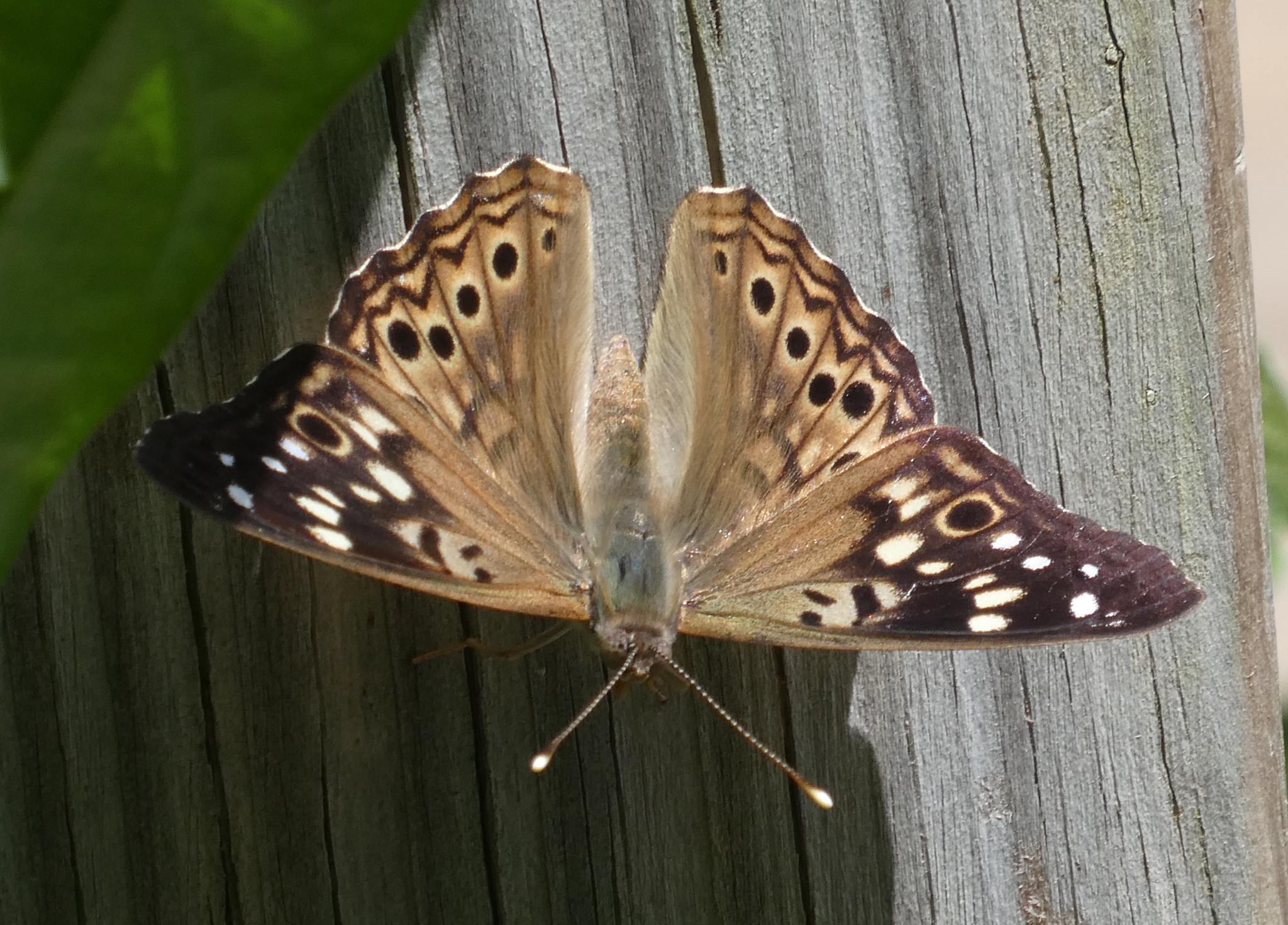
Flitting with a graceful, gliding flight amidst the canopies and understories of hackberry trees across eastern and central North America is Asterocampa celtis, commonly known as the Hackberry Emperor. This relatively drab yet intriguing butterfly is less attracted to colorful flowers and more to tree sap, rotting fruit, and even carrion, making it a unique and often approachable resident of woodlands, river bottoms, and suburban areas where its host trees thrive.
A Subdued Elegance: Appearance and Cryptic Markings:
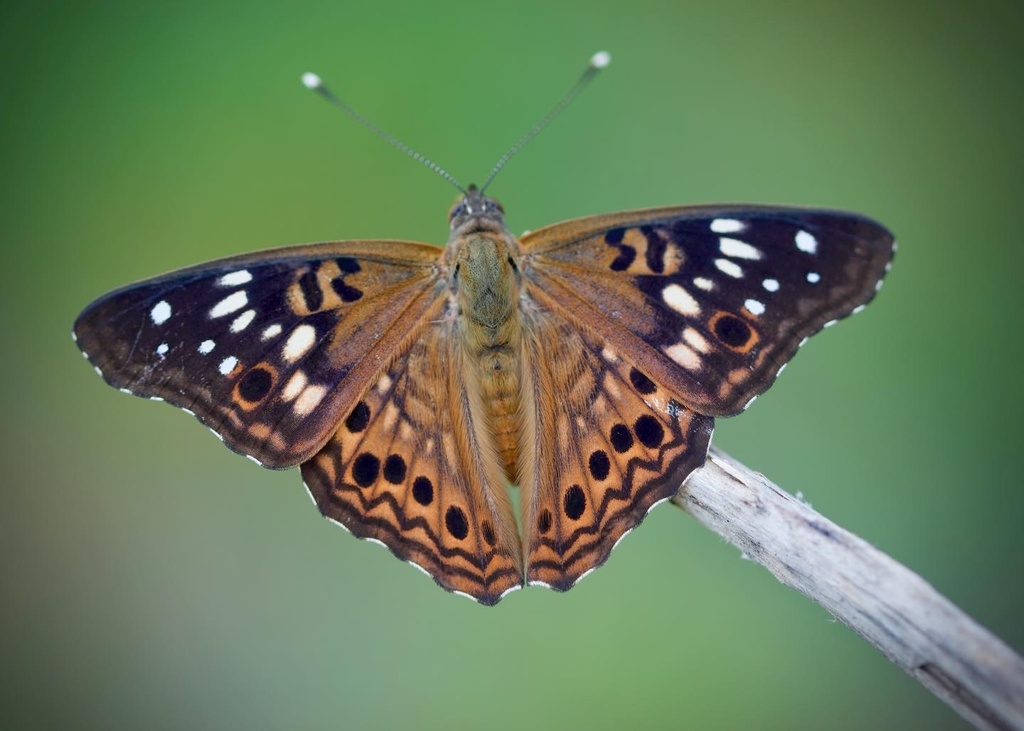
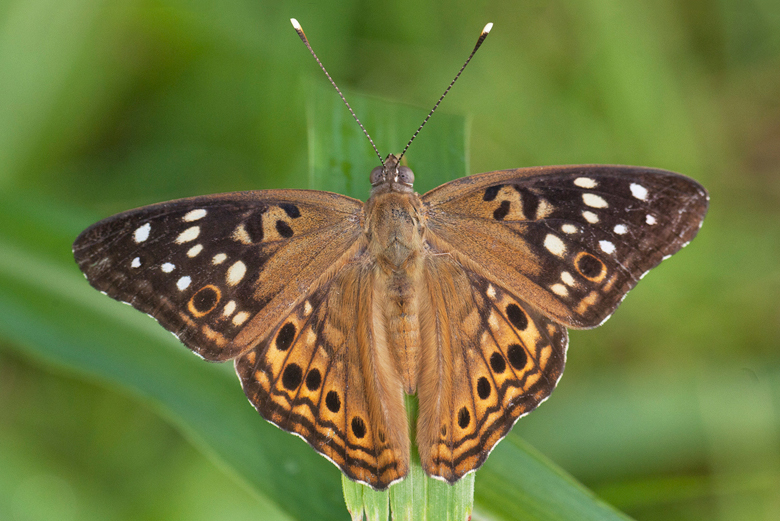
The Hackberry Emperor is a medium-sized butterfly, typically boasting a wingspan ranging from 1.7 to 2.5 inches (4.3 to 6.3 cm). Its dorsal (upper) wing surface is a soft, mottled brownish-gray or tan, often with a subtle purplish sheen in fresh specimens. The forewings feature several prominent, small, white spots, particularly near the apex. The hindwings are generally unmarked on the dorsal side or have faint, lighter spots.
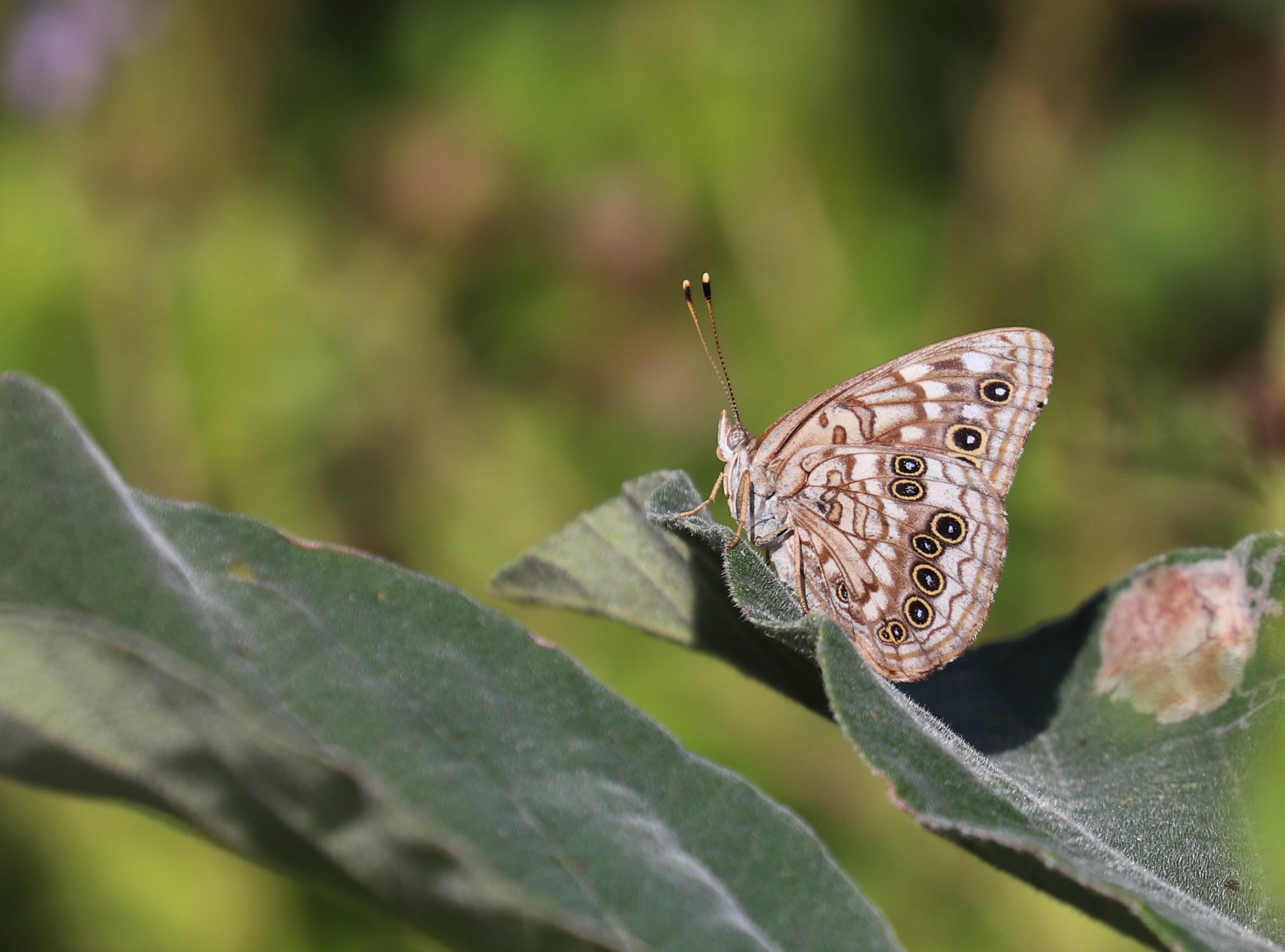
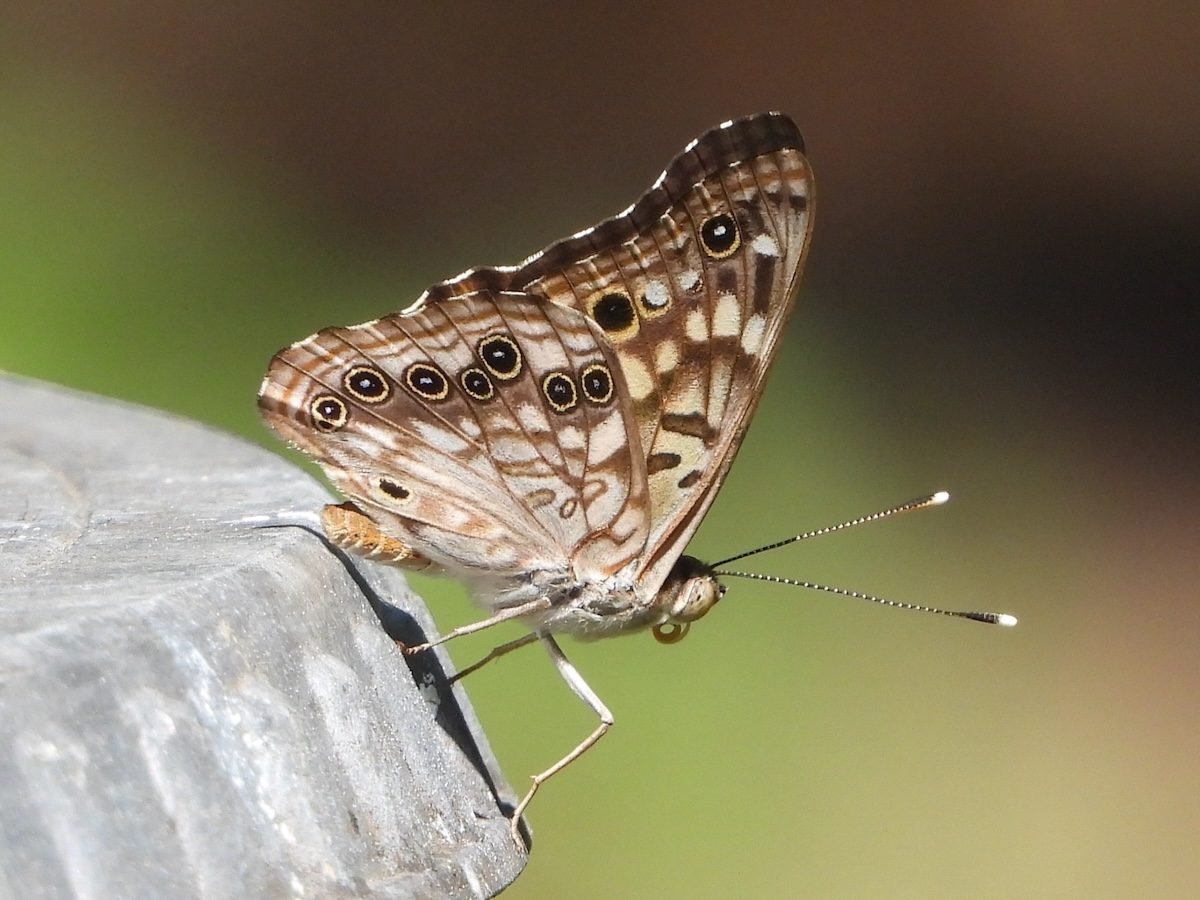
The ventral (underside) of the wings is a complex and beautiful pattern of mottled grays, browns, and whites, mimicking tree bark or dead leaves. The hindwings usually display a distinctive row of small, dark, often ringed eyespots (ocelli) along the outer margin, which may or may not have blue pupils. These eyespots are generally less pronounced than those of its close relative, the Tawny Emperor (Asterocampa clyton). The overall coloration provides excellent camouflage when the butterfly rests with its wings closed on tree trunks or branches. Males and females are similar in appearance, though females are typically slightly larger.
Distribution and Habitat: Wherever Hackberry Trees Grow:
Asterocampa celtis is widely distributed across the eastern and central United States, extending from southern Canada (Ontario, Quebec) southward through the Great Plains to the Gulf Coast states, and westward into parts of Arizona and New Mexico. Its presence is directly tied to the distribution of its larval host plants – various species of hackberry trees (Celtis species). Consequently, it inhabits woodlands, forest edges, riverine forests, riparian zones, urban parks, and suburban areas where hackberry trees are common. It prefers shadier, often humid, understory environments.
Life Cycle: From Spiny Larva to Sap-Loving Adult:
The life cycle of Asterocampa celtis follows the typical four stages of complete metamorphosis, with the larval stage displaying unique overwintering behavior.

- Egg: Females lay small, pale green, ribbed eggs singly or in small clusters on the underside of hackberry leaves.
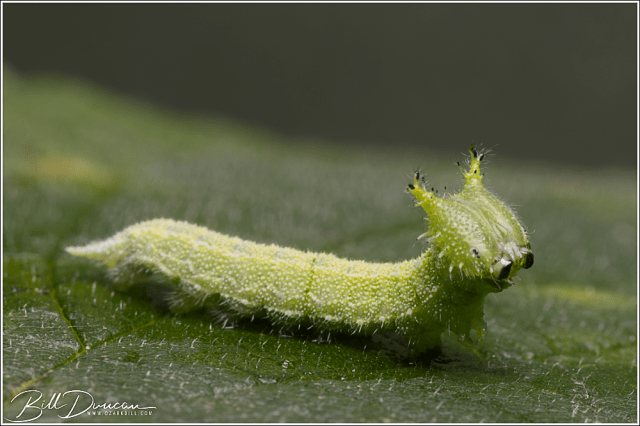
- Larva (Caterpillar): The caterpillars are a striking lime green, covered with small, pale bumps. They possess two prominent, branched “horns” on their head and two smaller, fleshy “tails” at the rear, giving them a somewhat slug-like or alien appearance. They are masterfully camouflaged against hackberry leaves. In late summer or autumn, caterpillars of the second brood enter diapause (winter dormancy) as half-grown larvae, often resting on twigs or under bark, and overwinter in this stage. They resume feeding in spring.

- Pupa (Chrysalis): Once fully grown, the larva forms a chrysalis that is typically light green, resembling a leaf, sometimes with white markings. It is suspended head down by a silken pad from a twig or leaf. This stage lasts for a few weeks.
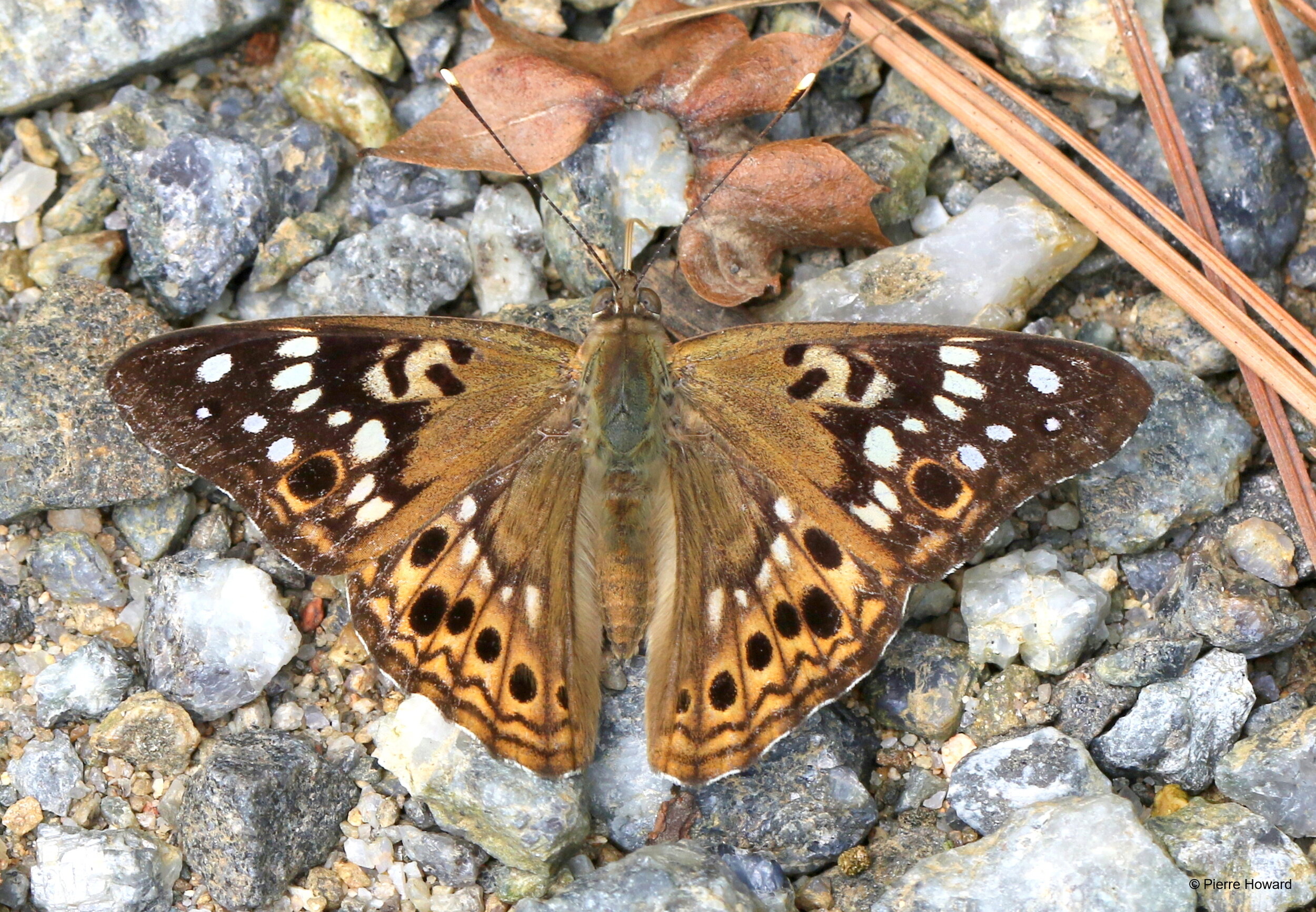
- Adult: The adult butterfly emerges from the chrysalis, typically in late spring or early summer. There are usually two to three broods per year in most of its range, with adults active from late April to October.
Host Plants and Adult Food Sources: Strictly Hackberry, Diverse Adult Diet:
The caterpillars of the Hackberry Emperor are highly specialized, feeding exclusively on the leaves of various species of hackberry trees (genus Celtis). This host plant specificity dictates the butterfly’s distribution. Common host species include:
- Common Hackberry (Celtis occidentalis)
- Sugarberry (Celtis laevigata)
- Netleaf Hackberry (Celtis reticulata)
Adult butterflies are unusual in their feeding preferences. Unlike many butterflies that primarily nectar on flowers, Hackberry Emperors are strongly attracted to:
- Tree Sap: Especially from hackberry, oaks, and other trees.
- Rotting Fruit: Fermenting fruit provides essential sugars.
- Animal Dung: A source of minerals and nutrients.
- Carrion: Decomposing animal matter provides salts and other vital compounds.
- Mud Puddles: For salts and minerals.
- They rarely visit flowers for nectar.
Behavior and Ecology: Approachable and Territorial:
Hackberry Emperors are known for their calm and often approachable nature. They frequently land on people, presumably attracted to salts in sweat, allowing for close observation. Males are territorial, perching on hackberry leaves or tree trunks and flying out to intercept other butterflies or even large insects that enter their domain. Their flight is characterized by quick, powerful bursts interspersed with long glides.
The camouflage of both the larva (resembling a slug or bird dropping) and the adult (blending with tree bark) is a primary defense mechanism against predators. The overwintering larval diapause is a crucial adaptation to temperate climates.
Conservation Status and Threats: Generally Secure and Resilient:
Asterocampa celtis is currently considered a common and widespread species throughout its range and is not facing significant conservation threats. Its strong association with common hackberry trees, which are often tolerant of urban and suburban environments, contributes to its resilience. While local populations can be affected by the removal of hackberry trees or broad-spectrum pesticide use, the species as a whole remains robust. Encouraging the planting of native hackberry trees in suitable areas benefits this fascinating butterfly.
A Subtle Gem of the Woodlands: The Enduring Charm of the Hackberry Emperor:
The Hackberry Emperor, Asterocampa celtis, with its unassuming beauty, unique feeding habits, and intimate connection to its hackberry host, stands as a quiet yet captivating presence in the forests and urban green spaces of North America. Its peculiar behaviors and masterful camouflage offer a rewarding glimpse into the intricate and often surprising adaptations of the insect world. Encountering this shade-loving emperor is a reminder of the subtle wonders that thrive in even the most familiar of environments.
Discover more from
Subscribe to get the latest posts sent to your email.
 davethebugguy.org