
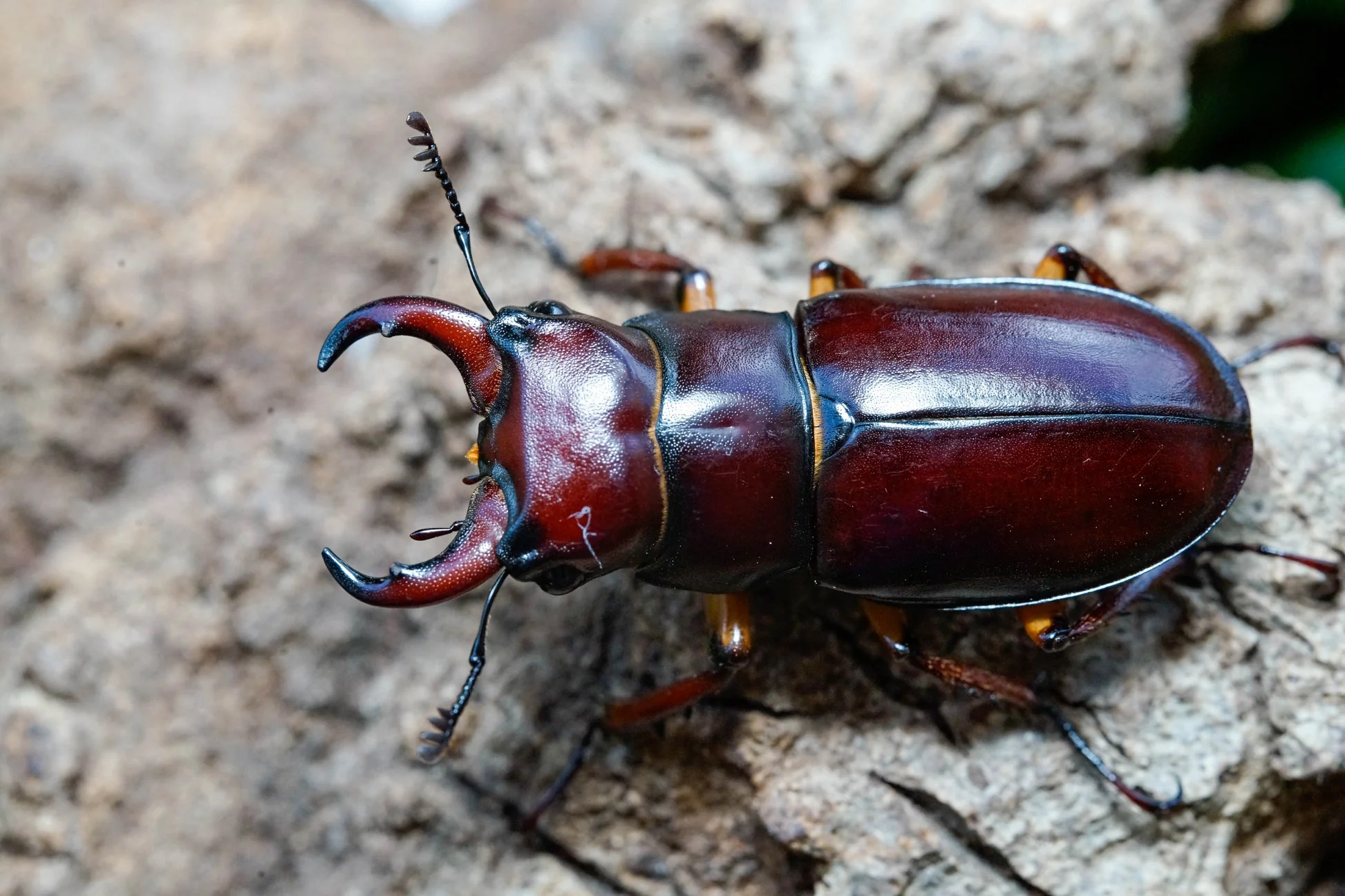
From the deciduous forests and woodlands of eastern North America emerges Lucanus capreolus, commonly known as the Reddish-Brown Stag Beetle or Eastern Stag Beetle. Recognized by its distinctive antler-like mandibles in males and its association with decaying wood, this fascinating insect plays a vital role in nutrient cycling, contributing to the health and vitality of forest ecosystems.
A Textured Reddish Hue: Appearance and Sexual Dimorphism:
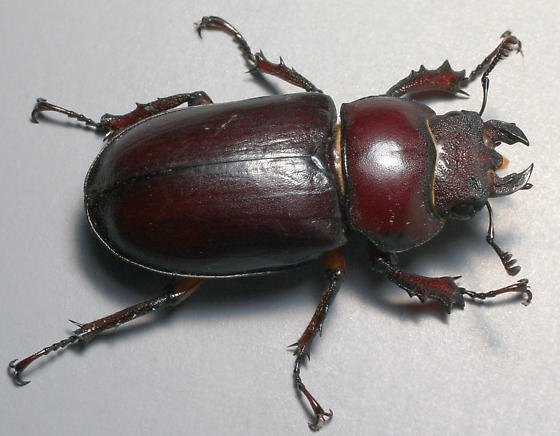
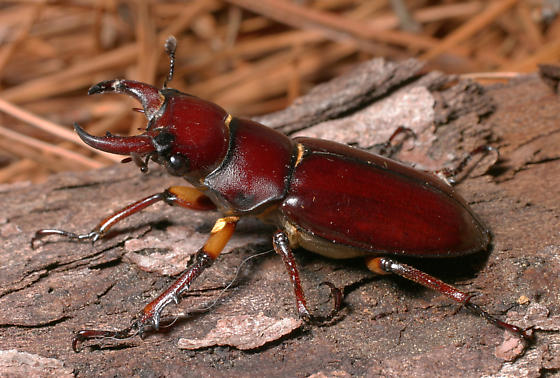
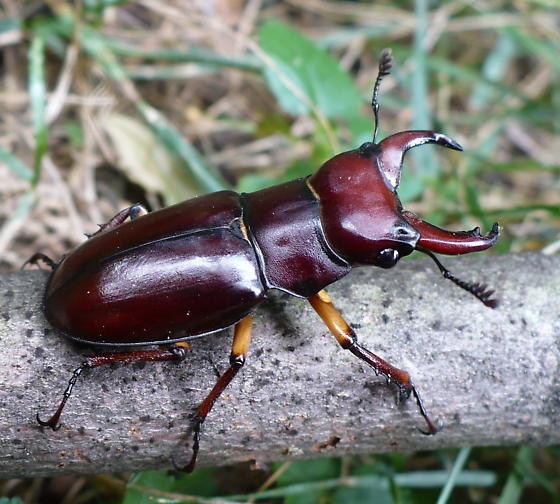
Lucanus capreolus is a medium to large-sized beetle, typically ranging from 1 to 2.5 inches (2.5 to 6.3 cm) in length. Its most striking feature is its overall coloration, which is a uniform, glossy reddish-brown or mahogany, earning it its common name.
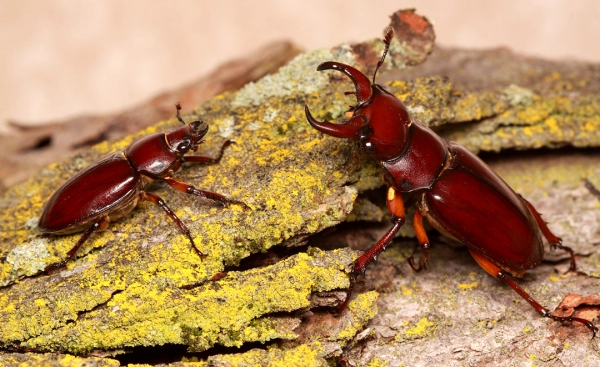
- Male: Males are easily distinguished by their prominent, enlarged mandibles, which are often described as resembling the antlers of a deer. While impressive, these mandibles are generally smooth, somewhat curved, and less branched or toothed compared to some other Lucanus species (like Lucanus elaphus). They are primarily used for wrestling with other males for mating rights or in territorial displays.
- Female: Females have much smaller, more robust, and more sharply pointed mandibles than males. These smaller jaws are considerably stronger and more functional for chewing wood, particularly when preparing egg-laying sites. Females are typically slightly smaller and stockier than males.
Both sexes have shiny, somewhat flattened bodies, with prominent antennae ending in a distinctive lamellate (leaf-like) club.
Distribution and Habitat: Deciduous Forests of Eastern North America:
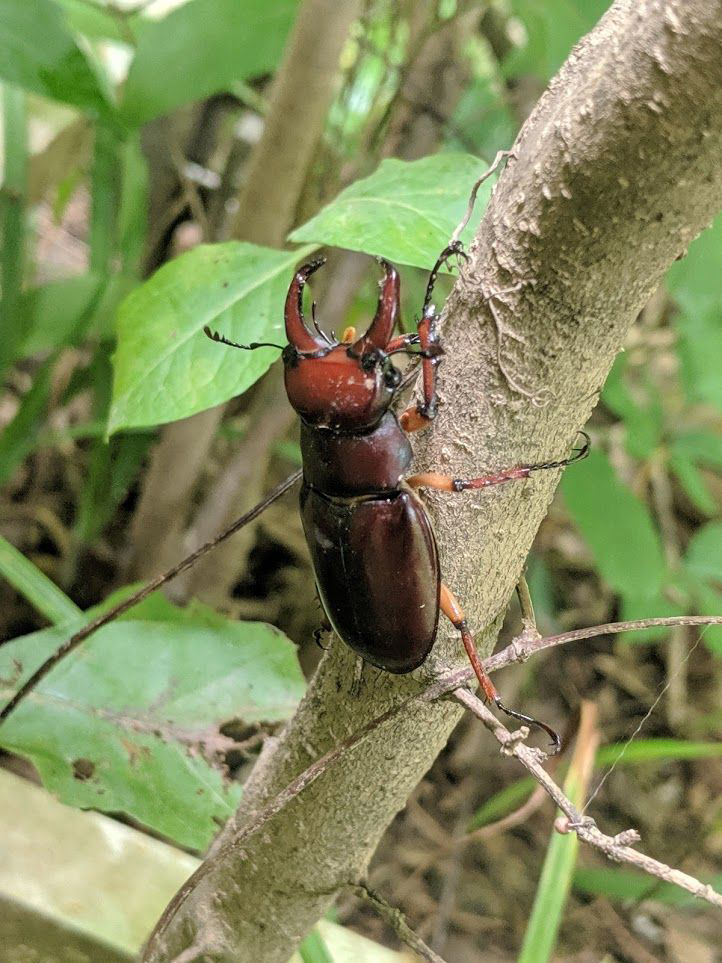
Lucanus capreolus is widely distributed throughout eastern North America, ranging from southeastern Canada (Ontario, Quebec) southward through the eastern United States, extending west to the Great Plains. Its presence is strongly tied to the availability of decaying hardwoods, making its primary habitat mature deciduous and mixed forests. It can be found in woodlands, forest edges, riparian zones, and even in suburban areas with mature trees and plenty of decaying wood. Larvae thrive within rotting logs, stumps, and the root systems of various hardwood species.
Life Cycle: A Multi-Year Subterranean Development:
The life cycle of Lucanus capreolus is characterized by a prolonged larval stage, typically lasting several years within decaying wood.

- Egg: Females lay small, oval, whitish eggs deep within decaying wood, often in crevices or under bark.

- Larva (Grub): The larval stage, known as a grub, is large, C-shaped, and creamy white with a distinct brown head capsule and powerful mandibles for chewing wood. These grubs are saproxylic, meaning they feed on decaying wood, absorbing nutrients as they tunnel through the decomposing timber. This stage can last for 2 to 4 years, sometimes even longer, depending on environmental conditions and food availability.
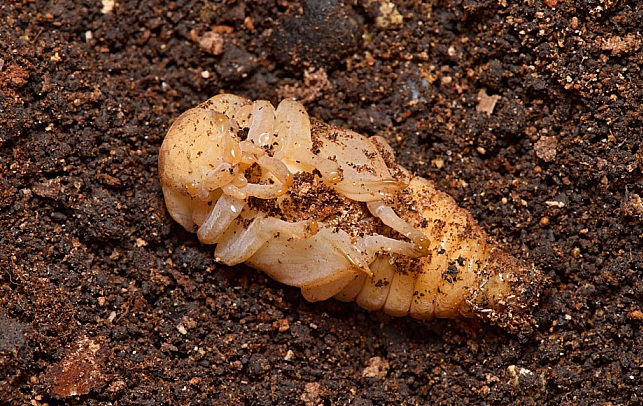
- Pupa: Once fully grown, the larva constructs a pupal chamber within the decaying wood or in the surrounding soil. It pupates within this chamber, transforming into the adult beetle. This stage typically lasts for a few weeks to a month.
- Adult: The adult beetle emerges from its pupal chamber, typically in late spring or early summer (May to July). Adults are relatively short-lived, often existing for only a few weeks to a couple of months. Their primary purpose is reproduction. They are primarily nocturnal, attracted to lights, but can also be seen flying clumsily during the day.
Food Sources: Decaying Wood for Larvae, Sap and Liquids for Adults:
The diet of Lucanus capreolus varies dramatically between its life stages:
- Larvae (Grubs): Strictly saproxylic, feeding on the decaying wood of various hardwood trees. Common wood types include oak, maple, elm, ash, and various fruit trees. This process is crucial for breaking down woody debris and returning nutrients to the forest soil.
- Adults: Do not actively feed on solid wood. Instead, they primarily feed on tree sap (exuding from wounds on trees), juices from rotting fruit, and occasionally, they may lick up other sugary liquids. They have been observed feeding on the fluids of decomposing animal matter, which provides valuable nutrients.

Behavior and Ecology: Nocturnal Activity and Male Combat:
Adult Lucanus capreolus are primarily nocturnal and often attracted to lights at night, where they can be seen crawling or flying clumsily. During the day, they often hide under logs or leaf litter.
Males use their enlarged mandibles in ritualistic combat with other males to secure mating opportunities with females. These battles involve pushing, grappling, and attempting to flip opponents, rarely resulting in serious injury. Females, with their stronger mandibles, are adept at excavating tunnels for egg-laying. The presence of decaying wood is crucial for both larval development and providing shelter for adults.
Conservation Status and Threats: Generally Secure, but Habitat Dependent:
Lucanus capreolus is currently considered a common and widespread species throughout its range and is generally not facing significant conservation threats. Its adaptability to various types of hardwood decay contributes to its resilience. However, like many forest-dwelling invertebrates that rely on deadwood, localized populations can be impacted by:
- Habitat Loss and Fragmentation: Due to deforestation, clear-cutting, and “tidying up” forests by removing dead trees and logs, which eliminates larval habitat.
- Changes in Forest Management: Practices that prioritize removing all dead or dying timber can negatively affect populations.
- Pesticide Use: Broad-spectrum insecticides can indirectly impact populations.
Promoting sustainable forest management practices that allow for the presence of dead and decaying wood is crucial for ensuring the long-term health of Lucanus capreolus populations and the broader forest ecosystem.
A Silent Decomposer of the Woodland: The Enduring Allure of the Reddish-Brown Stag Beetle:
The Reddish-Brown Stag Beetle, Lucanus capreolus, with its distinctive antlered males, glossy reddish-brown coloration, and essential role in the decomposition of decaying wood, stands as a captivating example of nature’s recyclers. This fascinating beetle, often glimpsed during its brief adult phase, offers a compelling insight into the hidden processes that sustain our forests, reminding us of the vital and often unseen contributions of invertebrates to the health of our natural world.
Discover more from
Subscribe to get the latest posts sent to your email.
 davethebugguy.org