
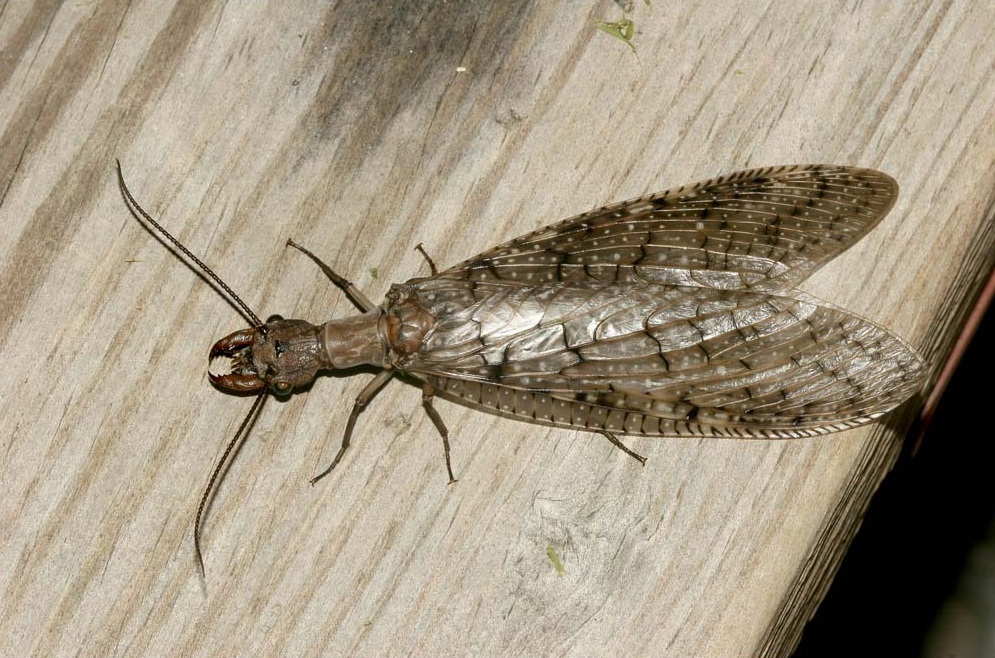
From the clear, oxygen-rich waters of streams and rivers across eastern North America emerges a truly formidable insect – Corydalus cornutus, commonly known as the Eastern Dobsonfly. While the adult is a short-lived, somewhat clumsy giant of the night, its larval form, the “hellgrammite,” is a fearsome aquatic predator whose intimidating appearance and powerful mandibles make it a legendary inhabitant of freshwater ecosystems and a prized bait among anglers.
A Giant’s Jaws: Imposing Size and Distinctive Features:
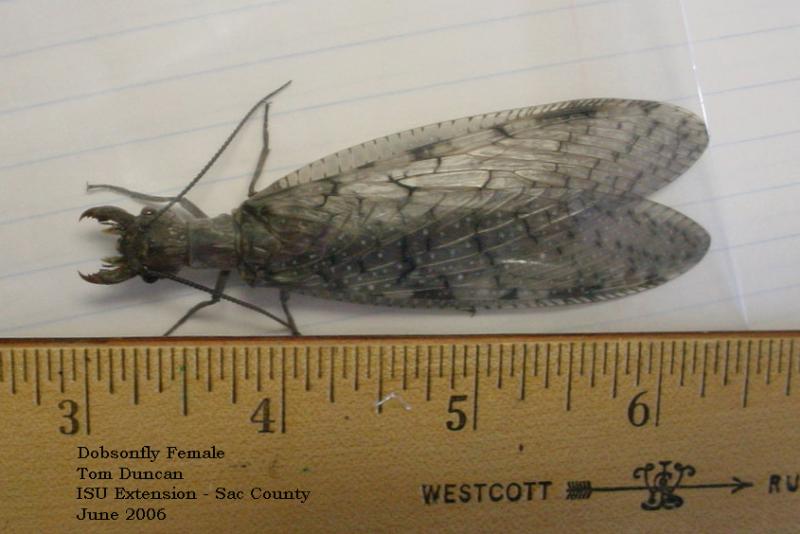
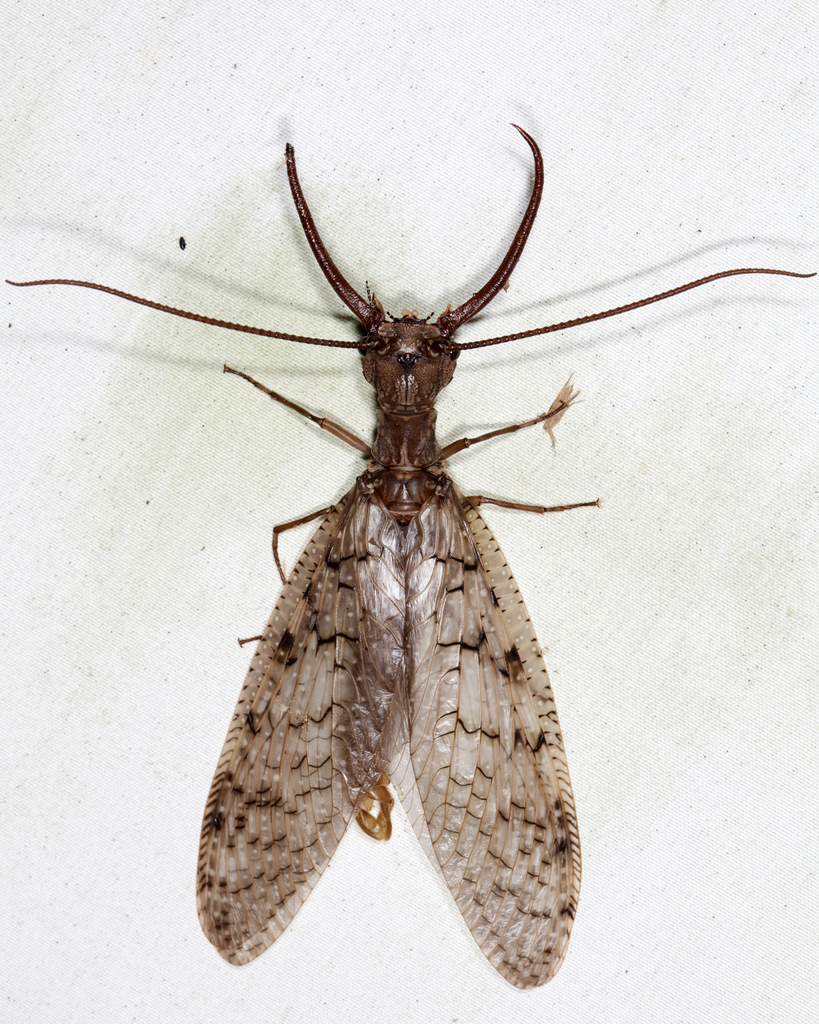
Corydalus cornutus is one of the largest non-lepidopteran insects in North America, with adults typically reaching lengths of 2 to 4 inches (5 to 10 cm), and some males approaching up to 5 inches (12.7 cm) including their mandibles.

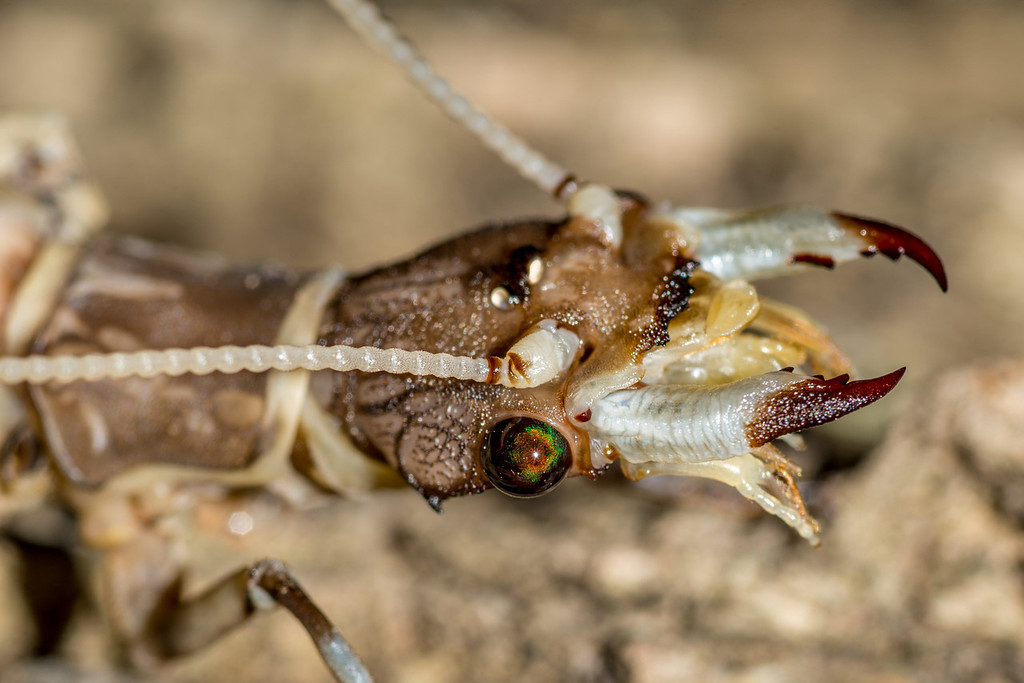
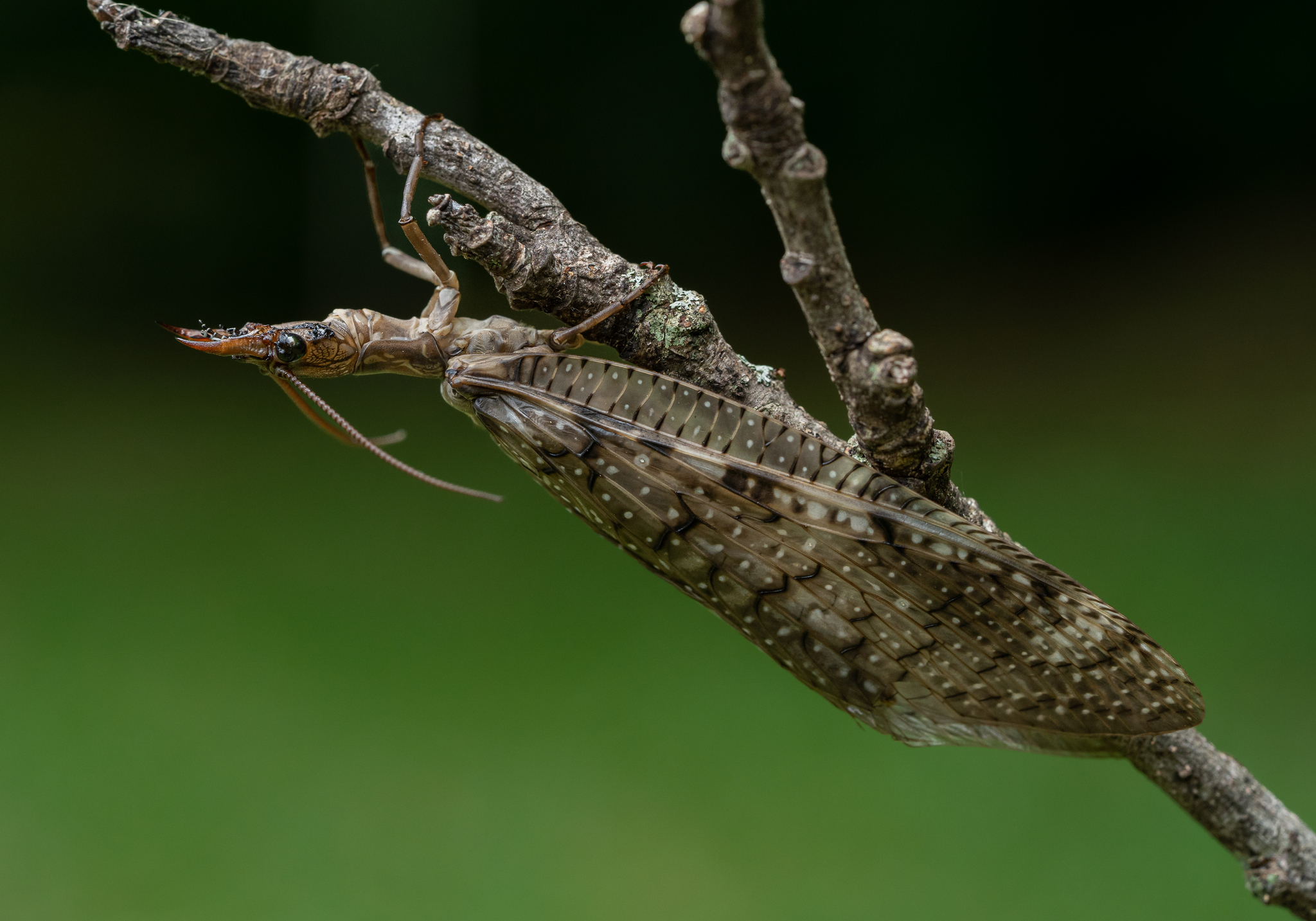
- Adult Male: Males are particularly striking, possessing enormously elongated, sickle-shaped mandibles (jaws) that can be as long as their head. Despite their intimidating size, these mandibles are primarily for display and grasping females during mating, rather than for biting. The wings are large, veined, and typically mottled gray-brown, with a somewhat leathery texture. They are held roof-like over the body at rest.
- Adult Female: Females have much shorter, but significantly more robust and powerful mandibles than males. These are capable of inflicting a painful pinch if handled carelessly. Their overall body size is often larger than males.
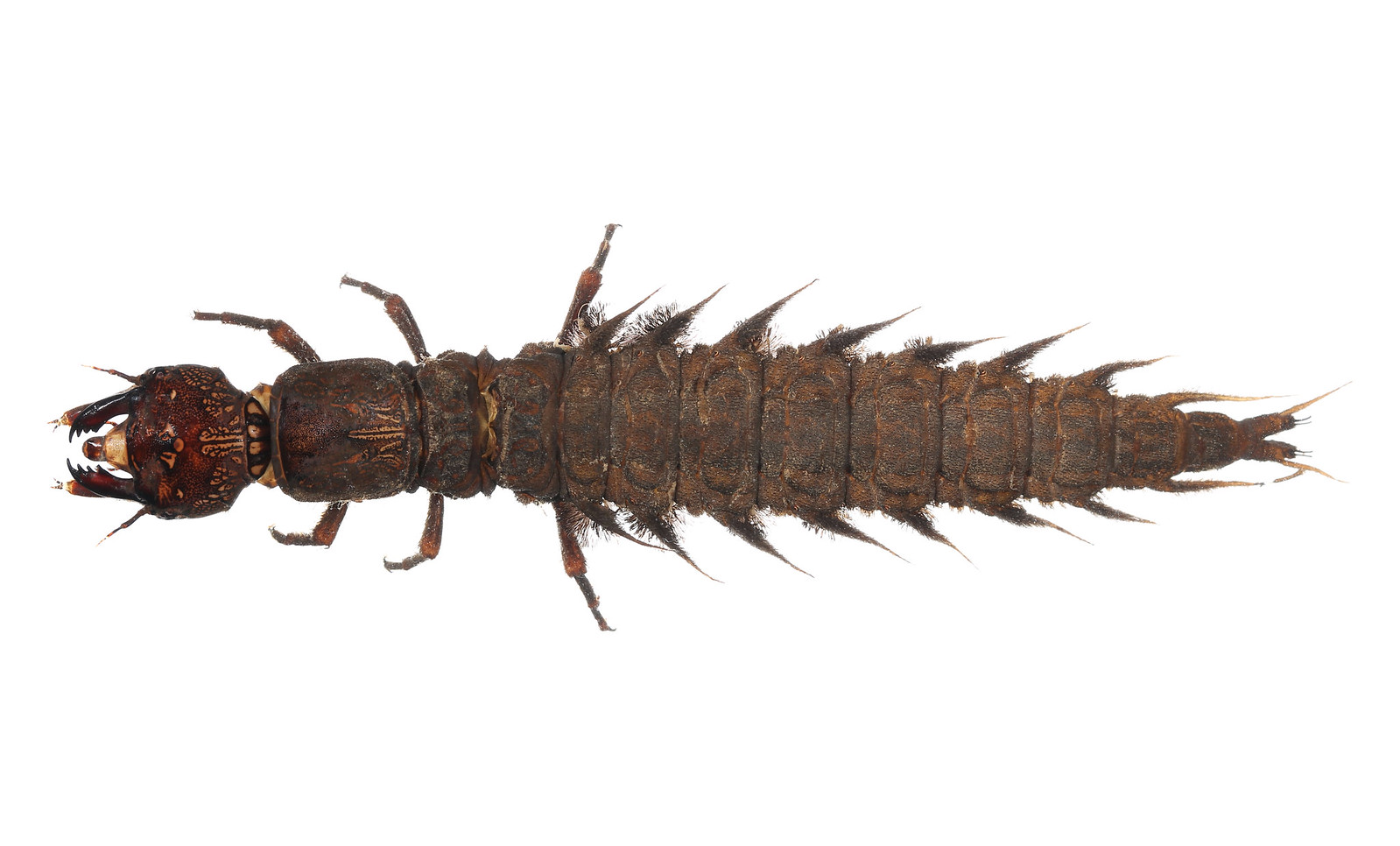
- Larva (Hellgrammite): The larval stage, known as the “hellgrammite,” is equally impressive, reaching lengths of up to 3 inches (7.5 cm). Hellgrammites are dark, segmented, and flattened, with powerful biting mandibles. They possess seven or eight pairs of prominent, branched abdominal gills along their sides, used for respiration underwater, and two fleshy anal prolegs with hooks at the end for gripping the substrate. Their intimidating appearance and powerful jaws are well-deserved, as they are active aquatic predators.
The overall coloration of both adults and larvae is typically dark brown or black, allowing them to blend into their respective environments.
Distribution and Habitat: Clean Waters of Eastern North America:
Corydalus cornutus is widely distributed throughout eastern North America, from southeastern Canada (Ontario and Quebec) southward through the eastern and central United States, reaching as far west as parts of the Great Plains (e.g., eastern Kansas, Oklahoma, Texas). Its presence is a strong indicator of good water quality, as the hellgrammite larvae require cool, clear, well-oxygenated, unpolluted streams and rivers with rocky or gravelly bottoms. Adults are found near these aquatic habitats, often attracted to lights at night.
Life Cycle: A Multi-Year Aquatic Phase Culminating in a Brief Adult Flight:
The life cycle of Corydalus cornutus is predominantly aquatic, with the larval stage lasting for several years.
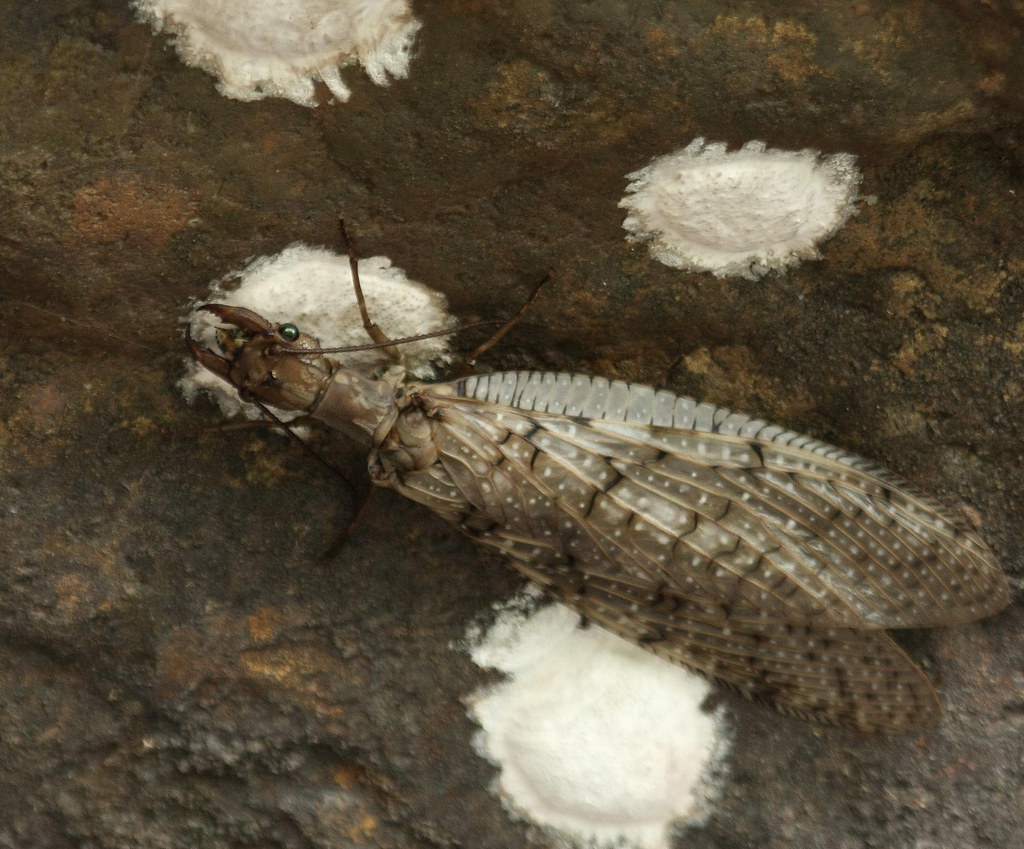
- Egg: Females lay large, distinctively chalky-white egg masses (often 1-inch in diameter) on surfaces overhanging water, such as rocks, bridges, or tree branches. These egg masses often have a protective, iridescent covering.
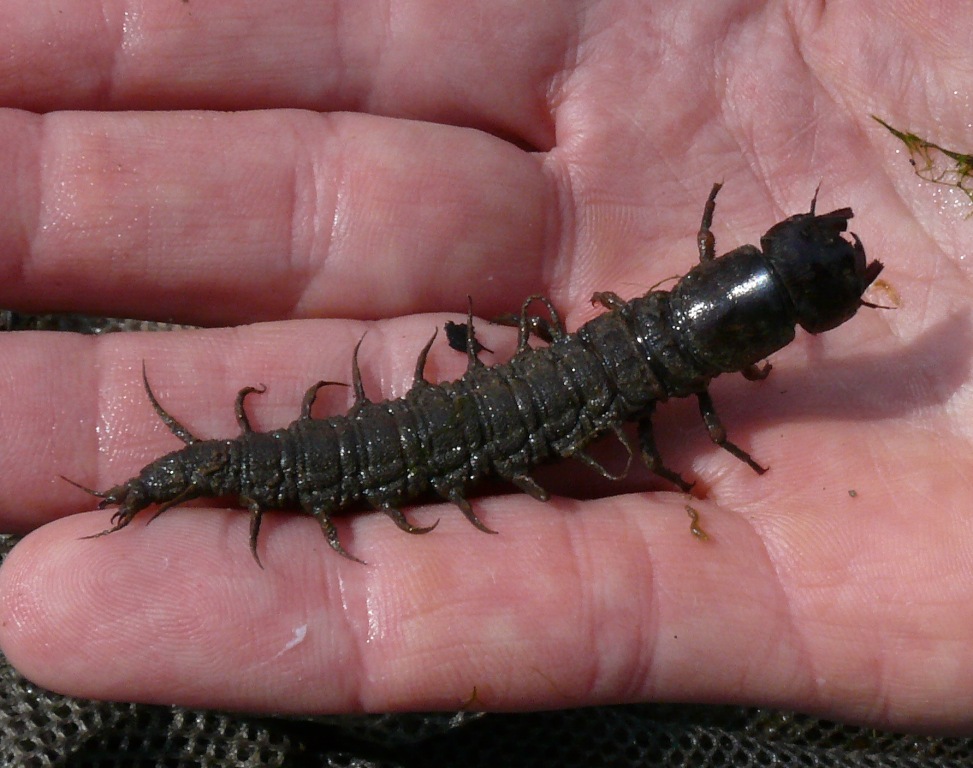
- Larva (Hellgrammite): Upon hatching, the larvae drop into the water. Hellgrammites are powerful, active predators, spending 2 to 3 years (or sometimes longer) at the bottom of streams and rivers. They hide under rocks and debris, ambushing smaller aquatic invertebrates like insect larvae (mayfly nymphs, caddisfly larvae, stonefly nymphs), and even small fish or tadpoles. They undergo several molts as they grow.
- Pupation: When fully grown, the hellgrammite crawls out of the water onto land, often some distance from the stream bank. It constructs a small, irregular chamber or cell under a rock, log, or in damp soil. It pupates within this chamber. The pupal stage can last from a few weeks to several months.
- Adult: The formidable adult dobsonfly emerges from the pupal chamber, typically in late spring or early summer. The adult stage is remarkably short-lived, lasting only a few days to a week. Adults do not feed and their sole purpose is reproduction. They are nocturnal, often attracted to lights, and males engage in aerial courtship displays and battles with their mandibles for females.
Host Plants and Adult Food Sources: Purely Predatory and Non-Feeding:
The larvae (hellgrammites) are strict carnivores, preying on other aquatic invertebrates. They do not consume plant material.
Adult dobsonflies have non-functional mouthparts and do not feed. They rely entirely on the energy reserves accumulated during their extensive larval stage for their brief adult existence, which is dedicated solely to mating and egg-laying.
Behavior and Ecology: Aquatic Ambushers and Terrestrial Courtship:
Hellgrammites are well-adapted to their benthic (bottom-dwelling) existence, using their strong legs and caudal prolegs to cling to rocks in fast-flowing currents. Their cryptic coloration helps them blend with the substrate.
Adult dobsonflies are clumsy fliers but strong attractants to light. Males use their oversized mandibles in ritualistic combat with other males to establish dominance and secure mating opportunities. Females, once mated, seek out suitable overhanging surfaces to lay their characteristic white egg masses. The short adult lifespan emphasizes the reproductive imperative.
Conservation Status and Threats: Indicator Species for Water Quality:
Corydalus cornutus is generally considered a common species within its range and is not currently listed as endangered or threatened. However, its strict requirement for clean, unpolluted, well-oxygenated aquatic habitats makes it an important indicator species for water quality. Populations can decline rapidly in areas affected by:
- Water pollution: From agricultural runoff, industrial waste, and sewage.
- Siltation: Sedimentation that smothers rocky bottoms and buries larvae.
- Habitat alteration: Damming, channelization, or removal of riparian vegetation.
Protecting and restoring the water quality of streams and rivers is paramount for the continued survival of the Eastern Dobsonfly and the broader aquatic ecosystems they inhabit.
A Primal Force of Freshwater: The Unforgettable Eastern Dobsonfly:
The Eastern Dobsonfly, with its fearsome hellgrammite larva and its giant, short-lived adult form, stands as a prime example of an insect embodying both ecological significance and natural wonder. From its hidden life beneath river stones to its brief, dramatic appearance in the night, this creature is a powerful reminder of the intricate beauty and delicate balance of our freshwater environments. Its presence is a testament to the health of the streams it calls home, a truly unforgettable component of North America’s aquatic biodiversity.
Discover more from
Subscribe to get the latest posts sent to your email.
 davethebugguy.org