
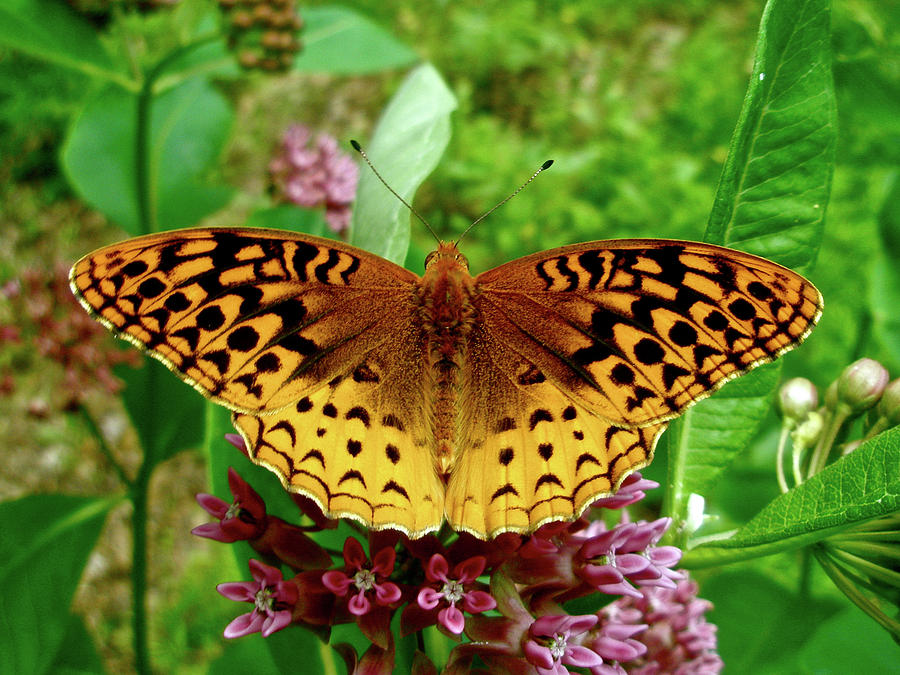
Gliding with powerful, buoyant flight through sun-drenched meadows, open woodlands, and vibrant flower gardens across much of North America is Speyeria cybele, commonly known as the Great Spangled Fritillary. This large and striking butterfly, adorned with a kaleidoscope of orange and black, and notably brilliant silver spots on its underside, is a cherished sight, embodying the beauty and vitality of its grassland and forest-edge habitats.
A Fiery Display with Silver Linings: Appearance and Striking Patterns:
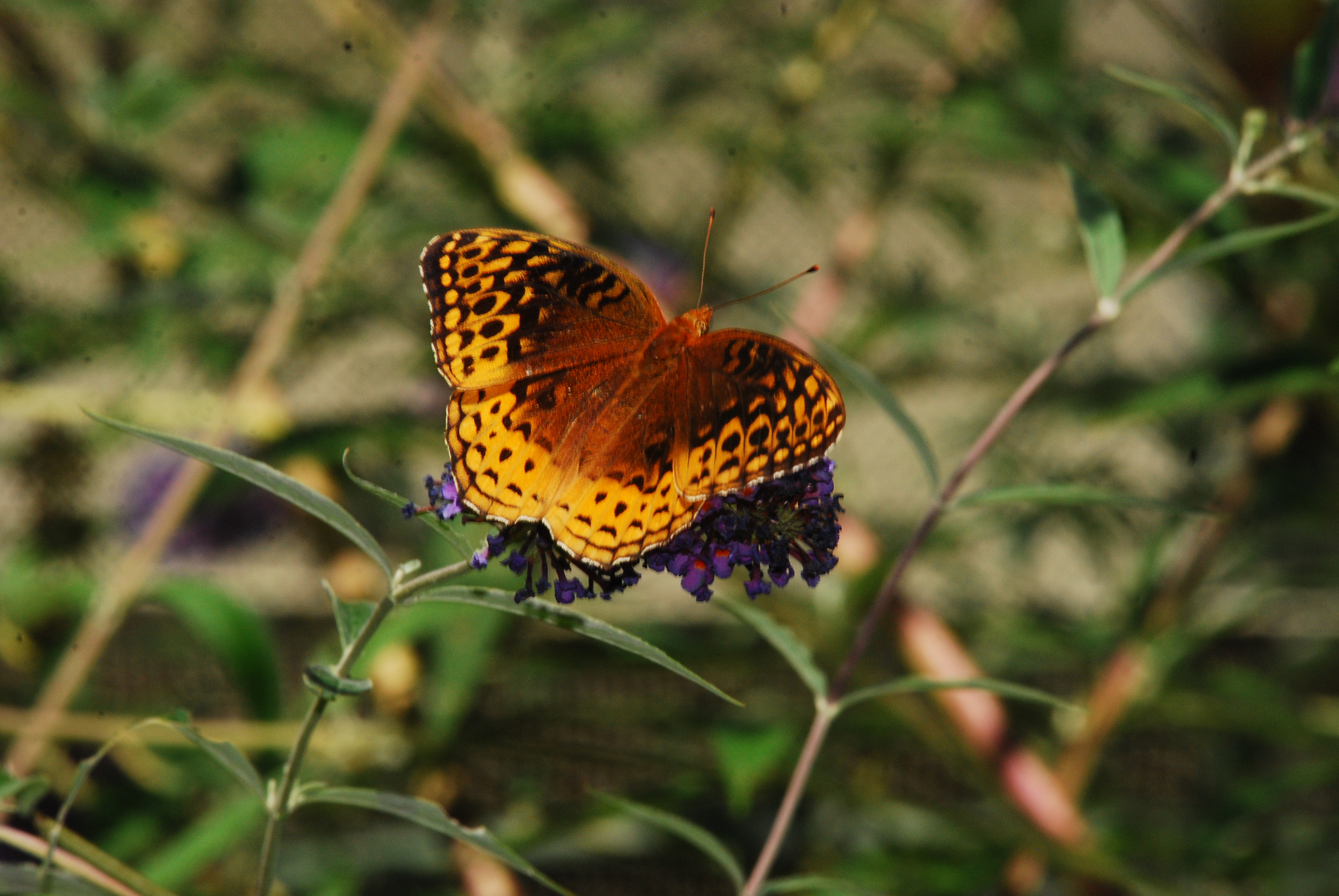
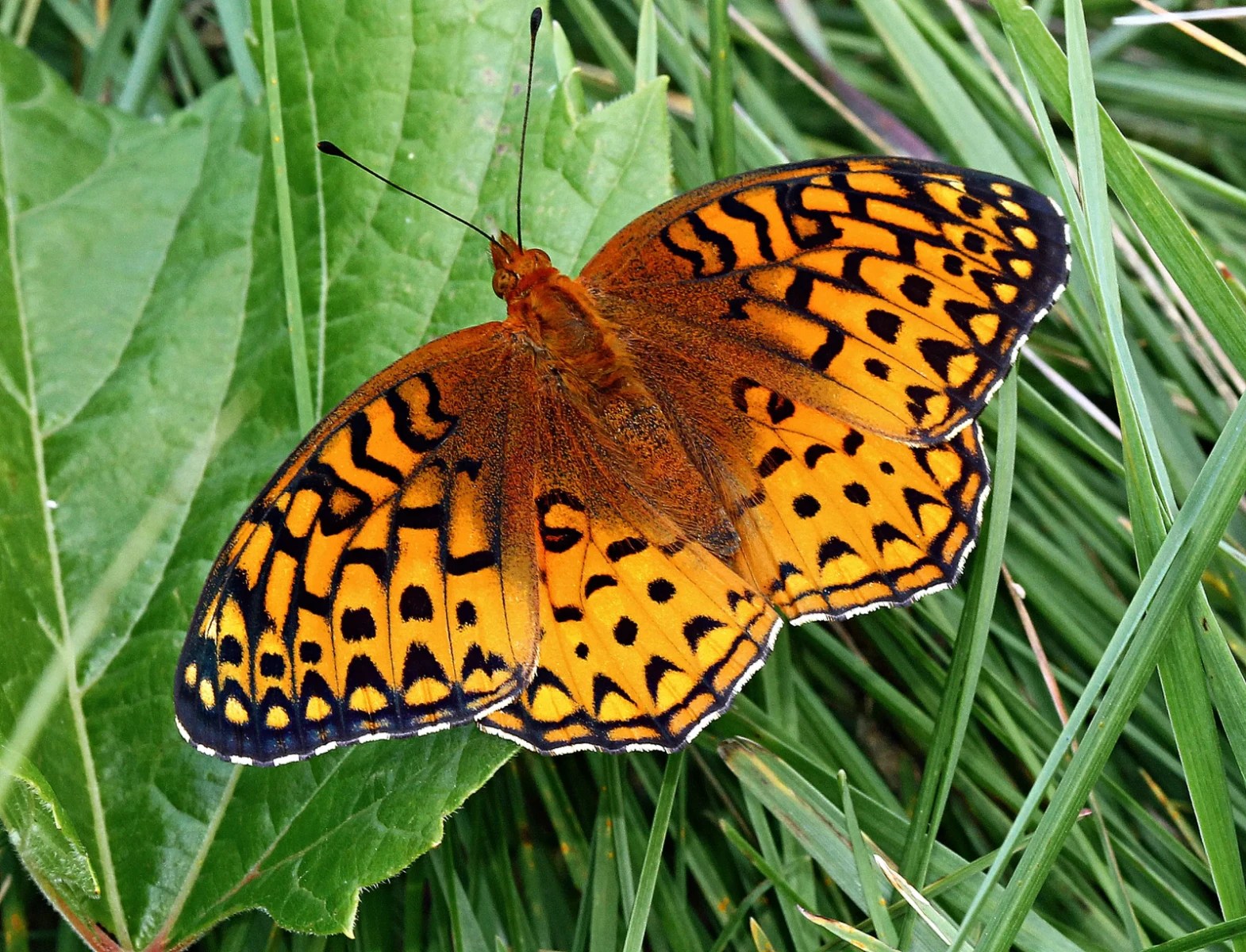
The Great Spangled Fritillary is a large and robust butterfly, typically boasting a wingspan ranging from 2.5 to 4 inches (6.4 to 10 cm). The dorsal (upper) surface of its wings is a vibrant, fiery orange, heavily marked with intricate black patterns. These patterns include bold black dashes near the base of the wings, a series of irregular black spots across the central area, and a double row of black spots and triangles along the outer margins.
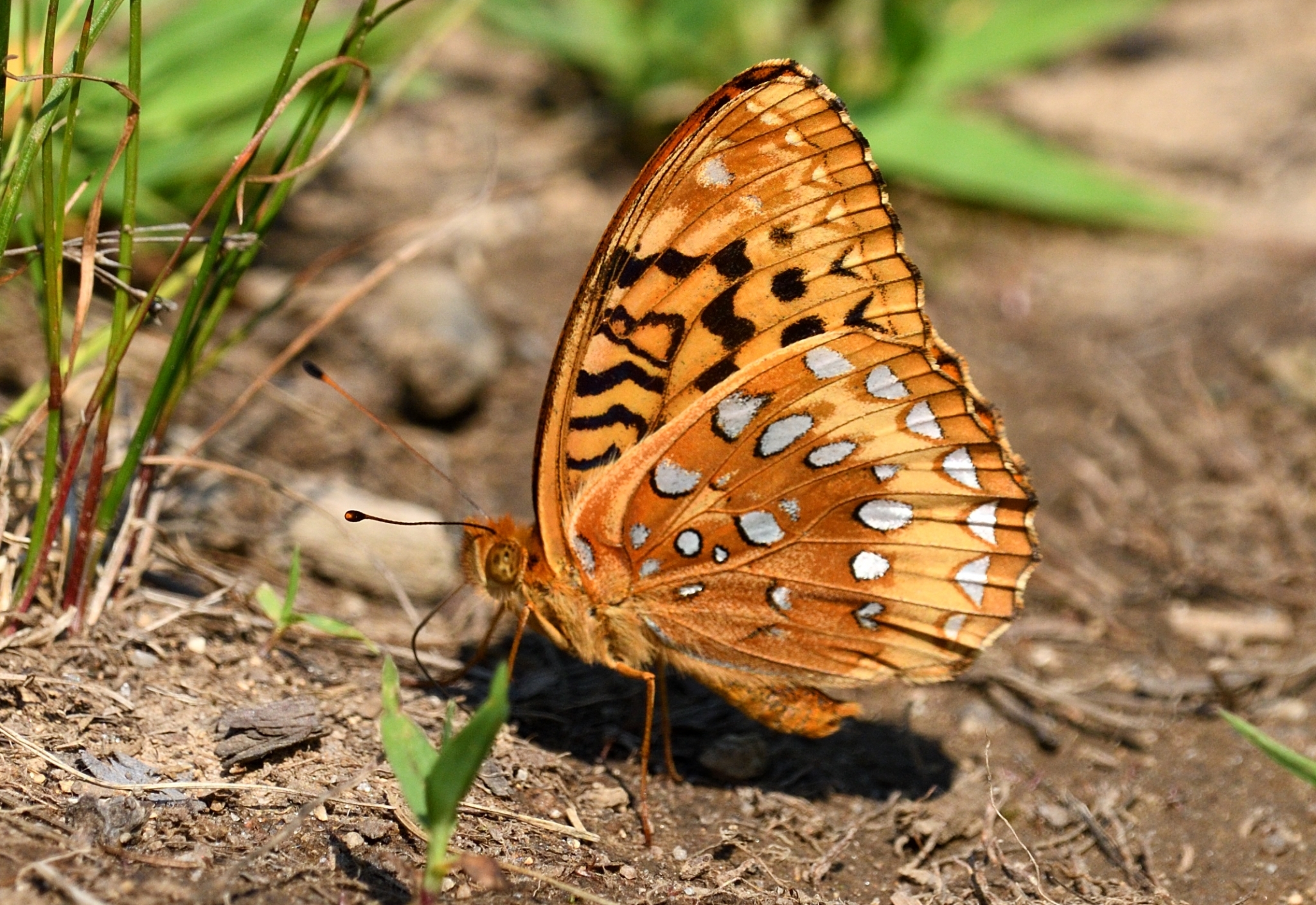
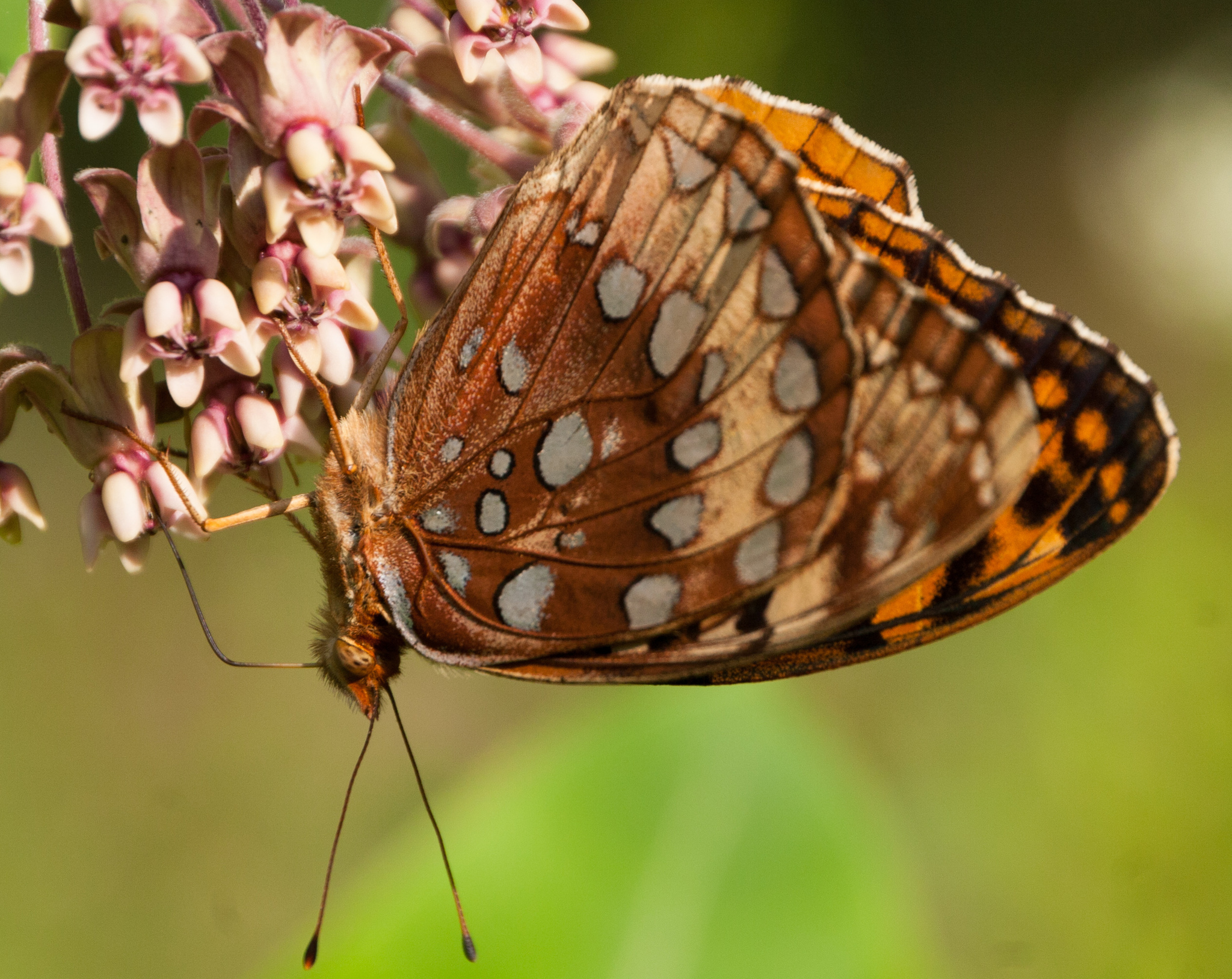
The underside of the forewings mirrors the orange and black patterns but is paler. However, the most distinguishing feature, and the origin of the “spangled” in its name, is the ventral (underside) of the hindwings. These are a rich olive-brown or mahogany red, adorned with numerous large, brilliant, and highly reflective silver spots. This dazzling array of metallic spots makes it instantly recognizable and truly beautiful when it lands with its wings closed. Females generally have darker, often more purplish-brown hindwing undersides and are typically larger than males.
Distribution and Habitat: A Widespread North American Native:
Speyeria cybele is widely distributed across temperate North America, ranging from southern Canada (all provinces except Newfoundland) southward through most of the United States, extending from coast to coast and reaching into parts of northern Mexico. It thrives in open, sunny habitats with abundant nectar sources, including meadows, fields, prairies, open woodlands, forest edges, savannas, pastures, and large gardens. Its widespread success is due to its adaptable nature and its reliance on various species of violets as larval host plants, which are common across diverse landscapes.
Life Cycle: A Dormant Start and a Nectar-Fueled Adulthood:
The life cycle of Speyeria cybele is unique among many butterflies, beginning with the newly hatched larva entering a period of dormancy.
- Egg: Females lay small, pale greenish-yellow eggs singly on or near the leaves of violet plants, often in late summer or early autumn.
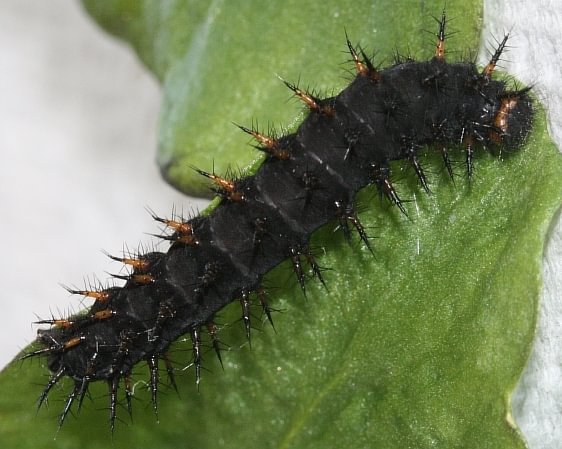
- Larva (Caterpillar): The tiny caterpillars hatch in the fall but do not feed immediately. Instead, they enter a period of diapause (dormancy), typically overwintering as first-instar larvae in the leaf litter at the base of their host plants. In the spring, they emerge from dormancy and begin feeding voraciously on the new growth of violet leaves. They are generally dark-colored (black or dark brown) with numerous branched, bristly spines. They are nocturnal feeders, hiding during the day.

- Pupa (Chrysalis): Once fully grown, the larva forms a chrysalis that is typically brown or mottled, resembling a dead leaf. It is suspended head down from a stem or twig by a silken pad. This stage lasts for a few weeks.
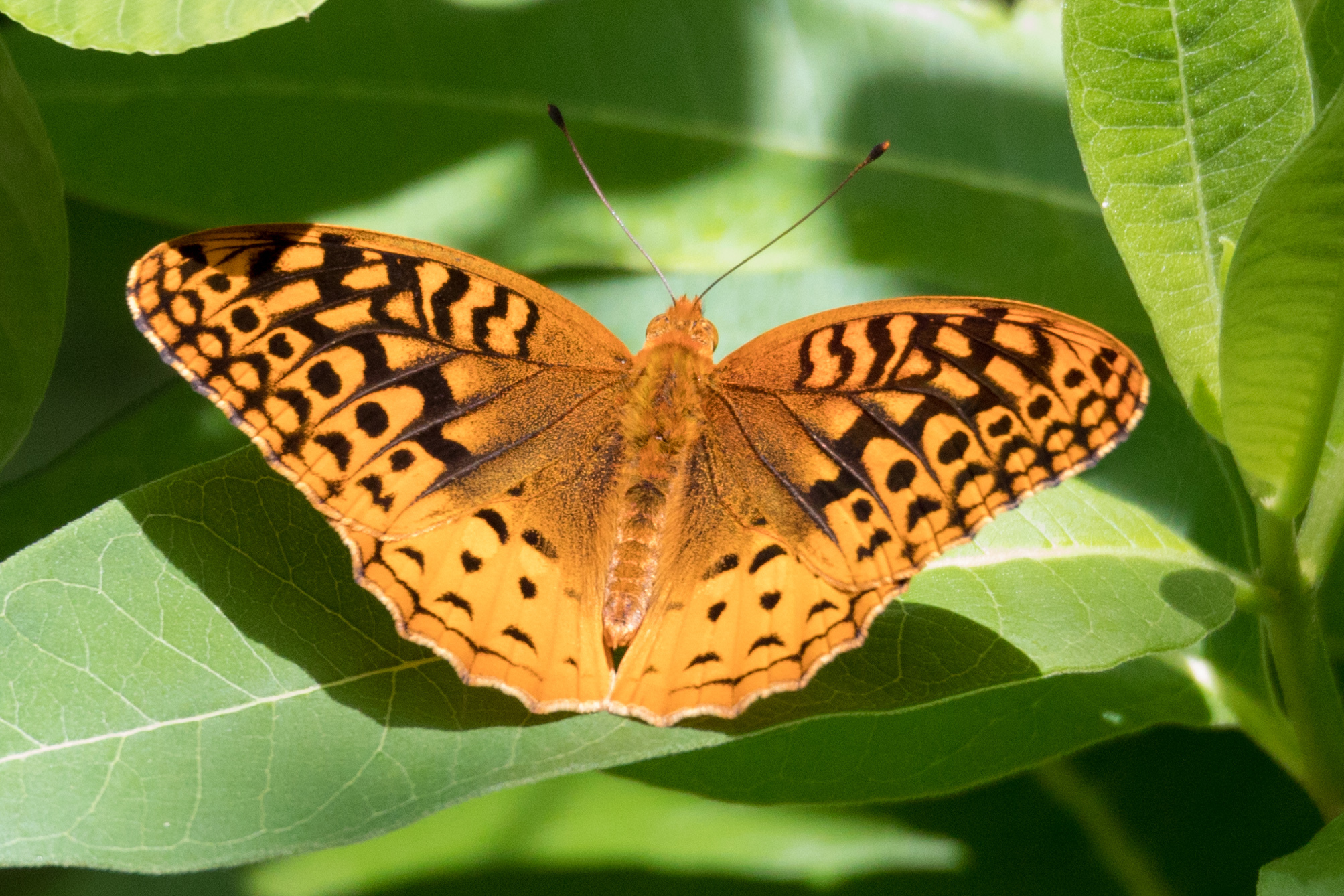
- Adult: The magnificent adult butterfly emerges from the chrysalis, typically in early to mid-summer (June-August in most areas). After allowing its wings to dry and harden, the Great Spangled Fritillary takes flight, ready to feed on nectar and reproduce. There is typically one generation (brood) per year across its range.
Host Plants and Nectar Sources: Violets for Larvae, Diverse Flowers for Adults:
The survival of the Great Spangled Fritillary is exclusively tied to its larval host plants, which are various species of violets (genus Viola). The specific species of violet can vary by region. Common host violets include:
- Common Blue Violet (Viola sororia)
- Canada Violet (Viola canadensis)
- Long-spurred Violet (Viola rostrata)
- Numerous other Viola species.
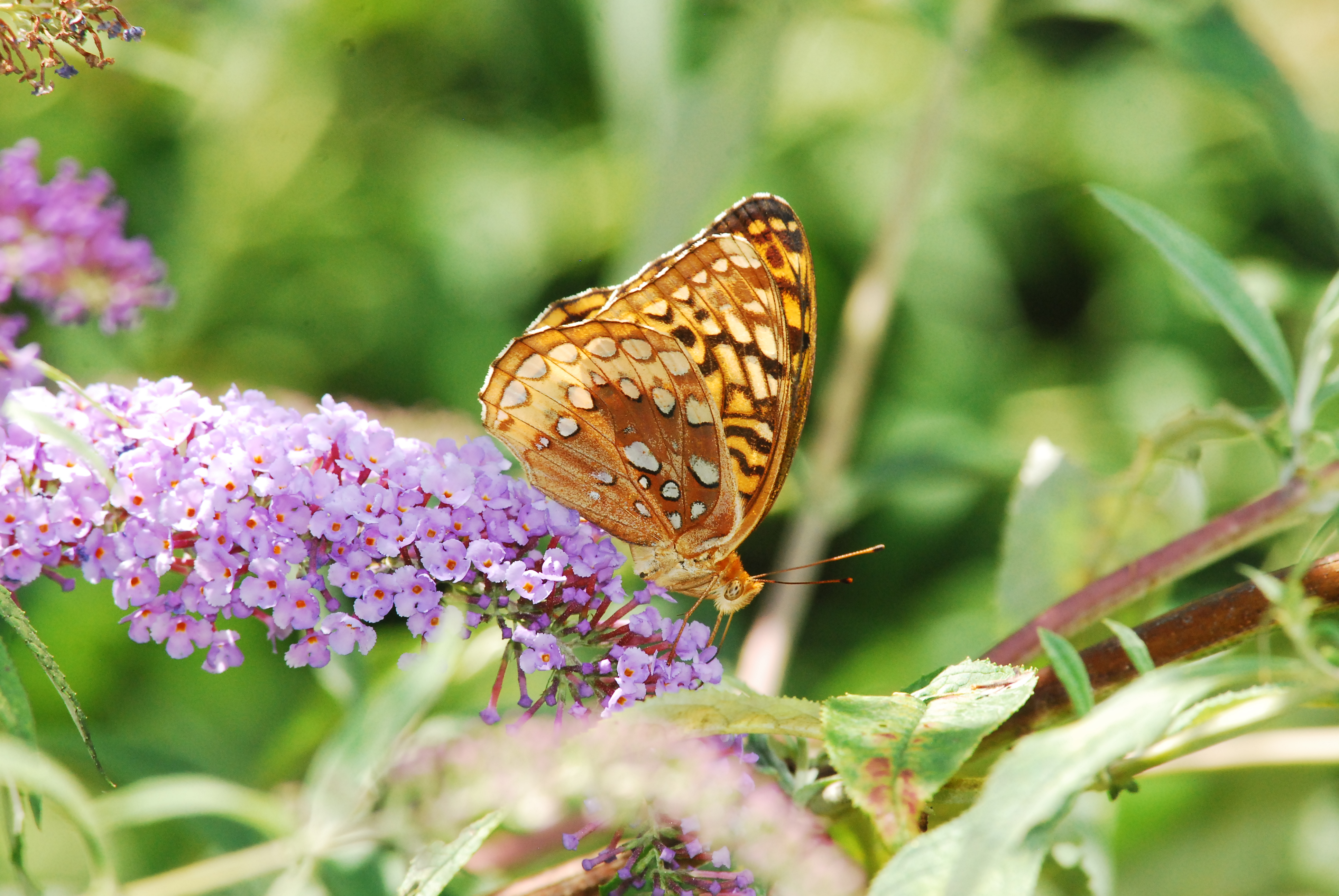
Adult butterflies are voracious nectar feeders and are attracted to a wide array of large, colorful flowers that provide ample nectar. They are important pollinators in their ecosystems. Some favored nectar sources include:
- Thistles (Cirsium species)
- Milkweeds (Asclepias species)
- Red Clover (Trifolium pratense)
- Dogbane (Apocynum cannabinum)
- Ironweed (Vernonia species)
- Buttonbush (Cephalanthus occidentalis)
- Various garden flowers like coneflowers and zinnias.
Behavior and Ecology: Active Foragers and Sun Bathers:
Great Spangled Fritillaries are active during the day, frequently seen flying powerfully and purposefully over meadows and through open woodlands in search of nectar. Males are often seen patrolling for females. They are strong fliers and can travel considerable distances in search of suitable foraging areas.
They are also fond of basking in the sun with their wings open, especially during cooler mornings, to warm up. When resting, they often close their wings, showcasing the brilliant silver spots on their hindwings. While not known for complex mimicry, their large size and bold patterns may serve as a deterrent to some predators.

Conservation Status and Threats: Generally Secure, but Habitat Quality Matters:
Speyeria cybele is currently considered a common and widespread species throughout most of its extensive range and is generally not facing significant conservation threats. Its adaptability to a variety of open habitats and its use of common violet species contribute to its resilience. However, localized populations can be impacted by habitat loss and degradation due to urbanization, intensive agriculture (which removes host plants and nectar sources), and the widespread use of pesticides. Maintaining and restoring diverse meadow and grassland habitats with native wildflowers and violets is crucial for ensuring the continued success of this beautiful butterfly.
A Silver-Spangled Delight: The Enduring Allure of the Great Spangled Fritillary:
The Great Spangled Fritillary, with its brilliant orange wings punctuated by black patterns and dazzling silver spots, stands as a vibrant symbol of North American summers. Its unique overwintering strategy as a larva and its strong, elegant flight make it a captivating subject for observation. Encountering this dazzling jewel soaring through a sunny meadow is a truly joyful experience, a vivid reminder of the intricate beauty and vitality that grace our natural world.
Check out my other Lepidoptera Life Cycles blogs HERE.
Discover more from
Subscribe to get the latest posts sent to your email.
 davethebugguy.org