
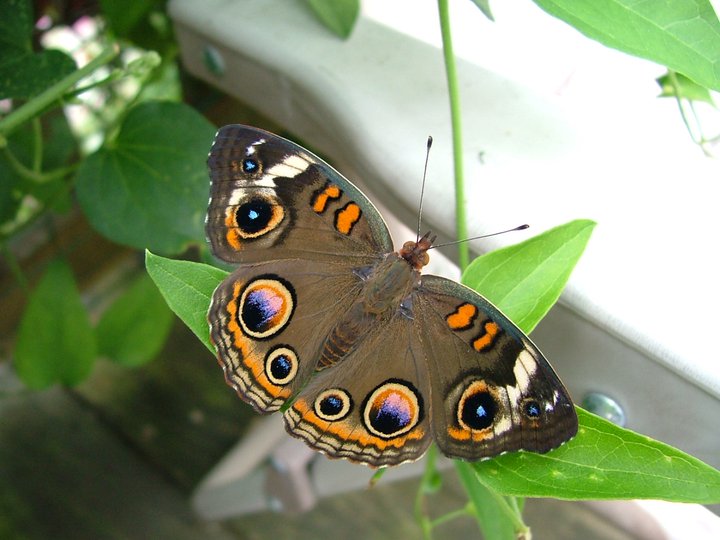
Flitting with erratic yet graceful movements through sunny fields, open woodlands, and disturbed areas across much of the Americas is the common buckeye, scientifically known as Junonia coenia. This charismatic butterfly, instantly recognizable by the prominent, iridescent eyespots on its wings, is a ubiquitous and cherished sight, enchanting observers with its striking patterns and its keen ability to thrive in a variety of open habitats.
A Kaleidoscope of Eyespots: Appearance and Seasonal Forms:
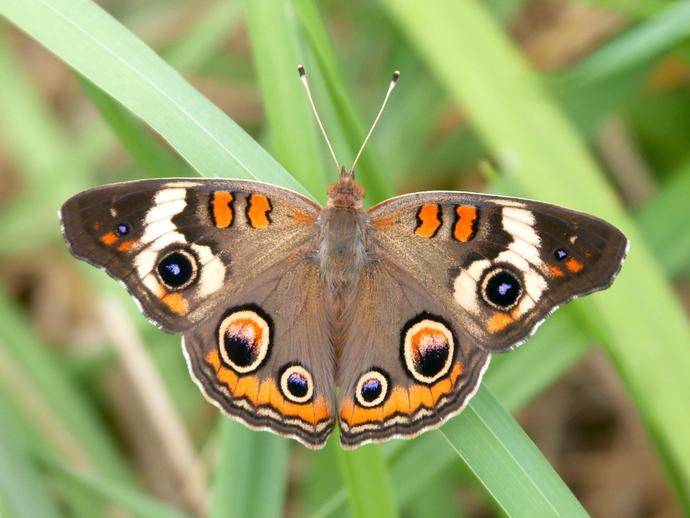
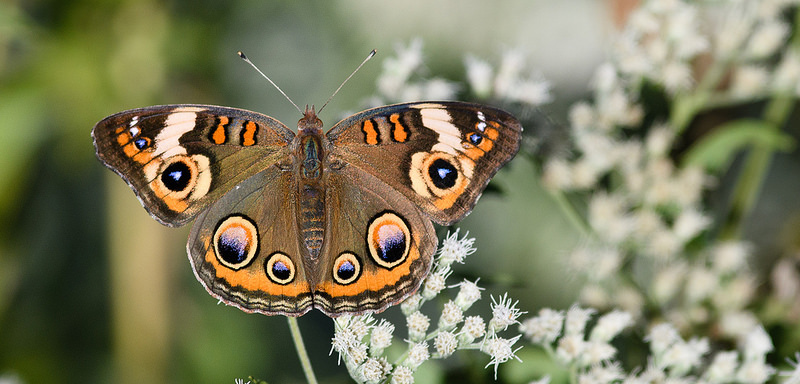
The common buckeye is a medium-sized butterfly, typically boasting a wingspan of 1.7 to 2.5 inches (4.3 to 6.3 cm). Its wings are a warm, mottled brown, often with patches of tan, orange, and black, providing a terrestrial camouflage against soil or leaf litter when at rest. However, its most distinctive feature lies in the prominent, iridescent eyespots that adorn both its forewings and hindwings.

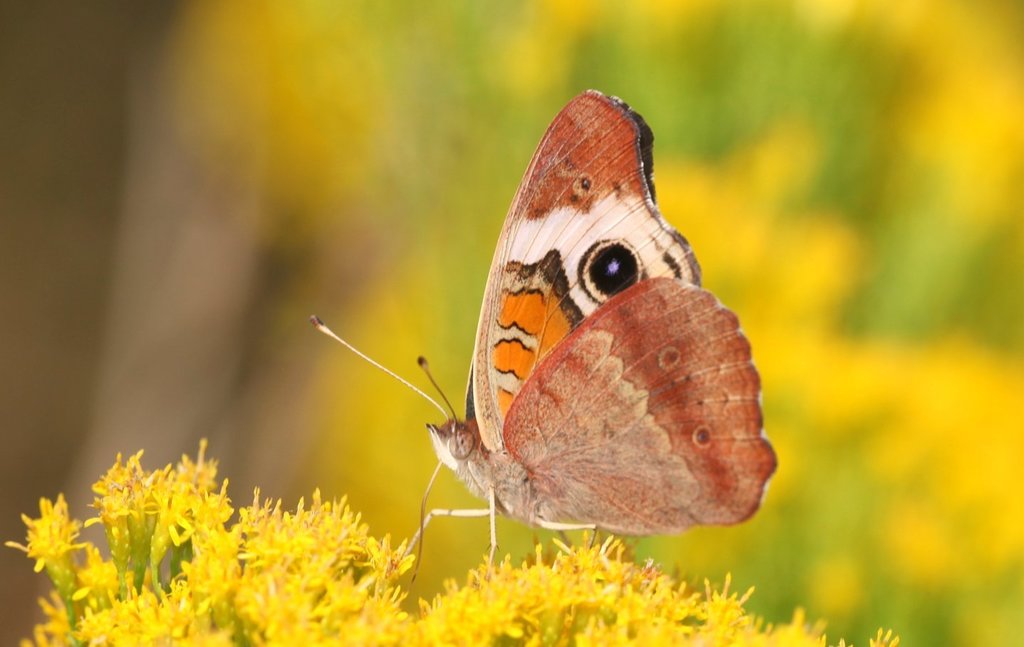
Each forewing typically displays two eyespots: a large, striking one near the apex with a blue pupil, and a smaller one below it. The hindwings feature two much larger, often more vibrant eyespots, also with blue pupils. These eyespots are ringed with yellow and black, creating a bold, almost hypnotic effect. The intensity and size of these eyespots can vary seasonally, with summer forms often being lighter and having larger, brighter eyespots, while cooler-season forms may be darker and have reduced eyespots. The ventral (underside) of the wings is typically a duller brown or tan, often with a subtle pattern that can help it blend into its surroundings.
Distribution and Habitat: A Widespread Opportunist:
The common buckeye enjoys a vast distribution across North America, extending from southern Canada (rarely), throughout most of the United States, south through Mexico, Central America, and into northern South America. It is a highly adaptable species, thriving in a wide range of open to semi-open habitats. These include meadows, fields, pastures, open woodlands, coastal dunes, urban parks, gardens, and disturbed areas like roadsides and vacant lots. Its widespread presence reflects its ability to utilize a variety of common plants as larval host sources.
Life Cycle: From Spiny Larva to Eye-Spotted Adult:
The life cycle of Junonia coenia follows the typical four stages of complete metamorphosis: egg, larva (caterpillar), pupa (chrysalis), and adult.
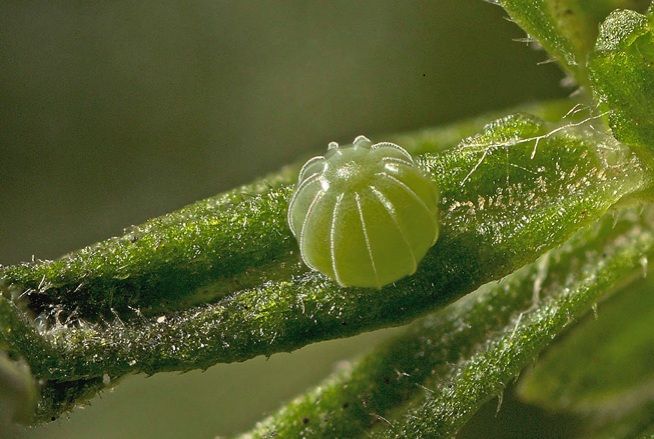
- Egg: Females lay small, pale green, ribbed eggs singly on the tips of the leaves or on the flower buds of its host plants.
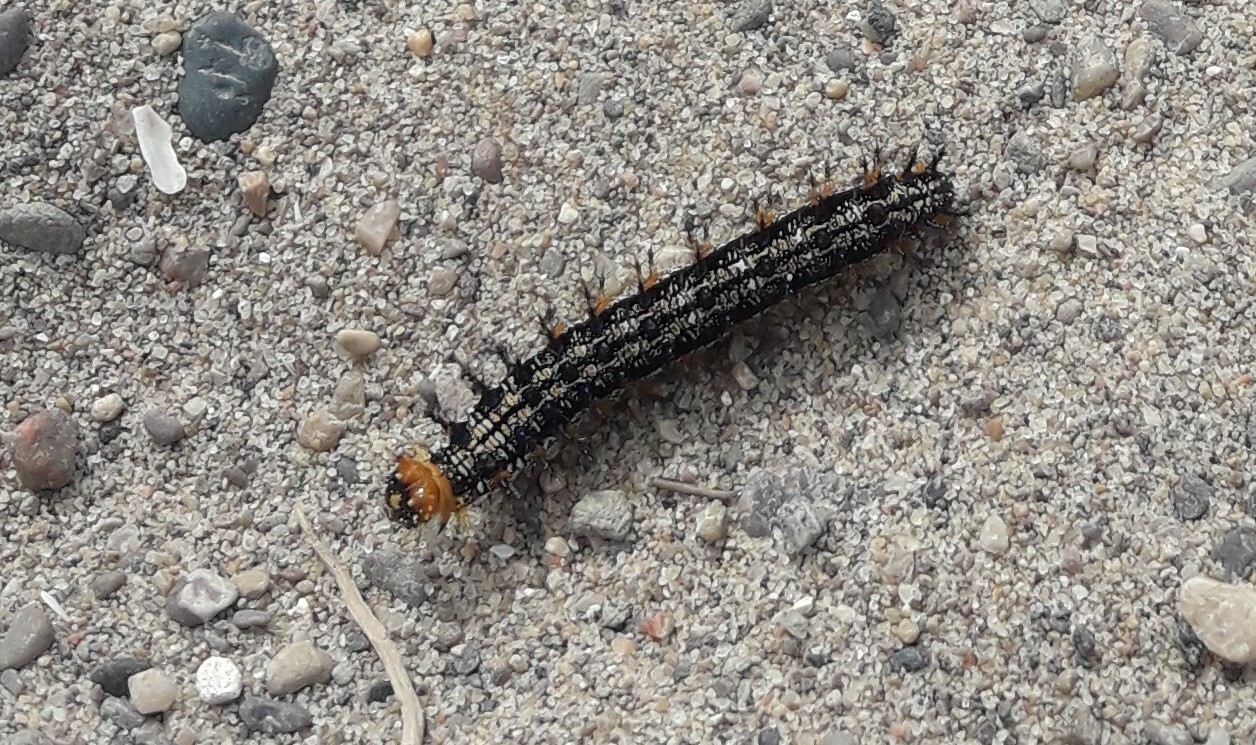
- Larva (Caterpillar): The caterpillars are typically dark-colored (black or brownish-black) with numerous branched spines covering their bodies. They often have subtle cream or orange markings. These spines, while visually sharp, are not stinging. They feed openly on their host plants.
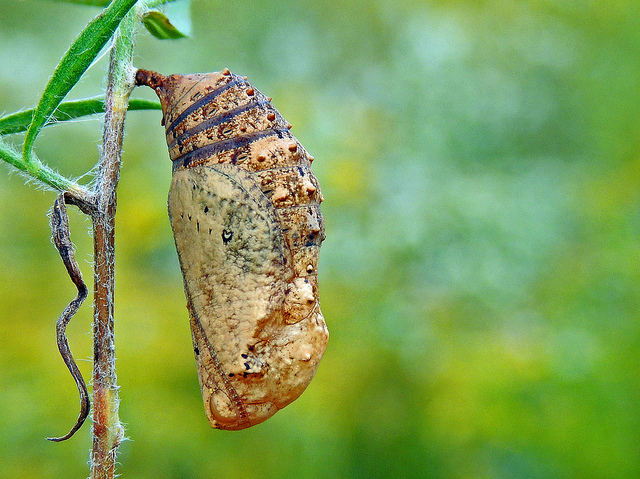
- Pupa (Chrysalis): Once fully grown, the larva forms a chrysalis that is usually light brown, green, or mottled, often resembling a dried leaf or twig. It is suspended upside down by a silken pad. The chrysalis can sometimes have a slightly metallic sheen.

- Adult: The vibrant adult butterfly emerges from the chrysalis. After allowing its wings to dry and harden, the common buckeye takes flight, ready to feed on nectar and reproduce. In most of its range, the common buckeye produces multiple broods per year (2-3, or more in warmer climates), allowing for a continuous presence throughout the warmer months. In northern parts of its range, it may migrate south for the winter, while in warmer regions, it can overwinter as an adult or pupa.
Host Plants and Nectar Sources: A Diet of Weeds and Wildflowers:
The caterpillars of the common buckeye are polyphagous, feeding on a variety of herbaceous plants, many of which are considered “weeds” by humans. This adaptability contributes greatly to the butterfly’s widespread success. Key host plants include members of the plantain, figwort, and snapdragon families:
- Plantains (Plantago species)
- Snapdragons (Antirrhinum species)
- Toadflax (Linaria species)
- False Foxglove (Agalinis species)
- Gerardias (Agalinis species)
- Ruellia (Ruellia species)
Adult butterflies are avid nectar feeders and are attracted to a wide array of flowering plants. They are important pollinators as they move from flower to flower. Some favored nectar sources include aster, chicory, knapweed, mints, verbena, and various garden flowers. They also frequently bask in the sun on bare ground, often near water sources.
Behavior and Ecology: Rapid Flight and Startle Display:
The common buckeye is known for its fast, erratic, and low-to-the-ground flight, often making it challenging to catch or closely observe. Males are territorial, perching on low vegetation or bare ground and aggressively chasing away other butterflies or insects that enter their territory.
The prominent eyespots on its wings are believed to serve as a defense mechanism, a form of “startle display” or “autotomimicry.” When a predator, such as a bird, attacks, the eyespots may mimic the eyes of a larger animal, startling the predator and giving the butterfly a chance to escape. Attacks are often directed at the eyespots, allowing the butterfly to survive with minor wing damage rather than a fatal body injury.
Conservation Status and Threats: A Resilient and Common Species:
The common buckeye is currently considered a common and widespread species throughout its extensive range and is not facing significant conservation threats. Its adaptability to various open habitats, its broad diet of readily available host plants, and its ability to produce multiple generations per year contribute to its resilience. While local populations can be affected by intensive land use or broad-spectrum pesticide use, the species as a whole remains robust.
A Glimmering Gaze in the Grasslands: The Enduring Charm of the Common Buckeye:
The common buckeye, with its striking eyespots, adaptable nature, and vibrant presence, is a familiar and cherished sight in the open landscapes of the Americas. Its remarkable patterns offer a lesson in evolutionary defense, while its ubiquitous presence reminds us of the beauty that thrives even in disturbed and common habitats. Encountering this energetic butterfly is a vibrant flash of life, a testament to the enduring charm of the natural world.
Discover more from
Subscribe to get the latest posts sent to your email.
 davethebugguy.org