
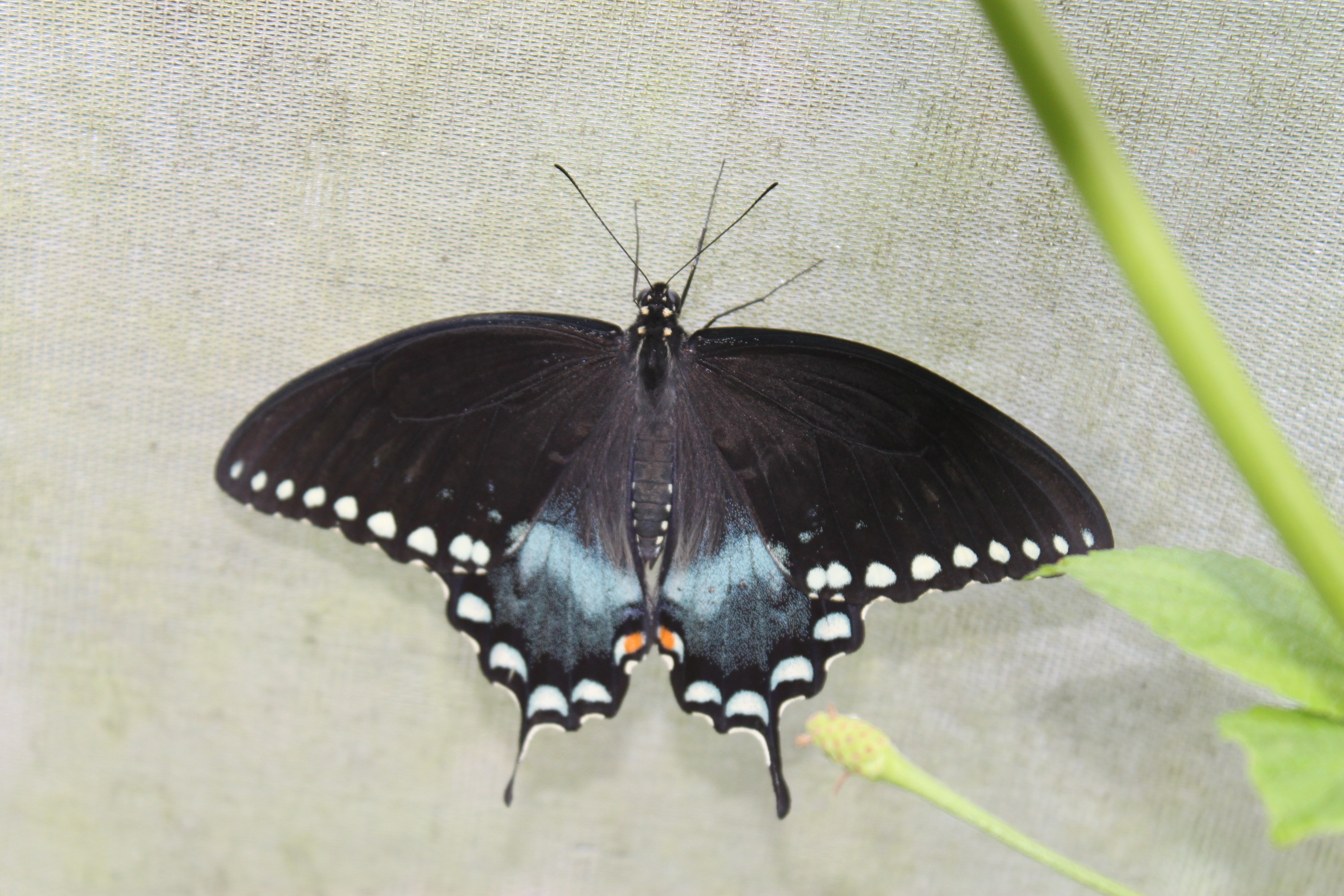
Gracefully gliding through the dappled sunlight of eastern North American woodlands, the spicebush swallowtail, scientifically known as Papilio troilus, is a butterfly of understated elegance and remarkable adaptations. Its velvety dark wings, often with iridescent blue or green highlights, and its distinctive flight pattern make it a beloved and frequently encountered resident of its native habitats.
A Study in Dark Sophistication: Appearance and Iridescence:
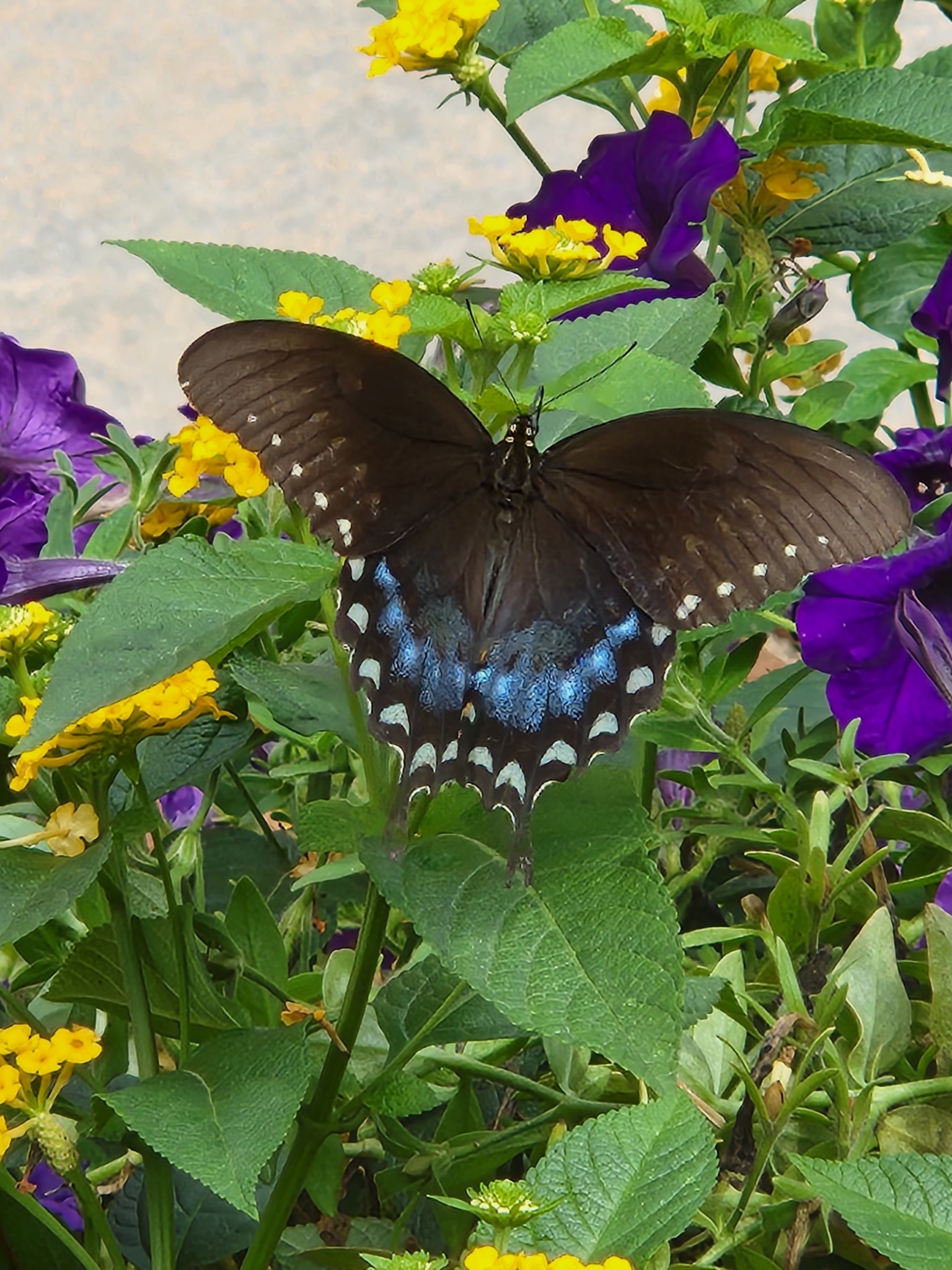
The spicebush swallowtail is a medium to large butterfly, typically boasting a wingspan of 3 to 4.5 inches (7.6 to 11.4 cm). The dorsal (upper) surface of its wings is predominantly a rich, velvety black or dark brownish-black. This dark background serves as a dramatic canvas for the species’ most captivating feature: a shimmering band of iridescent blue or blue-green scales on the hindwings, particularly prominent in males. Females often exhibit a more subdued blue iridescence or a row of distinct blue spots.
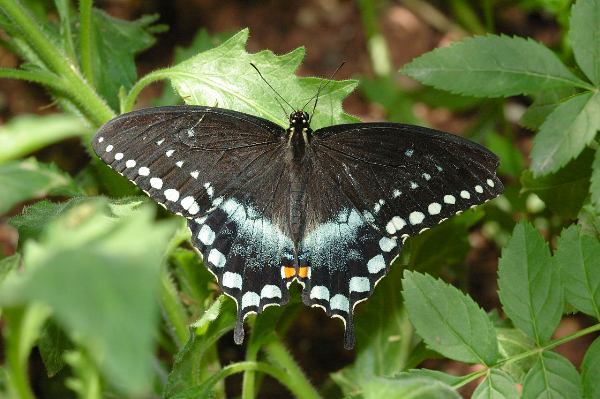
Both sexes feature a row of creamy-yellow spots along the outer margin of the forewings. The hindwings possess the characteristic swallowtail “tails” and a series of orange and blue spots along the inner margin. The ventral (underside) of the hindwings displays a more complex pattern of two rows of orange spots, with the inner row often partially bordered by blue. This intricate underside provides camouflage when the butterfly rests with its wings closed.
Distribution and Habitat: A Denizen of Humid Woodlands:
The spicebush swallowtail is widely distributed across the eastern United States, extending from southern Canada southward through Florida and westward into parts of the Great Plains, including eastern Texas and Oklahoma. It thrives in habitats characterized by the presence of its larval host plants, primarily members of the laurel family. Favored environments include moist deciduous woodlands, swamps, river valleys, open forests, and even suburban gardens and parks where spicebush or sassafras are present. Their preference for these environments reflects the distribution of their larval food sources.
Life Cycle: A Master of Disguise from Caterpillar to Chrysalis:
The life cycle of Papilio troilus follows the typical four stages of complete metamorphosis: egg, larva (caterpillar), pupa (chrysalis), and adult.
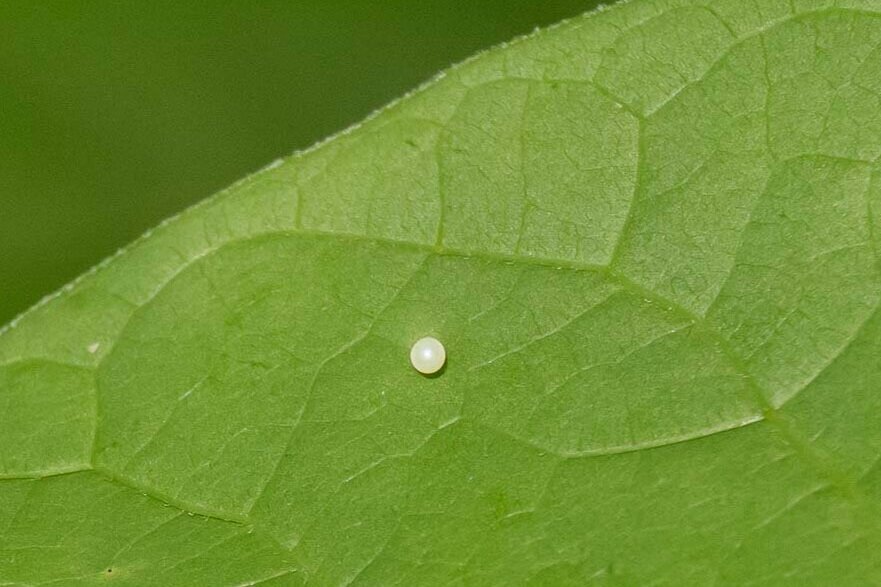
- Egg: The female spicebush swallowtail lays small, spherical, pale green or yellowish-white eggs singly on the undersides of young leaves of its host plants.

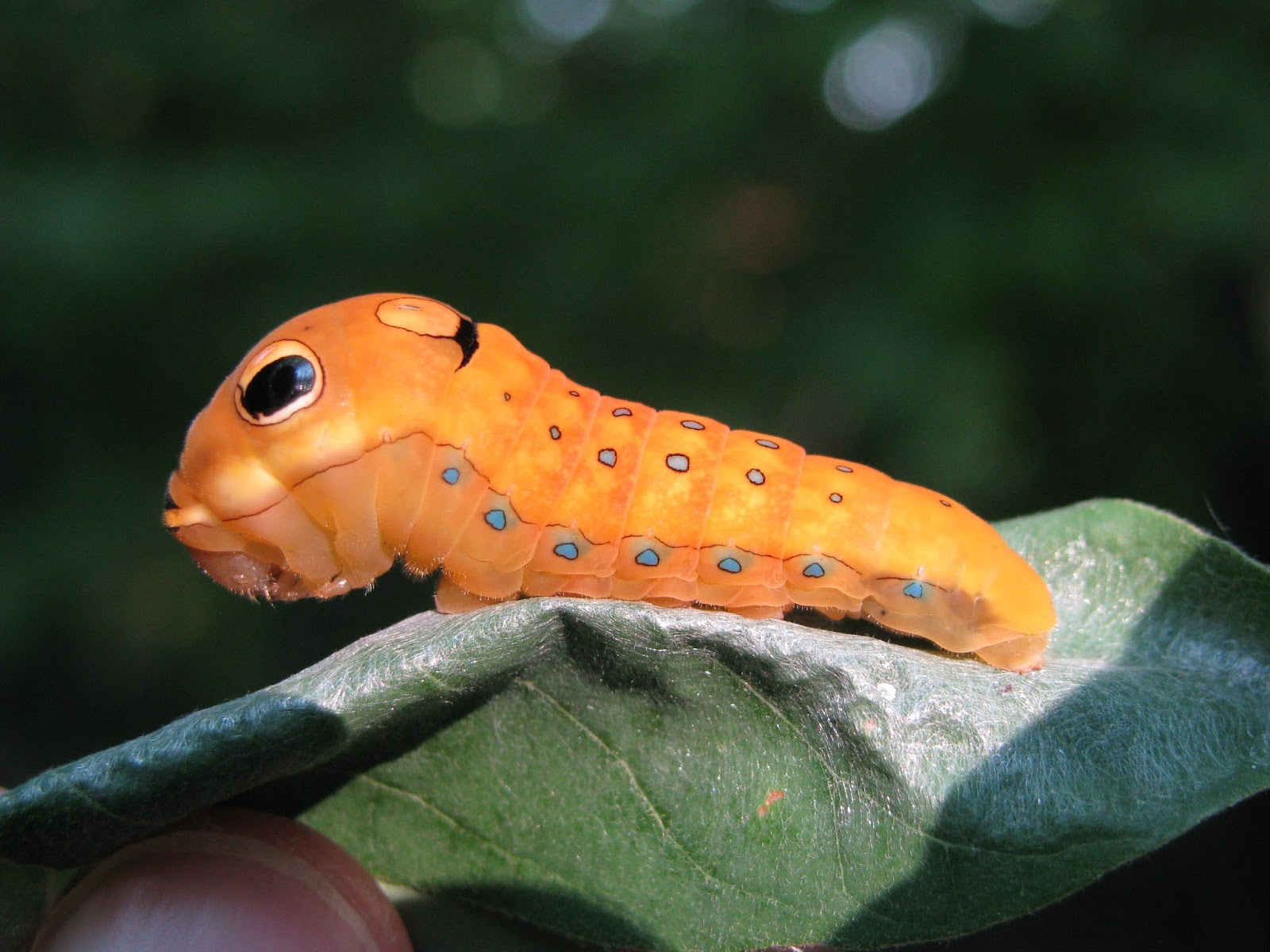
- Larva (Caterpillar): The caterpillars are renowned for their remarkable camouflage. Newly hatched larvae are brownish-black and resemble bird droppings. As they grow, they develop a vibrant green coloration with two large, prominent black and yellow “eyespot” markings on the thorax, giving them the appearance of a snake’s head. This mimicry is a strong deterrent to potential predators. They also construct a silk “shelter” by folding over a leaf of their host plant, providing a safe retreat. Like other swallowtail caterpillars, they possess an osmeterium, a fleshy, forked gland behind the head that emits a foul-smelling substance when the caterpillar is threatened.

- Pupa (Chrysalis): Once the larva is fully grown, it forms a chrysalis. The chrysalis is typically brown or green, perfectly mimicking a twig or dead leaf, attached to a stem or branch by a silken girdle and a cremaster. This exceptional camouflage helps it evade predators during its vulnerable pupal stage.
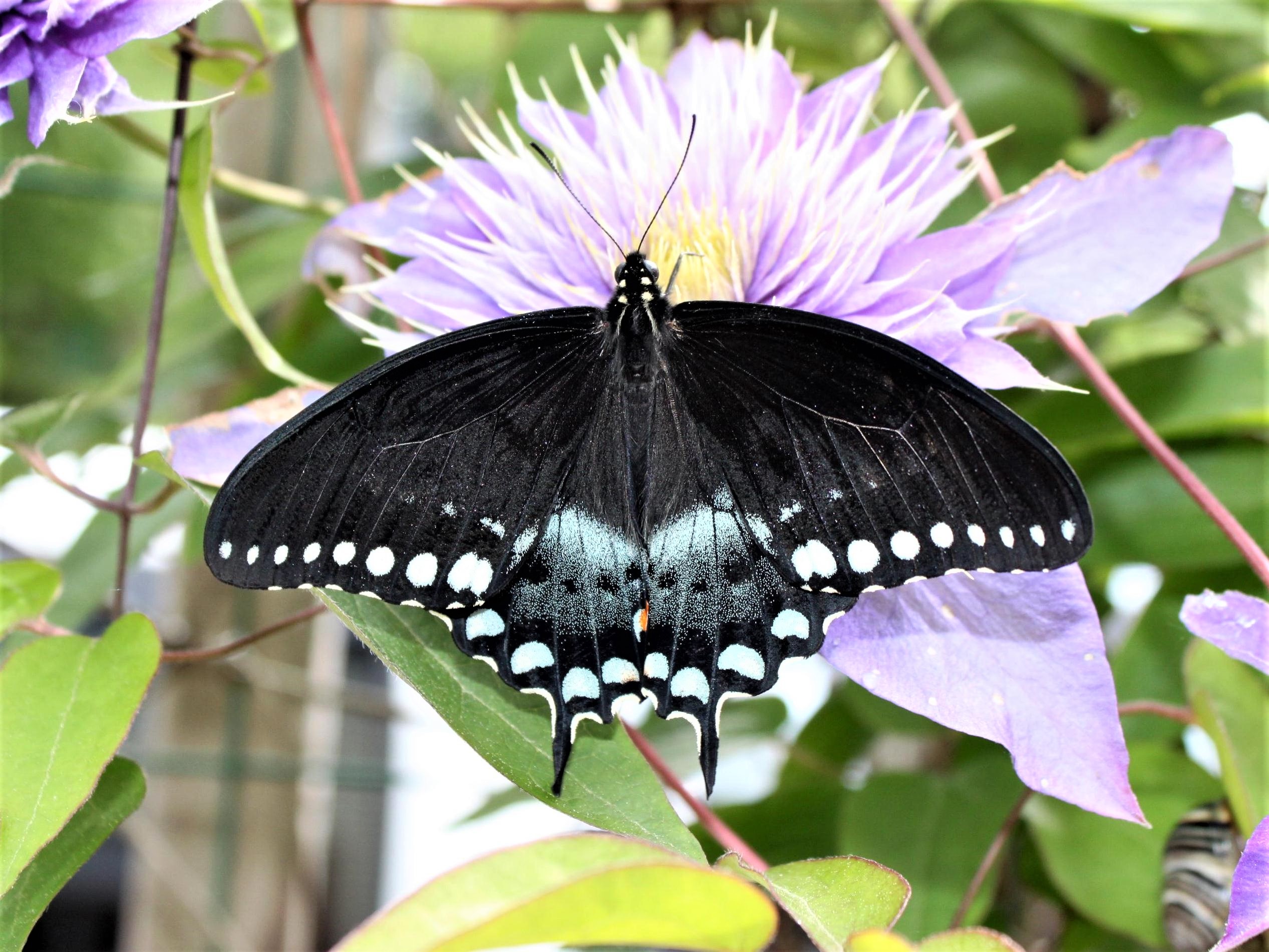
- Adult: Finally, the elegant adult butterfly emerges from the chrysalis. After allowing its wings to dry and harden, the spicebush swallowtail takes flight, ready to feed on nectar from various flowers and reproduce. In warmer regions, there can be two or three broods per year, allowing for a continuous presence of these beautiful insects throughout the warmer months.
Host Plants and Nectar Sources: A Specific Palate:
The survival of the spicebush swallowtail is intimately linked to its larval host plants, which are primarily members of the laurel family (Lauraceae) and some related species:
- Spicebush (Lindera benzoin)
- Sassafras (Sassafras albidum)
- Camphor Tree (Cinnamomum camphora) (in parts of its southern range)
- Sweetbay (Magnolia virginiana) (less common)
Adult butterflies are attracted to a wide variety of nectar-rich flowers, playing a role in pollination as they feed. They show a particular fondness for deep-throated flowers that accommodate their long proboscis. Some favored nectar sources include thistles, milkweeds, azaleas, dogbane, and various other wildflowers. They are also known to mud-puddle, drawing essential minerals from damp soil.
Behavior and Ecology: Gliding Flight and Opportunistic Feeding:
Spicebush swallowtails are known for their distinctive, gliding flight pattern, often soaring slowly through their woodland habitats before making rapid, erratic movements. Males frequently patrol areas near host plants in search of receptive females.
Their remarkable larval camouflage, combined with the osmeterium, provides effective defense against predation. The adult’s dark coloration and iridescent highlights also contribute to its survival, either by blending into shadows or by flashing its colors to startle a predator.
Conservation Status and Threats: Generally Secure, Yet Habitat Matters:
Currently, the spicebush swallowtail is a common and widespread species throughout most of its range and is not considered to be under significant threat. Its adaptability to suburban environments, where its host plants are often cultivated, contributes to its stability. However, localized habitat loss and degradation, particularly the destruction of moist woodland areas and the decline of its host plants, can still impact populations. Maintaining healthy forest ecosystems and promoting native plant diversity are key to ensuring the continued success of this elegant butterfly.

An Understated Gem of the Eastern Forests:
The spicebush swallowtail, with its sophisticated dark wings, flashes of iridescent blue, and a caterpillar that is a master of disguise, stands as a testament to the intricate beauty and evolutionary wonders of North American butterflies. Its presence enriches the diverse ecosystems of the eastern woodlands, offering a subtle yet profound reminder of the interconnectedness of life and the quiet majesty that graces our natural world.
Discover more from
Subscribe to get the latest posts sent to your email.
 davethebugguy.org