

Crawling with deliberate grace through the humid undergrowth of African forests is Archispirostreptus gigas, commonly known as the giant African millipede. As one of the largest millipede species in the world, this impressive invertebrate captivates with its immense size, segmented body, and a surprisingly gentle demeanor, making it a popular and fascinating subject in the world of entomology and exotic pets.
A Segmented Marvel: Imposing Size and Distinctive Features:
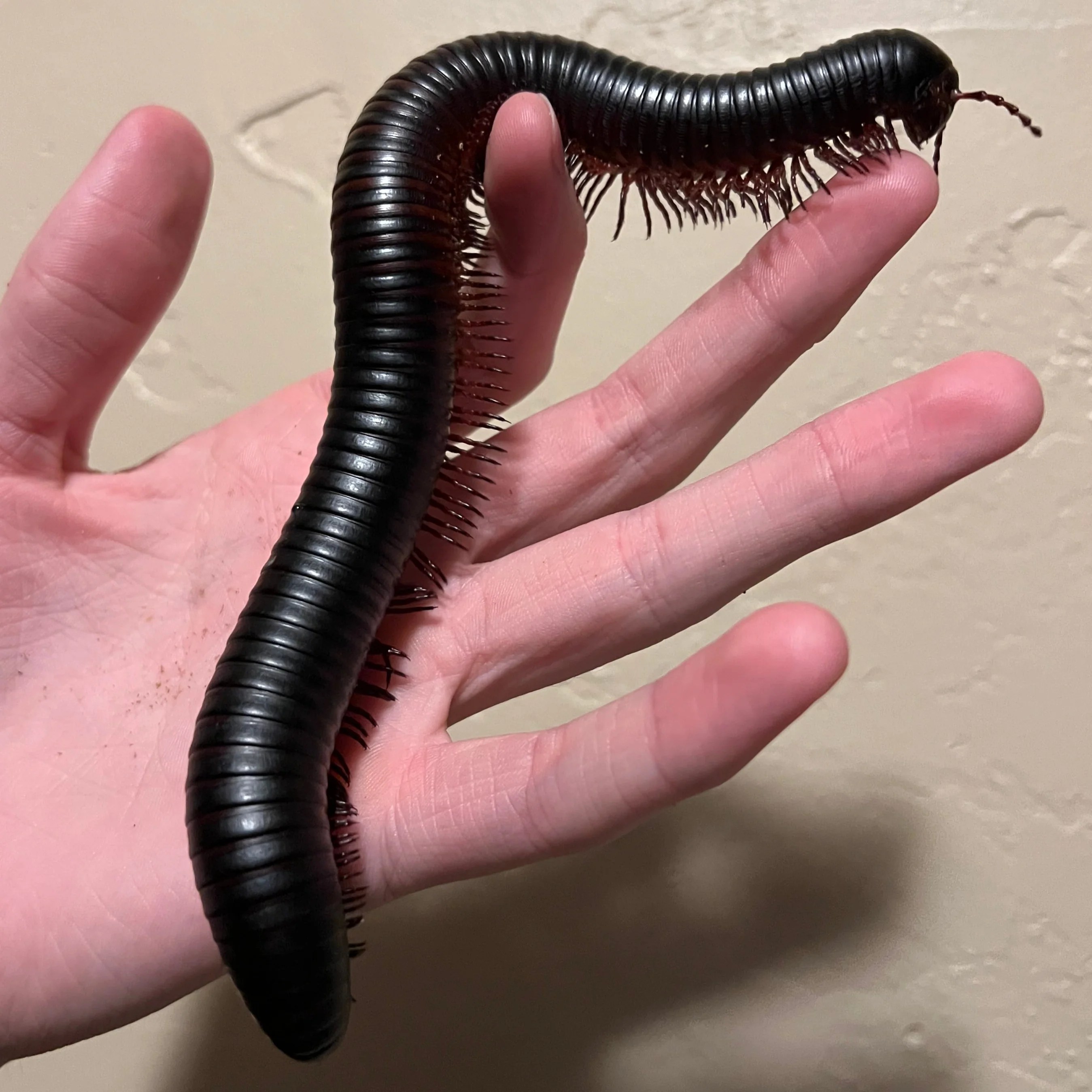
The giant African millipede lives up to its name, often reaching lengths of 7 to 15 inches (18 to 38 cm) and a thickness comparable to a human finger. Its body is composed of numerous hardened segments, typically ranging from 100 to 250, giving it a distinctly armored and elongated appearance. Each segment bears two pairs of legs, leading to the misleading “milli-pede” (thousand feet) moniker, though they possess hundreds, not thousands, of legs.
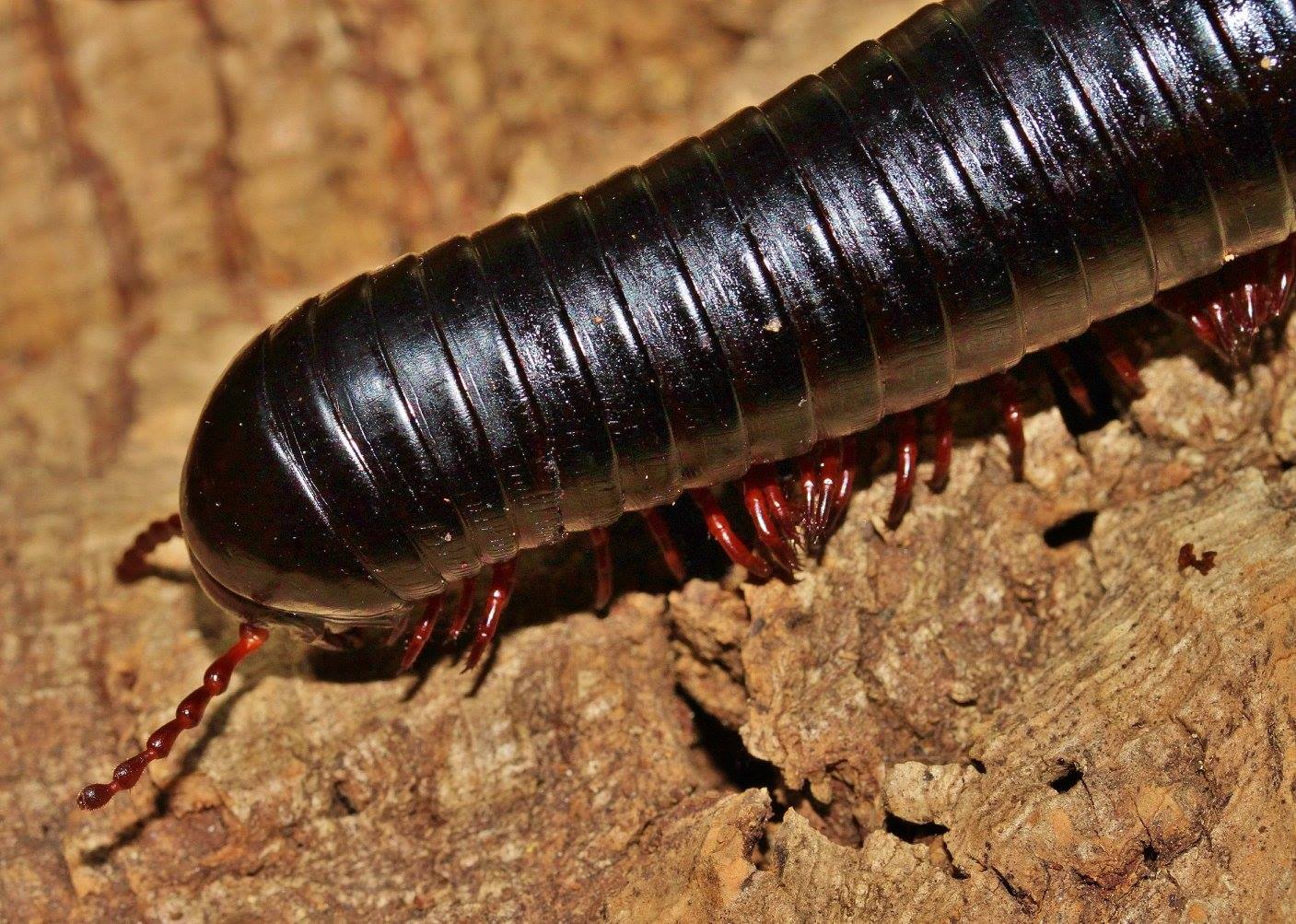
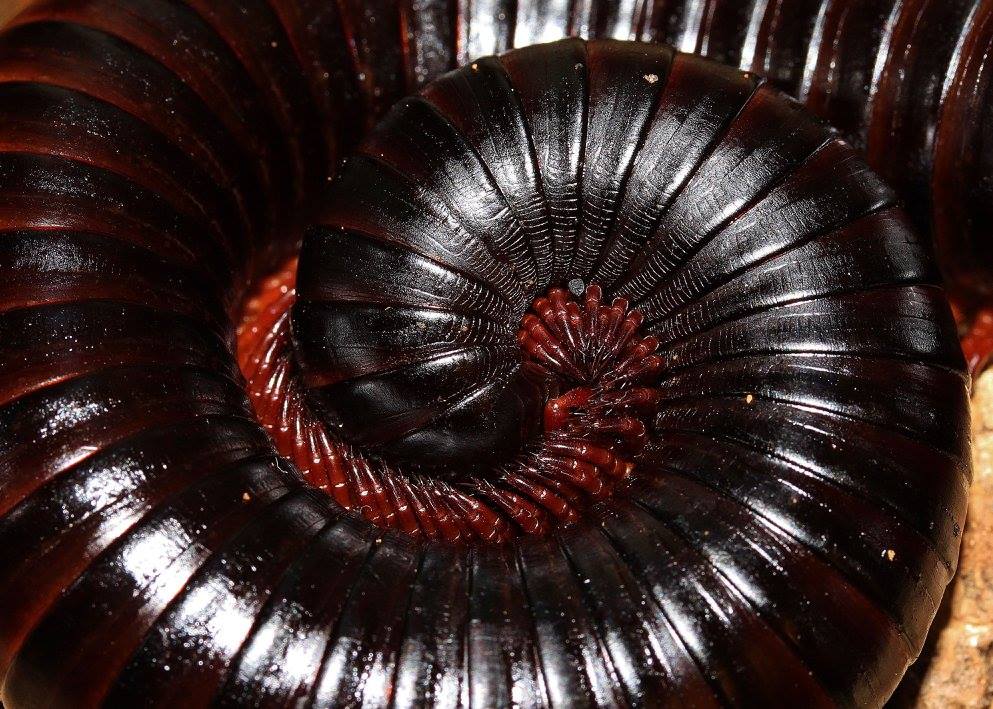
The exoskeleton is typically a glossy black, providing a striking contrast to the reddish or brownish legs and antennae. The head is relatively small, with short, clubbed antennae used for sensing its environment. While visually imposing, their movements are slow and deliberate, rolling into a tight spiral when threatened, which protects their vulnerable underside.
Distribution and Habitat: A Denizen of African Rainforests:
Archispirostreptus gigas is native to the tropical and subtropical regions of East Africa, specifically found in countries such as Kenya, Tanzania, and Uganda. It thrives in humid environments, typically inhabiting rainforests, savannas, and woodlands. These millipedes are primarily ground-dwellers, found amongst leaf litter, under decaying logs, beneath rocks, and in soft soil, where they can burrow to escape extreme temperatures and find food. Their preference for high humidity and decaying organic matter dictates their habitat choices.
Lifestyle and Behavior: Decomposers and Defensive Coiling:
Giant African millipedes are primarily detritivores, playing a crucial ecological role as decomposers. They feed mainly on decaying plant matter, such as dead leaves, rotting wood, and other organic debris, contributing significantly to nutrient cycling in their ecosystems. They also consume fungi and some fruits.
Despite their large size, A. gigas are entirely harmless to humans, possessing no biting or stinging capabilities. Their primary defense mechanism is to coil themselves into a tight spiral, protecting their soft underside with their hardened exoskeleton. If further disturbed, they may secrete an irritating liquid (often yellowish or brownish) containing quinones from pores along their body. This fluid can stain skin and is noxious to many predators, acting as a chemical deterrent. While generally peaceful, handling them might result in this secretion, which can be irritating if it gets into eyes or open wounds.

Life Cycle: A Slow and Steady Development:
The life cycle of Archispirostreptus gigas begins with eggs laid by the female in small nests or burrows within the soil.
- Egg: Females lay batches of small, whitish, spherical eggs in the substrate.
- Immature Stages: Once hatched, the tiny millipedes are initially whitish and have only a few segments and pairs of legs. As they grow, they undergo a series of molts, adding new segments and legs with each successive instar. This process can take several months to years for them to reach their full adult size. They gradually develop their darker coloration as their exoskeleton hardens.
- Adult: Adults can live for several years in optimal conditions, with lifespans in captivity often reaching 5-7 years, and sometimes longer. Their long lifespan and impressive size make them a fascinating subject for observation.
Ecological Role:
In their native habitats, giant African millipedes are vital components of the detrital food web. By breaking down decaying plant material, they help to recycle nutrients back into the soil, enriching it and making it available for new plant growth. This role is crucial for the health and productivity of forest ecosystems.
Conservation Status and Threats: Generally Stable, but Habitat is Key:
Archispirostreptus gigas is currently considered a relatively common species within its range and is not listed as endangered or threatened. However, like many forest-dwelling invertebrates, local populations can be impacted by habitat loss and degradation due to deforestation, agricultural expansion, and climate change affecting humidity levels. Sustainable collection practices for the pet trade are also important to ensure wild populations remain stable.

A Gentle Giant of the Soil: The Enduring Charm of the Giant African Millipede:
The giant African millipede, with its impressive size, segmented body, and crucial role as a decomposer, stands as a fascinating example of invertebrate life. Its docile nature and unique defense mechanisms make it an intriguing presence on the forest floor. Observing these gentle giants, diligently working to recycle nature’s debris, offers a compelling glimpse into the vital and often unseen processes that sustain our planet’s diverse ecosystems.
Discover more from
Subscribe to get the latest posts sent to your email.
 davethebugguy.org