
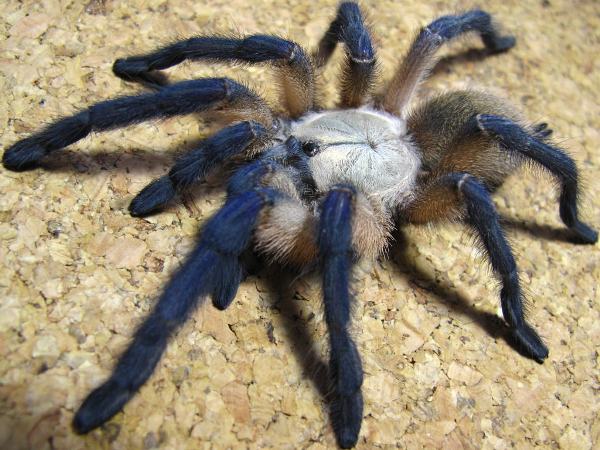
From the enigmatic and ancient island of Socotra, nestled in the Arabian Sea, hails a tarantula of exceptional beauty and fascinating social dynamics – Monocentropus balfouri, commonly known as the Socotra Island Blue Baboon or Socotra Blue Baboon. Revered in the arachnid hobby for its stunning coloration and communal living tendencies, this species offers a unique glimpse into the complex world of tarantulas.
A Jewel-Toned Display: Appearance and Distinctive Features:
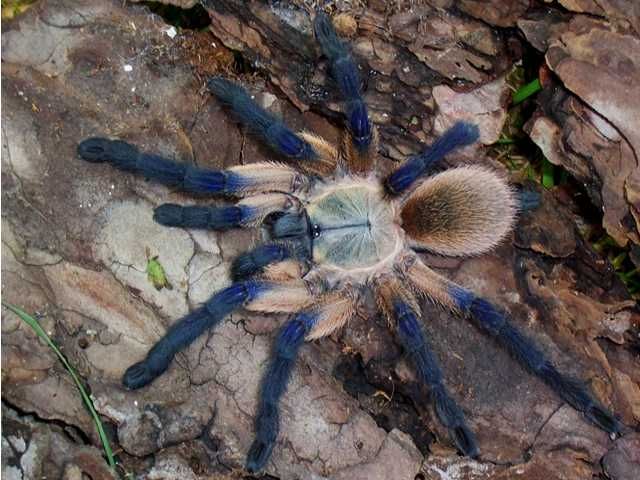
Monocentropus balfouri is a medium-sized tarantula, typically reaching a leg span of 4 to 6 inches (10 to 15 cm). Its most striking feature is its remarkable coloration. The legs are a vibrant, iridescent blue, often a deep sapphire or cobalt, especially prominent on the femurs and patellae. The carapace (the hard upper shell of the cephalothorax) ranges from a metallic blue-gray to a rich brown, often with a striking golden or coppery sheen, particularly around the fovea (a central indentation). The abdomen is typically a velvety brown or black, often covered with golden or reddish hairs.
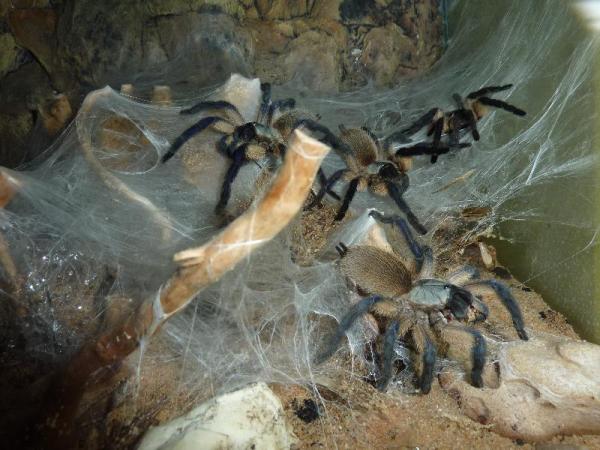
This captivating interplay of iridescent blues, metallic golds, and earthy browns creates a truly mesmerizing aesthetic, distinguishing it from many other tarantula species. Males tend to be slightly more slender and may exhibit more pronounced blue coloration when mature.
Distribution and Habitat: An Endemic Island Marvel:
Monocentropus balfouri is endemic to the remote and biodiverse Socotra Island, part of Yemen, located in the Arabian Sea. This isolation has led to the evolution of many unique species, and M. balfouri is a prime example. On Socotra, these tarantulas inhabit a range of semi-arid to arid environments, often found in rocky areas, under stones, or in crevices. They are burrowing tarantulas, excavating intricate silk-lined burrows that provide shelter from the harsh desert climate and serve as ambush points for prey. The island’s unique flora and fauna contribute to the distinct ecological niche occupied by this tarantula.
Lifestyle and Behavior: Communal Living and Defensive Instincts:
One of the most captivating aspects of Monocentropus balfouri‘s behavior is its tendency towards communal living, a relatively rare trait among tarantula species, particularly among Old World genera known for their more aggressive dispositions. While not strictly social, multiple individuals, often from the same egg sac, can coexist peacefully in large, interconnected webbed retreats, sharing burrows and even preying collectively on larger insects. This communal behavior is thought to be an adaptation to the challenging island environment, possibly offering advantages in resource acquisition or defense.

Despite their communal nature, M. balfouri are Old World tarantulas and are known for their defensive, fast, and often unpredictable nature. They do not possess urticating hairs (defensive bristles found on New World tarantulas) and instead rely on biting as their primary defense. Their venom, while not considered medically significant to healthy adult humans, can cause localized pain, swelling, and muscle cramps. Respect and caution are essential when observing or interacting with this species.
Life Cycle: From Egg Sac to Coexisting Adults:
The life cycle of Monocentropus balfouri begins with the egg sac, which the female diligently guards within her burrow. This sac can contain a substantial number of eggs, from which numerous spiderlings emerge.
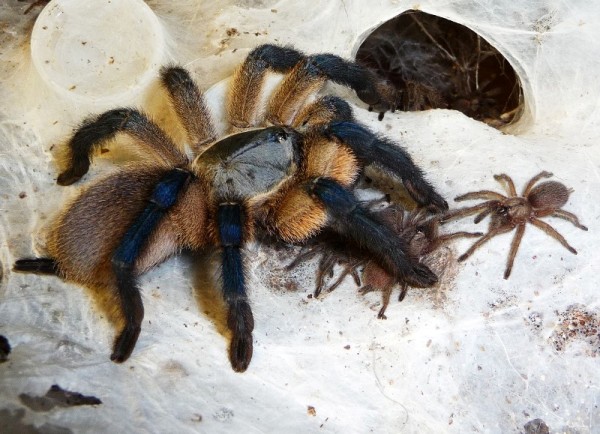
Once hatched, the spiderlings remain with the mother for a period, often coexisting peacefully with siblings as they grow. This communal phase can persist into adulthood, with multiple individuals occupying a shared web system. They undergo several molts (shedding of their exoskeleton) as they grow, gradually developing their vibrant adult coloration. Females of this species are known for their longevity, often living for over 10-15 years, while males typically have shorter lifespans, especially after reaching sexual maturity.
Ecological Role:
In their native Socotran ecosystem, Monocentropus balfouri plays a vital role as a terrestrial predator, helping to regulate insect and small invertebrate populations. Their burrowing habits also contribute to soil aeration and the cycling of nutrients within their arid habitat.

Conservation Status and Threats: A Unique and Vulnerable Island Species:
As an endemic species of a unique island ecosystem, Monocentropus balfouri faces inherent vulnerabilities. While specific conservation status information might be limited, general threats to Socotra’s biodiversity include habitat degradation and fragmentation due to human activities (e.g., development, overgrazing), climate change impacting rainfall patterns, and illegal collection for the exotic pet trade. Protecting its natural habitat on Socotra Island is paramount for the long-term survival of this remarkable tarantula.
A Gem from the Dragon’s Blood Isle: The Allure of Monocentropus balfouri
Monocentropus balfouri, the Socotra Island Blue Baboon, stands as a testament to the extraordinary biodiversity found in isolated ecosystems. Its stunning blue coloration, coupled with its fascinating communal behavior, makes it a highly prized species among arachnid enthusiasts and a compelling subject for scientific study. As we continue to unravel the mysteries of Socotra, this beautiful tarantula reminds us of the delicate balance of island ecosystems and the critical importance of preserving their unique inhabitants for generations to come.
Discover more from
Subscribe to get the latest posts sent to your email.
 davethebugguy.org