

Soaring with determined flight across continents, the red admiral, scientifically known as Vanessa atalanta, is one of the most widely recognized and globally distributed butterflies. With its striking black wings slashed by vivid orange-red bands, this bold and beautiful butterfly is a familiar sight in gardens, fields, and woodlands across the Northern Hemisphere, captivating observers with its distinctive patterns and impressive migratory journeys.
A Striking Banner of Black and Red: Appearance and Variation:
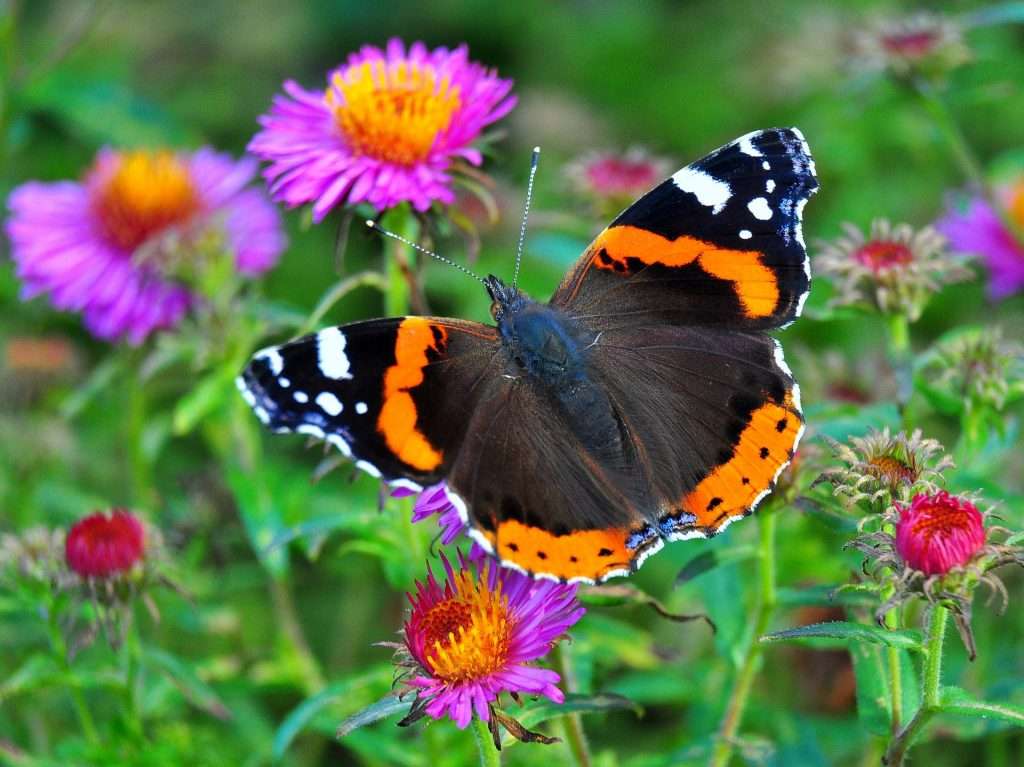
The red admiral is a medium-sized butterfly, typically boasting a wingspan of 1.7 to 2.5 inches (4.5 to 6.5 cm). Its dorsal (upper) wing surface is a dramatic canvas of deep velvety black. A prominent, fiery orange-red band diagonally crosses each forewing, extending from the costa (leading edge) towards the inner margin. The forewings also feature a series of crisp white spots near the apex. The hindwings display a broad, marginal orange-red band with a row of small black dots within it, and a few small blue spots near the anal angle.
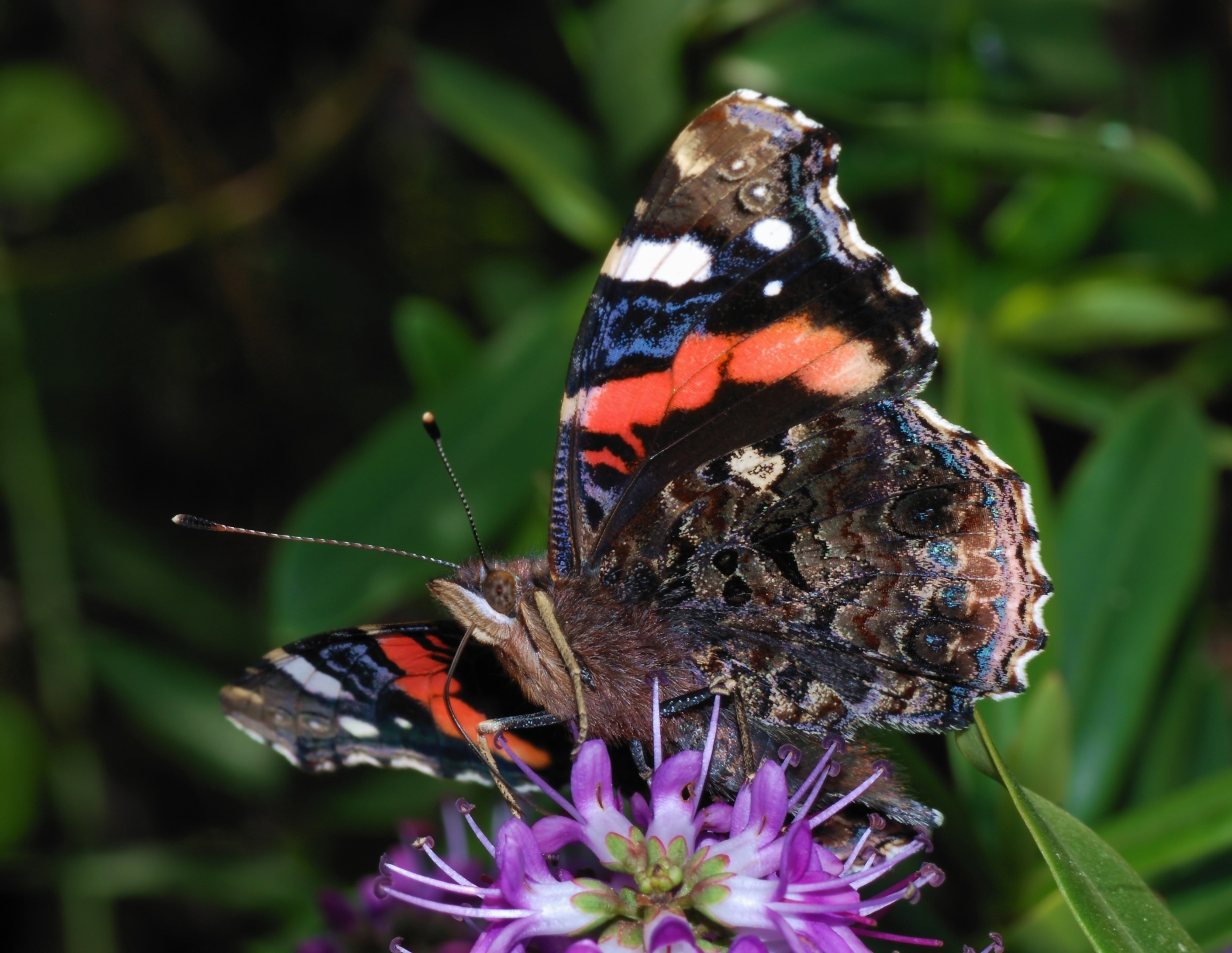
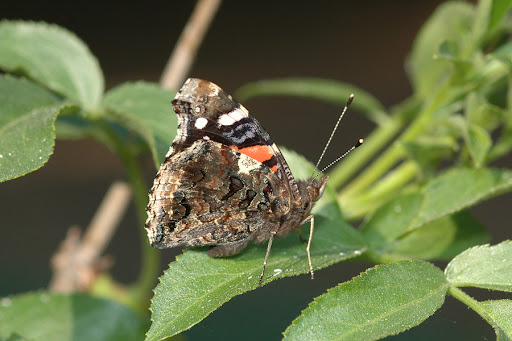
The ventral (underside) of the wings is a complex mosaic of mottled browns, grays, and blacks, providing excellent camouflage when the butterfly rests with its wings closed. The forewing underside mirrors the orange-red band and white spots of the upperside, while the hindwing underside is a cryptic blend of dark patterns, sometimes resembling bark or dead leaves. There is little sexual dimorphism, with males and females appearing very similar.
Distribution and Habitat: A Global Wanderer:
The red admiral is one of the most widespread butterflies in the world, found across much of the Northern Hemisphere, including temperate North America, Europe, Asia, and parts of North Africa. It is a highly adaptable species, thriving in a wide range of open to semi-open habitats. These include gardens, parks, meadows, fields, woodlands edges, forest clearings, urban areas, and even mountainous regions. Its global success is largely attributed to its broad diet of larval host plants and its strong migratory capabilities.
Life Cycle: A Journey of Metamorphosis and Migration:
The life cycle of Vanessa atalanta is characterized by its migratory patterns, with individuals often breeding continuously as they move between warmer and cooler regions.

- Egg: Females lay small, ribbed, pale green eggs singly on the upper surface of the leaves of its host plants.
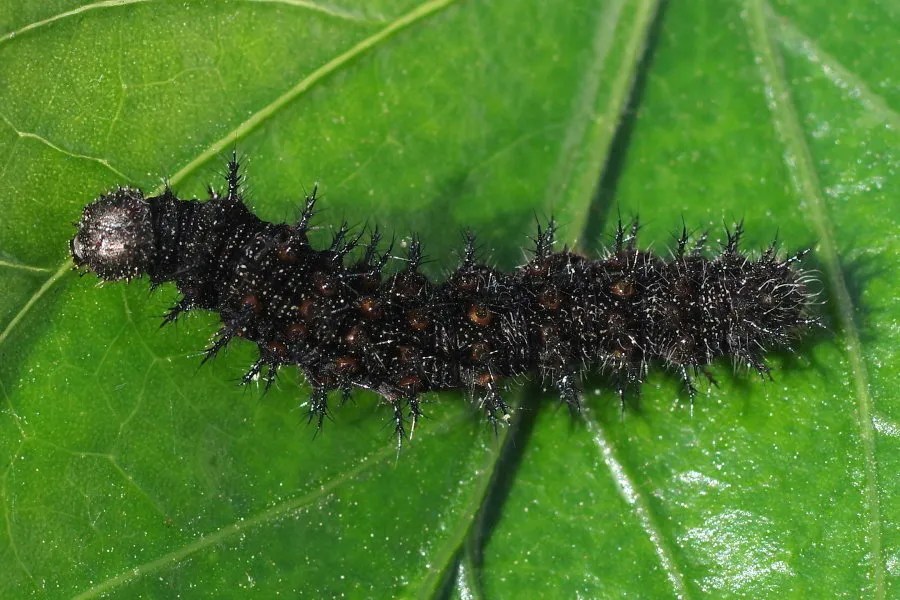
- Larva (Caterpillar): The caterpillars are variable in appearance, but typically dark-colored (black or brownish-gray) with numerous branched spines covering their bodies. They often have yellowish or whitish spots along their sides. They are solitary feeders, each caterpillar spinning a silk tent or rolling a leaf over itself for shelter while feeding.

- Pupa (Chrysalis): Once fully grown, the larva forms a chrysalis that is typically green, brown, or gray, often mottled to blend in with its surroundings. It is suspended upside down from a silken pad on a leaf or stem. The chrysalis sometimes has metallic gold or silver spots.

- Adult: The adult butterflies emerge, ready for their energetic flights. In many parts of its range, the red admiral is a strong migrant, flying northward from warmer overwintering grounds in the spring to recolonize northern territories. Multiple broods occur throughout the summer in these northern areas, with the final generation often migrating southward to overwinter in milder climates. In more temperate regions like the southern U.S. or Mediterranean Europe, adults may overwinter in sheltered locations.
Host Plants and Nectar Sources: A Preference for Nettles:
The caterpillars of the red admiral primarily feed on plants in the nettle family (Urticaceae). Key host plants include:
- Stinging Nettle (Urtica dioica)
- False Nettle (Boehmeria cylindrica)
- Parietaria (Parietaria officinalis and other Parietaria species)
- Hops (Humulus lupulus)
Adult butterflies are opportunistic feeders and are attracted to a wide variety of nectar sources from numerous flowering plants. They also show a strong preference for tree sap, rotting fruit, and even bird droppings, particularly when flowers are scarce. This varied diet contributes to their success across diverse landscapes.
Behavior and Ecology: Migratory Prowess and Territorial Displays:
The red admiral is known for its strong, rapid, and often erratic flight, making it a challenging subject to follow visually. Males are territorial, perching in sunny spots and aggressively defending their chosen areas from other butterflies and even small birds. They will chase intruders away before returning to their perch.
Their impressive migratory abilities allow them to exploit ephemeral resources and favorable conditions across vast geographical areas. While some populations overwinter as adults or pupae in milder climates, large-scale northward movements in spring and southward movements in fall are characteristic of the species, especially in cooler regions.

Conservation Status and Threats: A Resilient Generalist:
The red admiral is currently considered a common and widespread species throughout its extensive global range and is not facing significant conservation threats. Its adaptability to a wide range of habitats, its diverse host plant preferences, and its migratory capabilities contribute to its resilience. While local populations may fluctuate due to weather patterns or habitat changes, the species as a whole remains robust.
A Bold Stroke of Nature: The Enduring Charm of the Red Admiral:
The red admiral, with its striking black and red livery and its incredible migratory feats, stands as a testament to the adaptability and enduring beauty of the butterfly world. Whether seen basking on a sunny wall, fluttering through a garden, or embarking on a long journey, this resilient species provides a vivid splash of color and a reminder of the dynamic connections within our global ecosystems. Its presence is a common yet always welcome sight, a bold stroke of nature across the landscape.
Discover more from
Subscribe to get the latest posts sent to your email.
 davethebugguy.org