
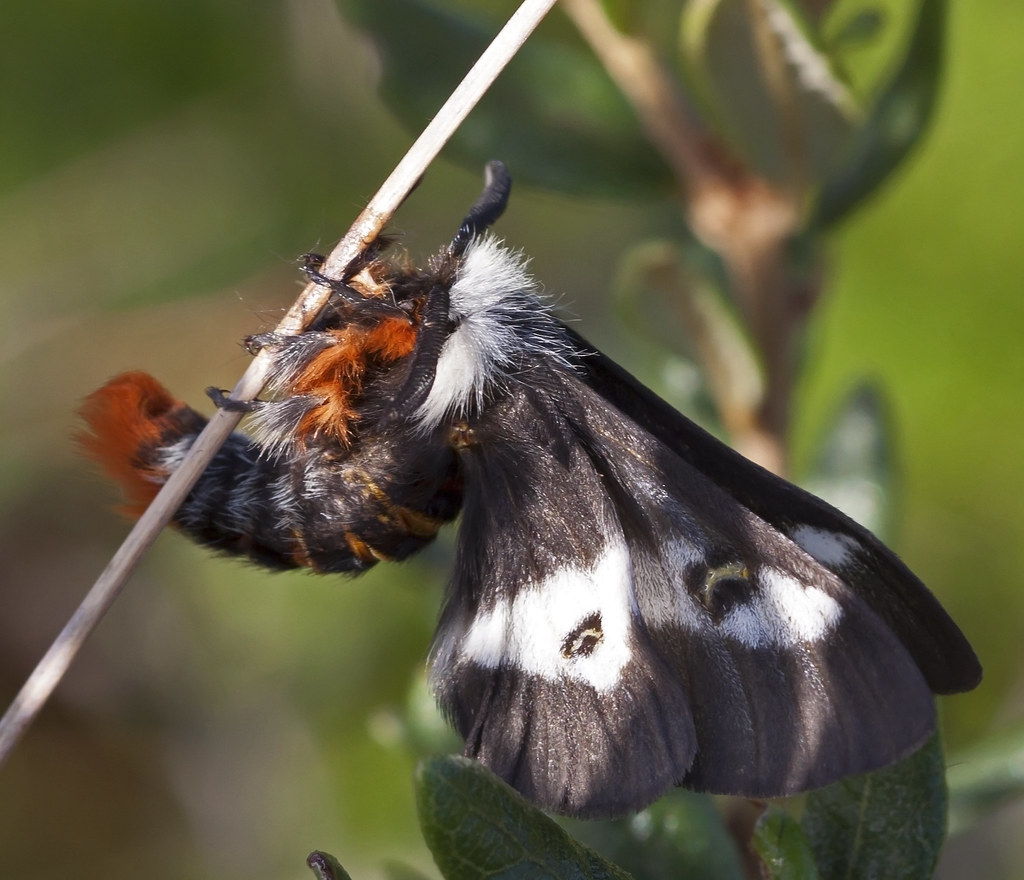
Darting through open woodlands, barrens, and sandy plains of eastern North America in the fall is the buck moth, scientifically known as Hemileuca maia. This striking day-flying moth, adorned with bold black and white patterns and vibrant red or orange markings, possesses a defense mechanism that demands respect: urticating (stinging) spines on its larvae. Its unique life cycle and aposematic coloration make it a fascinating subject of the autumnal landscape.
A Bold Banner of Black and White: Distinctive Appearance:
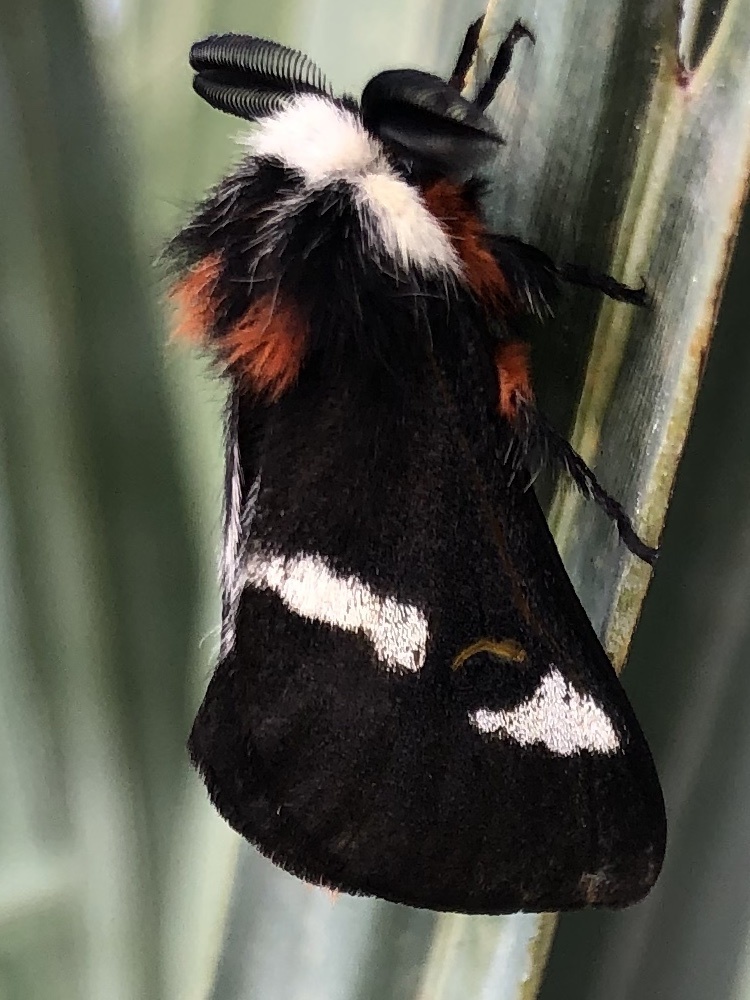
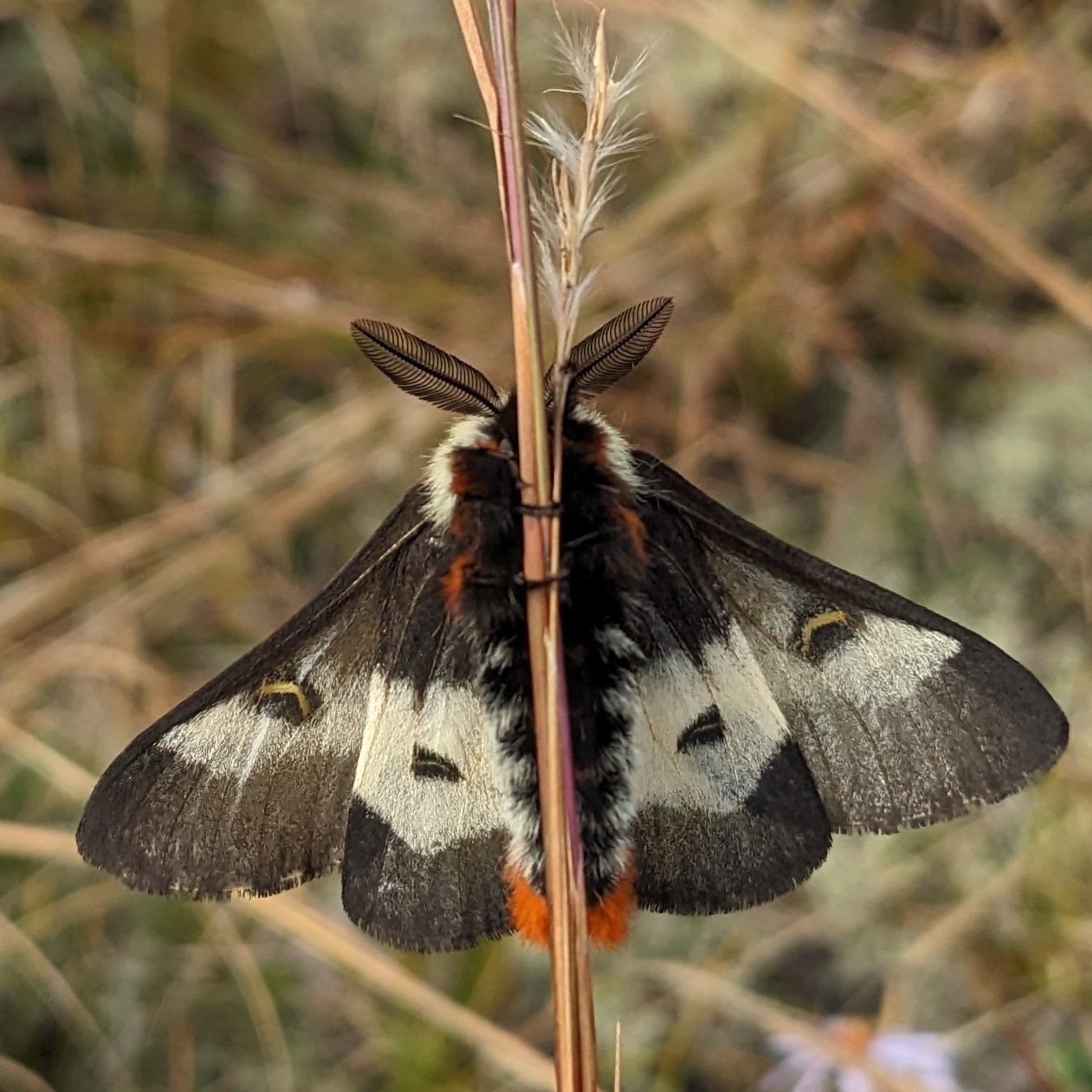
The buck moth is a medium-sized moth with a wingspan typically ranging from 2 to 3 inches (5 to 7.6 cm). Its wings are predominantly black, dramatically contrasted by crisp white veins that create a striking, almost net-like pattern. The wing margins are often fringed with white hairs. Adding a flash of color, the abdomen is usually banded with vibrant red or orange, a clear warning signal to potential predators. The legs are also covered in black and white hairs.
Males and females exhibit slight differences in appearance. Males typically have narrower wings and more pronounced white venation, while females tend to be larger and have a more robust body.
Distribution and Habitat: A Denizen of Open Landscapes:
The buck moth is primarily found in the eastern United States and southeastern Canada. Its distribution is somewhat patchy, often associated with specific habitat types such as oak savannas, pine barrens, sandy plains, and open woodlands where its larval host plants, primarily oaks, are abundant. This day-flying moth is often observed in sunny areas during its fall flight period.
Life Cycle: A Fall Flight and Overwintering Eggs:
The life cycle of Hemileuca maia is unique in that the adult moths emerge and are active primarily in the fall.
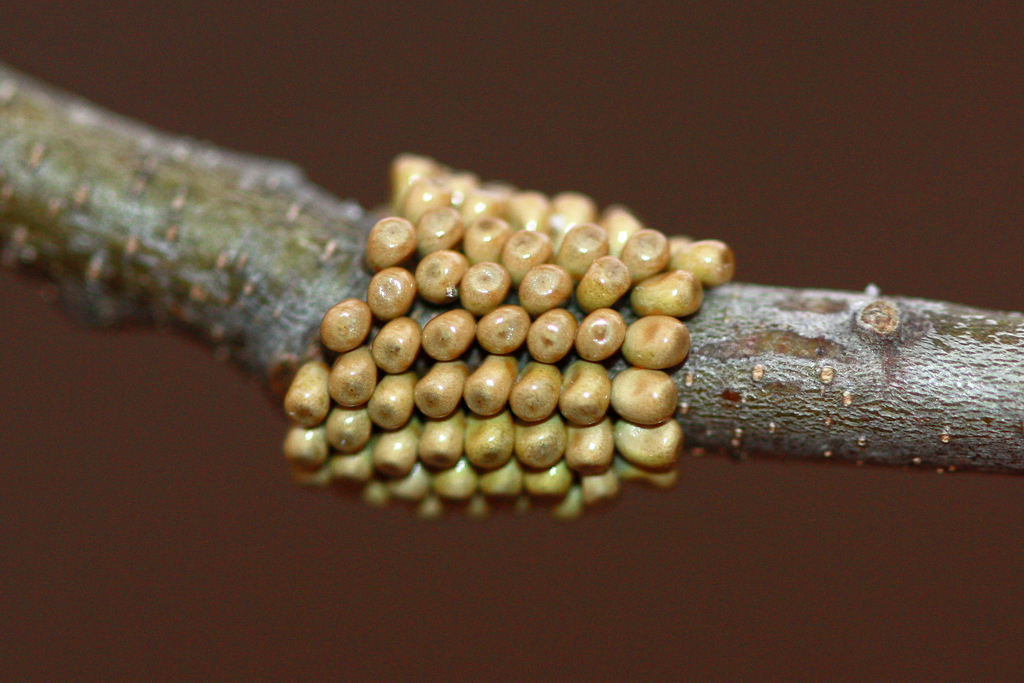
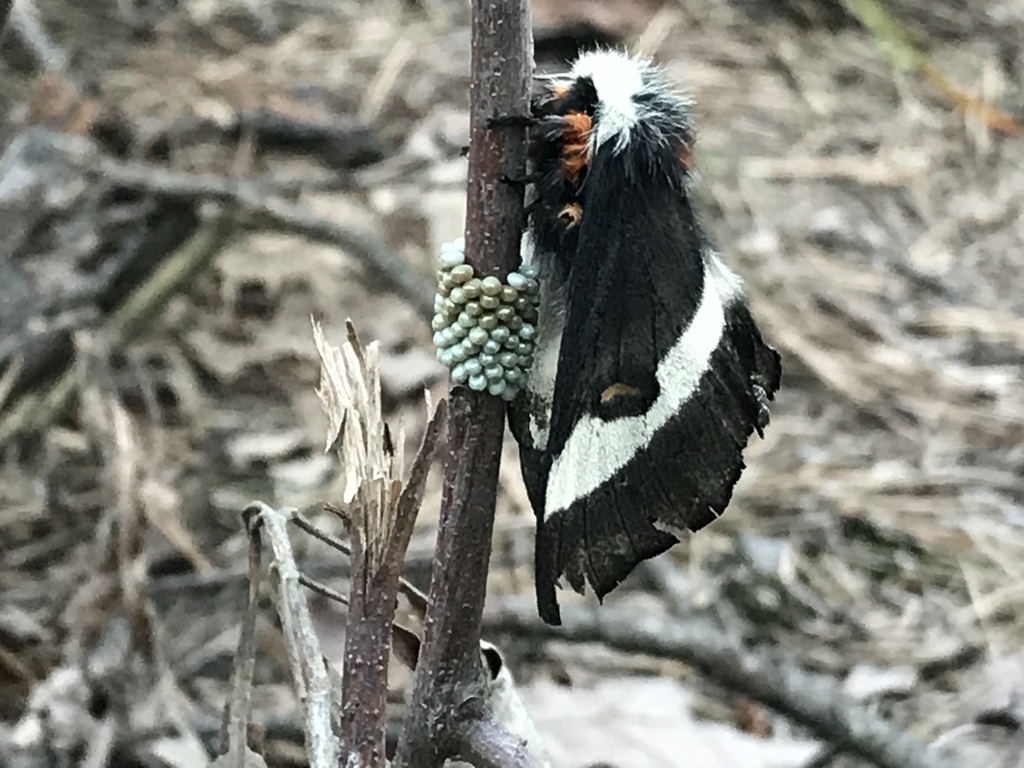
- Egg: Females lay clusters of dark-colored eggs in a ring-like fashion around the twigs of their host plants, typically various species of oak. These eggs overwinter, enduring the cold temperatures until the following spring.

- Larva (Caterpillar): The larvae hatch in the spring and are gregarious, feeding together in groups, especially during their early instars. They are dark-colored and covered in numerous branched spines that are capable of injecting an irritating venom upon contact, causing a painful sting and rash. As they mature, they may become more solitary. The coloration of the larvae can vary but often includes black with yellow or white markings. They feed voraciously on the leaves of their oak host plants.
- Pupa (Chrysalis): Once fully grown, the larva descends to the ground and pupates within a silken cocoon spun amongst leaf litter or just beneath the soil surface. The pupa is typically dark brown and relatively smooth.
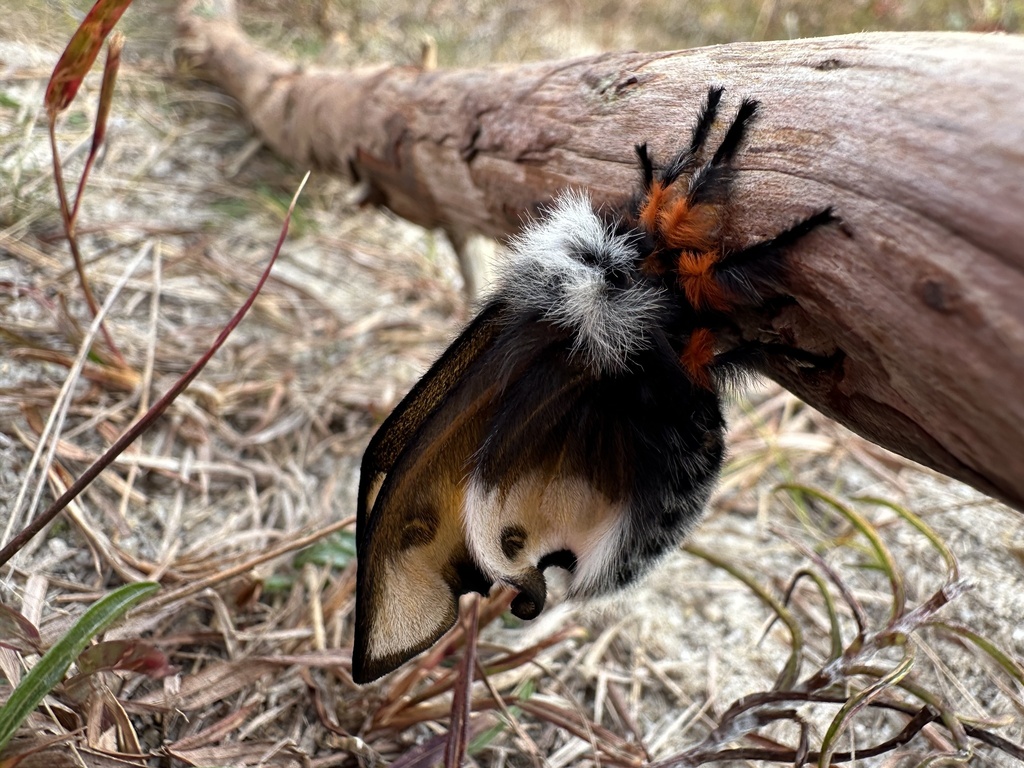
- Adult: The adult moths emerge in the fall, usually from September to November, depending on the geographic location and weather conditions. They are diurnal (active during the day), and their flight period is relatively short, focused entirely on mating and reproduction before the onset of winter.
Host Plants and Lack of Adult Feeding: An Oak Specialist:
The larvae of the buck moth are primarily oligophagous, meaning they feed on a limited range of host plants, primarily various species of oak (Quercus). Some common host plants include:
- Black Oak (Quercus velutina)
- Scarlet Oak (Quercus coccinea)
- Pin Oak (Quercus palustris)
- White Oak (Quercus alba)
The adult buck moths, like many other members of the Hemileucinae subfamily, lack functional mouthparts and do not feed. They rely entirely on the energy reserves accumulated during their larval stage for their short adult lives dedicated to reproduction.

Behavior and Ecology: Day Flight and a Painful Defense:
The buck moth’s diurnal flight period in the fall is a distinctive characteristic, setting it apart from many other large moths that are primarily nocturnal. Males actively fly in search of females, often in open, sunny areas.
The urticating spines of the larvae are a significant defense mechanism against potential predators, including birds and mammals. The painful sting serves as a strong deterrent, and the bold black and white coloration of the adults, coupled with the red or orange abdomen, likely acts as aposematism, a warning signal to predators that the insect is not palatable or may be dangerous.
Conservation Status and Threats: Habitat Specificity and Potential Vulnerabilities:
While the buck moth is not currently considered to be under significant threat rangewide, its somewhat patchy distribution and reliance on specific open oak habitats make it potentially vulnerable to habitat loss and fragmentation due to development, changes in land management practices, and fire suppression (as some of its open woodland habitats are maintained by fire). Monitoring populations and preserving its specific habitat requirements are important for its long-term conservation.
A Fall Flag of Warning: The Striking Buck Moth:
The buck moth, with its bold black and white wings, vibrant abdominal markings, and unique fall flight period, is a memorable inhabitant of eastern North American landscapes. Its dependence on oak trees and the stinging defense of its larvae highlight the intricate adaptations that allow species to thrive in specific ecological niches. Observing this striking day-flying moth in the crisp autumn air is a reminder of the diverse and sometimes formidable beauty of the natural world.
Discover more from
Subscribe to get the latest posts sent to your email.
 davethebugguy.org