
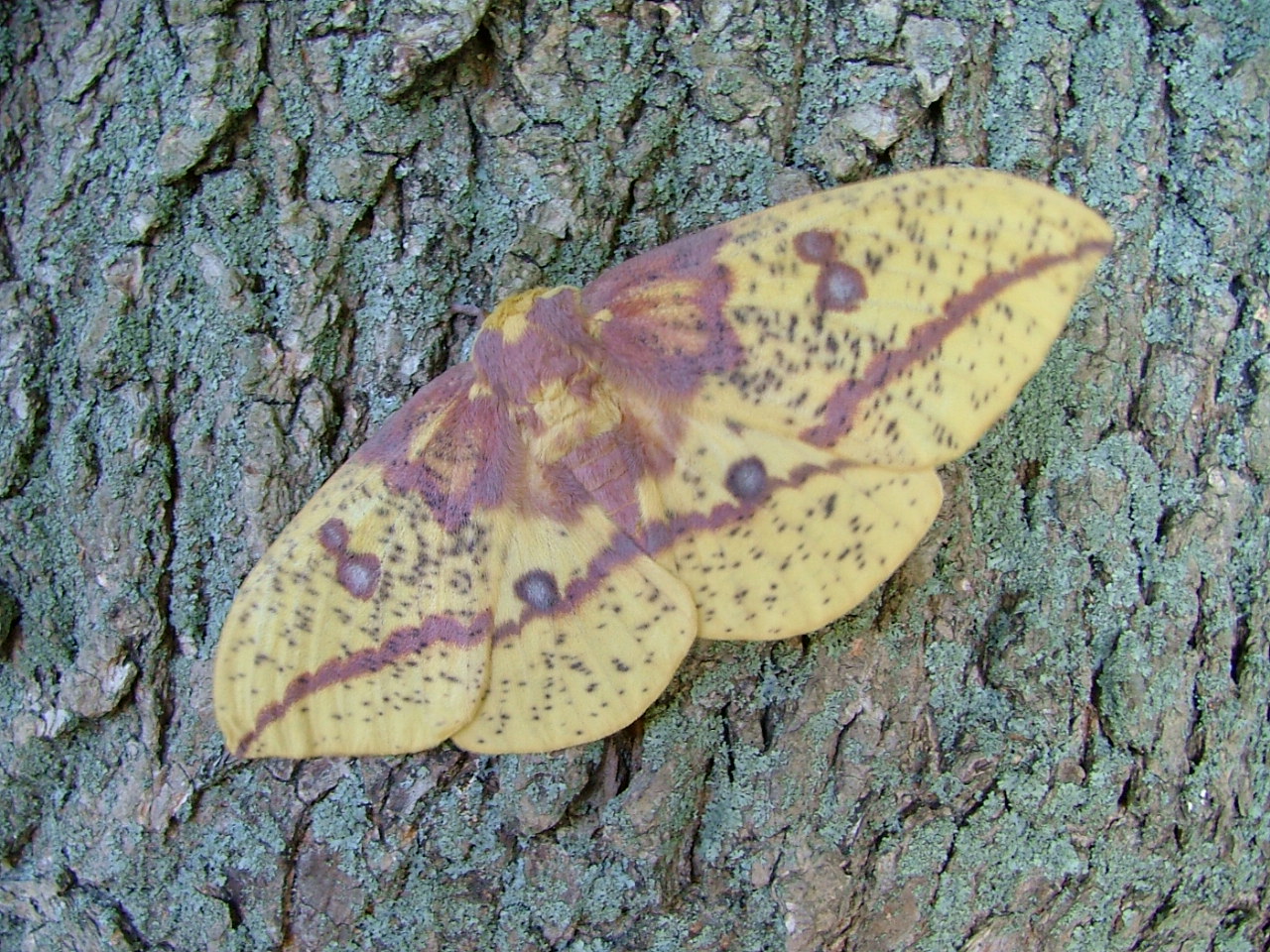
Drifting through the warm summer nights of eastern North America, the imperial moth, scientifically known as Eacles imperialis, commands attention with its impressive size and regal coloration. This magnificent member of the Saturniidae family, one of our largest silk moths, showcases a stunning tapestry of yellow ochre adorned with patterns of pink, red, and sometimes purple, truly living up to its majestic name.
A Coronation of Color: Striking Size and Pattern:
The imperial moth is a substantial insect, boasting a wingspan that can range from 4 to 7 inches (10 to 18 cm), with females typically being larger than males. Its base wing color is a rich yellow ochre, providing a vibrant canvas for the intricate network of markings that overlay it. These patterns consist of irregular lines and blotches in shades of pink, red, and sometimes deep purple or brown. The intensity and distribution of these darker colors can vary considerably between individuals, leading to a beautiful array of unique appearances within the species.
The forewings often exhibit a prominent discal spot (a central marking), which can be kidney-shaped or irregular and is usually outlined in a darker color. The wing margins are typically scalloped, adding to the moth’s ornate appearance. The body is stout and covered in yellowish-orange hairs, complementing the overall warm tones of the wings.
Distribution and Habitat: A Resident of Eastern Woodlands:
The imperial moth is primarily found in the eastern United States and southeastern Canada, its distribution generally following the range of its diverse larval host plants. It inhabits deciduous forests, mixed woodlands, pine barrens, and even suburban areas with suitable tree cover. Its presence is often associated with mature forests and areas with a rich diversity of broadleaf trees.
Life Cycle: A Transformation Among Diverse Foliage:
The life cycle of Eacles imperialis follows the typical four stages of complete metamorphosis for silk moths: egg, larva (caterpillar), pupa (chrysalis), and adult.

- Egg: Females lay large, yellowish-brown, oval eggs singly or in small groups on the leaves of their host plants.
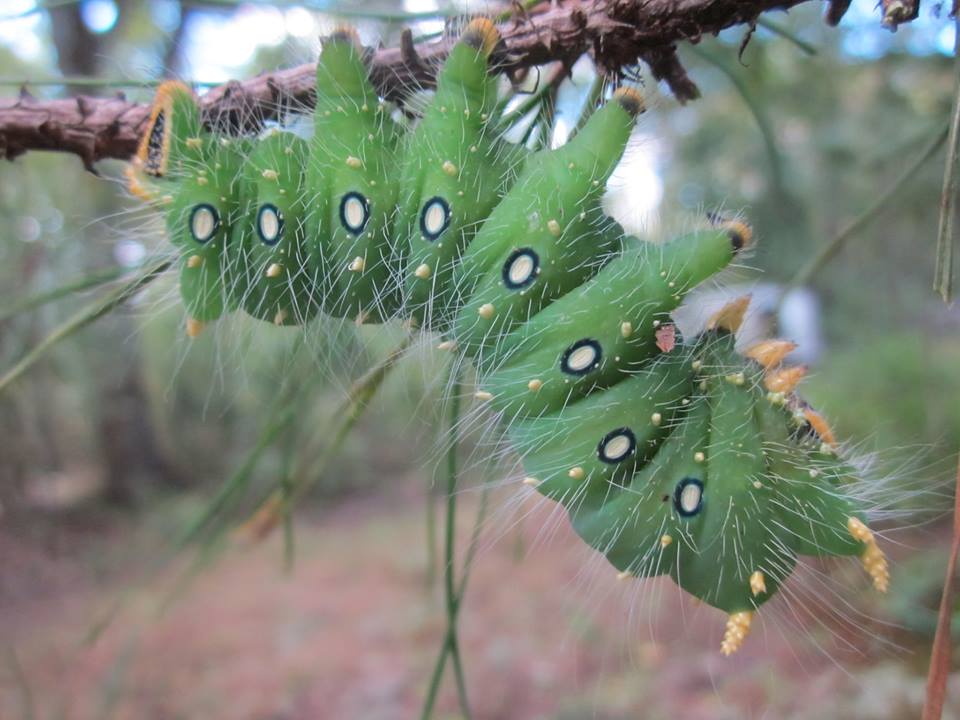
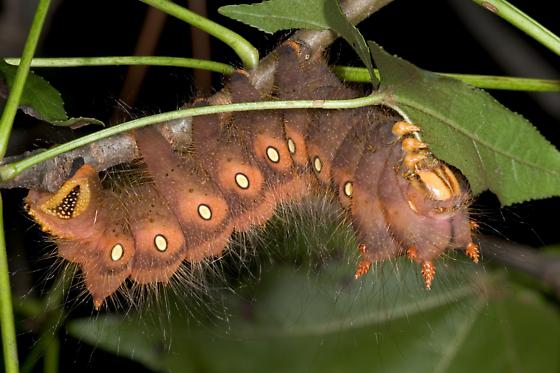
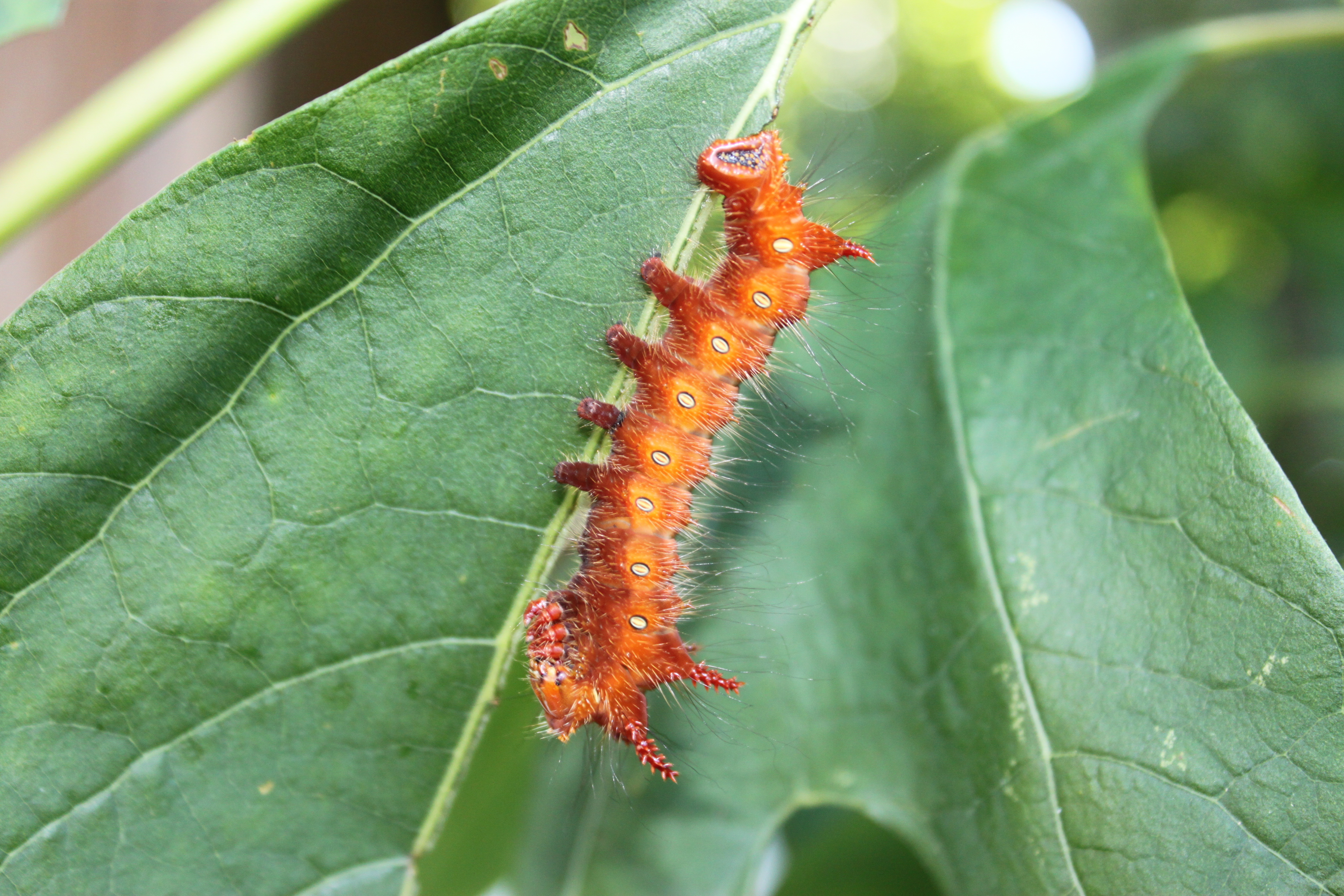
- Larva (Caterpillar): The larvae of the imperial moth are striking and variable in appearance. They go through several instars, and their coloration can range from yellow-green to brown or even reddish-brown. They are characterized by long, fleshy scoli (projections) along their bodies, which can be quite prominent and even spiny in some color phases. Different color morphs may be associated with the specific host plant they are feeding on. Mature larvae are large and robust.
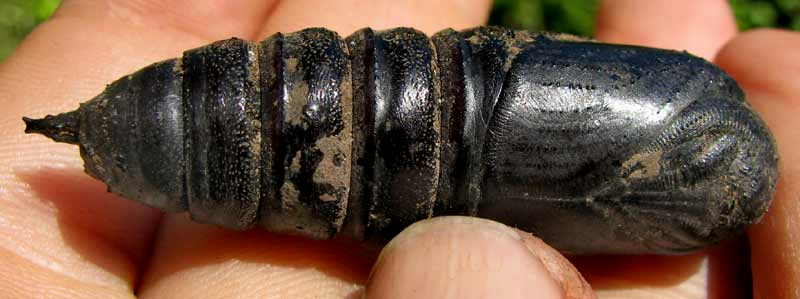
- Pupa (Chrysalis): Once fully grown, the larva burrows into the soil or leaf litter at the base of the host tree to pupate. Unlike many other silk moths that spin silken cocoons above ground, the imperial moth forms a pupa within an earthen cell. This subterranean pupation provides protection during the overwintering period in colder climates.
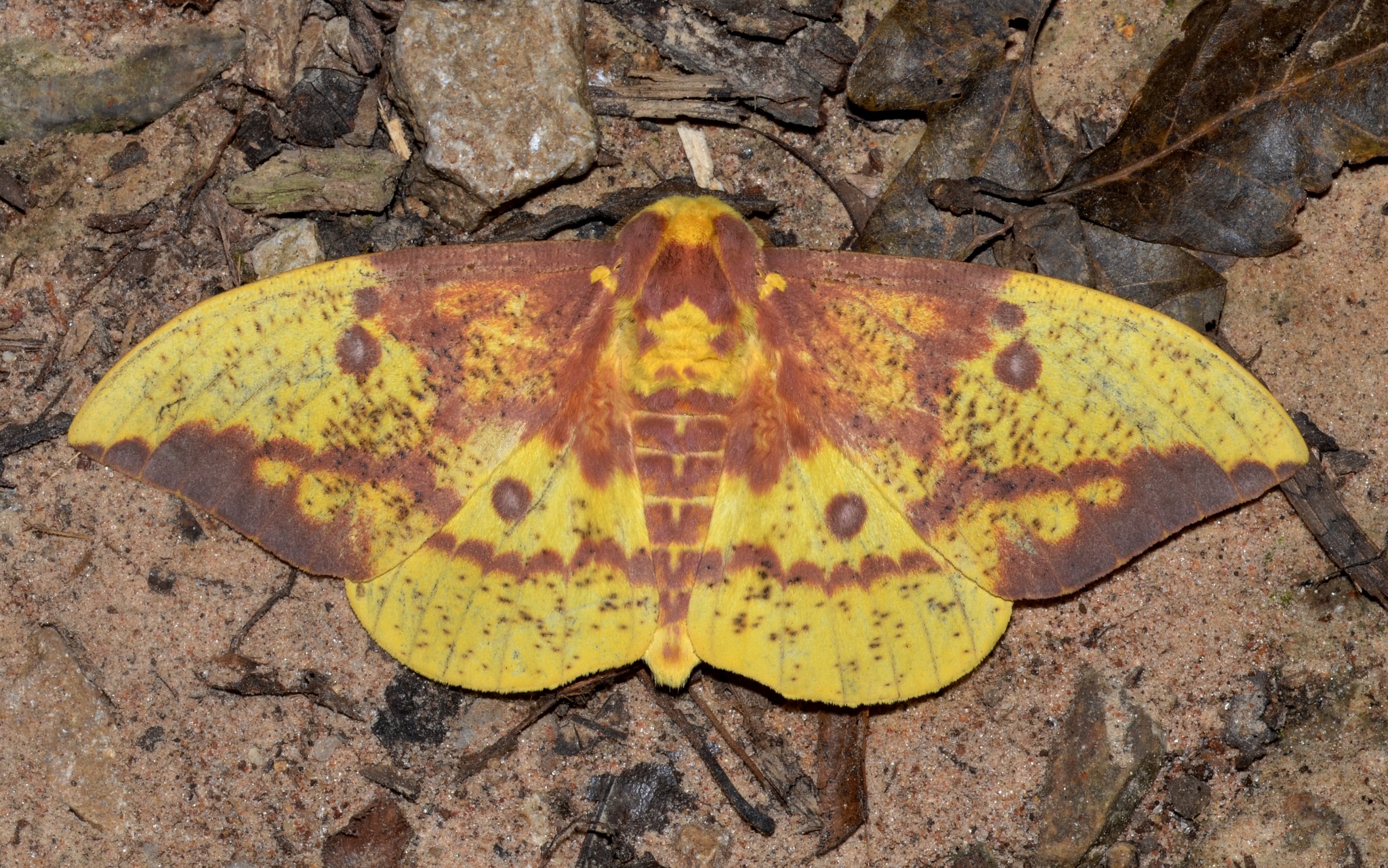
- Adult: The magnificent adult moths typically emerge in the summer months. As with other members of the Saturniidae family, the adult imperial moth lacks functional mouthparts and does not feed. Their primary purpose is to find a mate and reproduce. Males are attracted to the pheromones released by females, often over long distances, using their large, feathery antennae.
Host Plants and Lack of Adult Feeding: A Generalist Eater:
The caterpillars of the imperial moth are remarkably polyphagous, feeding on a wide variety of deciduous and coniferous trees. This broad diet contributes to their wide distribution. Some of their recorded host plants include:
- Pine (Pinus species)
- Oak (Quercus species)
- Maple (Acer species)
- Birch (Betula species)
- Sassafras (Sassafras albidum)
- Sweetgum (Liquidambar styraciflua)
- Hickory (Carya species)
- Walnut (Juglans species)
The adult imperial moths, like their relatives, do not feed and rely entirely on the energy reserves accumulated during their larval stage. Their adult lifespan is relatively short, dedicated to the essential act of reproduction.
Behavior and Ecology: Nocturnal Majesty and Subterranean Rest:
The imperial moth is primarily nocturnal, with adults taking flight at dusk and during the night. They are often attracted to lights. During the day, they typically rest with their wings spread, often well-camouflaged against tree bark or foliage.
The subterranean pupation is a notable aspect of their life cycle, providing insulation and protection during the colder months. The emergence of the adults in the summer coincides with favorable conditions for mating and egg-laying.

Conservation Status and Threats: Habitat Preservation is Key:
While the imperial moth is not currently listed as endangered or threatened across its entire range, habitat loss due to deforestation, urbanization, and changes in forest composition can impact local populations. The use of broad-spectrum pesticides can also pose a threat to these and other large moths. Maintaining healthy and diverse forest ecosystems is crucial for the long-term survival of this majestic species.
A Golden Banner of the Night: Encountering the Imperial Moth:
The imperial moth, with its impressive size and stunning array of yellow and reddish hues, is a true spectacle of the eastern forests. Its adaptability to a wide range of host plants contributes to its distribution, while its subterranean pupation sets it apart from many other silk moths. A chance encounter with this regal creature of the night is a memorable experience, a glimpse into the grandeur and beauty of the natural world.
Discover more from
Subscribe to get the latest posts sent to your email.
 davethebugguy.org