

Floating through the twilight of deciduous woodlands across North America is the breathtaking Polyphemus moth, scientifically known as Antheraea polyphemus. This magnificent giant silkmoth, named after the cyclops Polyphemus from Greek mythology due to the striking eyespot on each of its hindwings, captivates observers with its large size, delicate coloration, and the ethereal transparency of its wing windows.
A Symphony of Soft Colors: Size and Distinctive Markings:
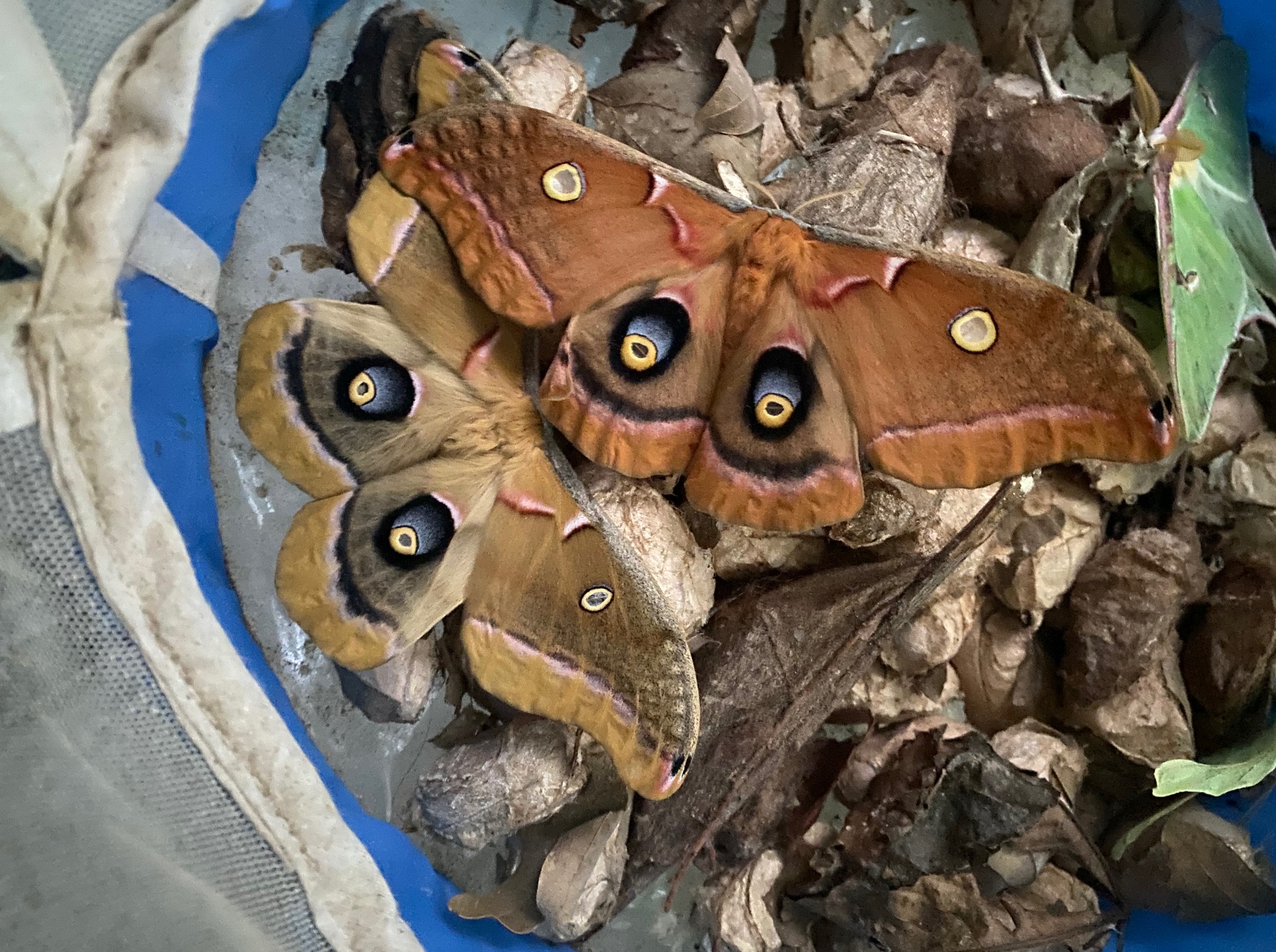
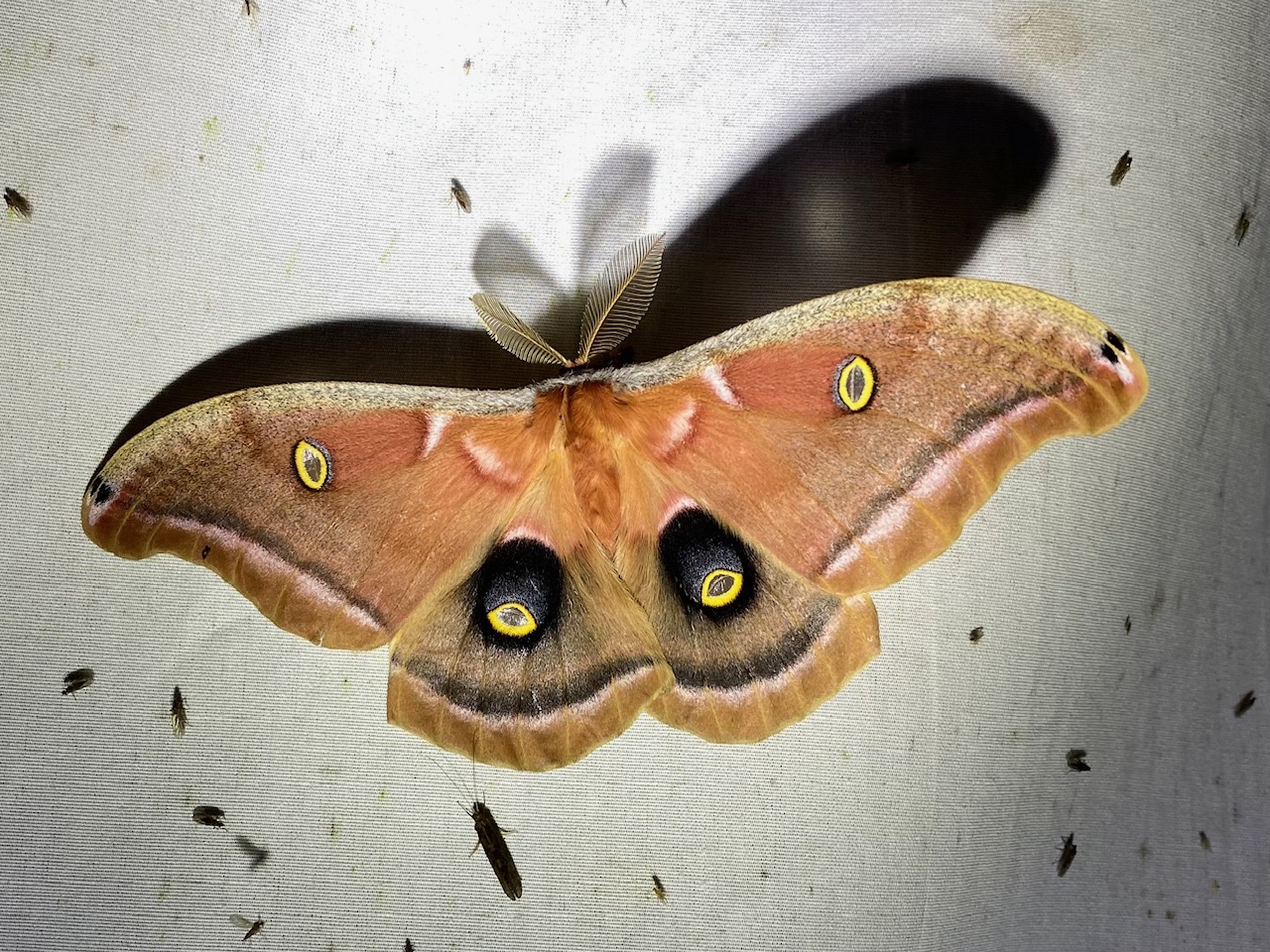
The Polyphemus moth is one of the largest moths in North America, boasting an impressive wingspan that can range from 4 to 6 inches (10 to 15 cm). Its wings are typically a warm, tawny yellow or ochreous brown, often with subtle variations in shade and delicate lines of reddish-brown or pink that traverse the wing surface.
The most striking feature of this moth is the large, translucent eyespot found on each hindwing. These oval or round “windows” are bordered by rings of black, blue, yellow, and white, creating an intricate and captivating design that is thought to startle or confuse potential predators. Each wing also exhibits a smaller, fainter eyespot near the apex of the forewing. The body is stout and covered in soft, reddish-brown hairs.
Distribution and Habitat: A Resident of Eastern Woodlands:
The Polyphemus moth is widely distributed across eastern and central North America, extending from southern Canada throughout most of the United States east of the Rocky Mountains, and into parts of Mexico. This species primarily inhabits deciduous forests, open woodlands, and suburban areas where its diverse range of larval host plants are found. Its preference for these environments reflects its reliance on the foliage of various broadleaf trees for its caterpillar development.
Life Cycle: A Transformation Among the Leaves:
The life cycle of Antheraea polyphemus involves the typical four stages of complete metamorphosis characteristic of silk moths: egg, larva (caterpillar), pupa (chrysalis), and adult.

- Egg: Females lay large, flattened, pale green or cream-colored eggs singly or in small clusters on the undersides of the leaves of their host plants.
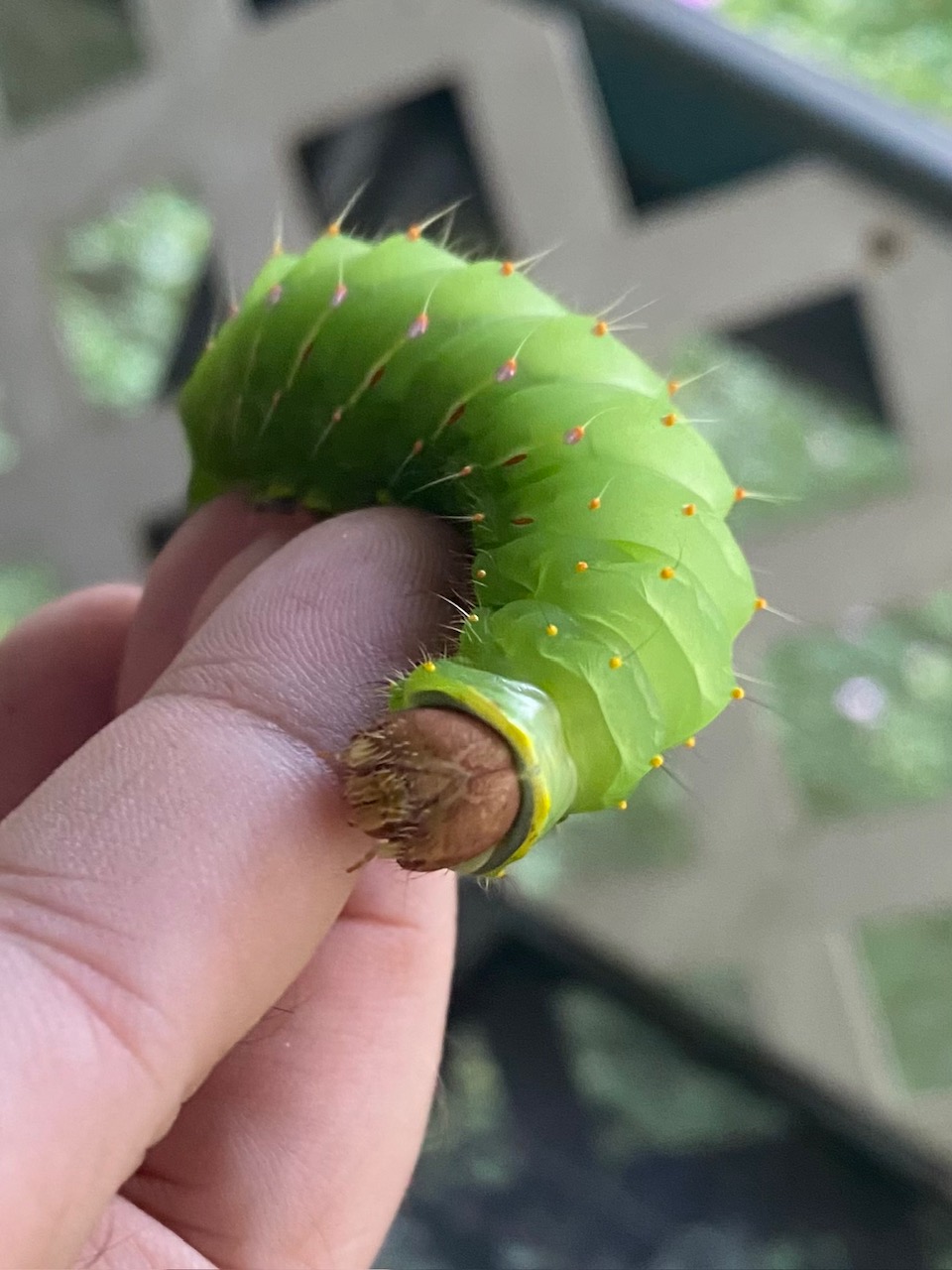
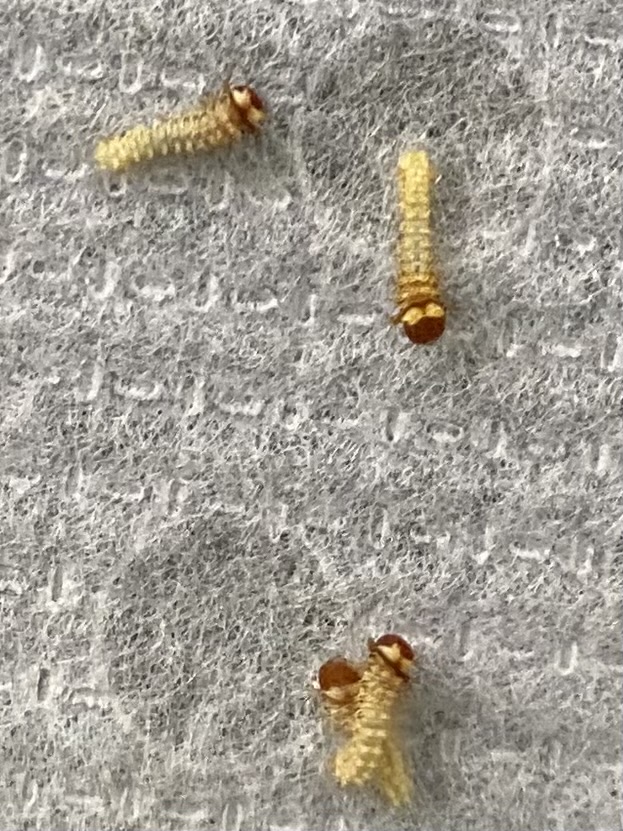
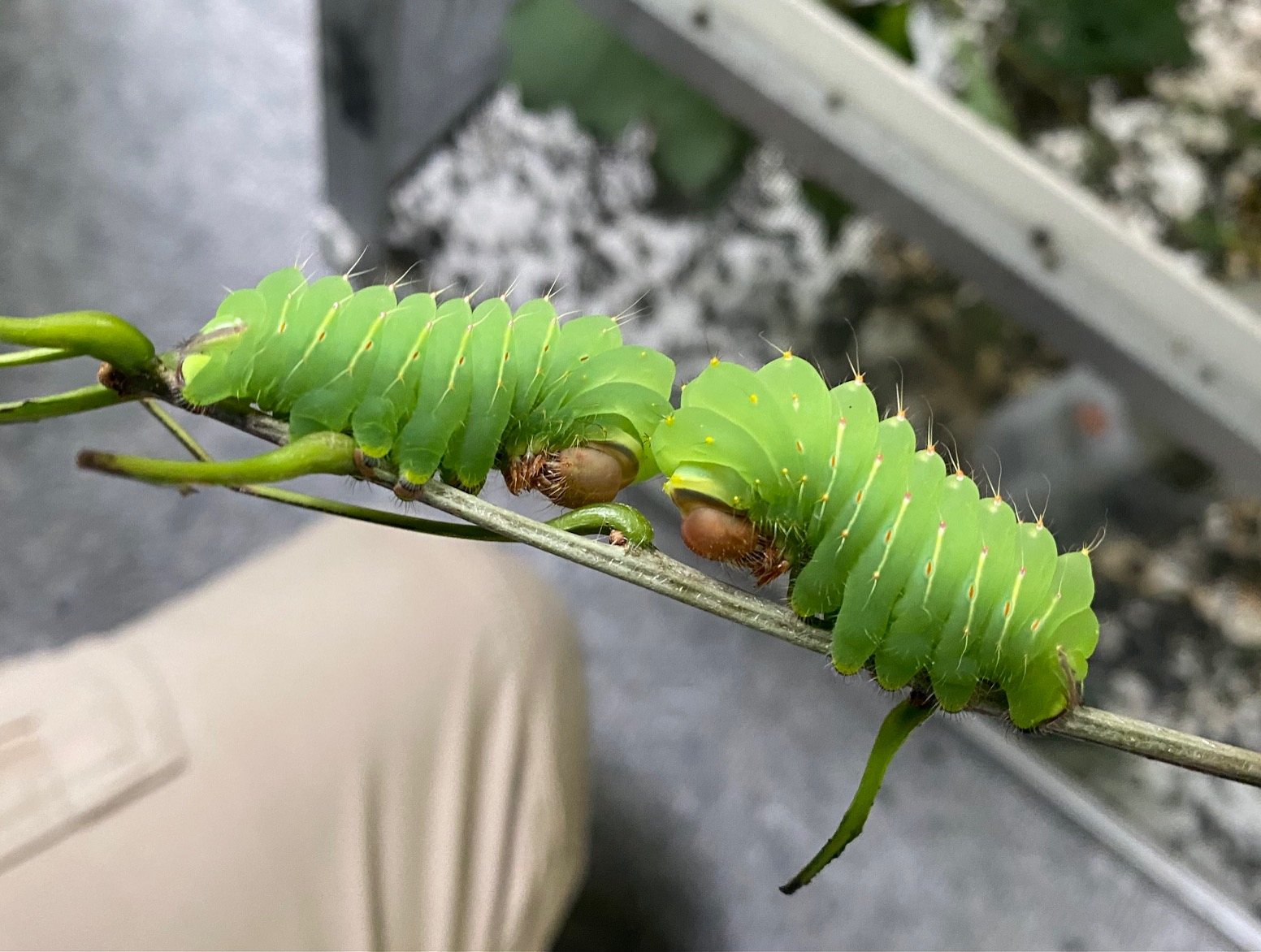
- Larva (Caterpillar): The larvae are large and fleshy caterpillars that undergo several instars, changing in appearance as they grow. Young larvae are often yellowish-green. Mature larvae are typically a vibrant green, sometimes with yellowish or whitish lateral stripes and small, silver or colored tubercles (bumps) along their bodies. They are voracious feeders and can consume a significant amount of foliage.
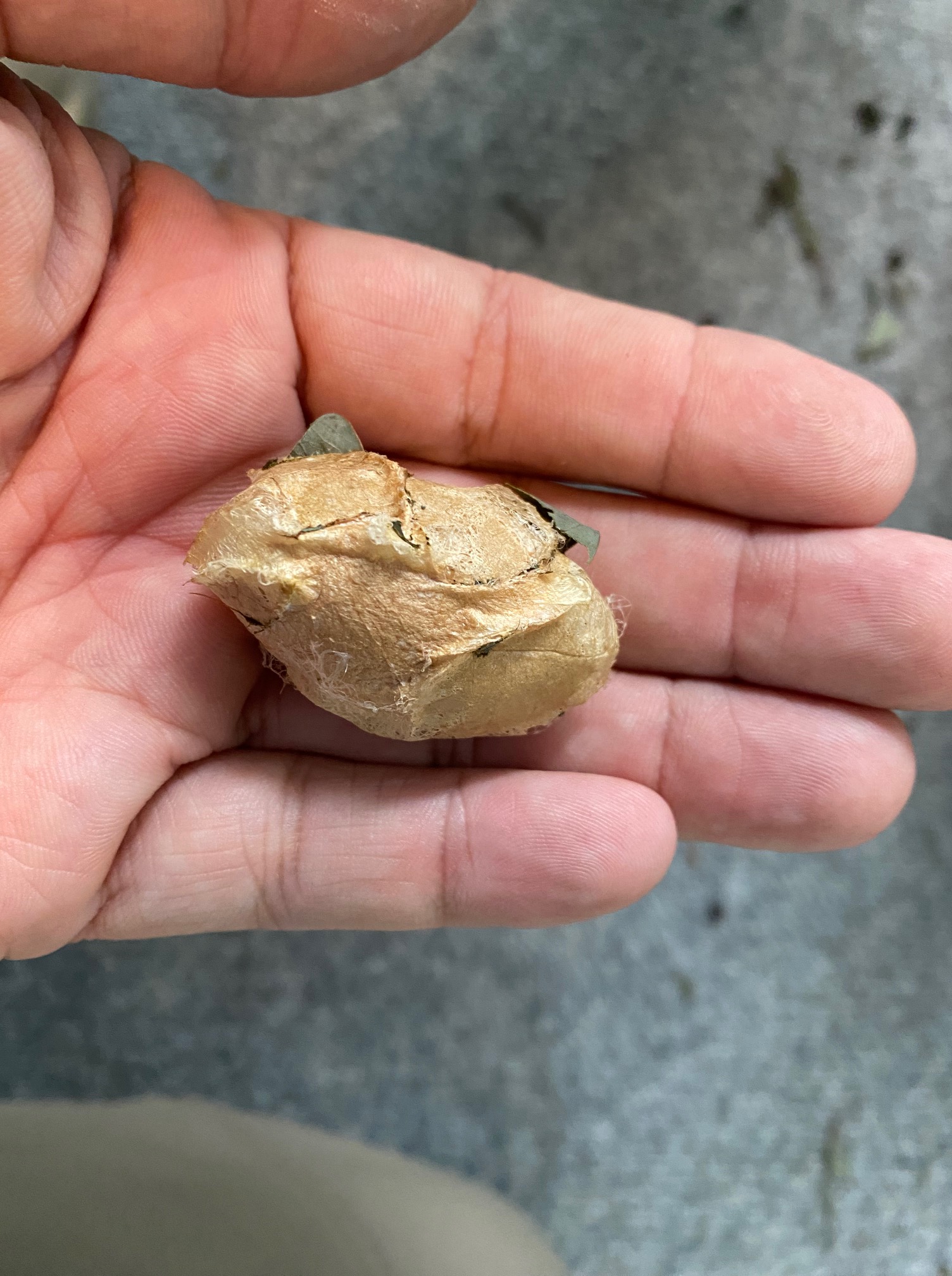
- Pupa (Chrysalis): Pupation occurs within a large, oval cocoon spun from tough, brown silk. The cocoon is often wrapped in leaves of the host plant for added protection and camouflage. The pupa, or chrysalis, is a robust, brown form that undergoes the remarkable transformation into the adult moth.

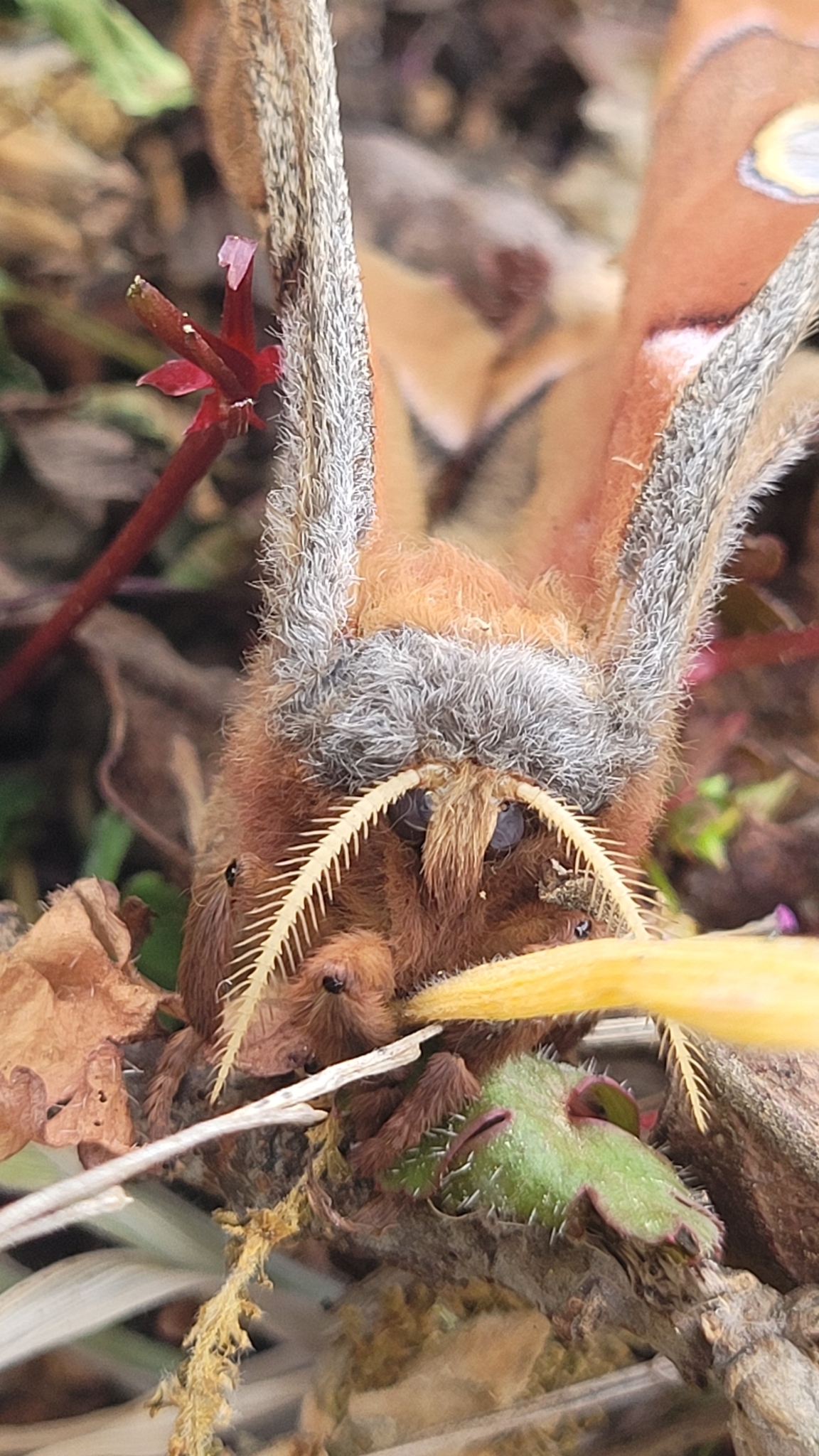
- Adult: The magnificent adult moths typically emerge in the late spring or summer. Like other giant silkmoths, the adult Polyphemus moth lacks functional mouthparts and does not feed. Their primary purpose is to mate and reproduce. Adult males have large, feathery antennae that they use to detect the pheromones released by females, often over considerable distances.
Host Plants and Lack of Adult Feeding: A Broad Palate for Larvae:
The caterpillars of the Polyphemus moth are polyphagous, meaning they feed on a wide variety of deciduous trees. Some of their common host plants include:
- Oak (Quercus species)
- Maple (Acer species)
- Birch (Betula species)
- Willow (Salix species)
- Hickory (Carya species)
- Walnut (Juglans species)
- Elm (Ulmus species)
The adult moths, as with other Saturniids, do not feed and rely solely on the energy reserves accumulated during their larval stage. Their adult lifespan is relatively short, dedicated to the crucial tasks of finding a mate and laying eggs.
Behavior and Ecology: Nocturnal Majesty and Defensive Eyespots:
The Polyphemus moth is primarily nocturnal, with adults becoming active at dusk and flying throughout the night in search of mates. During the day, they typically rest with their wings spread, often camouflaged against tree bark or foliage.
The prominent eyespots on their hindwings are believed to serve as a defense mechanism against predators, particularly birds. When threatened, the moth may flash its hindwings, revealing the large eyespots, which can startle or momentarily distract the predator, allowing the moth to escape.
Conservation Status and Threats: Generally Secure, But Habitat is Key:
Currently, Antheraea polyphemus is generally considered a common and widespread species throughout its range and is not facing significant conservation threats on a large scale. However, habitat loss due to deforestation and development, as well as the use of pesticides, can negatively impact local populations. The health and diversity of deciduous forests are crucial for the continued success of this magnificent moth.
A Window to the Wild: The Enchanting Flight of the Polyphemus Moth:
The Polyphemus moth, with its impressive size, soft coloration, and captivating windowed wings, is a true jewel of North American woodlands. Its wide distribution and the polyphagous nature of its larvae contribute to its relative abundance. Encountering this gentle giant in the stillness of the night is a reminder of the beauty and wonder that exists within our natural world, a fleeting glimpse into the delicate and enchanting lives of these magnificent moths.
Discover more from
Subscribe to get the latest posts sent to your email.
 davethebugguy.org