

Distinguished by its impressive size, striking wing patterns, and remarkable adaptability, the Ailanthus silkmoth, scientifically known as Philosamia cynthia, is a truly captivating member of the Saturniidae family. Originally native to Asia, this magnificent moth has successfully established itself in urban and suburban environments across the globe, its life cycle intricately linked to the often-overlooked Ailanthus tree, also known as the “tree of heaven.”
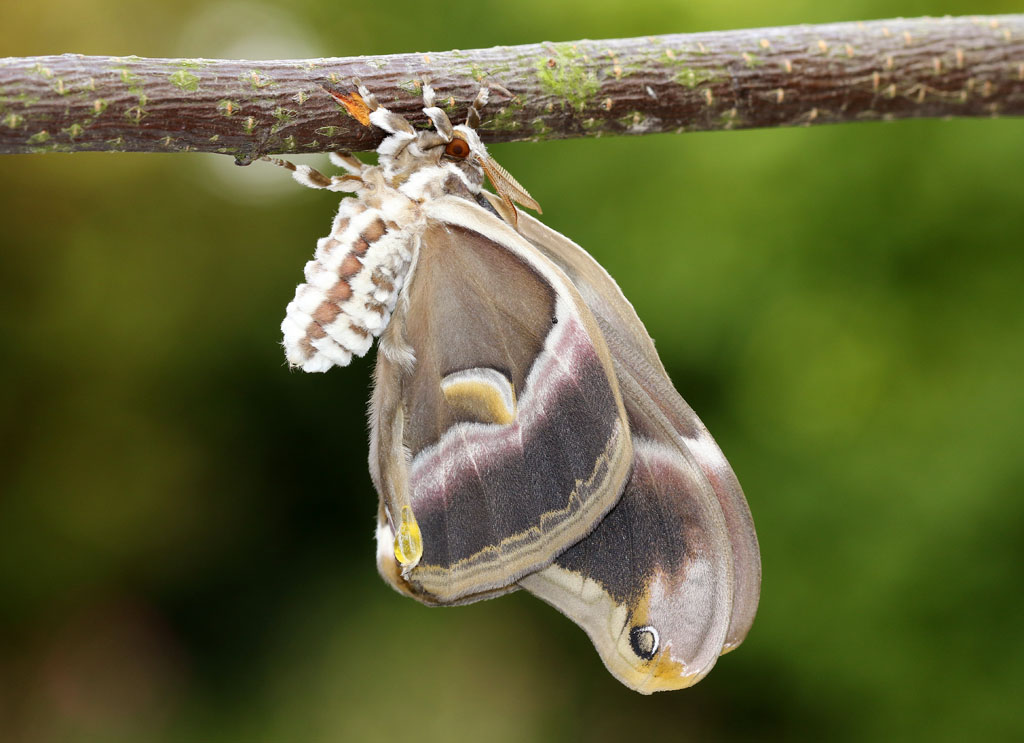
A Canvas of Earthy Tones: Striking Wing Patterns:
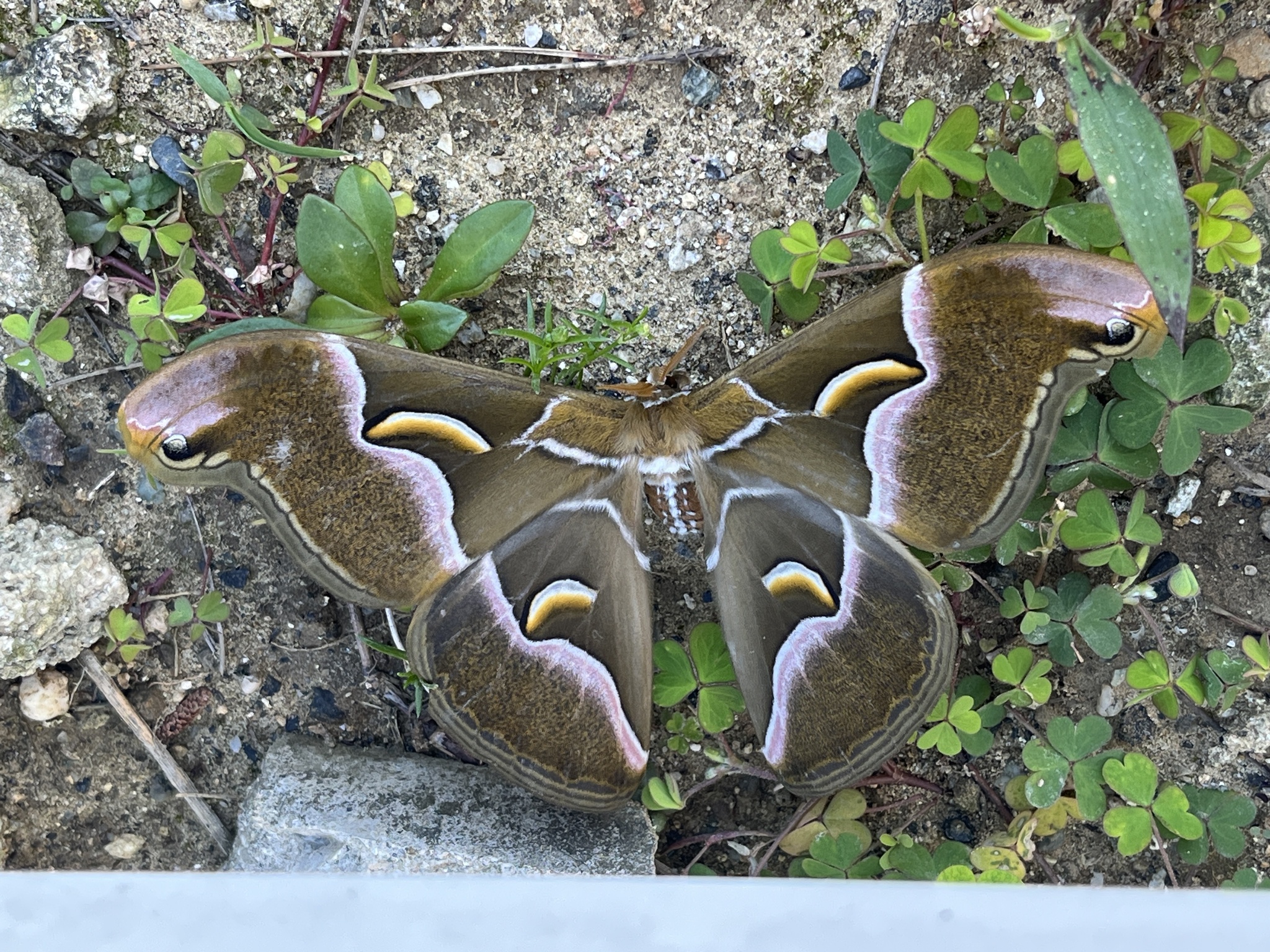
The Ailanthus silkmoth is a large and robust moth with a wingspan that can reach up to 4-5 inches (10-13 cm). Its wings are typically a warm, ochreous brown or olive-green, adorned with prominent, contrasting white or cream-colored crescent-shaped markings along the outer margins of both the forewings and hindwings. These lunar-like crescents are a key identifying feature of this species.
Each wing also displays a distinct, translucent eyespot. On the forewing, this eyespot is typically kidney-shaped and outlined in black, while on the hindwing, it is larger and more circular, often with a reddish or brownish center. These eyespots are believed to play a role in startling or deflecting potential predators. The body of the moth is stout and covered in dense, woolly hairs, usually in shades of brown and cream.

Distribution and Habitat: A Citizen of the World:
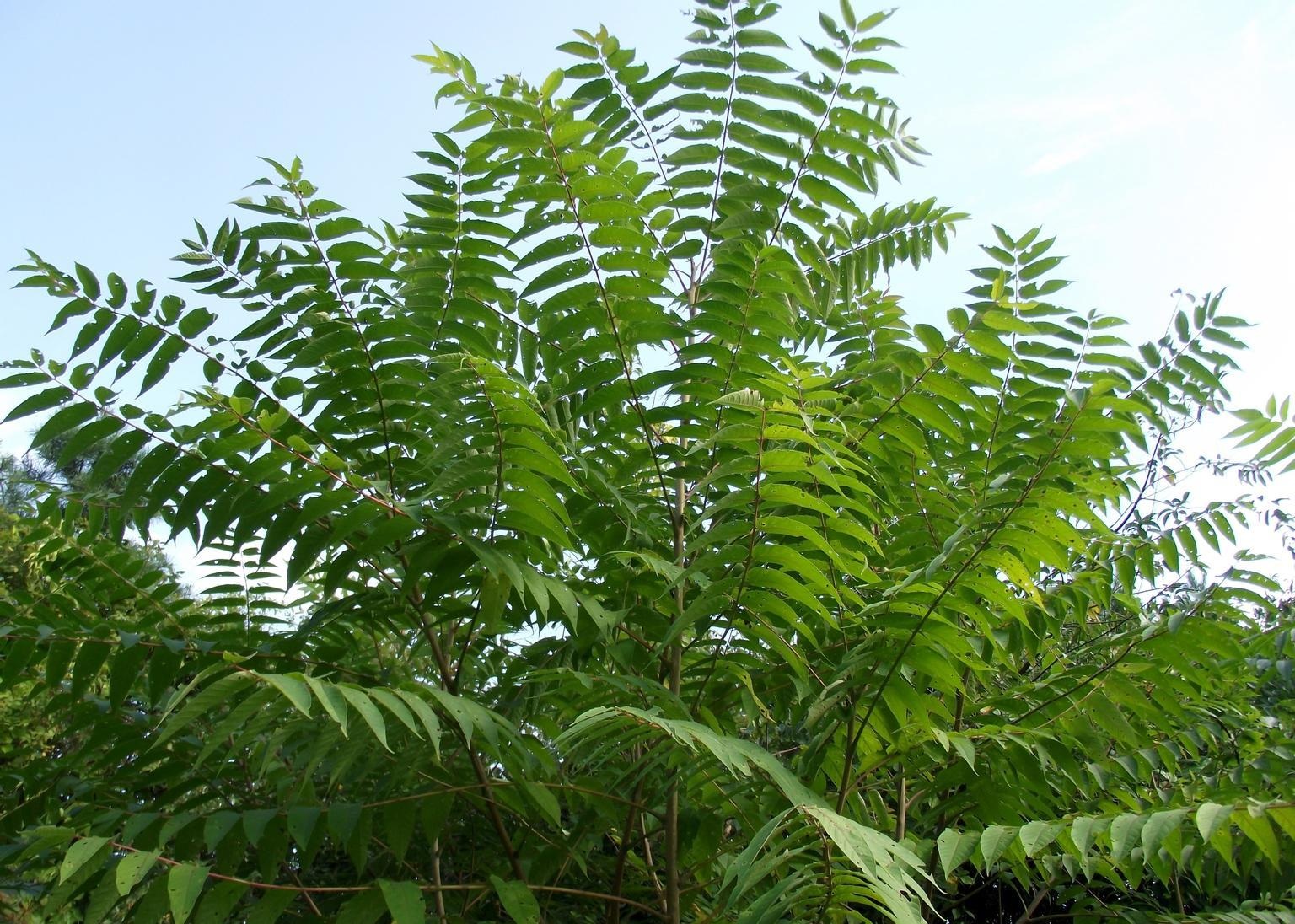
Native to Asia, particularly China and India, Philosamia cynthia has demonstrated an exceptional ability to adapt to new environments. Through intentional introduction for silk production and accidental spread, it has established populations in various parts of the world, including North America (primarily urban and suburban areas), Europe, and Australia. Its success in these new territories is largely attributed to its reliance on the readily available Ailanthus altissima tree, a fast-growing species often found in disturbed habitats and urban settings. This moth is commonly encountered in cities, towns, and along roadsides where its preferred host plant thrives.
Life Cycle: A Rapid Development on an Urban Tree:
The life cycle of the Ailanthus silkmoth is relatively rapid, often allowing for multiple generations per year in warmer climates.

- Egg: Females lay large, oval, cream-colored eggs in small clusters or singly on the leaves and stems of their host plants, primarily Ailanthus.
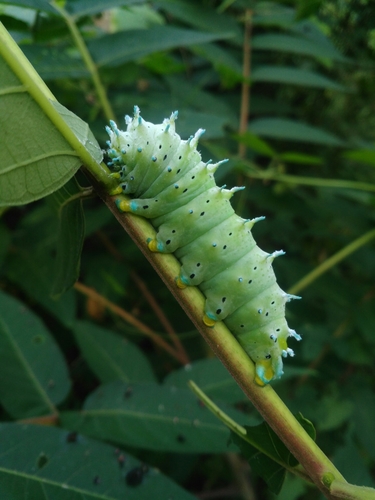
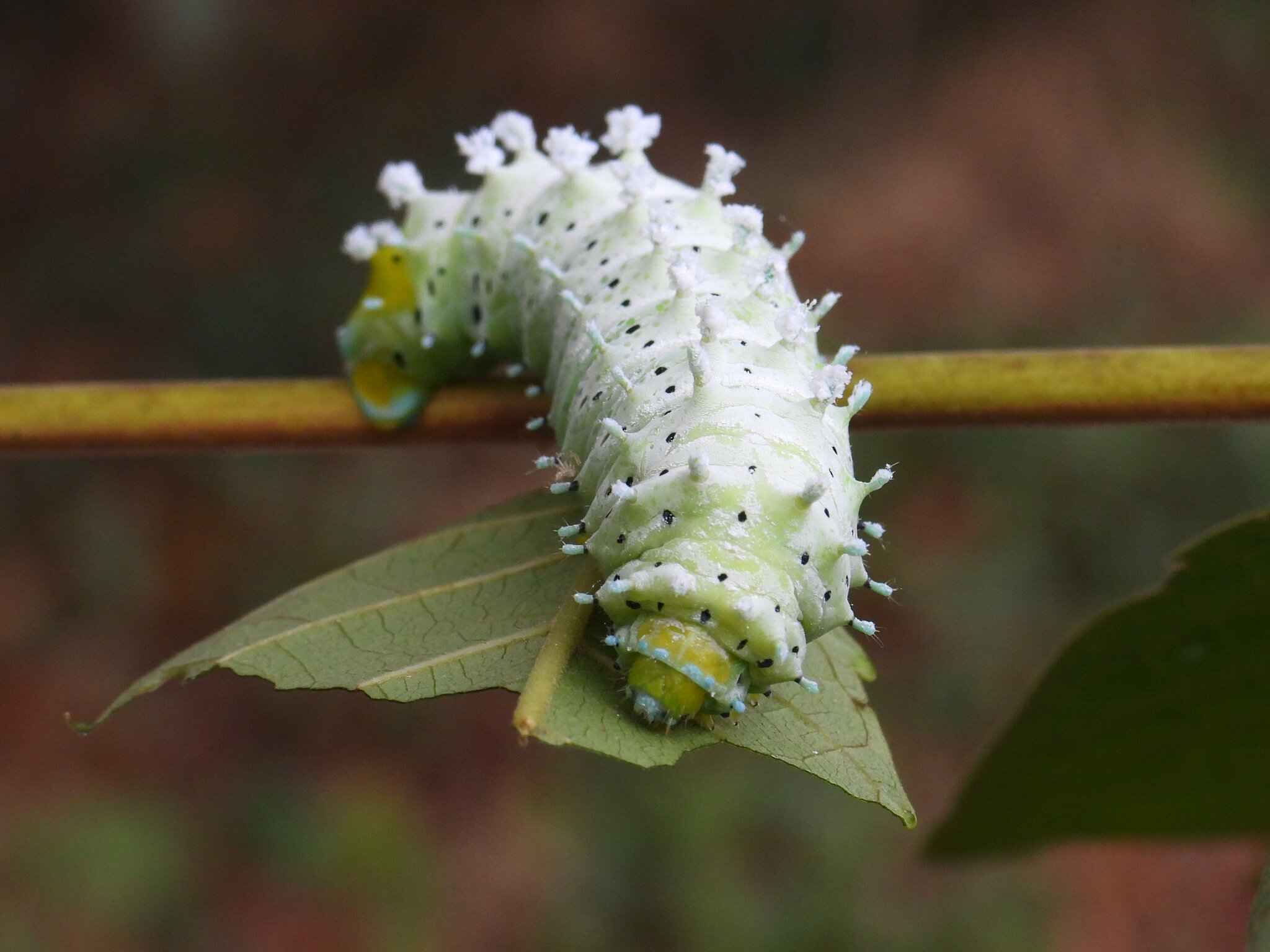
- Larva (Caterpillar): The larvae are large and striking caterpillars that go through several instars. Young larvae are often yellowish-green with black markings. As they mature, they become a vibrant bluish-green with a powdery white coating and prominent black spots or stripes. They feed voraciously on the leaves of Ailanthus trees, growing rapidly. Unlike some other silk moths, the larvae feed openly and do not spin a tight cocoon for pupation.
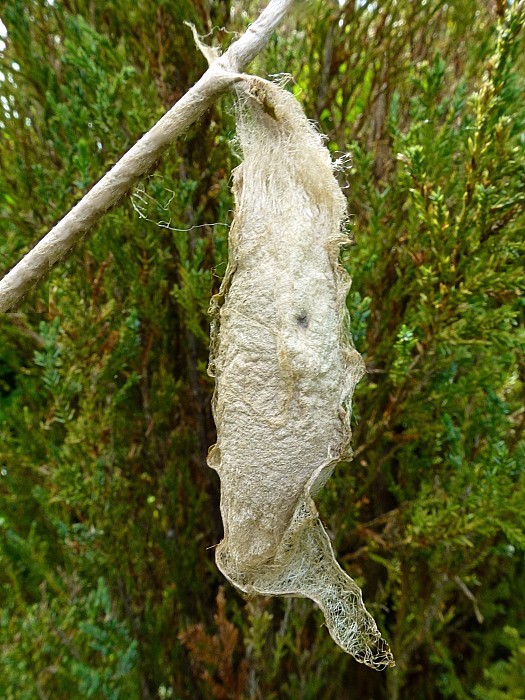
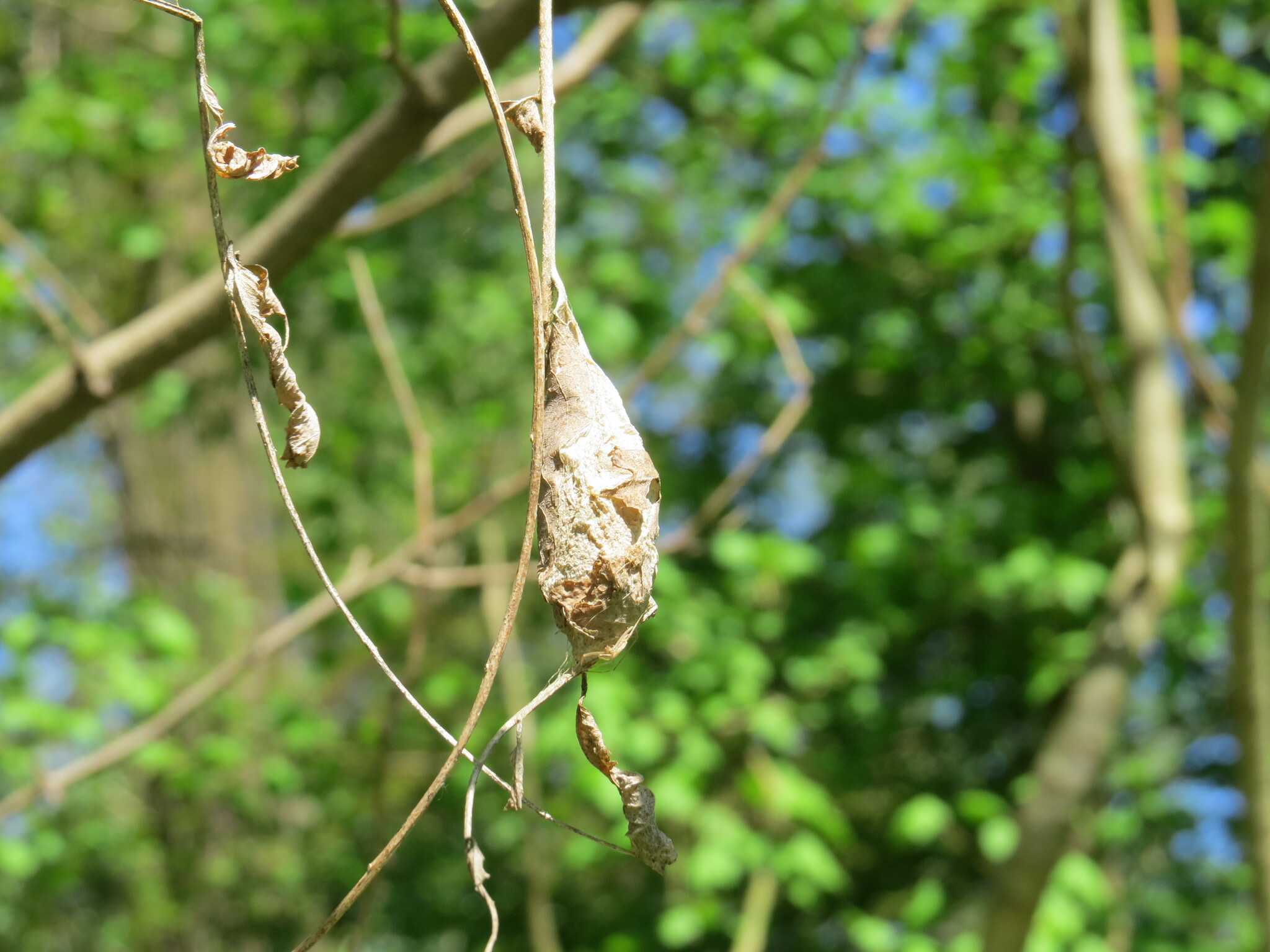
- Pupa (Chrysalis): Pupation occurs within a loosely spun, silken cocoon that is often attached to a twig or leaf of the host plant, or sometimes in sheltered locations. The pupa is a robust, brown form.

- Adult: The adult moths emerge with their impressive wings and characteristic markings. Like other members of the Saturniidae family, the adult Ailanthus silkmoth lacks functional mouthparts and does not feed. Their primary purpose is reproduction. Adult males are attracted to females by pheromones, and after mating, the females lay eggs, continuing the cycle.
Host Plant and Lack of Adult Feeding: Bound to the “Tree of Heaven”:
The Ailanthus silkmoth exhibits a strong and almost exclusive reliance on the Ailanthus altissima tree as its larval host plant. This fast-growing, often considered invasive, tree provides the necessary nutrients for the rapid development of the caterpillars. While there have been reports of larvae occasionally feeding on other plant species, Ailanthus remains their primary and preferred food source.
As with other giant silk moths, the adult Philosamia cynthia does not feed and relies entirely on the energy reserves accumulated during its larval stage. Their adult lifespan is relatively short, focused solely on mating and reproduction.
Behavior and Ecology: An Urban Adaptor:
The Ailanthus silkmoth has demonstrated a remarkable ability to thrive in urban and suburban environments, largely due to the abundance of its host plant, the Ailanthus tree, which often colonizes disturbed areas and vacant lots. The moths are typically nocturnal or crepuscular in their adult stage, becoming active at dusk and during the night.
The larvae are conspicuous feeders on Ailanthus leaves and can sometimes be found in large numbers. Their rapid growth and lack of a tightly spun cocoon make them relatively easy to observe. The species’ success in establishing itself globally highlights its adaptability to a range of climates and human-modified landscapes.
Conservation Status and Threats: A Successful Colonizer:
Currently, Philosamia cynthia is not considered to be under threat. In fact, in many regions outside of its native range, it is considered an introduced and sometimes even invasive species due to its association with the Ailanthus tree, which itself is often considered invasive. While not posing a significant threat to native ecosystems in most cases, its presence reflects the impact of global transport and the adaptability of certain insect species.
A Striking Sign of Urban Wildlife:
The Ailanthus silkmoth, with its impressive size, distinctive markings, and close association with urban environments, is a fascinating example of how wildlife can adapt and even thrive in human-dominated landscapes. Its global distribution and reliance on the “tree of heaven” tell a story of interconnectedness and the dynamic nature of species introductions. Encountering this majestic moth is a reminder that even in the heart of our cities, nature continues to find a way to flourish in unexpected and beautiful forms.
Discover more from
Subscribe to get the latest posts sent to your email.
 davethebugguy.org