

Gracing the deciduous forests of eastern North America with its whimsical charm is the rosy maple moth, scientifically known as Dryocampa rubicunda. This small to medium-sized silk moth is instantly recognizable for its delightful coloration, a vibrant blend of rosy pink and sunny yellow that seems almost too charming to be real. Its fuzzy body and delicate wings make it a captivating and beloved member of the moth world.
A Palette of Soft Hues: Unmistakable Appearance:
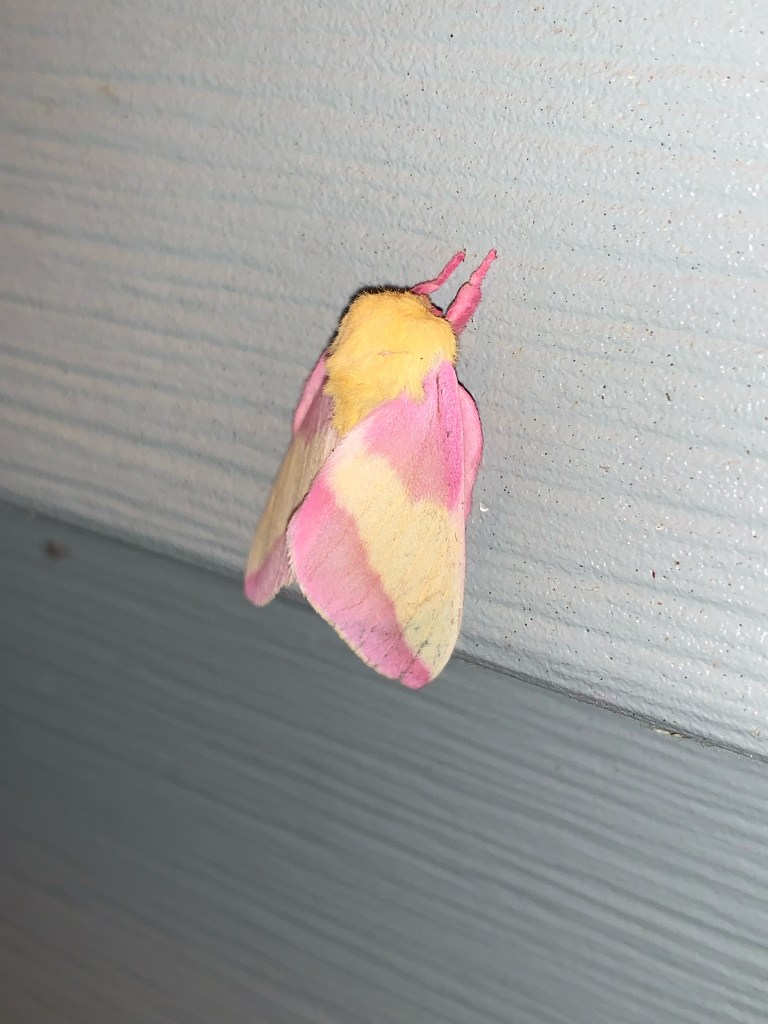
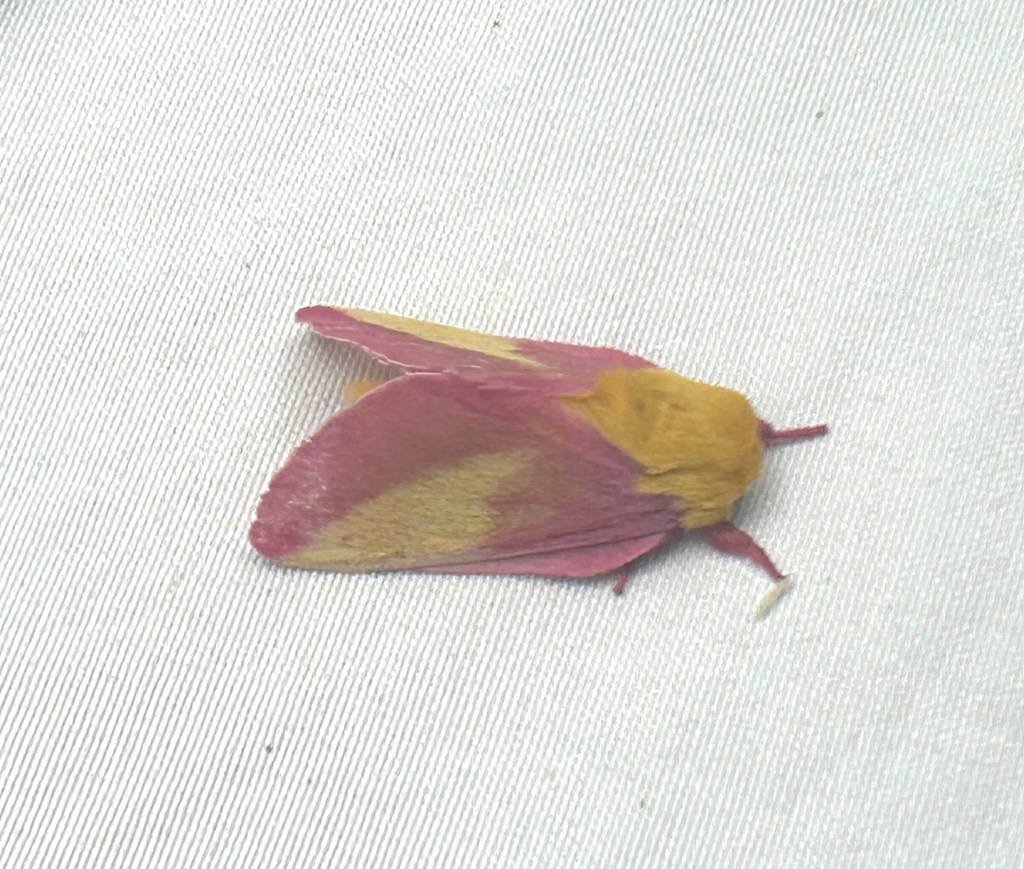
The adult rosy maple moth is a true spectacle of gentle colors. Its wings, typically ranging from 1.5 to 2 inches (3.8 to 5 cm) in wingspan, are predominantly a soft, rosy pink. This pink is often most intense along the costal margin (the leading edge of the forewing) and can vary in shade. The veins of the wings are usually highlighted in a contrasting pale yellow or cream color, creating a delicate network across the pink background.
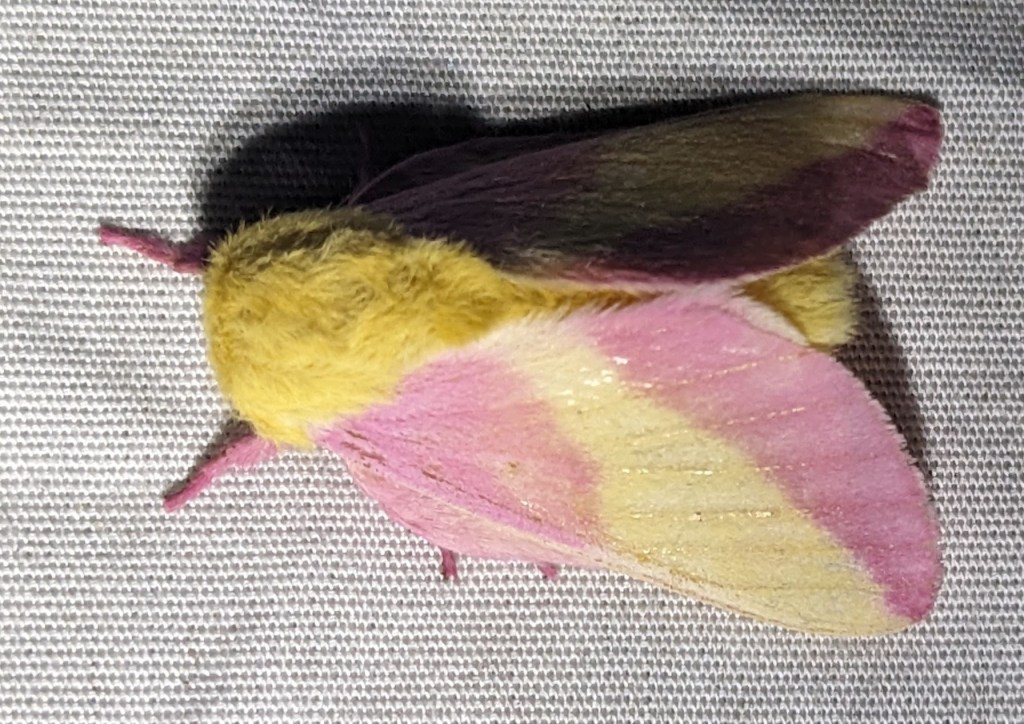
The body of the moth is equally endearing. It is stout and covered in dense, fuzzy hairs, primarily in shades of yellow and white, often with a pinkish band around the thorax (the segment behind the head). The legs are also fuzzy and typically yellow or pinkish. This overall soft and pastel coloration gives the rosy maple moth an almost ethereal quality.
Distribution and Habitat: A Denizen of Maple Woodlands:
The rosy maple moth is primarily found in the eastern half of North America, its distribution closely mirroring that of its larval host plants – maple trees. Its range extends from southeastern Canada south through the eastern United States, reaching as far west as eastern Texas and north into the Great Lakes region. These moths are most commonly encountered in deciduous forests, woodlands, and even suburban areas where maple trees are abundant. Their reliance on maple species for larval development firmly ties them to these habitats.
Life Cycle: A Transformation Rooted in Maple:
The life cycle of Dryocampa rubicunda involves the typical four stages of complete metamorphosis for moths: egg, larva (caterpillar), pupa (chrysalis), and adult.
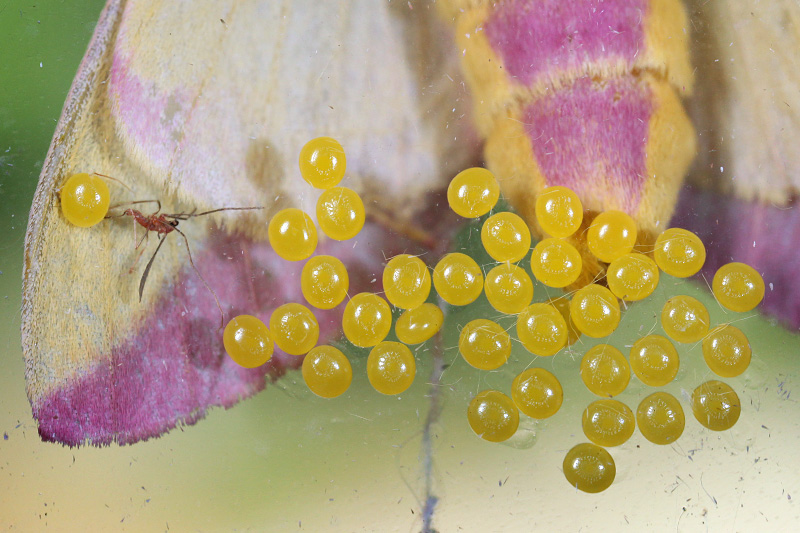
- Egg: Female rosy maple moths lay clusters of small, oval, yellowish eggs on the undersides of maple leaves. These clusters can contain several dozen eggs.
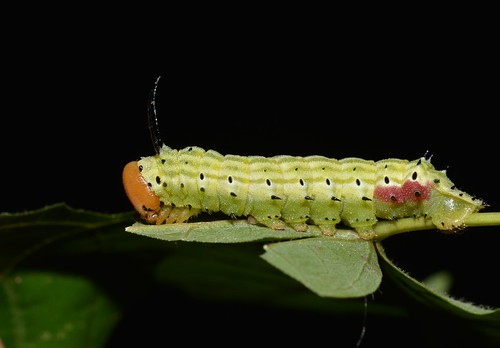
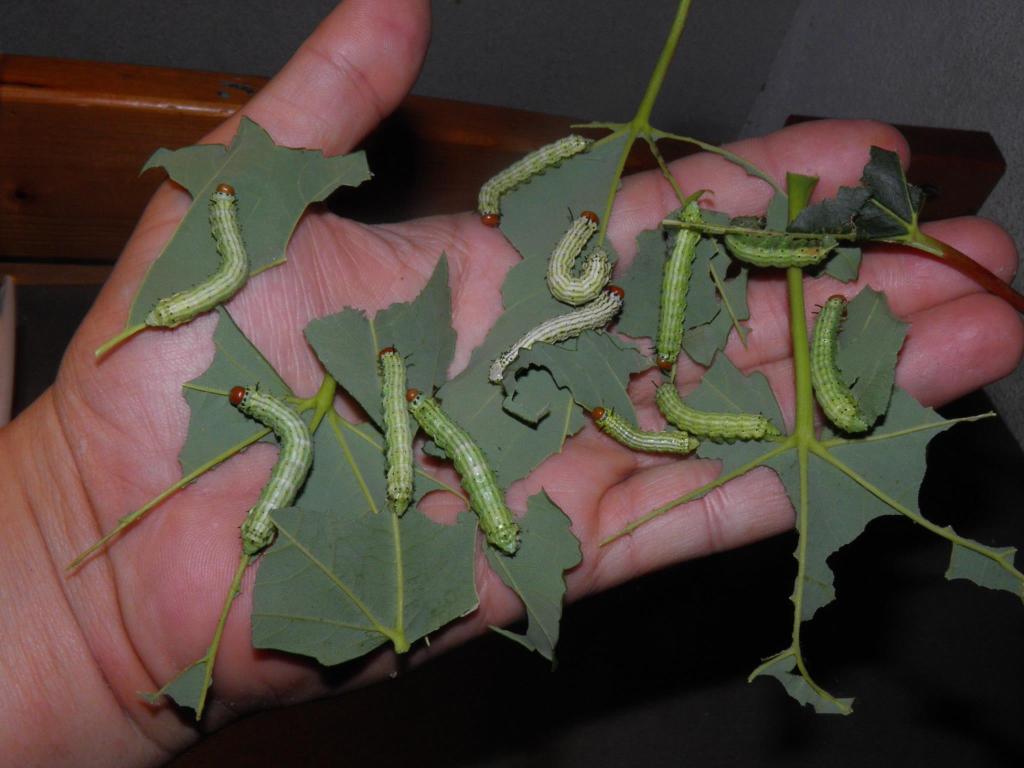
- Larva (Caterpillar): The larvae, commonly known as green-striped mapleworms, are initially small and yellowish-green. As they mature through several instars, they develop a more distinctive appearance. Mature larvae are large, reaching up to 2 inches in length, and are typically pale green with longitudinal stripes of darker green or black. They have two prominent, black, horn-like projections near their head and several smaller spines along their body. These striking caterpillars are voracious feeders on maple leaves.

- Pupa (Chrysalis): Once the larva is fully grown, it descends from the host tree and pupates in the leaf litter or just beneath the soil surface. The pupa is brown and relatively smooth, encased in a loosely spun silken cocoon that incorporates leaf fragments and soil particles for camouflage.
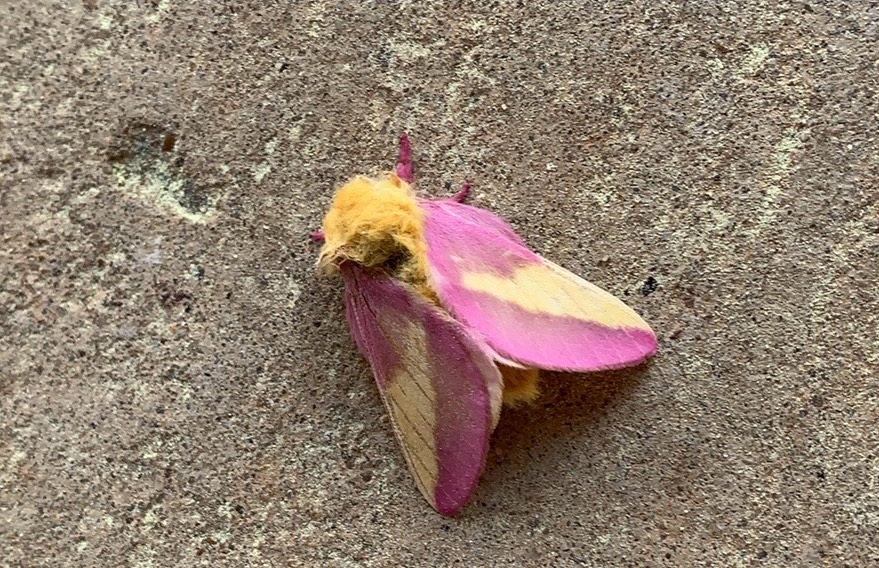
- Adult: The adult moths typically emerge in the late spring or summer. Unlike many other silk moths, the adult rosy maple moth is relatively active during the day, although it can also be attracted to lights at night. The adults have a short lifespan, primarily focused on reproduction. They do not feed and rely on the energy reserves accumulated during their larval stage.
Host Plants and Lack of Adult Feeding:
The rosy maple moth exhibits a strong dependence on maple trees as the primary food source for its larvae. Favored host plants include:
- Red Maple (Acer rubrum)
- Sugar Maple (Acer saccharum)
- Silver Maple (Acer saccharinum)
- Boxelder (Acer negundo, although sometimes considered a separate genus, Acer still applies here)
The adult moths, remarkably, lack functional mouthparts and do not feed at all. Their sole purpose in this stage is to mate and lay eggs, ensuring the continuation of the next generation. Their vibrant colors likely play a role in mate recognition and attraction.
Behavior and Ecology: Gentle Giants of the Canopy:
Despite their sometimes striking appearance as larvae, rosy maple moths are generally considered harmless. The caterpillars are herbivores, feeding exclusively on maple leaves, and while they can occasionally cause defoliation in localized areas during outbreaks, they are not typically considered significant pests of forests or ornamental trees.
The adult moths are often seen fluttering gently around maple trees during the day. Males use pheromones to attract females for mating. Their bright coloration makes them easily noticeable, adding a touch of beauty to their woodland habitats.
Conservation Status and Threats: A Common Delight:
Currently, Dryocampa rubicunda is considered a common and widespread species throughout its range and is not facing any significant conservation threats. Their adaptability to various maple species and their presence even in suburban areas with maple trees contribute to their stable populations. However, as with all wildlife, maintaining healthy forest ecosystems and avoiding the widespread use of broad-spectrum pesticides are important for ensuring their continued abundance.
A Fluffy Jewel of the Eastern Woods:
The rosy maple moth, with its charming pink and yellow hues and fuzzy demeanor, is a delightful and easily recognizable inhabitant of eastern North American forests. Its close association with maple trees and its unique life cycle, culminating in a non-feeding adult stage, make it a fascinating subject of natural history. Encountering this gentle and colorful moth is a reminder of the delicate beauty and surprising diversity that thrives within our woodlands. Sources and related content
Discover more from
Subscribe to get the latest posts sent to your email.
 davethebugguy.org