
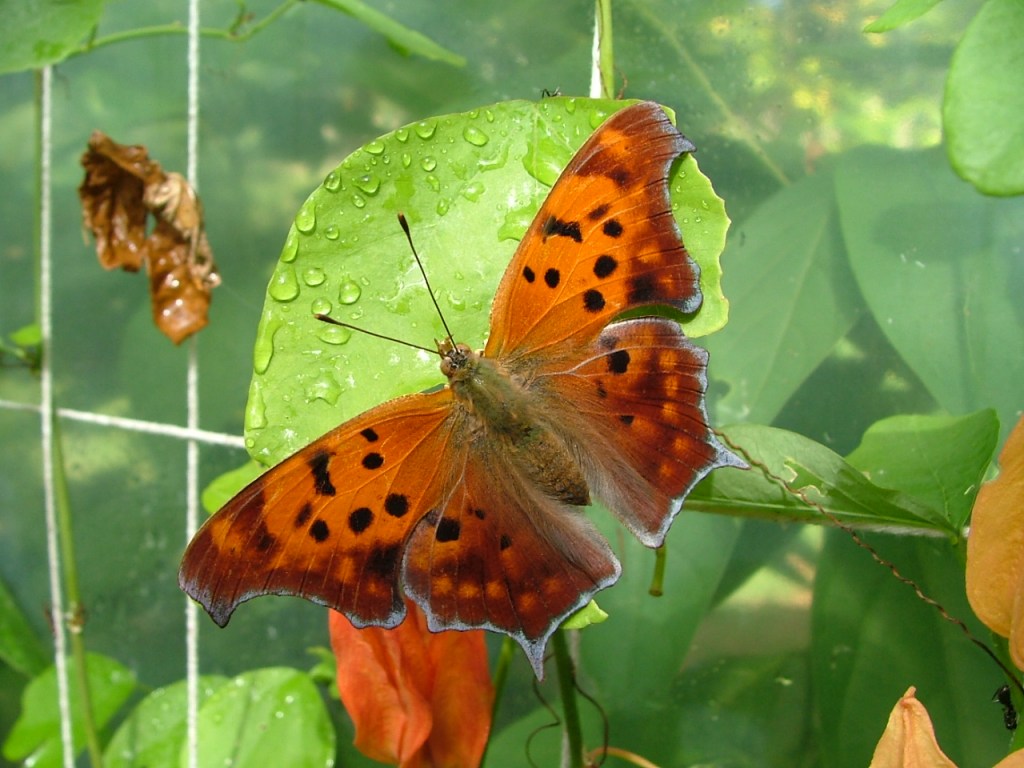
Dancing through sun-dappled woodlands and urban gardens across eastern North America flits a butterfly of curious markings and intriguing habits – the question mark, scientifically known as Polygonia interrogationis. Its scalloped wing edges and the distinctive silver mark on its hindwing, resembling its namesake punctuation, make it a readily identifiable and endlessly fascinating member of the brush-footed butterfly family.
A Winged Riddle: Distinctive Markings and Forms:
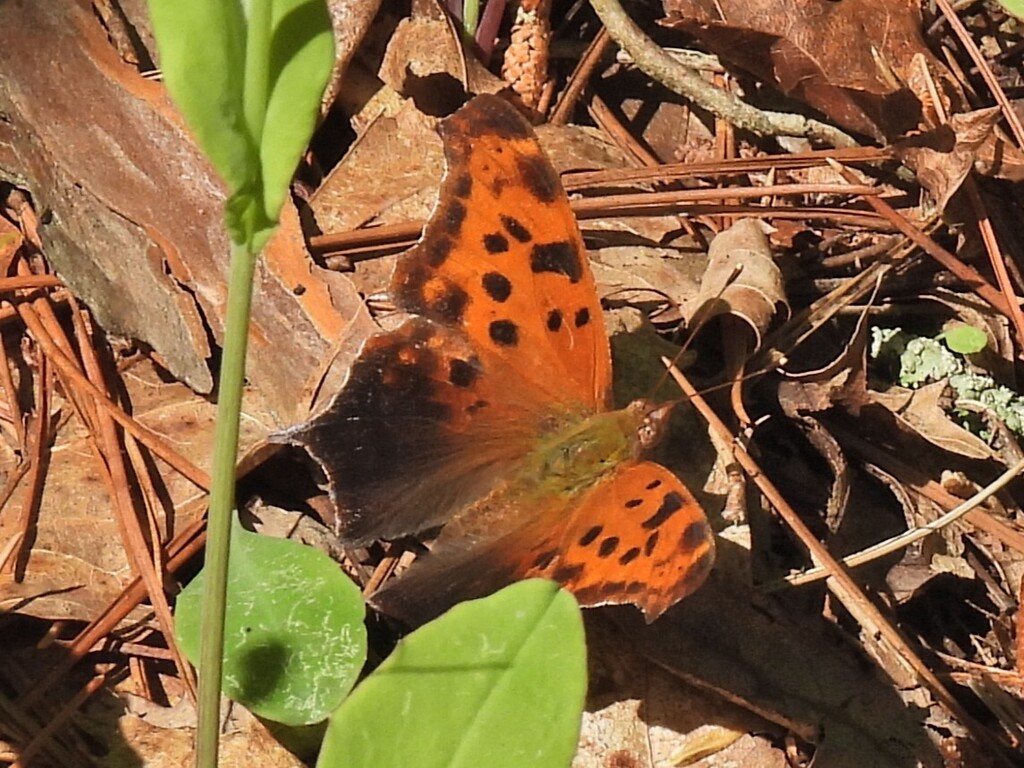
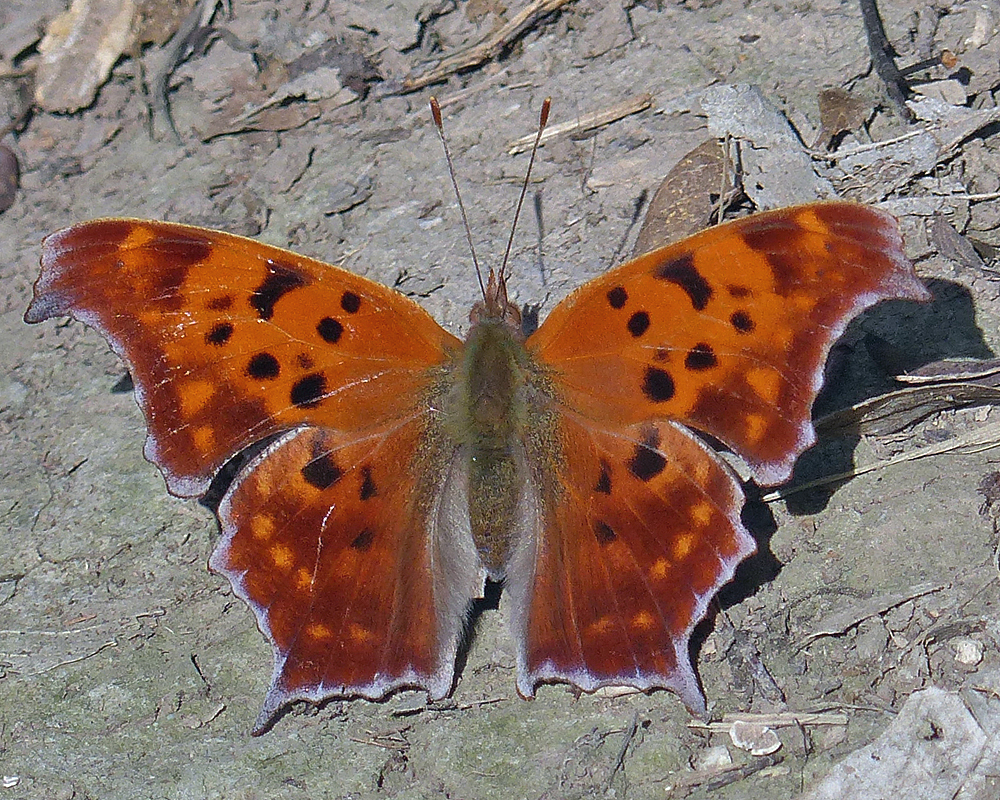
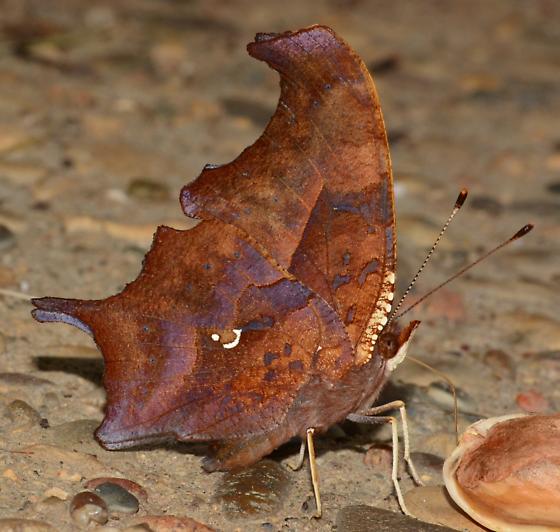
The question mark butterfly lives up to its name with the prominent, silvery, comma-like mark on the underside of its hindwing, often accompanied by a smaller dot directly below it, forming a perfect question mark. The upper side of its wings exhibits a rich tapestry of orange, brown, and black hues, often with darker spots and irregular patterns. The wing margins are distinctly jagged and scalloped, contributing to its unique silhouette in flight.
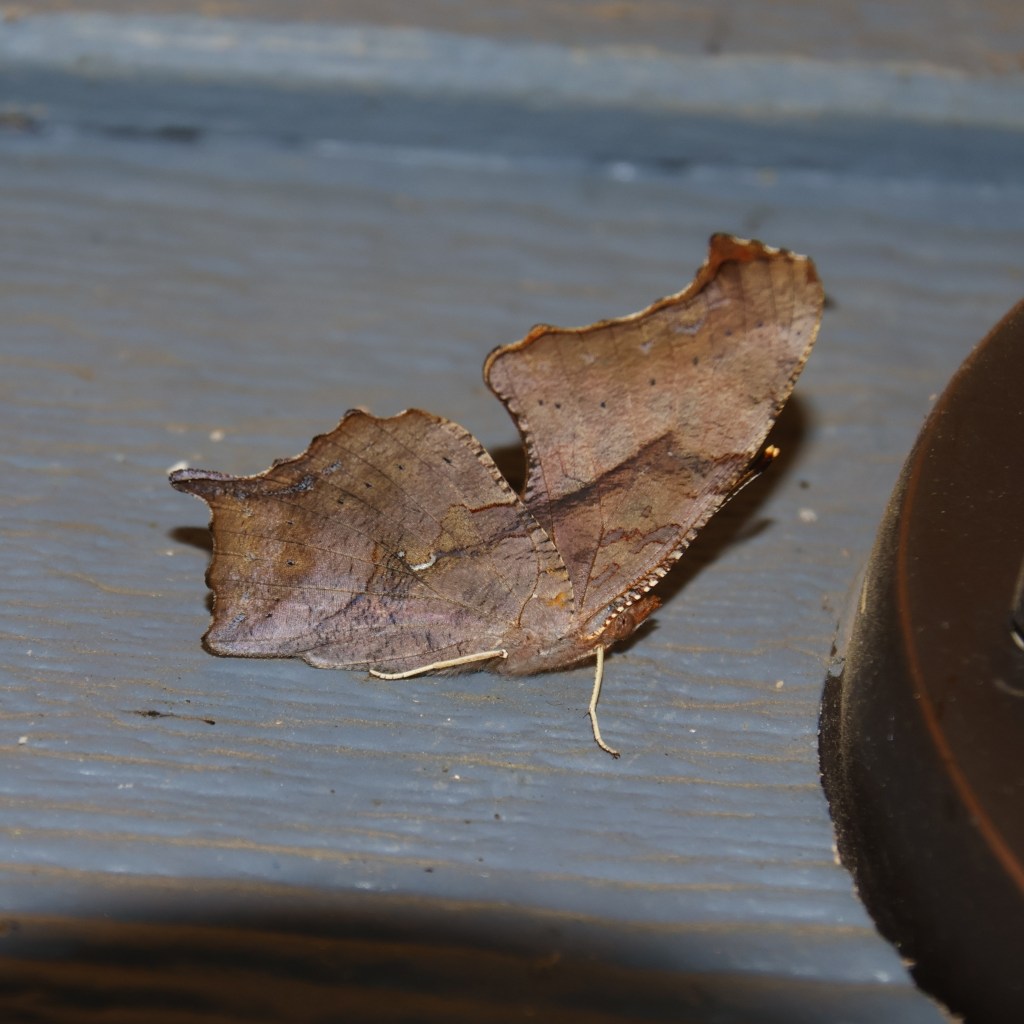
Adding to its intrigue, Polygonia interrogationis exhibits seasonal polyphenism, meaning it has two distinct adult forms that emerge at different times of the year. The summer form, emerging in warmer months, typically displays brighter, more vibrant orange coloration on the dorsal surface. The winter form, emerging in late summer and overwintering as adults, tends to be larger and darker, with more muted brown and purplish tones. These seasonal variations are influenced by environmental factors like day length and temperature during the pupal stage.
Distribution and Habitat: A Wide-Ranging Wanderer:
The question mark boasts a wide distribution across eastern North America, ranging from southern Canada southward through the eastern United States to Florida and westward to the edges of the Great Plains. This adaptable butterfly can be found in a variety of habitats, including deciduous forests, woodlands, stream valleys, open fields with scattered trees, and even suburban areas, particularly where its larval host plants are present. Its ability to utilize diverse environments contributes to its relatively widespread distribution.
Life Cycle: A Tale of Two Seasons:
The life cycle of Polygonia interrogationis is intricately linked to the changing seasons, particularly due to its overwintering adult stage and seasonal polyphenism.
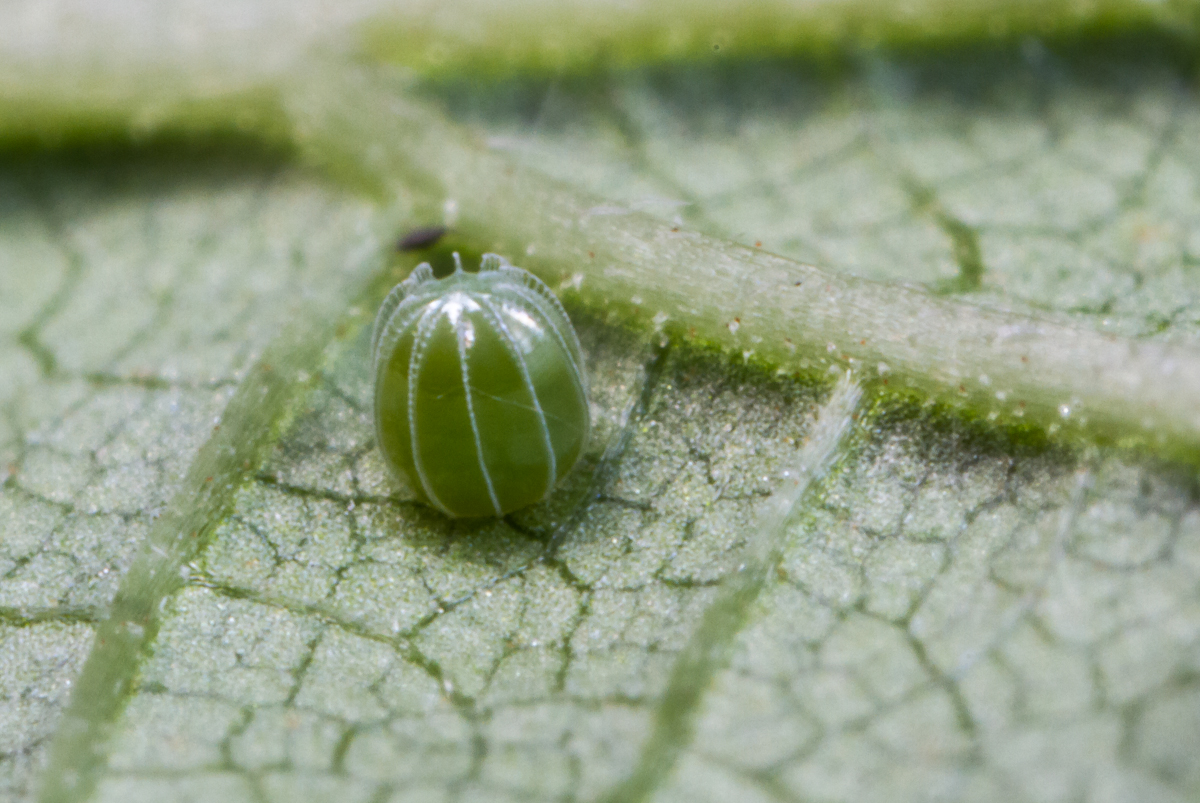
- Egg: Females lay small, greenish eggs singly or in short stacks beneath the leaves of their host plants. The eggs are often ribbed and barrel-shaped.
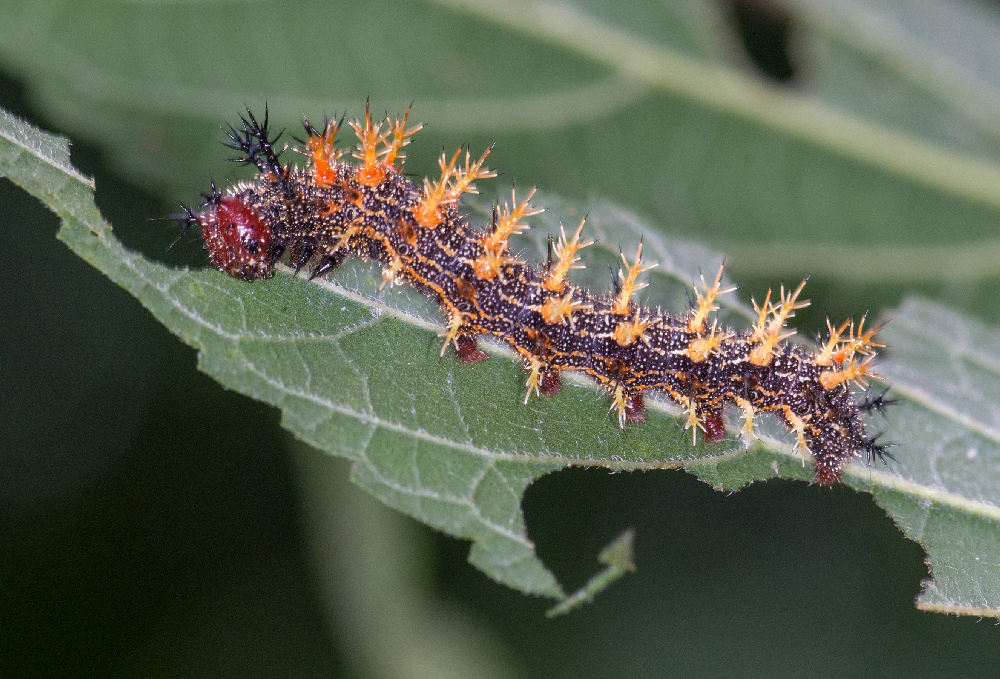
- Larva (Caterpillar): The caterpillars of the question mark are somewhat spiny and can vary in color, often exhibiting shades of brown, black, and yellow or green. They possess branched scoli (fleshy projections) along their bodies. A fascinating defensive behavior is their ability to create a shelter by folding over and silking together a leaf of their host plant.
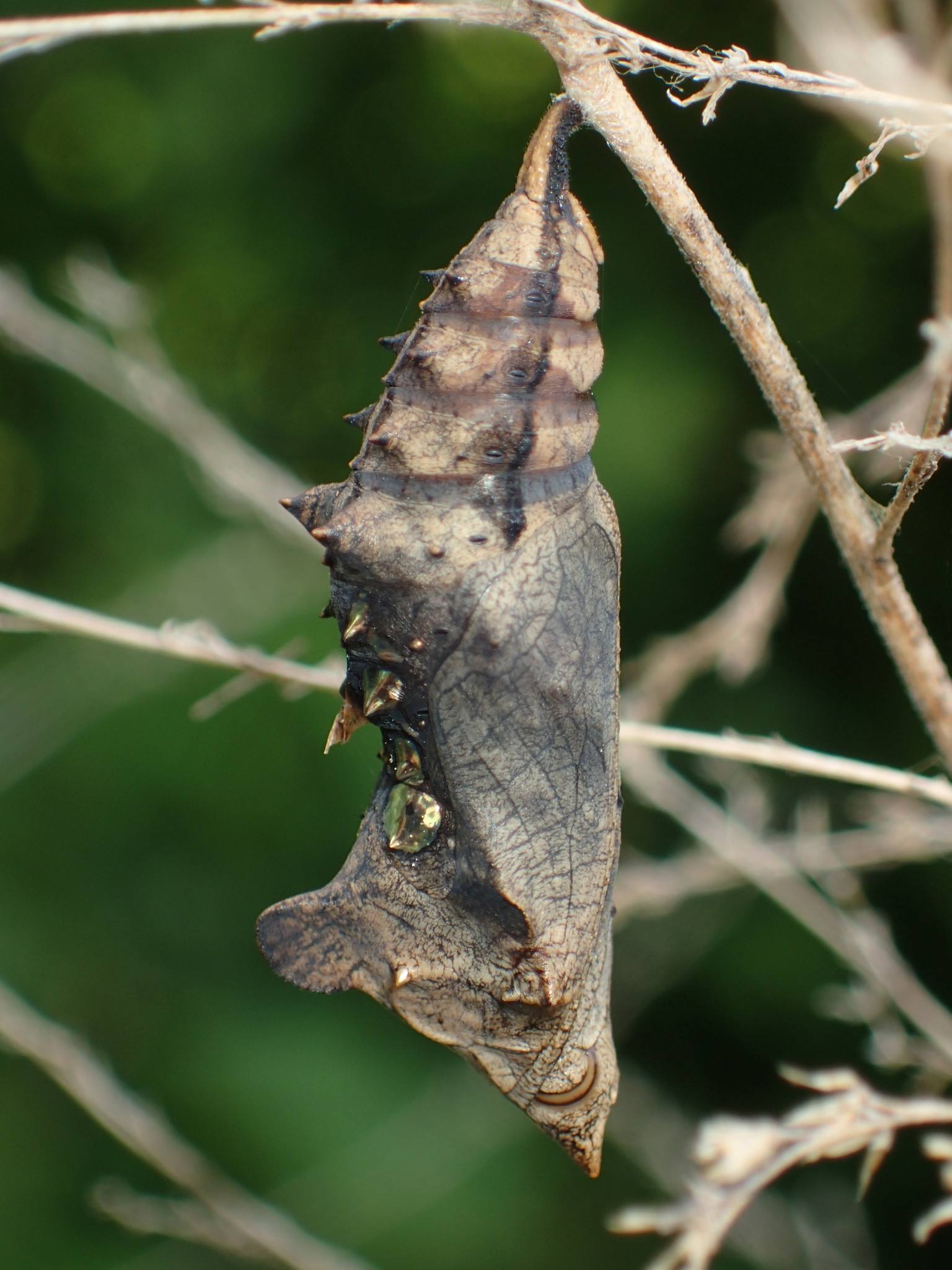
- Pupa (Chrysalis): The chrysalis is an irregular, angular shape, often mottled in shades of brown or gray, providing excellent camouflage amongst twigs and foliage. It is suspended from a twig or leaf.
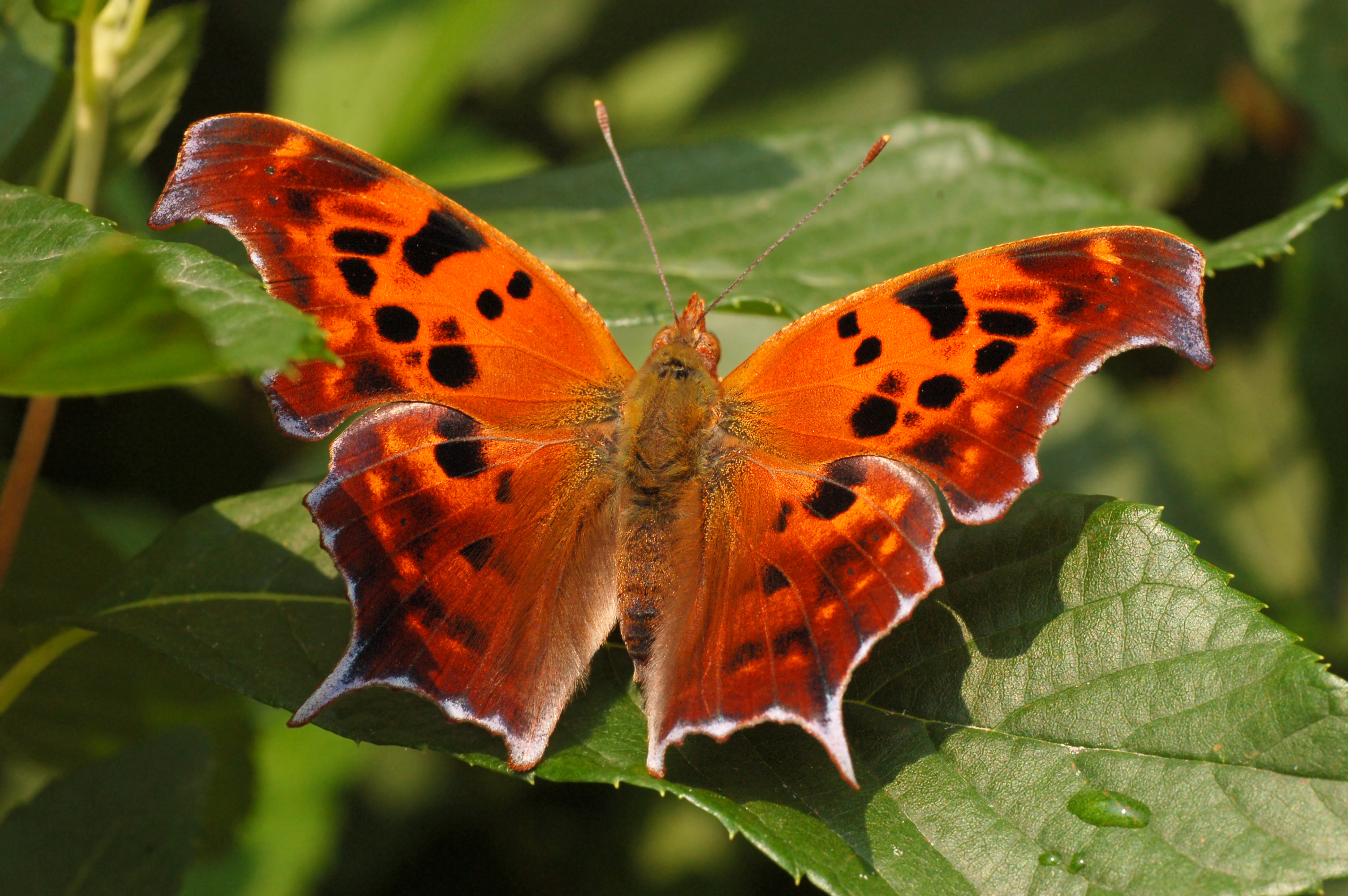
- Adult: The emergence of either the summer or winter form depends on the environmental cues experienced during the pupal stage. Summer form adults are typically seen from spring to fall and will produce the overwintering generation. Winter form adults emerge in late summer and enter a state of diapause (dormancy), seeking sheltered locations like tree cavities, under loose bark, or in leaf litter to survive the cold winter months. They become active again in the spring to mate and lay eggs, initiating the next generation.
Host Plants and Nectar Sources: A Varied Diet:
The caterpillars of the question mark are relatively unique in their feeding habits, utilizing a diverse range of host plants, including:
- Elms (Ulmus species)
- Hackberries (Celtis species)
- Nettles (Urtica species)
- Hops (Humulus lupulus)
- False nettle (Boehmeria cylindrica)
Adult butterflies are attracted to a variety of food sources beyond just nectar. They are often seen feeding on tree sap, rotting fruit, carrion, and even dung, in addition to flower nectar from plants like asters, thistles, and milkweeds. This opportunistic feeding behavior likely contributes to their adaptability and survival.
Behavior and Ecology: Territoriality and Hibernation:
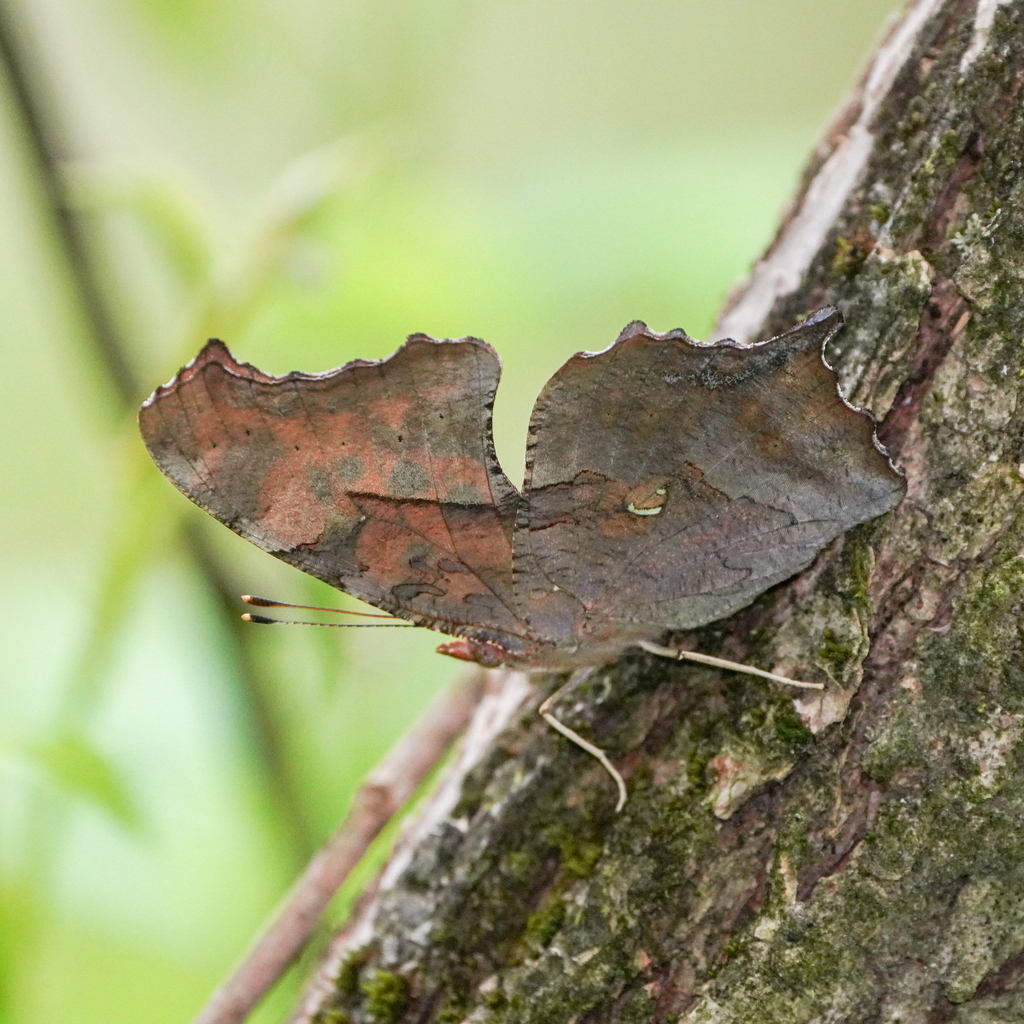
Question mark butterflies are known for their relatively fast and erratic flight. Males are often territorial, perching in sunny spots and aggressively defending their chosen areas against other butterflies. Their scalloped wing edges provide excellent camouflage when they rest with their wings closed, resembling dead leaves or bark.
The overwintering behavior of the winter form adults is a crucial aspect of their life cycle, allowing them to survive harsh winter conditions and emerge in the spring to reproduce. This diapause is a remarkable adaptation that ensures the continuation of the species in temperate climates.
Conservation Status and Threats: A Common Sight, Yet Vigilance Remains Key:
Currently, Polygonia interrogationis is generally considered a common and widespread species throughout its range, and it is not facing significant threats on a large scale. However, habitat loss due to urbanization and agricultural development can still impact local populations. The health and availability of their diverse host plants are also important factors for their continued success. Monitoring population trends and maintaining healthy, diverse ecosystems are essential for ensuring the long-term viability of this fascinating butterfly.
A Living Punctuation in the Landscape:
The question mark butterfly, with its distinctive markings, seasonal forms, and intriguing life history, adds a touch of whimsy and wonder to the natural landscapes of eastern North America. Its adaptability and unique characteristics make it a captivating subject for both casual observers and avid butterfly enthusiasts, a living punctuation mark that punctuates the beauty and complexity of the natural world.
Discover more from
Subscribe to get the latest posts sent to your email.
 davethebugguy.org