

Coscinocera hercules, commonly known as the Hercules moth, is a truly remarkable insect. It belongs to the family Saturniidae, a group recognized for containing some of the largest moths in the world. The Hercules moth certainly exemplifies this characteristic, standing out as a giant among its kind. This retrospective will explore various facets of this fascinating species in detail.
The Hercules moth was initially described by William Henry Miskin in 1876. Its scientific classification places it within the domain Eukaryota, the kingdom Animalia, the phylum Arthropoda, the class Insecta, and the order Lepidoptera. Within the Lepidoptera order, it resides in the family Saturniidae, the genus Coscinocera, and is identified by the species name Coscinocera hercules.
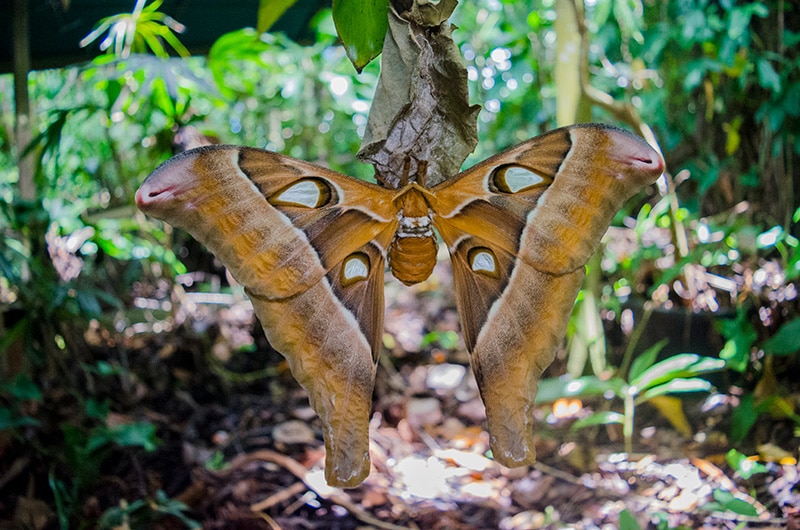
This impressive moth is endemic to New Guinea and northern Australia. Its distribution is closely tied to the presence of lush rainforests, which provide the necessary habitat and food sources for its larvae. These regions, with their abundant and diverse flora, support the life cycle of this magnificent creature.
One of the most notable features of Coscinocera hercules is its extraordinary size. It holds the distinction of being the largest moth found in Australia. Furthermore, its wings possess the largest documented surface area of any living insect. Females of this species can attain a wingspan of up to 27 cm, which is approximately 11 inches. Males, while still large, are somewhat smaller, with wingspans reaching up to 20 cm. The coloration of these moths is predominantly golden-brown and white, and their wings are adorned with distinctive transparent spots. A notable difference exists between the sexes in the shape of their wings. Males have elongated, slender tails on their hindwings, while females have broader wings that lack these tails. Interestingly, adult Hercules moths do not feed. They lack functional mouthparts and rely entirely on the energy reserves they accumulated during their larval stage.
The larvae of Coscinocera hercules are also quite substantial, growing up to 12 cm in length. By the time they reach their final instar, they can weigh around 54 grams. These larvae exhibit a pale blue or green coloration and are characterized by red spots along their sides and prominent yellow spines. In terms of their diet, the larvae are polyphagous, consuming the leaves of a variety of rainforest trees. These food plants include Dysoxylum mollissimum, Glochidion ferdinandi, Homalanthus populifolius, Polyscias elegans, Timonius rumphii, and Timonius singularis.
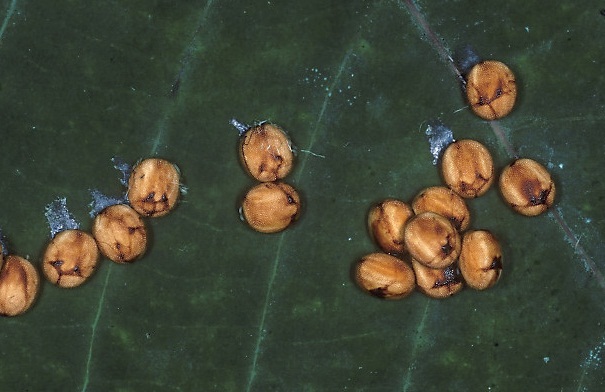
The life cycle of the Hercules moth follows a pattern typical of many Saturniid moths. It begins with the female laying eggs on the leaves of the host plants. These eggs then hatch into larvae, which undergo several stages of growth, known as instars, during which they feed voraciously and increase significantly in size. Once fully grown, the larva transforms into a pupa. This pupal stage occurs within a large, double-walled cocoon, which is typically attached to a leaf. Finally, the adult moth emerges from the cocoon. Adult Hercules moths have a relatively short lifespan, usually lasting only 10 to 14 days. During this brief period, their primary focus is on reproduction.
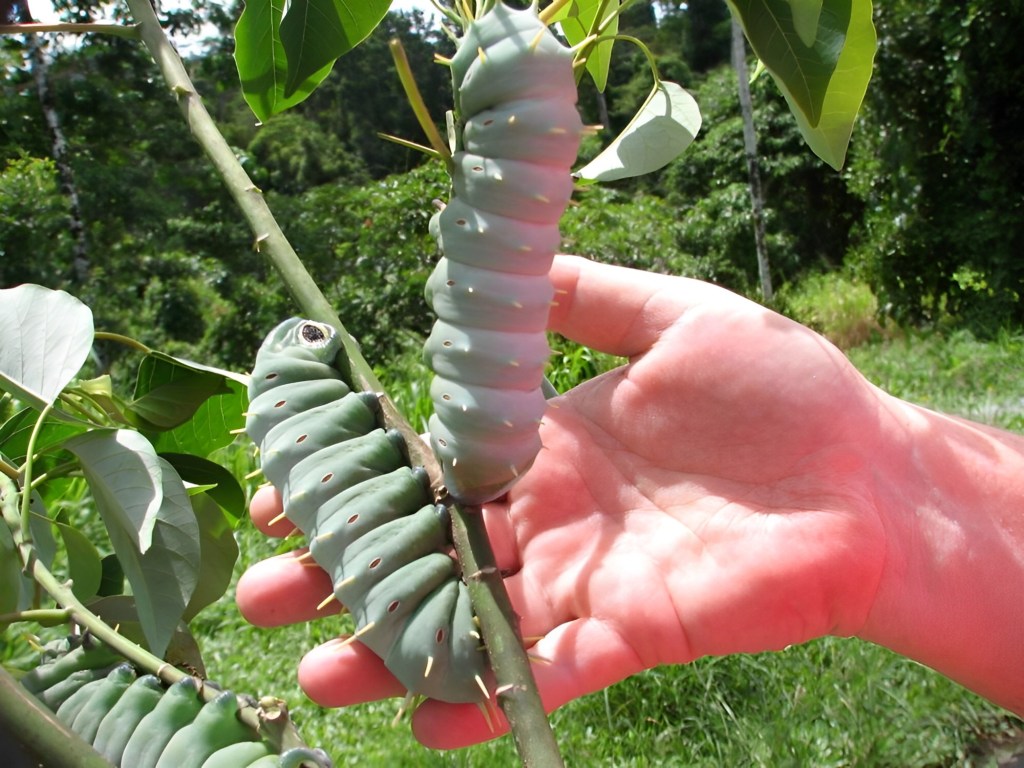
Adult Hercules moths exhibit behaviors largely centered around reproduction. Females attract males by releasing powerful pheromones, which males can detect from considerable distances, sometimes over 2 kilometers away. The larvae, on the other hand, are solitary feeders. They consume large quantities of leaves to fuel their rapid growth. Their distinctive coloration and spiny appearance may serve as a defense mechanism, helping to deter potential predators. Speaking of predators, birds and other insectivorous animals are known to prey on these moths. The snake-head like patterns on the wings are thought to be a defensive adaptation to scare away predators.
The conservation status of Coscinocera hercules has not been thoroughly assessed. However, it is clear that the species’ survival is closely linked to the preservation of its rainforest habitat. The ongoing loss of this habitat due to deforestation and other human activities could pose a significant threat to its populations.
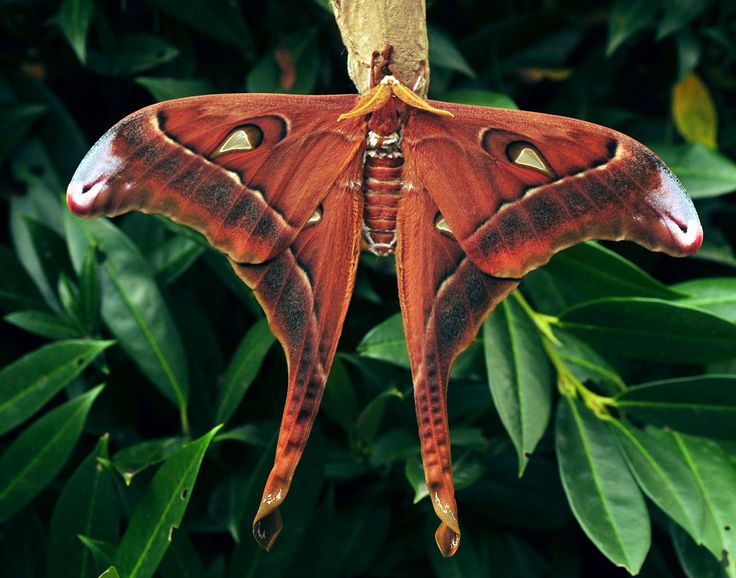
The sheer size and beauty of Coscinocera hercules have long captivated human interest. The moth’s common name is derived from the mythical figure Hercules, who was renowned for his extraordinary strength. This name is a fitting tribute to the moth’s impressive size and stature. In Papua New Guinea, the moth is sometimes farmed.
In conclusion, Coscinocera hercules is a truly remarkable insect, celebrated for its immense size and striking appearance. Its life cycle, behavior, and ecological role within the rainforest ecosystem make it a subject of ongoing scientific interest. While further research is needed to fully understand its conservation status, it is evident that the preservation of its habitat is crucial to ensure the continued survival of this magnificent species.
Discover more from
Subscribe to get the latest posts sent to your email.
 davethebugguy.org