
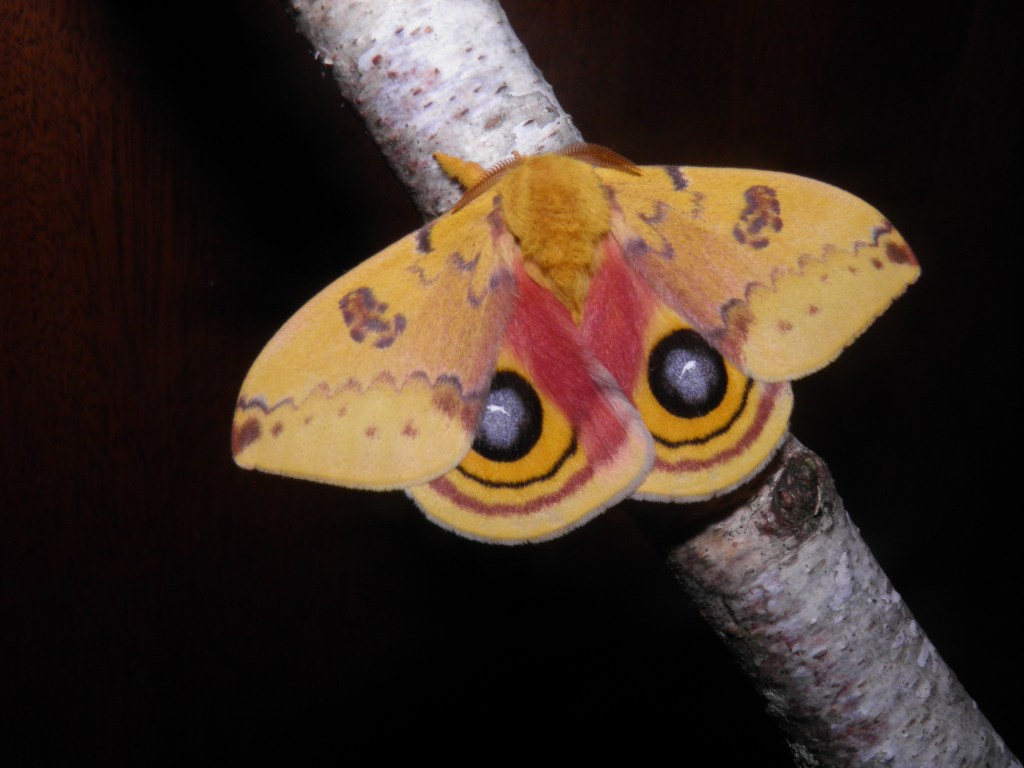
Automeris io, commonly known as the Io moth, is a visually arresting member of the Saturniidae family, celebrated for the dramatic, owl-like eyespots on its hindwings. This widespread North American silk moth exhibits a fascinating life cycle and employs a unique defense mechanism in its larval stage.
Distribution and Habitat
The Io moth boasts a broad distribution across North America, ranging from southern Canada southward through the United States to Mexico. Its habitat is diverse, encompassing deciduous woodlands, suburban gardens, and even agricultural areas where its various host plants are found. This adaptability allows it to thrive in a wider range of environments compared to some more specialized silk moth species.
Physical Characteristics
Automeris io displays significant sexual dimorphism in both size and coloration.
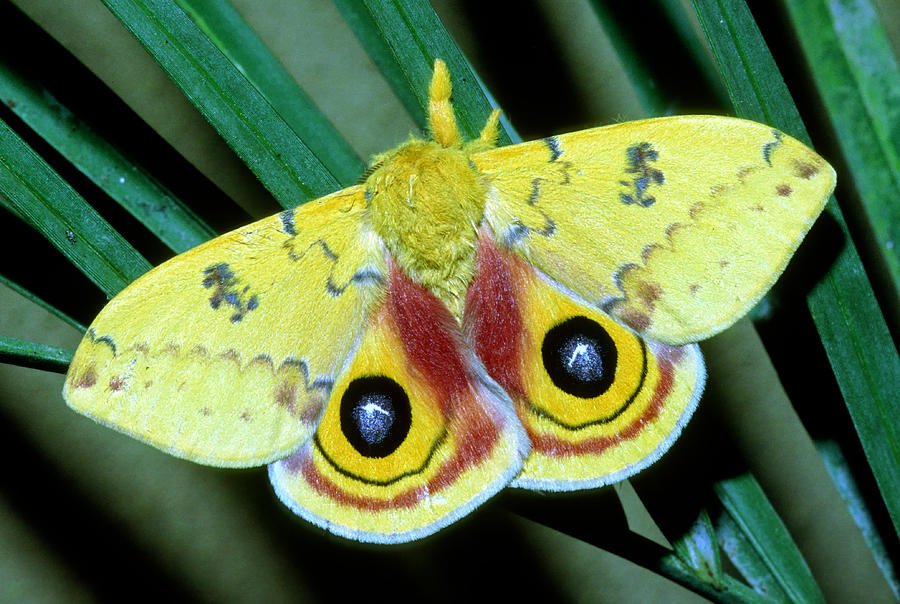
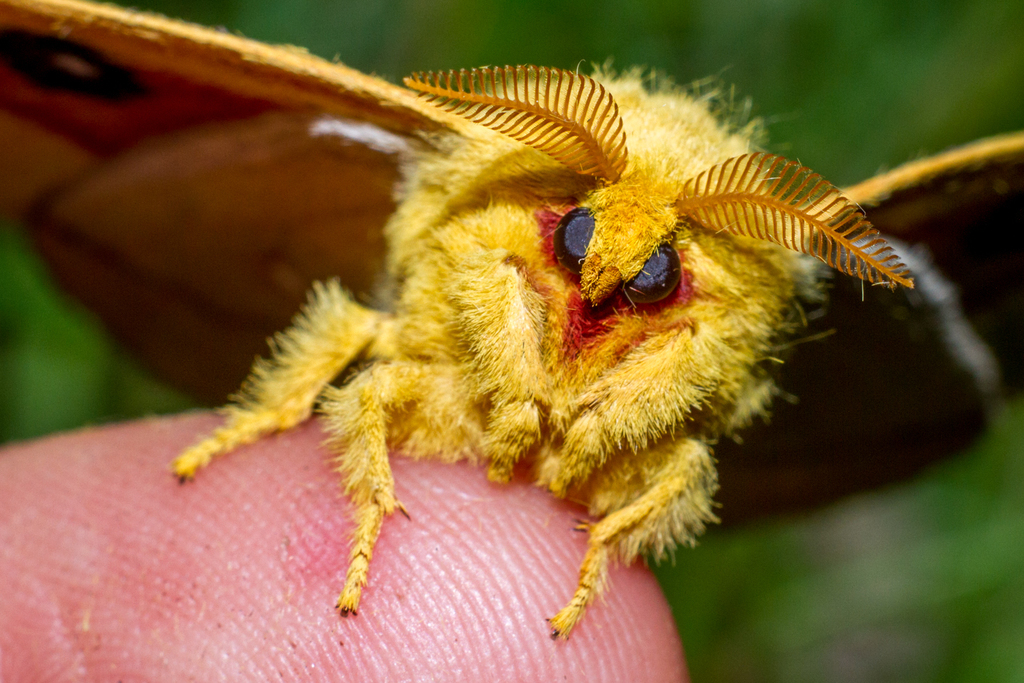
Males: Male Io moths are typically smaller, with a wingspan ranging from 50 to 75 mm (approximately 2 to 3 inches). They are characterized by their bright yellow coloration on the forewings and hindwings. A prominent, dark reddish-brown to purplish-brown postmedial line runs diagonally across both wings. The hindwings feature the unmistakable, large, and vividly colored eyespots, consisting of a black center, surrounded by rings of blue, yellow, and orange or red. These eyespots are usually concealed at rest and are suddenly revealed as a startling defense mechanism. The antennae of the male are broadly bipectinate (comb-like), aiding in the detection of female pheromones.
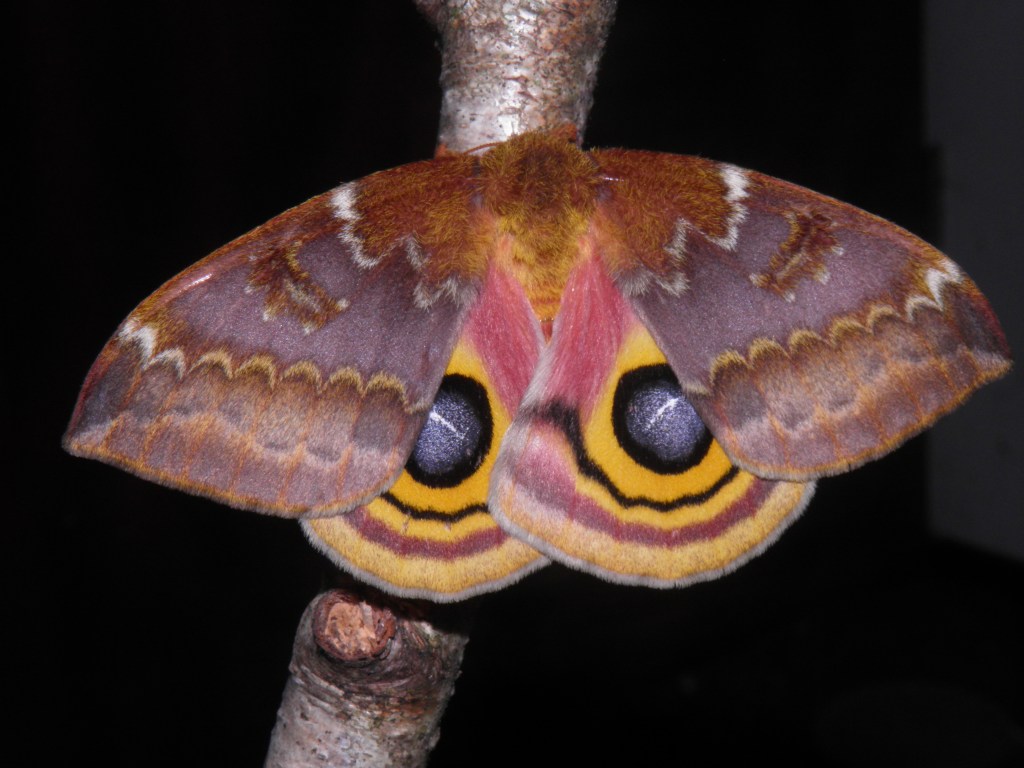
Females: Female Io moths are generally larger, with a wingspan ranging from 60 to 90 mm (approximately 2.4 to 3.5 inches). Their coloration is typically reddish-brown, although variations in yellow, tan, and even white can occur. Similar to the males, they possess a dark postmedial line across their wings and the striking eyespots on the hindwings. The female’s antennae are narrowly bipectinate.
Both sexes have a relatively small body covered in fuzzy hairs. The overall wing shape is somewhat rounded.
Life Cycle
Automeris io undergoes complete metamorphosis, progressing through four distinct stages: egg, larva (caterpillar), pupa (chrysalis), and adult moth.
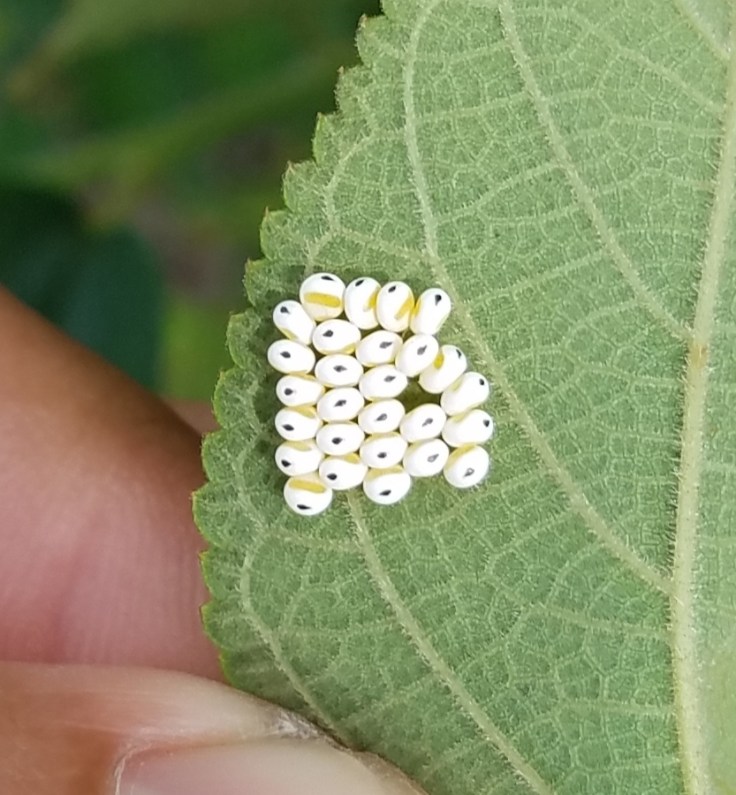
Egg: Female Io moths lay clusters of greenish-white eggs on the leaves or stems of their host plants. These clusters can contain anywhere from 20 to 50 eggs. The eggs hatch in approximately one to two weeks, depending on temperature.
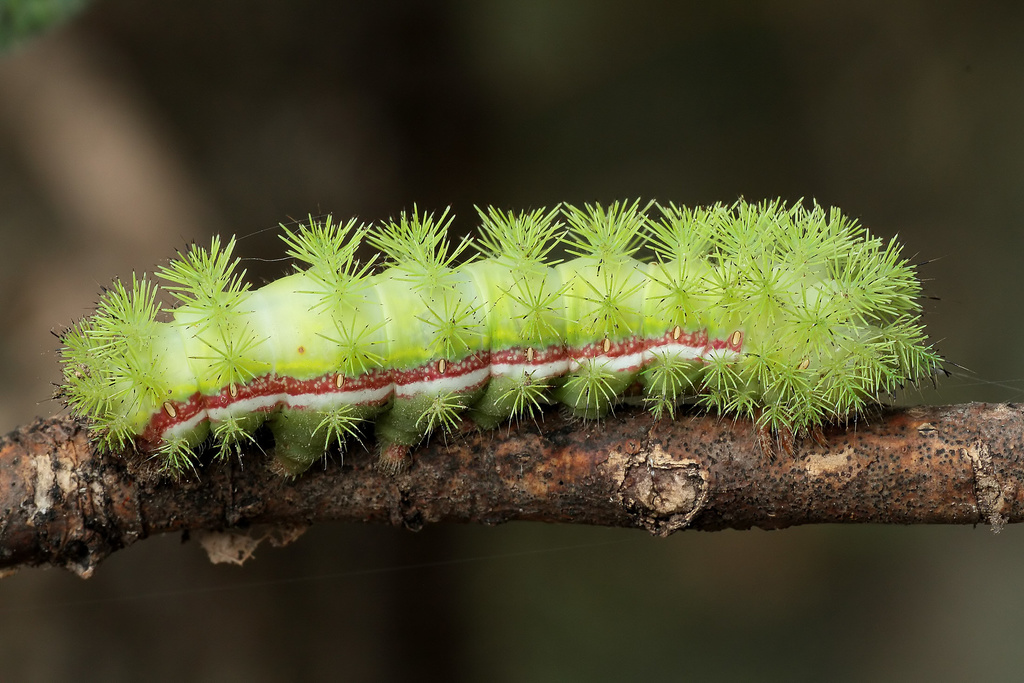
Larva (Caterpillar): The larval stage of the Io moth is particularly interesting due to its stinging hairs. Young larvae are gregarious and often feed together. As they mature, they become solitary. The caterpillars go through several instars (molts), and their appearance changes significantly with each molt. Mature larvae are typically pale green with longitudinal stripes of red and yellow or white. They are covered in branched spines or setae that are connected to poison glands. Contact with these spines causes a painful, itchy rash in humans and other animals, serving as a potent defense against predators.
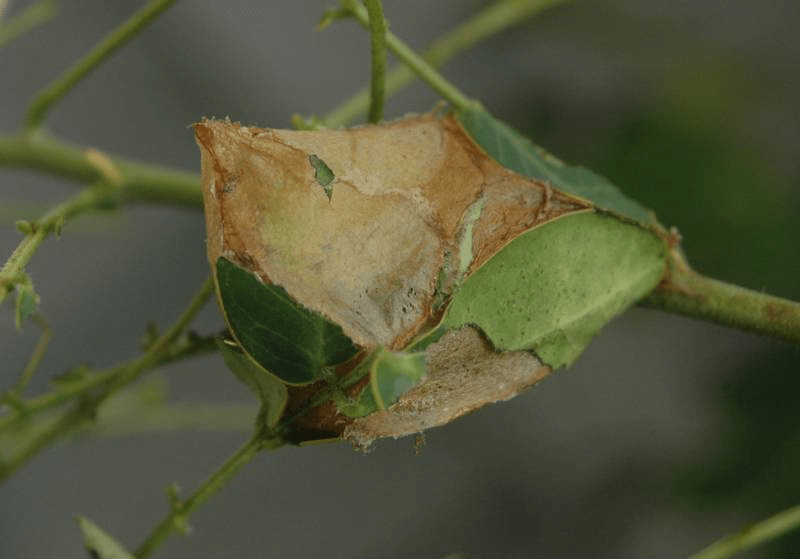
Pupa (Chrysalis): Once the larva is fully grown, it spins a loosely woven, papery cocoon, usually attached to a twig or hidden amongst leaf litter. The pupa overwinters within this cocoon.

Adult Moth: Depending on the latitude, the Io moth can have one or two broods per year. In the northern parts of its range, there is typically a single brood, with adults emerging in late spring or early summer. Further south, two broods may occur, with adults flying in the spring and again in the summer. The adult moths are nocturnal and are attracted to lights. Similar to other Saturniid moths, adult Io moths do not feed and rely on the energy reserves accumulated during their larval stage. Their primary purpose is to reproduce. Males use their sensitive antennae to detect pheromones released by females, often over considerable distances. Mating occurs at night, and females lay eggs shortly thereafter. The adult lifespan is typically short, lasting only a week or two.
Ecological Significance
The Io moth larvae are polyphagous, meaning they feed on a wide variety of host plants. Some of the recorded host plants include willow (Salix spp.), maple (Acer spp.), oak (Quercus spp.), elm (Ulmus spp.), birch (Betula spp.), ash (Fraxinus spp.), sassafras (Sassafras albidum), wild cherry (Prunus spp.), and many others. This broad diet contributes to their wide distribution. The adult moths, like other non-feeding silk moths, play a minimal role in direct pollination. However, they serve as a food source for nocturnal predators such as bats and owls. The stinging hairs of the larvae represent a significant defense mechanism against potential predators. The sudden flashing of the hindwing eyespots by the adult moths is also believed to startle or deter predators, mimicking the eyes of a larger animal, such as an owl.
Conservation Status
Automeris io is generally considered a common and widespread species across its range. While local populations may experience fluctuations due to various environmental factors, the species as a whole is not currently considered to be under significant threat. Its adaptability to a range of habitats and its diverse diet contribute to its overall stability.
Conclusion
The Io moth, with its striking coloration, dramatic eyespots, and the unique defensive capabilities of its larvae, is a fascinating and readily recognizable member of the North American moth fauna. Its adaptability and wide distribution highlight its ecological resilience, making it a common yet captivating subject for nature enthusiasts and entomologists alike. The sudden flash of its hindwing eyespots serves as a constant reminder of the intricate and often surprising defense mechanisms found in the natural world.
Discover more from
Subscribe to get the latest posts sent to your email.
 davethebugguy.org