
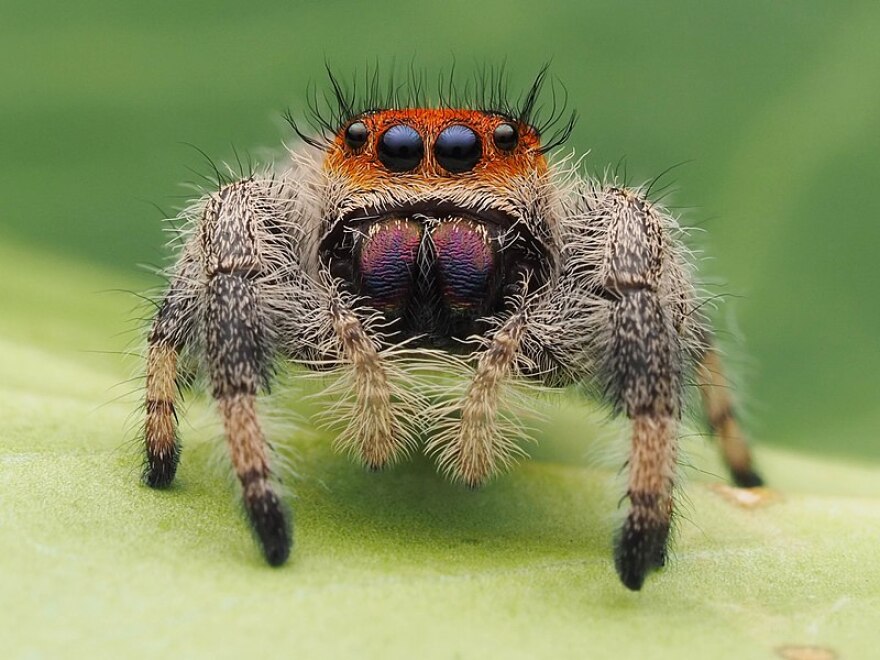
Jumping spiders, members of the family Salticidae, are a captivating group of arachnids renowned for their exceptional vision, remarkable jumping abilities, and diverse behaviors. With over 6,000 described species, they constitute the largest family of spiders, showcasing an incredible array of adaptations and lifestyles. Here’s a comprehensive look at these fascinating creatures:
Exceptional Vision:
- Eye Arrangement:
- Jumping spiders possess eight eyes, with a distinctive arrangement. The large, forward-facing anterior median eyes (AME) provide them with acute, stereoscopic vision, crucial for judging distances and tracking prey.
- The other eyes, positioned around the head, enhance their peripheral vision, allowing them to detect movement from various directions.
- Visual Acuity:
- Their AME are capable of incredibly detailed vision, surpassing that of many other arthropods.
- They can perceive colors, including ultraviolet light, which plays a role in prey detection and courtship displays.
Remarkable Jumping Abilities:
- Hydraulic Mechanism:
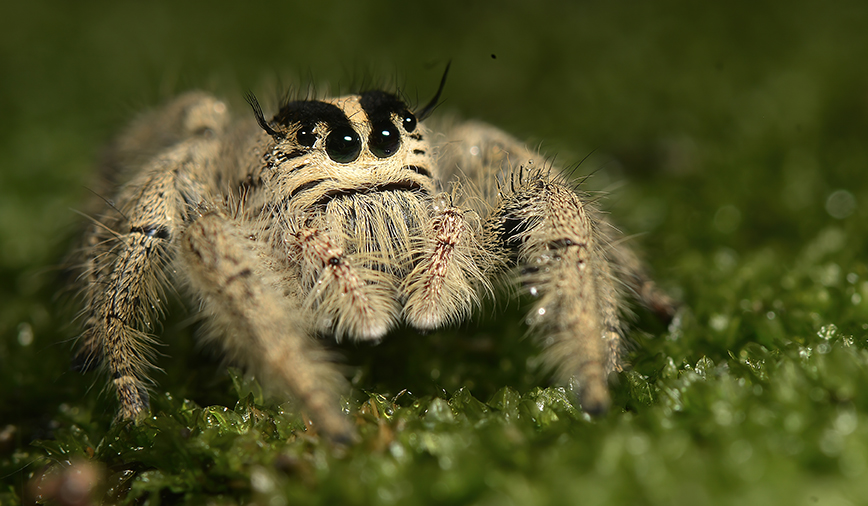
- Jumping spiders don’t rely solely on muscle power for their leaps. Instead, they use a hydraulic system, rapidly altering the pressure of their hemolymph (blood) within their legs to extend them.
- This allows them to achieve jumps that can be many times their body length, enabling them to capture prey and navigate their environment with precision.
- Silk Draglines:
- Before jumping, they often release a silk dragline, acting as a safety rope. This prevents them from falling if they miss their target.

Diverse Behaviors:
- Hunting Strategies:
- Unlike many spiders that use webs to capture prey, jumping spiders are active hunters. They stalk their prey, using their keen vision to locate and track it, before executing a precise jump to capture it.
- Their diet consists primarily of insects and other small arthropods.
- Courtship and Mating:
- Male jumping spiders engage in elaborate courtship displays to attract females. These displays often involve intricate leg movements, body postures, and vibrant color patterns.
- Some species, like the peacock spiders, are known for their spectacular courtship dances.
- Silk Use:
- While they don’t build webs for trapping prey, jumping spiders use silk for various purposes, including:
- Building silken retreats for shelter and molting.
- Creating egg sacs to protect their offspring.
- Using draglines for safety during jumps.
- While they don’t build webs for trapping prey, jumping spiders use silk for various purposes, including:
- Habitat and Distribution:
- Jumping spiders are found in a wide range of habitats across the globe, from tropical rainforests to deserts and even urban environments.
- They can be found on vegetation, rocks, and even the walls of buildings.
Key Characteristics:
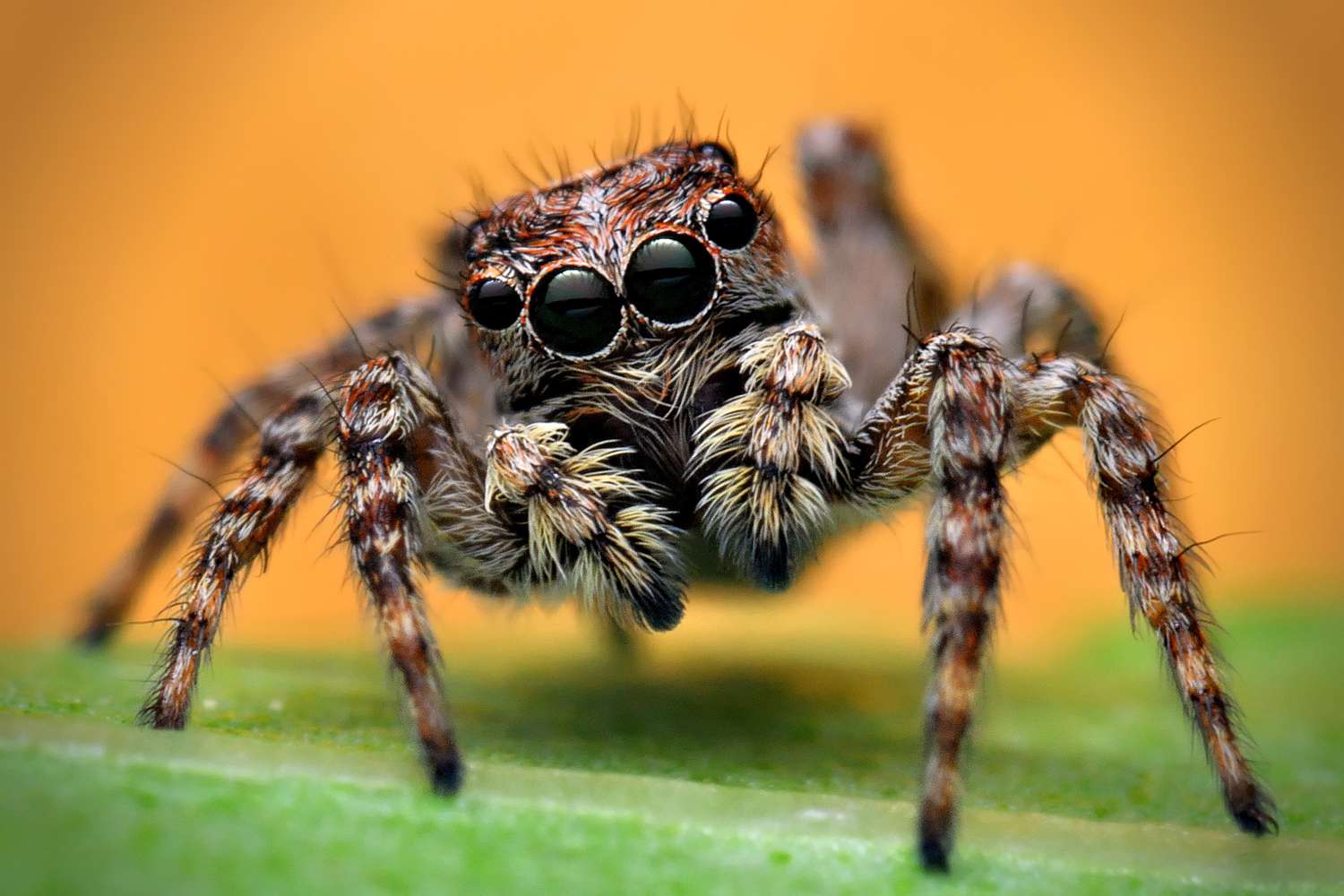
- Distinctive Eye Pattern: Their large, forward-facing eyes are a defining characteristic.
- Agile Movements: They are known for their quick and precise movements.
- Diverse Coloration: Jumping spiders exhibit a wide variety of colors and patterns, often used for camouflage or courtship.
Ecological Importance:
- Jumping spiders play a vital role in ecosystems as predators, helping to control populations of insects and other small arthropods.
Jumping spiders are truly remarkable creatures, showcasing the incredible diversity and adaptations found in the natural world. Their combination of exceptional vision, jumping prowess, and complex behaviors makes them a subject of ongoing scientific study and fascination.
Discover more from
Subscribe to get the latest posts sent to your email.
 davethebugguy.org