
When it comes to moths, there are none as spectacular as the giant silk moths, from the family Saturniidae. Despite Rhode Island being such a small state, we actually have five species common to this area. How many have you seen?
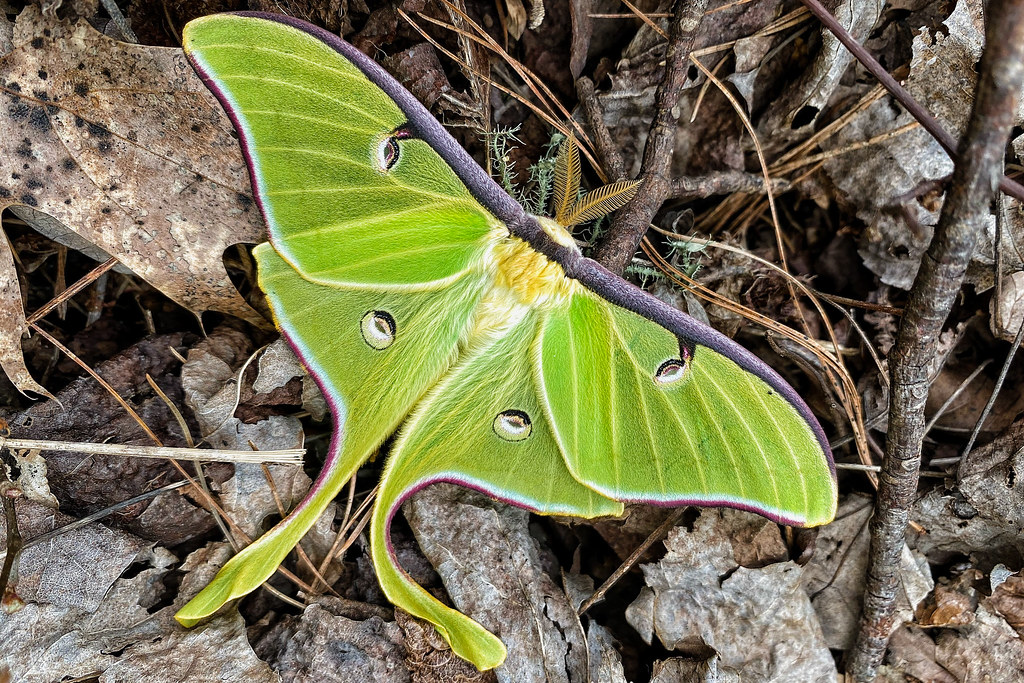
Actias luna, commonly known as the Luna moth, is a remarkable and easily recognizable member of the Saturniidae family, often celebrated for its ethereal beauty and large size. This moth, native to North America, has a wingspan that can extend up to four and a half inches. Its wings are pale green and adorned with eyespots that serve as a defense mechanism against predators. The forewings are long and curved, giving the moth a crescent-like shape, while the hindwings are broader and feature long, elegant tails that add to its mystical appearance. The Luna moth’s body is furry and white, with a distinctive pinkish hue along the edges of its wings and legs.
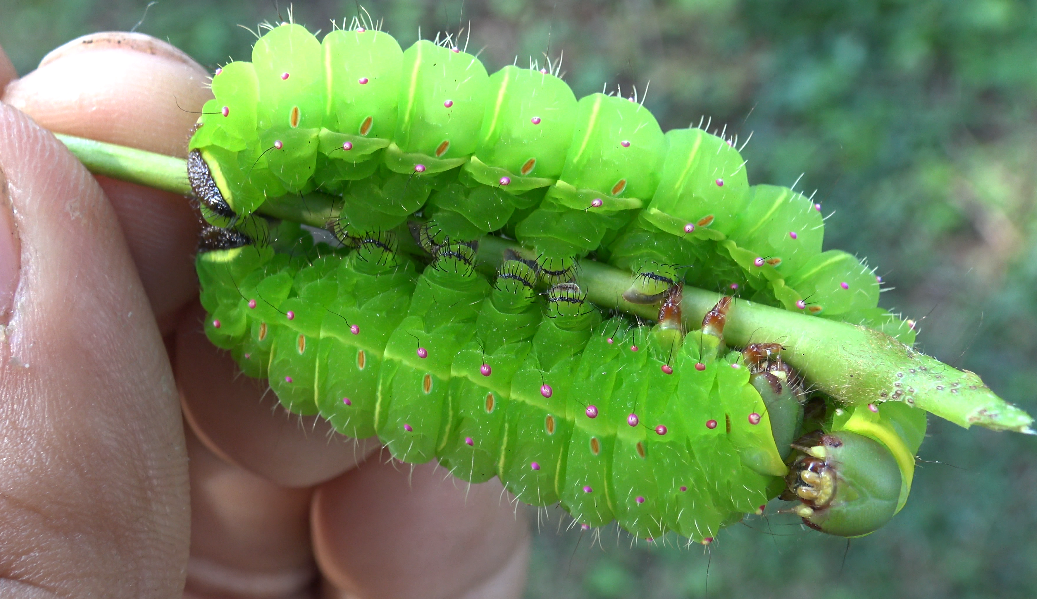
Luna moths are nocturnal and are primarily seen during the spring and early summer months. Their lifecycle begins when females lay clusters of eggs on the leaves of host plants, such as walnut, hickory, and sweetgum trees. The caterpillars are bright green with a yellow stripe running down each side of their body, covered with short, fine hairs. As they mature, they go through several molts before spinning a silken cocoon in which they pupate. The adult moths then emerge in the spring, with a brief adult lifespan of only about a week, during which they do not feed. Instead, their sole purpose is to reproduce, after which they die. The Luna moth’s brief yet captivating existence, combined with its stunning appearance, makes it a symbol of ephemeral beauty and a subject of fascination for naturalists and lepidopterists alike.

Antheraea polyphemus, commonly known as the Polyphemus moth, is a magnificent member of the Saturniidae family, distinguished by its impressive size and striking features. This moth, named after the Greek mythological giant Polyphemus, has a wingspan that can reach up to six inches, making it one of the largest moths in North America. Its wings are a soft brown color with intricate patterns, including eye-catching eyespots on each of the hindwings. These eyespots are blue and black with yellow and white rings, resembling the eye of a peacock feather, and serve as a defense mechanism to startle predators.
The Polyphemus moth’s life cycle begins with the female laying eggs on the leaves of various deciduous trees, such as oak, maple, and birch. The caterpillars are bright green with distinctive white stripes and adorned with spiky, orange-tipped tubercles. As they grow, they consume large amounts of foliage, going through several instars before spinning a tough, brownish cocoon in which they pupate. This cocoon, often attached to twigs or leaves, provides protection during the pupal stage, which can last several weeks or even months, depending on environmental conditions.

Adult Polyphemus moths emerge in late spring to early summer, and like other giant silk moths, they do not feed during their short adult lifespan, which lasts only about a week. Their primary purpose is reproduction. The males, equipped with large, feathery antennae, are adept at detecting the pheromones released by females from great distances. The brief but captivating life of the Polyphemus moth, marked by its dramatic transformation from a voracious caterpillar to a majestic adult, makes it a fascinating subject for entomologists and butterfly enthusiasts alike.
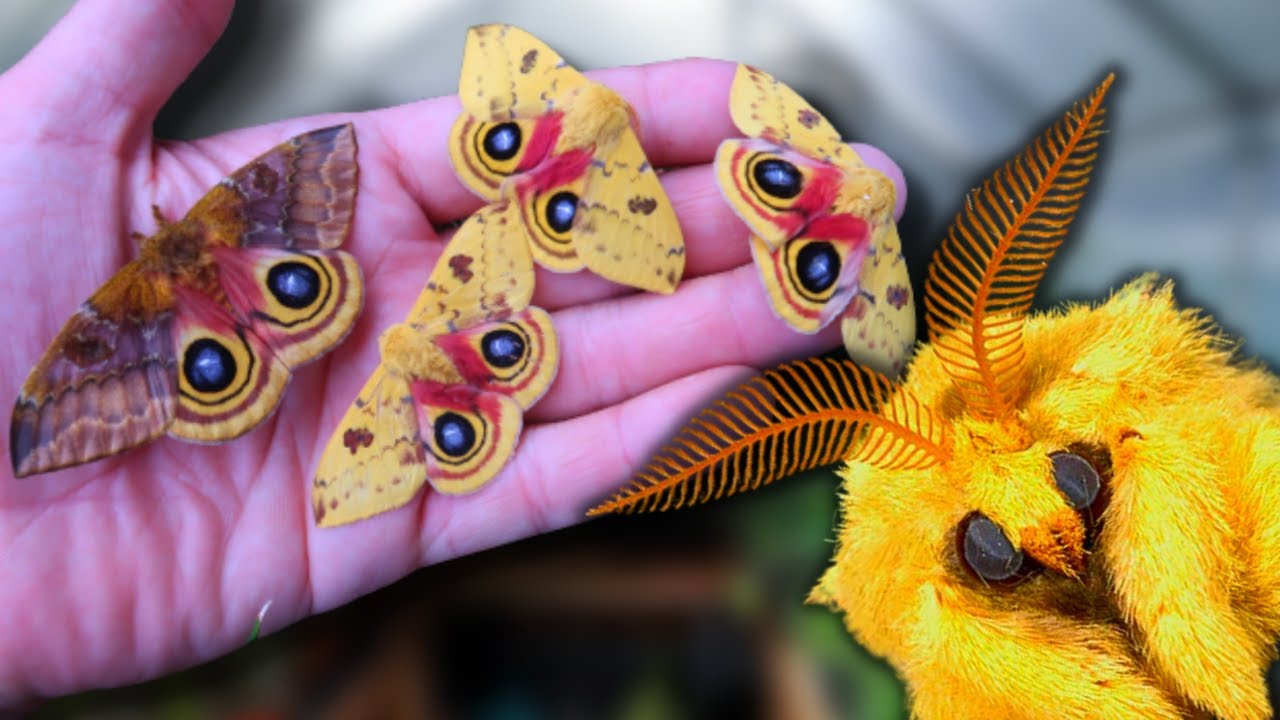
Automeris io, commonly known as the Io moth, is a vibrant and captivating member of the Saturniidae family, renowned for its striking appearance and unique defense mechanisms. This medium-sized moth has a wingspan ranging from two to three inches, with a notable sexual dimorphism: males typically have bright yellow forewings, while females display a more subdued brown hue. Both sexes, however, share the characteristic and dramatic hindwings, which are bright yellow or orange with large, prominent eyespots. These eyespots are black with blue and white centers, mimicking the eyes of a larger predator to deter potential threats.
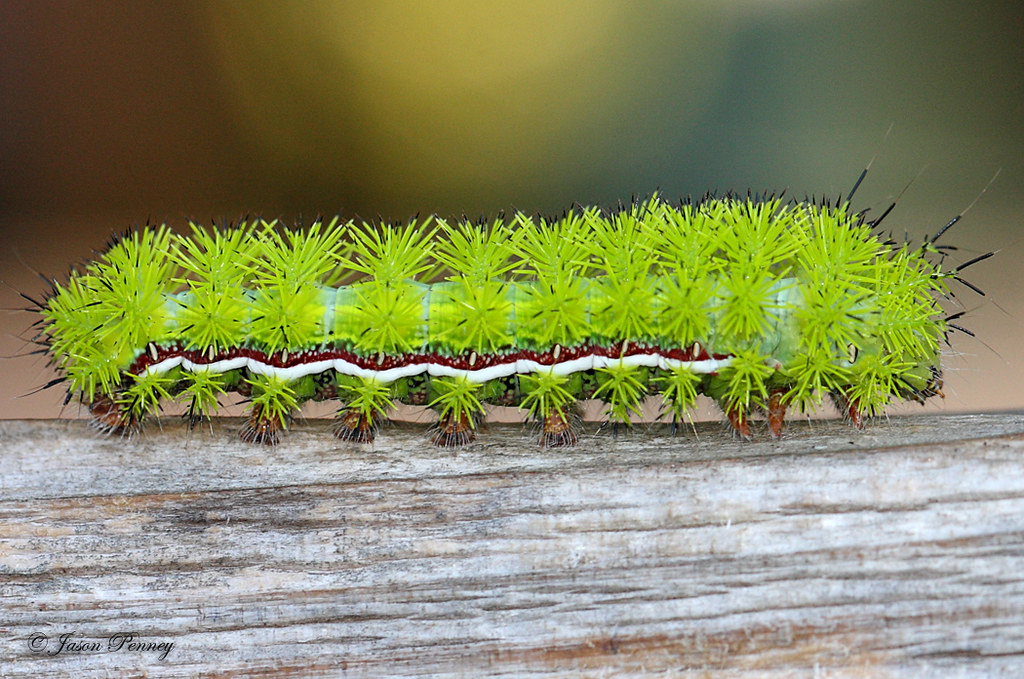
The life cycle of the Io moth begins when females lay clusters of eggs on the leaves of various host plants, such as willow, hackberry, and cherry trees. The caterpillars are equally striking, initially bright green and covered with tufts of venomous spines that can cause a painful sting if touched. As they mature, the caterpillars develop red and white lateral stripes along their bodies. These spines serve as a potent defense against predators, making the caterpillars less likely to be eaten.
Once fully grown, the caterpillars spin a loosely woven cocoon, where they pupate and undergo metamorphosis. The pupal stage can vary in duration, often influenced by environmental conditions. Adult Io moths emerge in the late spring to early summer, and like many of their Saturniidae relatives, they do not feed during their brief adult phase, which lasts only a week or so. Their primary objective during this time is to mate and lay eggs, ensuring the continuation of their species.
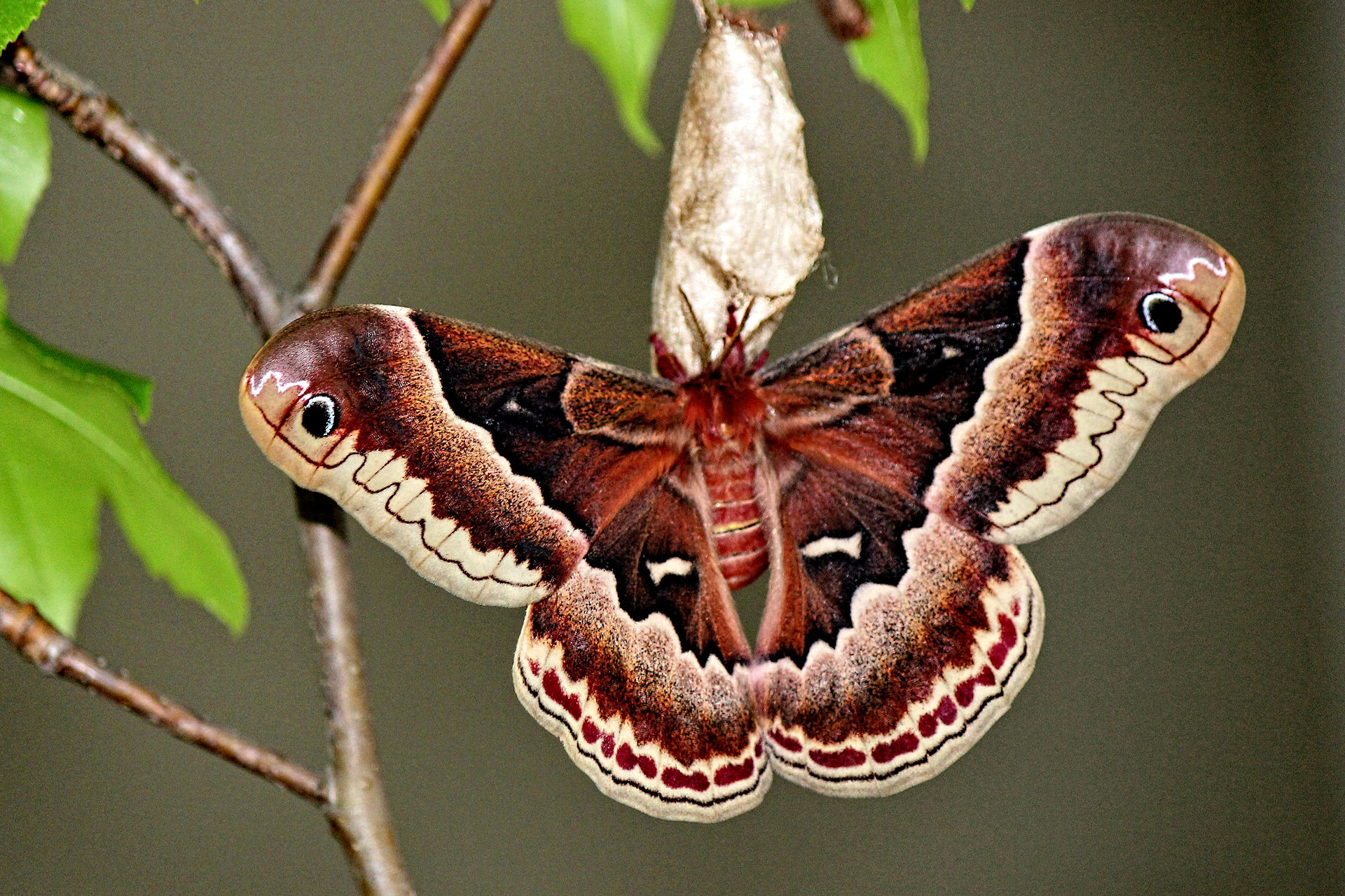
Callosamia promethea, commonly known as the Promethea moth, is a striking member of the Saturniidae family, celebrated for its beauty and fascinating life cycle. Native to North America, the Promethea moth exhibits pronounced sexual dimorphism. Males boast a dark, velvety blackish-brown coloration with subtle white markings, while females are a rich reddish-brown with a more intricate pattern of white and tan lines. The wingspan of these moths ranges from three to four inches, making them quite noticeable. One of the most distinctive features of the Promethea moth is the stark contrast between the sexes, which aids in easy identification.
The lifecycle of the Promethea moth begins with the female laying eggs on the leaves of various host plants, such as tulip trees, sassafras, and spicebush. The caterpillars that hatch are initially small and pale, but as they mature, they develop into large, green larvae with striking red and yellow tubercles. These caterpillars are voracious feeders, consuming significant amounts of foliage before pupating. The pupation occurs inside a unique silken cocoon, which the caterpillar attaches to a leaf. The leaf then folds over the cocoon, providing additional protection during the pupal stage.
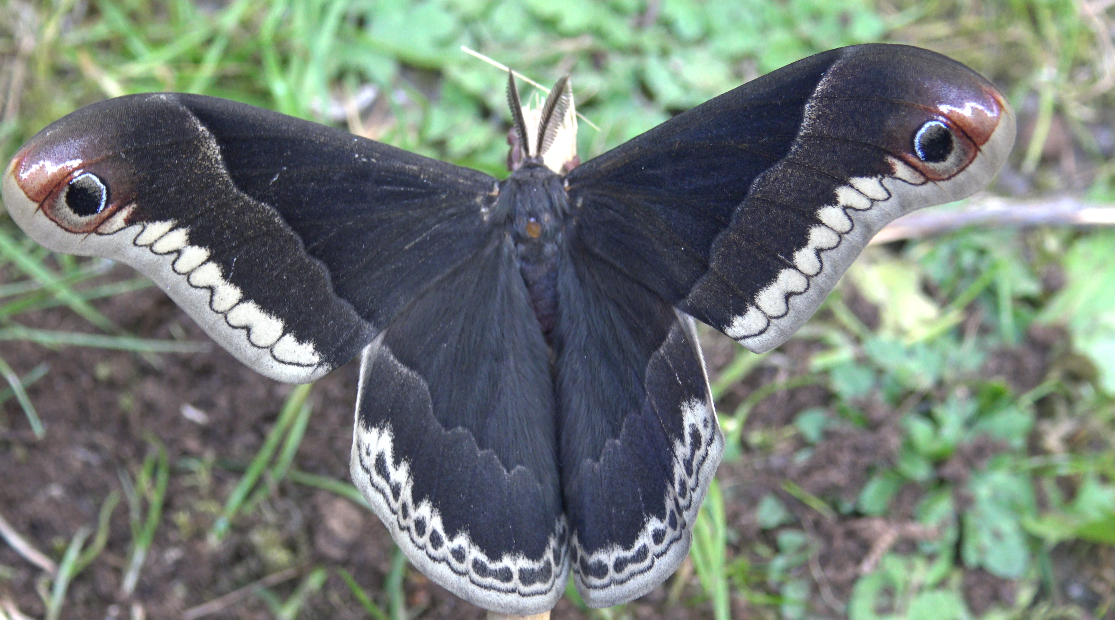
Promethea moths emerge in late spring to early summer. The adults, like many giant silk moths, do not feed and have a short lifespan focused on reproduction. Males are diurnal and are often seen flying during the day, actively seeking out females, which are typically nocturnal and remain relatively stationary, releasing pheromones to attract mates. The Promethea moth’s striking appearance, coupled with its unique behavioral patterns and ecological role, makes it a subject of great interest to entomologists and lepidopterists.

Hyalophora cecropia, commonly known as the Cecropia moth, is the largest native moth in North America, belonging to the Saturniidae family. This majestic moth boasts an impressive wingspan that can reach up to six inches, making it a true giant among its peers. The wings are richly patterned with shades of reddish-brown, tan, and white, and they feature distinctive crescent-shaped spots bordered by black. These spots, along with eye-like markings, serve as a deterrent to predators. The moth’s body is robust and furry, with a reddish-brown thorax and a banded, feathery abdomen that adds to its striking appearance.
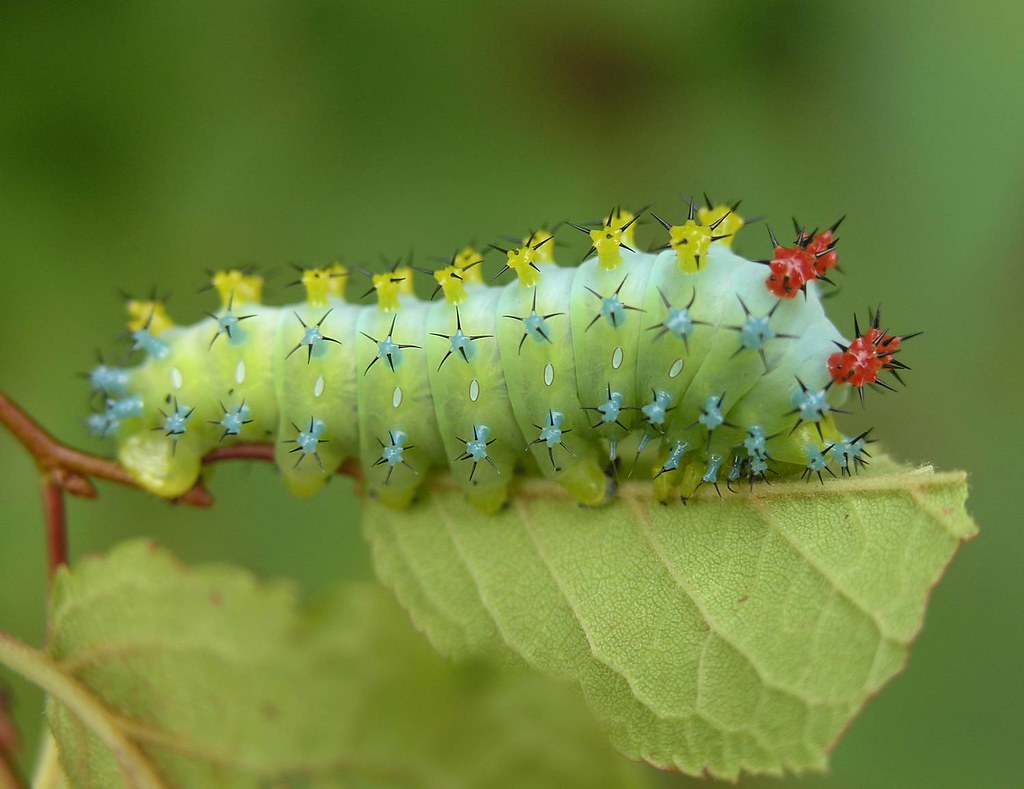
The life cycle of the Cecropia moth begins when females lay their eggs on the leaves of host plants such as maple, birch, and cherry trees. Upon hatching, the larvae are initially black but soon develop into large, green caterpillars adorned with blue, yellow, and red tubercles, which are small, knob-like structures. These caterpillars are voracious feeders, consuming significant amounts of foliage as they grow through several instars. Before pupation, they spin large, papery cocoons, often attached to twigs or leaves, where they will undergo metamorphosis.
Adult Cecropia moths emerge in late spring to early summer, and like other giant silk moths, they do not feed and have a very short adult lifespan, typically only about two weeks. Their primary focus during this brief period is reproduction. Males, equipped with large, feathery antennae, are particularly adept at detecting the pheromones released by females, sometimes from miles away. The Cecropia moth’s combination of significant size, vivid coloration, and fascinating life cycle make it a captivating subject for both scientific study and casual observation by nature enthusiasts.
It you would like to learn about the cocoons of these amazing moths, check out my blog “The Thrill of the Hunt: Finding Moth Cocoons in the Wild.”
~David Albaugh
Discover more from
Subscribe to get the latest posts sent to your email.
 davethebugguy.org
Thank you so much for this interesting and informative article. As a teenager I came in contact with a big, green caterpillar with red and white racing stripes and learned the hard way about those little “Christmas trees” that adorn it’s body; but until now I didn’t know it was an Io caterpillar.
The stings from io caterpillars are the worst LOL
Thank you so much for sharing your vast knowledge of these moths. I have a pupa on my plant and I’m trying to figure out what it is. I am overwintering my plants and I usually end up with snails, some bugs, I even have a Chinese Manis right now in my plants. But I have no idea what is pupating in my Boston Fern.
I found this to be educational and I now have a new found love for moths.
Thank you so much
Hi Heather. Would you happen to have a photo of the pupa?